Showing posts with label Monarchy. Show all posts

Friday, 23 September 2022

The Magic Of Monarchy

Grief is the price we pay for love.”  –  Queen Elizabeth II 

IT WAS HEART-BREAKING. It was heart-warming. It was as contemporary as a smartphone. It was as old as the Middle Ages. It was the antithesis of democracy. It was what the people wanted.

The Queen, at 96, has passed away, but what remains is older still. And what remains is the deep, deep magic of monarchy.

So many people, when asked by reporters why they had come to pay their last respects to Elizabeth II, confessed to being baffled. Some even owned up to being republicans, and yet, here they were, waiting in a queue for nine hours, for just a few seconds in front of the catafalque.

Anyone who has witnessed a hypnotist’s on-stage performance would immediately have recognised their condition. Quite simply, monarchy had mesmerised them. They were under its spell.

How else to explain the numerous heads-of-government and heads-of-state who consented to being driven by bus to Westminster Abbey to pay their last respects to this doughty woman – a curious mixture of primness and joy – who, wholly enthralled to the ideal of service, had redefined the meaning of leadership. Constitutionally powerless, Elizabeth II was also astonishingly powerful. Would so many world leaders have turned out to offer the tribute of their presence to a woman who wasn’t?

No leftists worthy of the name would concede any of these points. They would argue that all rational persons long ago abandoned the intellectually bankrupt notion of hereditary rule. Nations committed to democracy, they’d say, cannot in good conscience accept even a constitutional monarchy – not if they are genuinely committed to the idea that all human-beings are born equal in rights and dignity. Monarchy is the conceptual and political enemy of equality, and democracy is equality in action.

Understanding how the Left came by its aversion to hereditary rule isn’t difficult. It was no fun being a commoner in an aristocratic society. You were stuck at the bottom of the heap in a world constructed to keep you there. If you spoke up, you were slapped down. If you lifted a hand against the established order, you were hanged by the neck until you were dead. Short of rebellion, there was no way of improving the lot of people like yourself. Political power could not be earned, it could only be inherited. “Born to rule” wasn’t just a cheap political jibe, it was an accurate description of the constitution.

At the end of the American Civil War, emancipated slaves liked to tease the soldiers of the defeated Confederacy by shouting out: “Bottom rail on top!” Human-beings who had been treated as beasts of burden, were now citizens with rights. The racist world of the American South had been turned upside down.

But this triumph of equality and democracy: “government of the people, by the people, for the people”; was short-lived. Abraham Lincoln’s famous summation of democracy overlooks the inescapable fact that “the people” are not a homogeneous mass. Some of the people want one thing, and some of the people want something else. You can count votes to determine who gets what, but you can’t make the losers like the final result.

Democracy works well when the stakes are low. But raise the stakes and watch democracy come apart at the seams. One way or another, the head-of-state of a republic takes office through a process of election. Chose a president when the political stakes are dangerously high, and the legitimacy of the winner will, inevitably, be questioned by the loser – and his followers. We have seen it happen with Donald Trump, we will likely see it again if Jair Bolsonaro loses the Brazilian presidential election.

Watching the final moments of the Queen’s funeral, it was impossible not to marvel at the complex simplicity of constitutional monarchy. With the line of succession decided, there was no argument about who would replace Elizabeth II. Nobody had to stand for the office of monarch. No party had to lick its wounds and mutter darkly about a “rigged” election. The transfer of power from Mother to Son was instantaneous and seamless. Moreover, the power transferred was of an apolitical nature.

As the Lord Chamberlain broke in twain his wand, and a lone piper skirled his lament through the lofty majesty of St George’s Chapel, it was clear that magic – and monarchy – had prevailed.


This essay was originally published in The Otago Daily Times and The Greymouth Star of Friday, 23 September 2022.

Monday, 6 June 2022

The Year Of Jubilee.

Apres moi ...? Queen Elizabeth II, photographed nearly 70 years ago at her coronation. A remarkable monarch, but she is faltering. Unable to attend so many of the Jubilee’s dazzling spectacles, the Queen’s frailty attests to the unalterable fact of human mortality. Unlike palaces and castles, human-beings cannot be strengthened and renovated. Time, remorseless and unforgiving, exacts its toll.

ON TUESDAY, 22 JUNE 1897, my Grandfather, William Marshall, rode through the streets of London to honour Queen Victoria. As a trooper in the North Otago Mounted Rifles he was part of the New Zealand military contingent sent to celebrate Her Majesty’s Diamond Jubilee. For sixty glorious years Victoria had reigned over the United Kingdom of Great Britain and Ireland, and an empire of unsurpassed extent and power.

One hundred and twenty-five years later, the streets of London are again filled with cheering crowds. Queen Elizabeth II has easily exceeded Victoria’s record, reigning for an astonishing 70 years. Her Platinum Jubilee has given the British people what is almost certainly their last opportunity to mark a milestone in the reign of the only monarch most of them have ever known.

To have a clear memory of King George VI, one would need to have been born in, or before, the late-1940s. And yet, when I was growing up in the 1960s, the late King’s image was everywhere. On ha’pennies, pennies, threepences, sixpences, shillings and florins. George wasn’t merely a “Rex”, he was an “Imp”: the King-Emperor from whom my father received his commission during the Second World War.

George’s daughter, Elizabeth’s, coins were never stamped with the “Imp”. India was gone by the time she became Elizabeth R in 1952. Her seventy years as queen have been distinguished not by the Imperial might to which my grandfather contributed (by helping Victoria’s ministers seize the Boer republics) but by imperial decline.

The British Empire is no more, and the United Kingdom itself is becoming an increasingly dubious proposition. The unification of Ireland has moved from an utter impossibility to a distinct likelihood. Scotland, too, is moving away from the “Great Britain” forged by the accession of James I in 1603. Even Wales is teetering.

Who else but Elizabeth II could have held this strange heraldic menagerie in check? Her great age encompasses so much of the UK’s recent history. She was there when Hitler’s bombers filled England’s skies. She donned a scratchy khaki uniform to “do her bit” for the “war effort”, saluting bravely alongside millions of her father’s subjects, caught up, like her, in the most terrible event of human history.

As the handful of still airworthy Spitfires and Hurricanes roared over the balcony of Buckingham Palace on Friday, Queen Elizabeth’s participation in the Second World War was acknowledged. It brought to mind my father’s own experiences as a Pilot Officer in the RNZAF, and my mother’s vivid high-school memories of “the War”. Both of them are gone now, but somehow, miraculously, Elizabeth endures.

But she is faltering. Unable to attend so many of the Jubilee’s dazzling spectacles, the Queen’s frailty attests to the unalterable fact of human mortality. Unlike palaces and castles, human-beings cannot be strengthened and renovated. Time, remorseless and unforgiving exacts its toll. New Zealand’s banknotes have told the story. From the young and radiant Elizabeth; to the mature mother of a fractious royal brood; to the Old Queen of today. The planet’s seventy journey’s around the Sun are etched upon her face for all to see.

There are some who say that she has carried her royal burden for far too long. At 73, Charles, Prince of Wales, appears to many as a man wronged and ruined by a surfeit of waiting. Had his mother abdicated in his favour at the age of 75, King Charles III would now be in the twenty-first year of his reign. Moreover, with the precedent of a retiring age of 75 firmly set, Charles would now be readying his own son, Prince William, to ascend to the throne in 2024.

Why, then, is the above counter-factual, rather than actual, history? Blame it on Elizabeth’s wicked uncle, Edward VIII. Thanks to him, abdication became a dirty word. A king or queen of England does not shrug off the solemn duties owed to the Realm like a soiled overcoat. Duties, no matter how burdensome, are to be borne to the bitter end – to the last breath.

And then, sadly, there is Charles himself. The poor man would have been so much better suited to the role of an eccentric aristocrat, only distantly related to the reigning monarch, whose peculiar interests, even more peculiar opinions, and “difficult” relationships with women, could inflict no lasting damage on the Royal Family. In the Heir Apparent to the Throne, however, these eccentricities were always going to give his royal mother and her ministers serious cause for concern.

Indeed, with the possible exception of her youngest son, Edward, all of the Queen’s children have allowed themselves to provide unfavourable contrasts with the unblemished track-record of their mother. It isn’t difficult to grasp why the disadvantages of stepping down from the Throne have always struck Elizabeth as being vastly greater than the advantages. Schooled by her grandmother, Queen Mary, in the sacredness of duty; and by her father, the King, in the obligations of service, Her Majesty has chosen to stiffen her shoulders, set her chin, keep calm – and carry on.

And so, as the years have passed, the sprawling ramshackle family pile that is the British Monarchy, has shown increasing signs of wear and tear. There’s a fragility about the whole edifice now that poses, to all who still care about it, an uncomfortable question: “Can it survive the present Queen’s demise?” Will the old “Dominions” – Canada, Australia, New Zealand – embrace King Charles III? Will the peoples of England, Scotland, Wales and Northern Ireland?

Perhaps, if Charles set a limit upon his reign of five years, or, with more prospect of saving “The Firm”, abdicated in favour of his 40-something son and his glamorous wife. That just might work. Indeed, skipping an entire generation, and crowning Princess Diana’s son King William IV, strikes many royalists as the only viable strategy for preventing the British people, and their far-flung progeny, from rather quickly falling out of love with the whole anachronistic notion of a head-of-state who is born – not chosen.

And yet, and yet … My grandfather Marshall (now a captain) was back in England for the Coronation of the King Emperor, Edward VII. As a little boy, I would, from time to time, be allowed to draw his dress sword from its scabbard. With shining eyes, I would trace Edward’s royal initials woven into the hilt. King’s man. That was my grandfather. And Marshall is my middle name. Passed down. Inherited.

King's Man: Captain William Marshall. The author's grandfather.
The continuity of family in a chaotic world.

Vivat Regina!


This essay was originally posted on the Interest.co.nz website on Monday, 6 June 2022.

Friday, 7 January 2022

Majority Overruled.

The All-Too-Visible Hand: Most people are surprised to learn how recently this idea: that the greatest say rightly belongs to the greatest number; took root in human societies. While it is most unlikely that nomadic bands of hunter-gatherers would’ve followed a course of action to which most of its members were opposed, for most of the last 10,000 years the preferences of the majority haven’t amounted to a hill of skulls. Indeed, it is possible to argue that civilisation and oppression go hand-in-hand.

MAJORITY RULES. We simply take it for granted that what the most want, the most get. Whether it be the evening’s choice of Netflix viewing, or the allocation of parliamentary seats, the will of the majority prevails.

The alternative to majority rule – minority rule – is dismissed out of hand. The idea of a small number of people determining the future of a much greater number of people is simply unacceptable. Democracy, in its essence, is all about the numbers: who has them; and who does not.

Most people are surprised to learn how recently this idea: that the greatest say rightly belongs to the greatest number; took root in human societies. While it is most unlikely that nomadic bands of hunter-gatherers would’ve followed a course of action to which most of its members were opposed, for most of the last 10,000 years the preferences of the majority haven’t amounted to a hill of skulls. Indeed, it is possible to argue that civilisation and oppression go hand-in-hand.

Even the shining example of Ancient Athens – the supposed birthplace of Democracy – was predicated on the political exclusion of women and slaves. Only about a third of the great city-state’s adult population were actually permitted to participate in its government. The man who could convince slightly more than half of Athens’ active citizenry to adopt his policies had a fair chance of seeing them enacted. In order to prevail, however, he only needed to sway roughly one-sixth of Athens’ population. Not really a majority. Not really a democracy.

It was, however, a great improvement on the chiefly, monarchical, and imperial political systems that prevailed across most of our planet for all but three of the past one hundred centuries. While it is true that chiefs felt obliged to give heed to the tribe’s most fearless warriors and its best hunters; and that Kings and Emperors could not afford to ignore the wishes of their most powerful nobles; the idea that humble farmers and craftsmen had as much right to a say in things as the Lord in his manor and his heavily-armed knights, would have struck the latter as both ridiculous and dangerous.

In this belief, political rulers have always been strongly supported by their religious counterparts. God (or the Gods) had a strange way of replicating in the sphere of the spirit the same pyramidal hierarchies that characterised the material realm.

The road to destruction, it seems, is broad enough to accommodate the overwhelming majority of humankind. “Straight is the gate, and narrow the way that leadeth unto life,” said Jesus, “and few there be that find it.” Certainly, the overwhelming majority of the cast of the very scary Book of Revelation end up in the fiery lake. It would seem that Heaven, like the very best country clubs, takes some getting into.

And yet, all those despised masses, all those damned sinners, remained unwaveringly receptive to the idea that they, too, had a role to play in the drama of human existence. That the Majority is neither to be despised nor damned.

Perhaps the greatest burden in that struggle to play a role and have a say fell upon the shoulders of women. For those who hold up half the sky constitute the most enduring majority of them all. Indeed, as Athens proved, if women have no say, then you do not have a Democracy. In the words of that indefatigable Suffragette, Emmeline Pankhurst:

“We have to free half of the human race, the women, so that they can help to free the other half.”

In an era when it is common to hear “leftists” dismiss Democracy contemptuously as “the tyranny of the majority”: and where it is impossible to avoid the conclusion that the Majority, far from being, by democratic convention, always in the right; is, in the eyes of many of today’s fanatically self-righteous politicians, always in the wrong; then we would do well to dwell upon Emmeline’s words.

For although “bigot” may have replaced the word “sinner”, and “redneck” the word “serf”, it remains an inescapable truth that if the goal is to free the human race, then all of the human race – male, female, black, white, gay and straight – must be freed.

Knowing what freedom is, determining what freedom does, and receiving its blessings in proportion to their numbers.


This essay was originally published in The Otago Daily Times and The Greymouth Star of Friday, 7 January 2022.

Tuesday, 31 January 2017

Endless Cycles.

Mouth Of The Mob: At the end of the Ancient Greek historian, Polybius', anacyclotic cycle of political decline, a demagogue, more skilled than any of his predecessors, attracts sufficient support from the state’s angriest and most fearful citizens to overturn the institutions of democracy and govern without them.
 
IT’S UNNERVING to discover that today’s headlines are best explained by a man who died in 118 BC. Perhaps it’s the extreme unpredictability of global events – especially the Trump Presidency – that makes this possible. So many people are disorientated and dismayed by their discovery that the news no longer fits into the explanatory frameworks they have relied upon to make sense of political and economic behaviour.
 
This is where Polybius comes in.
 
Polybius was an historian who looked for patterns in the chaotic spectacle of human affairs. He was interested especially in the way people governed themselves. There were, he said, three “benign” forms of  government: Monarchy – rule by the one; Aristocracy – rule by the few; and Democracy – rule by the many. Unfortunately, these three benign forms were dogged by their malignant shadows: Tyranny – misrule by the one; Oligarchy – misrule by the few; and Ochlocracy – misrule by the mob.
 
Surveying the history of his own era (Polybius was writing at the time when the Greek world was fast giving way to the upstart Roman Republic) he identified a pattern of political stimulus and response which gave rise to a recurring sequence, or cycle, in human affairs. Polybius called this cycle “anacyclosis”.
 
In the simplest terms, anacyclosis evolves as follows: monarchy declines into tyranny; aristocracy degenerates into oligarchy; democracy disintegrates into mob rule.
 
Polybius, like so many of the ancient writers, was a fatalist. The historical cycle he describes is explained as the unavoidable consequence of human-beings inability to resist the tendency of power to corrupt all those who wield it. Over time, he argues, regimes instituted with the objective of making life better for everyone, inevitably succumb to the temptation to unfairly advantage the one, the few, or the many – at the expense of everybody else.
 
Converted into a straightforward historical narrative, anacyclosis goes something like this.
 
A mighty warrior and his army leads his people to independence, whereupon his family, and the families of his key supporters, are entrusted with the task of ruling the new state. For a while all goes well, but as the powers of kingship descend through the generations, the mighty warrior’s successors abandon all pretence of ruling for the public good and begin to wield their inherited authority capriciously, corruptly and, ultimately, violently.
 
Convinced that their persons and property are no longer safe, the wealthiest and most militarily accomplished families unite to depose the tyrant and assume the responsibility of providing just and effective government themselves. As the years pass, however, the opportunities for enrichment, which control of the state offers, prove irresistible. Increasingly, the mass of the people are forced to offer up more and more of what little they have to satisfy the greed of their masters.
 
Exhausted and outraged at being sucked dry by these parasitic oligarchs, the people rise up in revolt and establish a system of popular government. It does not take long, however, for bitter disputes over how the wealth of the (now democratic) society should be distributed to tear the new state apart.
 
The wealthy fear for their property. The poor demand a share of it. In short order, both parties become the prey of political demagogues skilled at whipping up the basest emotions of the people in order to secure partisan advantage. The democratic institutions of the state are paralysed by intractable factionalism and deliberately incited rancour and recrimination. Debate degenerates into disorder and violence. Civil war beckons.
 
At which point a demagogue, more skilled than any of his predecessors, attracts sufficient support from the state’s angriest and most fearful citizens to overturn the institutions of democracy and govern without them. Backed by his fanatical followers, and with sufficient armed force at his disposal to overcome all resistance, the demagogue arrogates to himself the powers of a king.
 
And so Polybius’s cycle begins all over again – albeit at a lower (and ever-declining) level of morality.
 
Only last week, the radical American writer, John Michael Greer – who has a strong scholarly interest in the writings of Polybius – was blogging about the relevance of anacyclosis to contemporary American politics.
 
The United States, he writes, is now in the “crisis phase” of the cycle:
 
“[W]hen power has become so gridlocked among competing power centres that it becomes impossible for the system to break out of even the most hopelessly counterproductive policies. That ends, according to Polybius, when a charismatic demagogue gets into power, overturns the existing political order, and sets in motion a general free-for-all in which old alliances shatter and improbable new ones take shape. Does that sound familiar? In a week when union leaders emerged beaming from a meeting with the new president, while Democrats are still stoutly defending the integrity of the CIA, it should.”
 
At which point of Polybius’ cycle would you locate New Zealand?
 
This essay was originally published in The Press of Tuesday, 31 January 2017.

Friday, 26 August 2016

A Political King.

Birds Of A Feather: If Edward VIII had been a less enamoured sex-slave to Wallis Simpson and a more convinced fascist, it is entirely possible that he could have completely upended the British constitution. Royal words, and deeds, still matter - as the political impact of the Maori King's, Tuheitia Paki's, intervention earlier this week attests.
 
IT’S AN INTRIGUING COUNTERFACTUAL to contemplate. What if Edward VIII had been a less enamoured sex-slave to Wallis Simpson and a more convinced fascist? It is entirely possible that a highly politicised King, ably assisted by Winston Churchill (who, in real life, fought right up until Edward’s abdication speech to keep him on the throne) David Lloyd-George (Britain’s Prime Minister during World War I) and Sir Oswald Mosley (leader of the British Union of Fascists) could have completely upended the British constitution.
 
Early in 1936 Edward had given hope to millions of unemployed workers, and heart palpitations to the Conservative Government of Stanley Baldwin, by declaring that “something must be done” about the appalling poverty he had just witnessed on a royal visit to South Wales.
 
British monarchs were not supposed to say such things. But, let us suppose that Edward had continued to speak out against poverty and mass unemployment. Let us further suppose that his younger brother, George, the Duke of Kent, had used his contacts with Nazi-sympathising German aristocrats to forge an alliance with like-minded members of the British upper-classes? With the additional assistance of the brilliant outcast politicians mentioned above – all of them desperate to restore their dwindling political fortunes – a more intelligent and dynamic Edward VIII would have had every chance of successfully carrying-off a royal coup d’état.
 
Even today there are elements within the British establishment who dread the ascension of the Prince of Wales. Unlike his remarkable mother, who has maintained the constitutional proprieties impeccably for the whole of her 64-year reign, it is feared that King Charles III may not be content to remain above the political fray. Imagine a King who tweeted? A King who to read his own Speech from the Throne? In the throes of another economic crisis, and unwilling to be ‘rescued’ by a political class they both despise and distrust, what might Charles III’s subjects not do?
 
What has prompted these musings on the residual power of the monarchy? Obviously, it was the extraordinary, and apparently impromptu, political observations of Tuheitia Paki, the Maori King. The latter’s disparaging remarks about the Labour Party, coupled with his de facto endorsement of the Maori and Mana parties, have garnered the Kingitanga movement considerable media coverage. It is a matter of some significance that, to date, media coverage has offered little in the way of criticism of the King’s actions. Maori and Pakeha journalists, alike, have not thought it necessary to condemn Tuheitia for stepping into the fraught arena of electoral politics.
 
The NZ First Leader, Winston Peters, has had no such qualms. “It is disappointing the Maori King has been used in such a sad way,” said Mr Peters. “There is no way his predecessor, the Maori Queen, would ever have done that.”
 
Perhaps not. But was his predecessor’s reticence born of what she perceived to be her purely ceremonial status? Or, was her silence on electoral matters merely a concession to the prevailing political realities of her reign. For the past 153 years, the Kingitanga has maintained a respectful distance from the Settler State. This is hardly surprising: military invasion and land confiscation tends to dampen even the most courageous people’s political ardour.
 
The Kingitanga’s long-standing recognition of the Settler State’s power to do it harm, indicated by its dignified silence, has been misinterpreted by Pakeha politicians as indigenous acceptance of the rules of constitutional monarchy. Like his British counterpart’s, the Maori monarch’s status is regarded as purely symbolic and ceremonial. That he or she might aspire to being an independent political actor, wielding real political power, is not something Pakeha New Zealand has seriously contemplated since 1863.
 
Much has changed since that violent period of our history. The Settler State is no longer the predatory beast that assailed the earthworks at Rangiriri. The need for Kingitanga reticence is not so great now as it was during the reign of Dame Te Atairangikaahu, King Tuheitia’s predecessor. In his keynote speech to mark the tenth anniversary of his ascension, the Maori King spoke of Maori exercising dual sovereignty over Aotearoa-New Zealand by 2025. This is less constitutional monarchy than it is constitutional revolution.
 
Royal words matter. If you doubt it, then just imagine the effect on Jeremy Corbyn’s fortunes if Queen Elizabeth II declared herself a life-long Labour supporter.
 
This essay was originally published in The Waikato Times, The Taranaki Daily News, The Timaru Herald, The Otago Daily Times and The Greymouth Star of Friday, 26 August 2016.

Tuesday, 15 April 2014

A Matter of Time: Reflections Of A Waning Republican

Time Lords: The historical transition of the Monarchy: from that which rules, to those who reign, was a remarkable constitutional innovation. Neither a true monarchy, nor yet a full republic, Britain’s constitutional monarchy offered its subjects something unique. "[A] constitution made by what is ten thousand times better than choice, it is made by the peculiar circumstances, occasions, tempers, dispositions, and moral, civil, and social habitudes of the people, which disclose themselves only in a long space of time.”
 
I’M A REPUBLICAN. At least, I used to be. Now, I’m not so sure. And, yes, this reassessment is, indeed, the result of the just completed visit of the Duke and Duchess of Cambridge and Prince George.
 
So, what has changed? What’s become of that young university debater who, way back in 1981, when the royalist team called for “Three cheers for Her Majesty, the Queen!” leapt to his feet and called for “Three cheers for Oliver Cromwell!”?
 
The answer, I’m afraid, is “Time”.
 
Two years on from that fiery debate in the Otago University Union, the Prince and Princess of Wales were seated on the lawn at Old Government House and their little son, William, was hot in pursuit of a Buzzy Bee.
 
And now, impossibly, that little boy has a little boy of his own. Through all the happy and farcical, inspiring and tragic events that have shaped both his life and my own over the  intervening 30 years, a connection – something more than mere sentiment – has grown. It was not there in my republican youth, but it has sprouted as my youth faded: watered by the storms of experience; growing stronger with each circuit of the sun.
 
And now, impossibly, that little boy has a little boy of his own.
 
I understand now what I could only smile at in my youth – my late mother’s undying affection for the Queen. I realise now that she, too, had memories to measure her own life by. Of a serious little girl staring warily at the newsreel cameras in the last years of peace before the outbreak of the Second World War. Of that little girl, grown now into a young woman, on the arm of her new husband. Of that same young woman, now a mother, proudly displaying her first-born son to the world.
 
That connection again: through war and marriage and motherhood; always there, always growing and subtly binding this super-family – half German, half Scot – to that vast commonwealth of families who, growing older, had learned to recognise the signposts of their own maturity in the unfolding history of this strange and exalted reflection of themselves.
 
The Royal Family - a strange and exalted reflection of our own.
 
Time has also taught me to recognise the true identity of the forces I railed against in my youth. In opposing monarchy I was, in fact, opposing the exercise of unelected and unaccountable authority: the arbitrary and violent intervention of state power into the lives of the powerless and the innocent.
 
But if that is the measure, then the government of Oliver Cromwell does not merit even one cheer. He and his “plain, russet-coated troopers” were nothing less than Christian mujahedeen. England during the Interregnum became a ruthless military theocracy. Cromwell’s New Model Army, for a brief moment the crucible of democratic debate, would emerge, finally, as the Taliban in breastplates.
 
And was the Monarchy really so politically unaccountable? When the Cromwellian regime collapsed, and the Stuart dynasty was restored in 1660, the executed King Charles I’s son landed at Dover. And all the way to London, a distance of 75 miles, the road was lined with his cheering subjects. Had it been put to a vote, Charles II would have been elected in a landslide.
 
What Cromwell did do, however, was prove that monarchs could not rule, indefinitely, without the people’s consent. This radical notion was reconfirmed in the Glorious Revolution of 1688. Henceforth kings and queens would reign – but they would not rule. Our monarchs thus ceased to be creatures of politics and became creatures of time. For what else is a “reign” but the temporal measure of the monarch’s tenure on the throne?
 
This historical transition of the Monarchy: from that which rules, to those who reign, was a remarkable constitutional innovation. Neither a true monarchy, nor yet a full republic, Britain’s constitutional monarchy offered its subjects something unique. In the words of the man who understood the innovation best, Edmund Burke:
 
“[I]t is a constitution made by what is ten thousand times better than choice, it is made by the peculiar circumstances, occasions, tempers, dispositions, and moral, civil, and social habitudes of the people, which disclose themselves only in a long space of time.”
 
And this, of course, is the great distinction, between a royal family and an individual head-of-state elected for a short term of office. A family embodies a relationship with time that is quite distinct from that of the individual. The hereditary principle itself is meaningless without the reality of those who have come before – and those who will come after.
 
And that is what we see when William and Kate and George step off the plane. Not just themselves, but all who have come before them, and all who shall succeed them. It is an image embodying not just the Royal Family, but our own.
 
And that is something we shall never be able to elect.
 
This essay was originally published in The Press of Tuesday, 15 April 2014.

Saturday, 5 October 2013

Crowning The Dummy

Like A Beckett Play: An overwhelming sense of fragility; of life in suspension; of history sucking up every available atom of breathable air. When will New Zealanders stop looking up to a monarch and start looking around - to themselves?

IT WAS A SCENE that would have done Samuel Beckett proud.
 
An old woman sits primly in an armchair, warmed by an electric fire. The fussily furnished room is festooned with family photographs and ceramic knick-knacks. The atmosphere of the scene is stuffy and oppressive. There’s an overwhelming sense of fragility; of life in suspension; of history sucking up every available atom of breathable air.
 
Seated opposite the old woman is a middle-aged man with an over-eager smile. He is dressed like a prosperous provincial accountant, and it is clear that just being in the room with the old woman represents the fulfilment of a boyhood dream.
 
They are talking to one another – although it is difficult to say what about. The old woman’s conversation is polite but inconsequential. She speaks as if she’s reading the lines of a play once popular, but now only ever performed to modest and ageing audiences.
 
Undaunted, the middle-aged man listens intently: his attention not at all diminished by the old woman’s sing-song delivery. Clearly, some weird alchemical miracle is taking place. In the middle-aged man’s brain the old woman’s leaden commonplaces are being transmuted into the purest rhetorical gold.
 
Beyond this and all the other rooms in the castle, the world goes on its merry way. Fallen empires refuse to rise. Children are blown to pieces by suicide bombers. Billions are wagered on stock markets and trillions consigned to tropical tax havens. Ice melts in the arctic. Deserts advance. Lovers embrace.
 
But in this stuffy drawing room nothing changes. The old woman sits and talks inconsequentially to “galloping colonial clots” who hang upon her every word, believing, in spite of everything that they have seen and done and made of themselves, that the bizarre tableau of which they are a part is more than it seems.
 
That it matters.
 
Another notable scene occurs in Ettore Scola’s 1982 movie That Night In Varennes. The plot revolves around a group of travellers who get caught up in King Louis XVI’s abortive attempt to escape the revolution in Paris.
 
As the revolutionary government’s officials dither, a debate ensues concerning the nature of monarchy among those now stranded at the local inn. Some of the travellers, in true Enlightenment fashion, dismiss monarchy as irrational. Others remain convinced of its quasi-religious power. Its magic.
 
As if to prove both sides correct, the King’s servants roll into the room a tailor’s dummy adorned with the royal regalia of France.
 
In a wonderful cinematic moment, the waiting peasants bare their heads and fall to their knees. Even the sceptical intellectuals find it difficult to resist the urge to doff their hats and bow low.
 
Monarchy weilds only as much power as people are willing to give it. Our ancestors long ago stripped the British monarchy of all but a recondite residue of its former political authority. What is it, then, about Queen Elizabeth and her peculiar family that continues to enthral a clear majority not only of her British subjects, but of New Zealanders as well? What is it that could possibly make our ruthless, currency-trader Prime Minister sit like an excited schoolboy on the edge of his seat in a stuffy Balmoral drawing-room?
 
The Frankfurt School’s, Erich Fromm (1900-1980) would tell us that New Zealanders’ on-going love affair with the British Royal Family, and the monarchical institutions they inhabit, stems from our abiding fear of, and desire to “escape from freedom”.
 
To be truly human, Fromm argued, men and women must free themselves from all that obscures the realities of existence. Our unique capacity to reason and to love makes each human life a challenging and painful experience; it can also make life glorious and transcendent.
 
For too many of us, however, the dangers and uncertainties of freedom keep us in a child-like state of fear and neediness. Thinking for ourselves is difficult and risky; better by far to adhere to the collective wisdom. Ruling ourselves is also difficult and risky; better by far to be guided by the myths and traditions of the past.
 
Living in a republic there is nothing and no one to look “up” to: we can only look “around” – to ourselves.
 
But, in a monarchy, there is always somewhere safe to hide.
 
Even behind a prim old woman, in a stuffy drawing-room, in Scotland.
 
This essay was originally published in The Waikato Times, The Taranaki Daily News, The Timaru Herald, The Otago Daily Times and The Greymouth Star of Friday, 4 October 2013.

Friday, 30 November 2012

To Play The King

An Ass For A Lion? Always it is the lottery of succession that undoes the political efficacy of hereditary monarchy. Has the Kingitanga run up against the limits of its genetic inheritance?
 
WHAT IS A KING? If history is any guide he is the man other men follow. The man with the best explanation or, failing that, the best excuse. The sort of man who stands at the beginning of a tale: a carver of kingdoms; a founder of dynasties. Duke William of Normandy – William the Conqueror – stands as the prototype, the archetype, of this kind of king. The strong war leader, the dux bellorum, who transforms his sword into a sceptre.
 
But how are such men reproduced? How does the king/father guarantee his subjects a successor fit to rule them? Always it is the lottery of succession that undoes the political efficacy of monarchy. Or, as the Eighteenth Century writer and revolutionary, Thomas Paine, put it: “One of the strongest natural proofs of the folly of hereditary right in kings, is, that nature disapproves it, otherwise, she would not so frequently turn it into ridicule by giving mankind an ass for a lion.”
 
The creation of the Kingitanga (King Movement) is one of the greatest compliments Maori ever paid to Pakeha. By creating parallel political structures to those of the colonial administration, the beleaguered inland tribes of the North Island hoped to develop a political authority equal to that of the Settler Government. The distant British monarch and her local representatives would be required to deal with an indigenous king. It was an imitative gesture which alarmed every bit as much as it flattered the Pakeha politicians of the late-1850s.
 
The colonial government’s misgivings were unwarranted. The first Maori King, Potatau, was no Duke William. He was a man of prestigious lineage, rich in accumulated mana, but his kingship came to him via the nomination of his peers – not from victory on the battlefield. The Kingitanga itself was the product not of fighters but of thinkers; educated men like Wiremu Tamihana – known as “The Kingmaker”. From its very beginning, the Maori Kingdom served as both symbol and statement: a plea for racial equality, due process and an end to the illegal alienation of tribal lands.
 
Needless to say, it was roundly condemned by settler politicians as both a barrier and a threat to the colony’s advancement. It took 18,000 troops to break the Maori Kingdom, but break it the Settler Government did. That it survived at all – let alone into the Twenty-First Century – is explicable only in terms of its evolution from a parallel political system into a mystical hereditary taonga. For more than a century the Maori monarchs have passed through the walls of the Settler State with the ease of a phantom: holographic witnesses to the festering injustices of the past.
 
Such ethereal figures need to be very careful how they interact with the mundane world of pith and power. Like its British counterpart, the Maori Monarchy has taken special care to be in the world but not of it. Nothing’s been attempted which risked breaking the magic spell.
 
The reward, all $170 million of it, came in the form of the Waikato-Tainui Settlement – over whose determined negotiators the Maori Queen spread the feather-cloak of her carefully nurtured mana. Sadly, Waikato-Tainui’s settlement with the Crown of New Zealand has turned out to be at the expense of its own. The ill-considered choices of Dame Te Ātairangikaahu’s son and heir, King Tūheitia, are steadily proving the truth of Tom Paine’s assessment of hereditary monarchy. More and more it seems the Lioness has whelped an Ass.
 
Urged on by his courtiers and favourites, King Tūheitia shows every sign of an intention to rule as well as reign. Te Kauhanganui, the Kingitanga parliament, established by his predecessor, King Tawhiao, more than a century ago, has fought to secure the Waikato-Tainui people’s interest in the settlement’s millions only to witness its courageous leader, Tania Martin, brought low by palace intrigue and political ambush. Urged on by his counsellors, King Tūheitia, now seeks to become an absolute monarch: wielding full veto powers; free to summon and prorogue his parliament at will.
 
The Crown of New Zealand will not tolerate so blatant a pretender to its throne. If the Maori King aspires to be a politician then he must divest himself of the mystery and mana of his ancestors and endure the audit of democracy like any other citizen – Pakeha or Maori.
 
Kings do not carry wallets.
 
This essay was originally published in The Waikato Times, The Taranaki Daily News, The Timaru Herald, The Otago Daily Times and The Greymouth Star of Friday, 30 November 2012.

Monday, 4 June 2012

Long Live The Republic!

Sixty Glorious Years: But Elizabeth Windsor was not born to be Queen. Indeed had her wicked uncle, Edward VIII, been just a little cleverer (and a lot wickeder) England may well have been burdened with a royal fascist dictator. Such are the fatal vagaries of the hereditary principle. Heads-of-state should be chosen by more rational - and democratic - means.

A LOATHING OF MONARCHY is one of the many benefits of living with an avid student of Tudor history. You learn about the huge political, economic and social costs of hereditary rule. How utterly dependent society becomes upon the health and fecundity of royal fathers and mothers. Of the dangers posed to political and social order by physically and mentally deficient monarchs. And, most especially, of the horrors and injustices to which royal personages and their families are exposed on account of the constitutional principle of hereditary succession.

To which all you monarchists out there will smugly reply: “Just as well, then, that our Queen is a constitutional monarch.” Well, if you want to comfort yourself with that notion, feel free. But if you believe the “conventions” of constitutional monarchy offer us the slightest political protection, then you are quite mistaken.

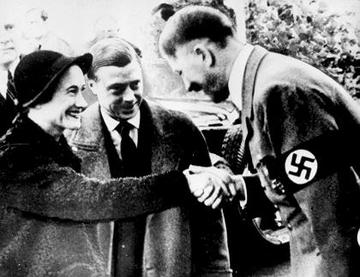
Take our present sovereign, Queen Elizabeth II. When she was born very few people believed she would inherit the throne. Her uncle, Edward, Prince of Wales, was heir apparent and was duly proclaimed King-Emperor upon the death of his father, King George V, in 1936. We are all extremely lucky that Edward VIII was nowhere near as clever as he was selfish, vain and irresponsible. Had he been as smart as his youngest brother, George, the Duke of Kent, he could well have turned the constitutional crisis arising out of his determination to marry Mrs Wallis Simpson into an opportunity to establish a fascist monarchical dictatorship. He would certainly have been able to count on a great deal of public support, not to mention the solemn oaths of loyalty sworn to his person by the armed forces and the police.

Democracy’s stocks were not very high in 1936, and the Windsor’s connections with Hitler’s Nazis were much stronger than they now care to admit. The Duke of Kent, in particular, moved freely in the highest Nazi circles. He was convinced that the British Empire could not survive another war with Germany. had he ever been in a position to do so, he would have guarded Germany’s back while she demolished the Soviet Union, and thereafter remained confident of her support against the economic ambitions of the USA. It is not difficult to understand why the German Ambassador to Great Britain, Joachim von Ribbentrop, kept in such close touch with both the Duke of Kent and Mrs Simpson.

Dangerous Liaisons: Wallis Simpson and the former King Edward VIII are welcomed to Germany by Adolf Hitler.

Had King George VI named Lord Halifax, and not Winston Churchill, prime minister in 1940, exactly the same calculations that made life for the surviving members of the Plantagenet dynasty so precarious during the reign of Henry Tudor would have been made about both himself and the little princesses, Elizabeth and Margaret. For there is no disputing the fact that, in the first six months of the war, a substantial “fifth column”, committed to making peace with the Nazis, florished in Britain – especially among the aristocracy. A negotiated peace with Germany could very easily have seen Edward VIII restored to the throne – leaving the erstwhile King George and his family to the tender mercies of a triumphant Adolf Hitler.

So, we are, indeed, extremely fortunate that Edward VIII was not equal to the many political opportunities that came his way. And, by “we” I certainly refer to New Zealand. Because you may be absolutely sure that if Great Britain had signed a peace treaty with Germany in mid-1940, our own government, and the governments of Canada, Australia, and South Africa, would have ceased hostilities immediately. And if, in a fit of madness, Peter Fraser had attempted to carry on the fight (counting, perhaps, on help from the United States) then it is certain that the new King-Emperor’s representative in New Zealand, the Governor-General, Viscount Galway GCMG DSO OBE PC, would have dismissed the Labour Government from office and invited the National Party leader, Adam Hamilton, to form a new ministry.

This is, of course, a very long way from the version of constitutional monarchy peddled by Dr Sean Palmer, Chair of Monarchy New Zealand, who shills for the hereditary principle on the grounds that it offers a much more stable foundation than popular election when determining a nation’s head-of-state.

His argument boils down to a recitation of those mostly European countries whose heads of state are kings and queens. Do you see how stable and non-threatening Norway, Sweden, Denmark and the Netherlands are? asks Dr Palmer. That has nothing to do with the democratic character of their politics, the homogeneity of their populations, or the pluralistic nature of their societies. No, no, no! It’s because their heads-of-state were raised to that office not by virtue of their talent, their courage, their generosity or their contribution to their fellow human-beings, but because they were clever enough to choose royal parents.

This is the same Dr Palmer who told Radio New Zealand’s Queen’s Birthday host, Richard Langston, that his homeland, Canada, and New Zealand had very similar constitutional arrangements. I suppose you could make out a case for that proposition – providing, of course, you set aside the fact that Canada has a written constitution, a bi-cameral parliament and a federal system of provincial governments. Apart from these small and inconsequential constitutional differences, Canada and New Zealand are practically identical!

We are, however, alike in being ruled over by a Governor-General (when Her Majesty isn’t going walkabout) and so I would have expected a constitutional expert, like Dr Palmer, to have had something intelligent to say about the Canadian Governor-General, Michaelle Jean’s, egregious failure to uphold the principle of parliamentary sovereignty.

Egregious Failure: Canada's unparliamentary sovereign, Governor General, Michaelle Jean.

Her 2009 decision to prorogue the Canadian House of Commons, thereby preventing it from debating a No Confidence motion in the Conservative Government of Stephen Harper, was made in defiance of the near unanimous opinion of Canada’s leading constitutional experts. Like the Australian Governor-General, John Kerr’s, decision to dismiss the Whitlam Labour Government in 1975, Jean’s abrogation of democratic norms lays bare not the stability, but the capriciousness, of “constitutional” monarchies, and demonstrates how extremely vulnerable their “subjects” are to the anti-democratic proclivities of these unelected heads-of-state.

All constitutional questions turn on the direction in which one believes power ought to flow: from the top to the bottom; or from the bottom to the top? It is quite impossible to cast monarchical institutions as anything other than top-down and, hence, profoundly undemocratic.

The “honours” announced to mark the sixtieth anniversary of Elizabeth Windsor’s coronation, provide stark proof of just how corrupting service to such monarchical institutions can be. In addition to a union-buster and a neoliberal hatchet-woman, Prime Minister Key has announced that the Duke of Edinburgh, Phillip Mountbatten, the man the late Chris Hitchens memorably described as “a dingy fascist”, has been made a member of the Order of New Zealand. Worse than this, however, was the news that Dr Michael Cullen, the man who taught me about the Levellers and the Diggers, Oliver Cromwell and the Putney Debates, has accepted a knighthood.

I felt a great wave of shame wash over me on his behalf. Could this be the same man whose university office once boasted a full-size poster depicting humanity’s putative parents above the revolutionary slogan of the English Peasants Revolt of 1381?

 
May my vanity and pride never play me so false, Dr Cullen. Rather, let me invoke on this, Queen's Birthday holiday weekend, the spirit of Oliver Cromwell’s plain, russet-coated troopers; whose contribution to human liberty a younger Michael Cullen once kept fresh; and cry out again, with a great voice:

“Long live the Republic!”

This posting is exclusive to the Bowalley Road blogsite.

Friday, 22 January 2010

Bonnie King Billy

Sucession Planning: Skipping a generation and proclaiming Prince William the next King of New Zealand is the Kiwi monarchists' best bet when it comes to preserving the institution in this country. Can't be done? Of course it can! Just take a look at English history.

WHY NOT KING BILLY? Seriously. It would make the monarchy interesting again – and God knows it needs it!

The alternative is Keith Locke’s worthy (but dull) Head-of-State Referenda Bill, which, if it becomes law, will almost certainly deliver some worthy (but dull) former judge or prime minister (Dame Sylvia Cartwright. Jim Bolger? Helen Clark!) as New Zealand’s first president.

No, if the monarchists are serious about preserving our current constitutional monarchy, HRH Prince William is their best bet.

Now before you all object that we have to endure King Charles III before we can enjoy King William V, let me just say this: Bollocks!

Strict succession has never been the English way. In fact it’s probably not drawing too long a bow (as the popular British historian, David Starkey, has done already) to suggest that the kings and queens of England have always governed by the consent of the English people.

It is certainly true that those who have attempted to rule the English without first obtaining their assent have not had an easy time of it. Duke William of Normandy (not unreasonably known as "The Bastard") was shrewd enough to realise that, his victory over King Harold at Hastings notwithstanding, he wouldn’t be able to govern England effectively without first getting the thumbs up from the English themselves. This they duly gave (no doubt with one eye on those sharp Norman spears).

King William I’s grand-daughter, Matilda, on the other hand, tried to assume the throne without the people’s assent, and learned the hard way that it’s always polite to ask first. Her cousin, Stephen, did just that – and became King.

England’s disdain for the strict rules of succession were again on display with the accession of King William III – who was a Dutchman. The "rightful" monarch of England was the Scotsman, James Stuart – younger brother of the late King Charles II.

Now, given the fate of James’s dad (whose failure to properly grasp this popular consent business left him shorter by a head) and the political caution of his brother, one might have expected James to pull his head in a bit. When he failed to do so, the English staged what they called "The Glorious Revolution of 1688" and called in James’s sister Mary, and her husband, William of Orange – the original King Billy, saviour of Protestant Ireland – to fill the vacancy.

The truth of the matter is that the English have never been content to suffer bad kings either gracefully, or for long. King Edward II, for example, who struck both the nobility of England (and his randy French wife, Isabella) as having a personality that was (how to put this delicately?) a little too – artistic – was forced (mostly by Isabella’s ambitious boyfriend, Mortimer) to abdicate in favour of his son.

Poor old Richard II (another "artistic" king) was deposed by his cousin, the rip-snorting Henry Bolingbroke. A similar fate overtook Henry VI, Edward V and, of course, the horse-less Richard III.

The last king called William (known by one and all as "Silly Billy") very nearly brought the English monarchy to an end. Had it not been for the star quality of his niece , Victoria, and the political savvy of her German husband, Albert, Great Britain might well have become a republic about the same time New Zealand became a colony.

So, you see, there is really no reason why, in the Realm of New Zealand, we shouldn’t take a leaf out of the Realm of England’s historical play-book and simply inform Prince Charles that his services here, as King, will not be required, and that, upon the death of his dear old Mum, he must relinquish his New Zealand throne in favour of his son, William. In fact, if the English themselves have got any sense (and we’ve seen that they do) that’s exactly what they will demand.

Flipping steaks on the barbie, and sucking down a few cool ones under Godzone’s searing summer skies, sounds lots more fun than enduring forty more dreary English winters waiting for Daddy to pop his clogs.

So come on Prime Minister, introduce your own "Royal Succession Bill" and turn HRH Prince William into our very own "King Billy".

If he refuses his antipodean subjects, he’ll be effectively declaring the New Zealand Republic.

President Helen Clark – anyone?

This essay was originally published in The Dominion Post, The Timaru Herald, The Taranaki Daily News, The Otago Daily Times and The Greymouth Evening Star of Friday, 22 January 2010.