Showing posts with label Magic. Show all posts

Friday, 23 September 2022

The Magic Of Monarchy

Grief is the price we pay for love.”  –  Queen Elizabeth II 

IT WAS HEART-BREAKING. It was heart-warming. It was as contemporary as a smartphone. It was as old as the Middle Ages. It was the antithesis of democracy. It was what the people wanted.

The Queen, at 96, has passed away, but what remains is older still. And what remains is the deep, deep magic of monarchy.

So many people, when asked by reporters why they had come to pay their last respects to Elizabeth II, confessed to being baffled. Some even owned up to being republicans, and yet, here they were, waiting in a queue for nine hours, for just a few seconds in front of the catafalque.

Anyone who has witnessed a hypnotist’s on-stage performance would immediately have recognised their condition. Quite simply, monarchy had mesmerised them. They were under its spell.

How else to explain the numerous heads-of-government and heads-of-state who consented to being driven by bus to Westminster Abbey to pay their last respects to this doughty woman – a curious mixture of primness and joy – who, wholly enthralled to the ideal of service, had redefined the meaning of leadership. Constitutionally powerless, Elizabeth II was also astonishingly powerful. Would so many world leaders have turned out to offer the tribute of their presence to a woman who wasn’t?

No leftists worthy of the name would concede any of these points. They would argue that all rational persons long ago abandoned the intellectually bankrupt notion of hereditary rule. Nations committed to democracy, they’d say, cannot in good conscience accept even a constitutional monarchy – not if they are genuinely committed to the idea that all human-beings are born equal in rights and dignity. Monarchy is the conceptual and political enemy of equality, and democracy is equality in action.

Understanding how the Left came by its aversion to hereditary rule isn’t difficult. It was no fun being a commoner in an aristocratic society. You were stuck at the bottom of the heap in a world constructed to keep you there. If you spoke up, you were slapped down. If you lifted a hand against the established order, you were hanged by the neck until you were dead. Short of rebellion, there was no way of improving the lot of people like yourself. Political power could not be earned, it could only be inherited. “Born to rule” wasn’t just a cheap political jibe, it was an accurate description of the constitution.

At the end of the American Civil War, emancipated slaves liked to tease the soldiers of the defeated Confederacy by shouting out: “Bottom rail on top!” Human-beings who had been treated as beasts of burden, were now citizens with rights. The racist world of the American South had been turned upside down.

But this triumph of equality and democracy: “government of the people, by the people, for the people”; was short-lived. Abraham Lincoln’s famous summation of democracy overlooks the inescapable fact that “the people” are not a homogeneous mass. Some of the people want one thing, and some of the people want something else. You can count votes to determine who gets what, but you can’t make the losers like the final result.

Democracy works well when the stakes are low. But raise the stakes and watch democracy come apart at the seams. One way or another, the head-of-state of a republic takes office through a process of election. Chose a president when the political stakes are dangerously high, and the legitimacy of the winner will, inevitably, be questioned by the loser – and his followers. We have seen it happen with Donald Trump, we will likely see it again if Jair Bolsonaro loses the Brazilian presidential election.

Watching the final moments of the Queen’s funeral, it was impossible not to marvel at the complex simplicity of constitutional monarchy. With the line of succession decided, there was no argument about who would replace Elizabeth II. Nobody had to stand for the office of monarch. No party had to lick its wounds and mutter darkly about a “rigged” election. The transfer of power from Mother to Son was instantaneous and seamless. Moreover, the power transferred was of an apolitical nature.

As the Lord Chamberlain broke in twain his wand, and a lone piper skirled his lament through the lofty majesty of St George’s Chapel, it was clear that magic – and monarchy – had prevailed.


This essay was originally published in The Otago Daily Times and The Greymouth Star of Friday, 23 September 2022.

Friday, 5 August 2022

In A Wizard's Garden.

In The Wizard’s Garden: George Dunlop Leslie, 1904

IT ALL SEEMS so long ago now, and, to be fair, in human terms, 48 years is a long time. New Zealand was a different country in 1974. Someone unafraid of courting controversy might say it had achieved “Peak Pakeha”. Although the Labour Government of Norman Kirk had struck out boldly in the direction of a truly independent foreign policy: recognising “Red China”, and sending a New Zealand frigate to “observe” (but really to protest) the French nuclear testing at Mururoa Atoll, this was still a very “European” place. In the South Island, particularly, the two largest cities – Christchurch and Dunedin – had been built to look as though they were founded in the Middle Ages – not the mid-Nineteenth Century.

Born and bred in the South Island, I had not been back there since 1969, when the family moved to Heretaunga in the Hutt Valley. Barely 18, and in search of – well, I wasn’t quite sure – I boarded the Union Steamship Company’s inter-island express steamer, the TEV Rangatira, and sailed south to Lyttleton. Yes, that’s right, Lyttelton. Forty-eight years ago it was still profitable to run a ferry service a wee bit further than Picton. I’ve seen many beautiful places since that journey in 1974, but none of them could match for sheer wonder sailing up Lyttelton Harbour on a brisk Autumn morning, as the sun came up behind the Rangatira’s stern and bathed the hills and houses in a magical golden light.

Magical, yes, that’s the word. Magic is what this essay is about. The magic of art and memory.

It was on that journey south, in the autumn of 1974, that I first encountered George Dunlop Leslie’s mysterious painting, “In The Wizard’s Garden”. It was hanging in the Robert McDougall Art Gallery, situated behind the Canterbury Museum in Christchurch’s splendid Botanic Gardens. Leslie’s painting stopped me in my tracks. The room in which it hung was deathly quiet, I was the only person in it, and I felt myself drawn to it like Edmund and Lucy in C.S. Lewis’s “Voyage of the Dawn Treader”. The melancholic gaze of the young woman, the painting’s principal subject, held me spellbound. Who was she? Where was she? And who was the dark figure striding through the garden’s narrow gate?

I can’t remember registering the artist’s name. If I did, then I soon forgot it. But the painting itself, its eerie stillness and its disconcerting sense of menace – that I did not forget. Passing through Christchurch many times in the latter half of the 1970s, I always made a point of making my way to that quiet room, and to the half-sad, half-challenging gaze of the young woman in the garden, and the dark figure who kept her there.

Until the day came when I entered the room and found Leslie’s painting had been replaced by another. Not unusual, of course, for art galleries to rotate the works in their collections, but I was devastated. “In The Wizard’s Garden” had become a kind of talisman, a corporeal reminder of a time in my life when magic seemed very close. It’s removal struck me as both a judgement and an instruction: time to put away childish things. But, the child in me preferred Leonard Cohen’s poetry:

Magic is afoot
It cannot come to harm
It rests in an empty palm
It spawns in an empty mind
But Magic is no instrument
Magic is the end


And so the years passed, and New Zealand changed, and I changed with it. Magic seemed very far away indeed in the narrower and more materialistic nation we had become. If I thought of the painting at all, it was only as a symbol of what had been lost. Our culture had become much less European and much more global in its focus. This was thought to be a good thing. A better thing, though, was the indigenous culture of the Māori, unfurling from the cracks in the colonisers’ concrete, and shimmering with a magic all its own.

And then, just a few weeks ago, I saw it. No more than a tiny circle of colour beside Lynda Clark’s Twitter handle, but the human brain is a marvellous thing and mine instantly recognised the sad figure of the young woman in the red dress. Not hesitating for a moment, I messaged Lynda and shared with her my longstanding fascination with the image she had chosen. Turns out I wasn’t the only person enchanted by Leslie’s painting: Lynda, too, had visited it whenever she could, transfixed, like me, by the young woman’s soulful gaze.

It was Lynda who supplied me with the artists name and the painting’s title. (I had thought it was called “The Magician’s Garden” – which was close, but not close enough for Google Images!) With the correct details, the Internet flooded me with images and information.

According to the Christchurch Art Gallery:

“In response to the adverse impacts and uncertainties of the industrial age, many late Victorian and Edwardian British artists were drawn to somewhat escapist historical or literary themes. Lavishly displaying this tendency, George Dunlop Leslie’s In the Wizard’s Garden was first shown at the Royal Academy in 1904, and in New Zealand at the 1906–07 Christchurch International Exhibition. Because the painting puzzled visitors, Leslie was asked for an explanation of its meaning. Its unhappy subject was a young medieval noblewoman who had sought an alchemist or wizard’s guidance to discover the secrets of the future. The theme originated from American writer Nathaniel Hawthorne’s ‘Rappacini’s Daughter’, a macabre tale featuring a garden filled with poisonous plants. The setting of the painting was, however, English rather than Italian: it is known to be based on Leslie’s own garden in Wallingford, Oxfordshire. London-based, former Dunedin merchant Wolf Harris, a friend of many leading artists, bought the work almost as soon as it arrived in Christchurch and then gifted it to the Canterbury Society of Arts.”

The secrets of the future, ah yes, that is the stuff of wizardry. For me, however, the joy of being able to look again into the wizard’s garden served only to unlock memories of the past. Like the works of those Victorian and Edwardian artists among whom Leslie’s skills shone so brightly, the New Zealand of 1974 strikes me now as an elaborate lie, designed to protect its Pakeha inhabitants from the “impacts and uncertainties” of their inescapably Pacific destiny.

The Christchurch I arrived in that autumn morning in 1974 is no more, shaken to bits by the constantly moving tectonic plates upon which Aotearoa does its best to stand upright. “God is alive, magic is afoot”, wrote Leonard Cohen. “It moves from hand to hand”. And it is moving now. Perhaps, in her half-sad, half-challenging way, the young woman in the wizard’s garden is urging us to step, finally, beyond its enchanted walls, and discover who, and where, we really are.


This essay was originally posted on The Daily Blog of Friday, 5 August 2022.

Thursday, 13 January 2022

Disenchanted.

Another World: Oamaru’s whitestone Victorian Precinct is an enclave for aging alternative life-stylers. The air is filled with the scent of patchouli and hand-crafted leather. There are troll figurines and fairies for sale, alongside crystals and dream-catchers.

OAMARU likes to think of itself as the “steam-punk” capital of the world. It certainly has plenty of the whitestone Victorian and Edwardian architecture needed for such a project. It has also made room for the requisite collection of amiable eccentrics and creatives required to flesh-out the standard steam-punk narrative. As harmless games of dress-up go, Oamaru’s make-believe world seemed quirkily benign.

But, that was before Covid.

Walking around the North Otago town’s “Victorian Precinct” in early January, the anti-vaxxer vibe was unmistakable. It wasn’t just the signs welcoming “everyone” into the market stalls and boutiques that gave the anti-vax sentiment away, but the defiant stares their owners levelled at the tourists. Some of the retailers almost seemed to be daring the out-of-towners to make an issue of the fact that their QR codes had mysteriously gone missing.

Not that many visitors would have “made an issue” out of it – any more than a Springbok Tour protester would have “made an issue” of apartheid sport in a public bar back in 1981. Wrong sort of place. Wrong sort of people.

Oamaru’s whitestone Precinct is an enclave for aging alternative life-stylers. The air is filled with the scent of patchouli and hand-crafted leather. There are troll figurines and fairies for sale, alongside crystals and dream-catchers.

In the North Otago artist Donna Demente’s “Grainstore Gallery” it is difficult to resist the whiff of magic that permeates not just her paintings and papier mâché sculptures, but all the weird and wonderful nineteenth and twentieth century bric-a-brac among which her artworks nestle. For all its steam-punk machinery, the Precinct smacks more of Pre-Raphaelite sorcery and enchantment than Victorian science.

Donna Demente’s “Grainstore Gallery”, Victorian Precinct, Oamaru.

The intrusion of QR codes and Vaccination Passes into this world was never going to be welcomed with open arms. Even among the vaccinated, one suspects, there would have been a strong sense of disappointment. Like when some kill-joy suddenly turns on the electric lights at an intimate candle-lit party.

Covid-19 must have burst into the Precinct with all the sensitivity of a drugs bust. Rules and regulations, masks and jabs, and precious little tolerance for those whose understanding of health and wellbeing embraces wholesome food, sunlight, and midnight swims with dolphins. The eccentric steam-punk scientists may have accepted the rationality of mass inoculation, but a significant number of the hippies and herbalists clearly remain unconvinced.

Magic only works in circumstances where people are willing to suspend their disbelief and set their imagination free. The possibility of catching a dangerous disease – even among the ornate “Oamaru stone” facades of the Precinct – is simply not conducive to turning-on, tuning-in, and dropping-out of the workaday world.

What Covid meant was that just about everybody suddenly stopped “playing”. The childlike wonder which had been the common currency among those who stepped across the invisible boundary separating twenty-first century Oamaru from its nineteenth century forerunner was replaced with the impatience and intolerance of visitors determined to “stay safe”.

No wonder the aging hippies and herbalists, funky craftspeople, magical artists, and amateur baristas felt affronted and disrespected. No wonder some of them felt compelled to make a stand against the rules and regulations pouring out of Wellington.

And if the cotton-print stall-holders and bearded wood-carvers glared with barely concealed hostility at the loud and decidedly unenchanting Aucklanders – who could really blame them?


This essay was originally posted on The Daily Blog of Thursday, 13 January 2022.

Wednesday, 23 August 2017

A Song For The Times.


Leonard Cohen wrote it.
Buffy Sainte-Marie sings it.
 
God Is Alive, Magic Is Afoot


Video courtesy of YouTube

 
This posting is exclusive to Bowalley Road.

Tuesday, 22 August 2017

Pure Magic! Jacinda Ardern Launches Labour's Election Campaign.

Magic-Woman: The mantle of success has already been draped over Jacinda’s shoulders. Victory advances towards her with arms outstretched. Her followers are convinced they know how this year’s election is going to end. She has filled them to the brim with hope. That’s the Magic – that’s the trick. Photo by JOHN MILLER
 
THAT JACINDA ARDERN has the “Magic” is not now in dispute. Labour’s campaign launch proved it many times over. Not only in terms of the 200m-long queue stretching back from the Auckland Town Hall doors. Not only because the whole event went off without a hitch. Not only because Jacinda’s speech was an absolute blinder. The Magic resides in the fact that everyone involved in the launch: the organisers, the media, the audience itself; had turned up anticipating a triumph.
 
The mantle of success has already been draped over Jacinda’s shoulders. Victory advances towards her with arms outstretched. Her followers are convinced they know how this year’s election is going to end. She has filled them to the brim with hope. That’s the Magic – that’s the trick.
 
The enormous significance of political magic is made clear principally by its absence. None of Jacinda’s four male predecessors had it. Contact lenses and a new haircut couldn’t make it appear. Speechwriters working in shifts couldn’t summon it. Focus groups couldn’t even tell the party where to look for it. But no Labour member; no Labour voter; had the slightest difficulty understanding that the Magic was passing them by.
 
Because, without the Magic, the party’s leaders were just so many talking heads; and its policies just so many (so many!) words on paper. They could be wheeled out in front of the public, but the public couldn’t be persuaded to notice them. Promises to do good things could be announced, re-announced, and then announced all over again – and, still, nobody believed them. Absent the Magic, why should they? The party was never going to be in a position to make them happen.
 
But, oh, what a difference, when the Magic finally appears! First, there’s the shock of recognition. In Jacinda’s case, that came just a few seconds into her first media conference as Leader. No one had addressed the Press Gallery with such effortless authority since the departure of Helen Clark in 2008. The journalists all thought they knew Jacinda Ardern, but they were wrong. The Jacinda Ardern with power was a very different person from the Jacinda Ardern without it. That mysterious and indefinable “gift of grace” – kharisma in Ancient Greek – had taken up residence in Jacinda Ardern, and she was changed.
 
No call now for tedious recitations of party policy. When the Magic is with you people don’t want to know the details of any particular reform, they want to know its purpose. And that’s what this sudden infusion of charisma has done for Jacinda. It has enabled her to communicate the passion and the urgency of her intentions with striking clarity – as when she declared Climate Change to be her generation’s “nuclear-free moment”.
 
Page after page of earnest policy proposals could never have achieved the political impact of that single sentence. Like David Lange’s in/famous quip that “you can’t run a country like a Polish shipyard”, Jacinda’s “my generation’s nuclear-free moment” political marker discloses a potent combination of emotion and aspiration. Not the least of which is her clear determination to not only participate in History, but to shape it.
 
This essay was originally posted on The Daily Blog of Monday, 21 August 2017.

Tuesday, 11 June 2013

The End Of Merlin: Or, Was Dunne Done-in?


No Fool Like An Old Fool: In the Arthurian legend of Merlin and Vivien, the old wizard's infatuation with Vivien, a young lady of the court, leads to his downfall. The story of Peter Dunne's fall from grace bears a very similar shape and feel.
 
THE SELF-DESTRUCTION of Peter Dunne has unfolded with the dream-like logic of our oldest and unhappiest myths. How could the master shape-shifter have got it so wrong? Made so many mistakes? Let down his guard so foolishly?
 
These are questions Mr Dunne himself found it difficult to answer. Indeed, at the press conference announcing his resignation from John Key’s ministry, the Member for Ohariu observed more than once that he could offer no “rational” explanation for his behaviour.
 
Throughout his encounter with the assembled media pack on Friday afternoon, Mr Dunne maintained an extraordinary dignity and clarity. It was almost as if he was discussing the behaviour of another man – one he barely recognised as himself. Again and again, he denied leaking the Kitteridge Report on the GCSB. It was at home, he said, in his study, in a locked briefcase. But, yes, he had discussed leaking the report with Fairfax Media’s parliamentary correspondent, Ms Andrea Vance.
 
He sounded like a man bewitched.
 
More than one journalist has hinted that Mr Dunne’s fall owes almost as much to Ms Vance as it does to the man himself. Between 30 March and 7 April, the politician and the journalist exchanged more than 64 e-mails. It was to preserve the confidentiality of these exchanges that the Minister was ultimately moved to tender his resignation.
 
These extraordinary events have the shape and feel of a very old and tragic tale. The bones of the story may be found in the mythology of every culture, but I first encountered it in the legends of King Arthur and the Round Table. There it is called the tale of Merlin and Vivien.
 
In the words of Alice M. Hadfield, whose 1953 version of the Arthurian legends I grew up with as a child: “Merlin the Wizard was a wise man nearly all his life, but when he was old he fell into foolishness.”
 
Unwisely, for a person so high in King Arthur’s esteem, he allowed himself to become bedazzled by Vivien, a young lady of the court. “He became quite crazed about her, followed her about everywhere, and told her any secret of his magic she wanted to know.”
 
Though initially “flattered and excited by his attention”, the young woman soon discovered that it was not “altogether comfortable to receive so much devotion from a wizard, and after a time Vivien became very tired of it.”
 
This was hardly surprising since Vivien had been raised under the guidance and protection of another magician. An ominous development because, as Ms Hadfield delicately puts it: “One wielder of magic seldom likes another, and Vivien had grown up to have no love for Merlin.”
 
Merlin’s end came when he invited Vivien to view the treasures hidden in a subterranean cave whose concealed entrance only he knew the whereabouts. Allowing the old wizard to lead her to the cavern, Vivien waited until he was well inside before sealing up the entrance with an incantation Merlin himself had taught her.
 
“Only the person who had said the word could say the other word which would undo it”, writes Hadfield. “Merlin is sealed up in the earth by his own folly and pride till all spirits meet before their Ruler.”
 
Such is the tale of Merlin and Vivien, which, I’m sure you now agree, bears a not unfamiliar shape and feel – even to us, who dwell at several centuries remove from the Middle Ages.
 
For there is much in politics that still carries the whiff of magic. How is it possible that those blessed with every conceivable political advantage fail so abysmally to spark the public’s interest? Why do the voters flock to politicians so bereft of wisdom or imagination? From whence do the words and phrases that inspire nations arise?
 
These matters are not described as “the dark art of politics” for no reason.
 
Few would dispute that, until very recently, Mr Dunne’s career bore all the hallmarks of a master political magician. To have shifted with such ease from Left to Right, and then, without disturbing a hair of his trademark coiffure, from Right to Left, and back again to Right, he must surely have mastered the elements of more than a few political incantations.
 
But he is not the only powerful magician at the court of King John. And, as Ms Hadfield has told us: “One wielder of magic seldom likes another”. It may have been Ms Vance’s own magic that persuaded Mr Dunne to contemplate (at the very least) sharing secret information with her newspaper, but we would be foolish to rule out the possibility that she was working with more than just one political wizard.
 
Speaking on TVNZ’s Q+A, Winston Peters observed: “There’s no fool like an old fool.”
 
Nor, it would seem, an old tale.
 
This posting is exclusive to the Bowalley Road blogsite.

Wednesday, 13 October 2010

Grandfather's Sword (Reflections on the Te Papa Controversy)

Respecting Family Treasures - and Maori Taonga: My Grandfather's sword (just visible below his elbow) now rests in the Oamaru Museum, where I trust it will continue to be accorded the same deep respect it always demanded - and received - from my family. Photograph of Captain William Marshall, Otago Mounted Rifles, courtesy of Margaret E. Trotter (nee Marshall).

CAN WEAPONS OF WAR inflict harm – even when they’re not in use? When displayed in a glass case in a museum, are greenstone mere and taiaha to be classified simply as "inanimate objects" – archaeological "artefacts"? Or are they something more than that? Something quite capable of harming any pregnant or menstruating woman who draws near?

Do weapons have a life of their own? That is the essense of the controversy currently swirling around the Museum of New Zealand - Te Papa. (See here and here.)

According to Maori cosmology the answer is a most emphatic "Yes." Any weapon that has shed blood, taken life, is imbued with tremendous spiritual force. It partakes not only of the life force of the person it was used against, but also of the spirit of the warrior who wielded it and of the craftsman who fashioned it. In the Maori world, weapons are objects of power. Touching them – even approaching them – is fraught with danger.

It is for this reason that pregnant and menstruating women are enjoined to remain at a safe distance from these potentially harmful objects. An instrument of death: shaped for violence, guided by anger, steeped in pain and suffering; should not be permitted to come anywhere near the bearers of life – or the sacred blood that nourishes it.

Those who embrace the scientific method will bridle at such notions. Things of stone and wood become dangerous only when manipulated by the hand and brain of Homo Sapiens. When not under conscious human direction mere and taiaha are harmless lumps of matter: nothing more, nothing less.

To those who subscribe to the core values of secular humanism, Te Papa’s tacit endorsement of Maori cosmology must also seem outrageous.

In the modern secular state, religious belief and practice is relegated strictly to the private sphere. In the public sphere reason alone is supposed to prevail. And reason dictates that differences of gender and ethnicity must in no way detract from the democratic rights and duties of free and equal citizens. To allow animist superstition to in any way prevent women – regardless of their reproductive condition – from exercising their civil rights is the nearest thing to a "sin" that secular humanism will allow.

All right and proper, I suppose, but it is very … well … thin.

We should never forget that the triumph of 18th Century Enlightenment values was challenged almost immediately by the much more visceral cultural impulses of Romanticism. Reason and science may have released us from the grip of religious obscurantism and superstition, but it also cast us adrift in a world stripped bare of meaning and mystery.

Very few human-beings are able to thrive in such a barren emotional environment, which is why so many people respond to and take comfort in what Science would undoubtedly reject as the irrational manifestations of fear and awe.

Like the mysterious power of weapons.

My Grandfather was an officer in the Otago Mounted Rifles who fought in the Boer War.

On the wall above our beds, as we were growing up, my brother and I could see the Mauser rifle Captain William Marshall had brought back with him from South Africa. It was a splendid example of German precision engineering – long and heavy and absolutely deadly. On the rifle’s stock its original owner had carved his name: "Van Rijn".

I can’t tell you how often I stared at that weapon, wondering about the man from whom my Grandfather took it as a trophy of war. Was it someone he had killed with his own hands? Or, did he prise it from Herr Van Rijn’s lifeless fingers in the aftermath of some forgotten skirmish on the High Veldt?

The spirits of both men seemed to me to linger in that rifle.

Invariably, whenever I lifted the weapon down from the wall, the hairs would rise on the back of my neck.

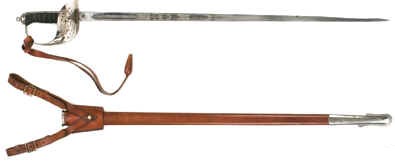
For true power, however, nothing came close to my Grandfather’s sword. It was kept in a special sheath of oilskin and only taken out on special occasions. The mixture of fear and awe that I experienced as a small boy as the long blade emerged from its leather scabbard is easily imagined.

For it was a thing of both beauty and power. Its greased blade was engraved with the most intricate filigree and just below the hilt a brass Star of David was inset. The initials of the King-Emperor, Edward VII, took pride of place on the finely-wrought guard to show at whose pleasure my Grandfather served.

It was a treasured heirloom of my family – a taonga filled with potent magic.

It rests now in the Oamaru Museum – where I hope it is accorded the same deep respect it always demanded – and received – from me. 

Friday, 17 April 2009

Seventies Pessimism (Fragment of a letter from December 1977)


LATE Thursday evening, approaching midnight, though Fergusson Drive still crowded with cars. This island never sleeps. Full moon giving the sky an unnatural brightness. Not a breath of wind.

This street on the right side of the road. Heretaunga, twenty miles out of Wellington. Old, established, oozing money and self-satisfaction. Home of businessmen industrialists and their whores, the lawyers and accountants.

Been here now for over a month. A lonely bird in a gilded cage. Miss the old town and the faces in it. Aching for A.

Writing to you now. Doesn’t do to neglect old friends. Caught up in the ego-race last year – kinda lost touch. We all make mistakes.

Your ideas are old-fashioned, definitely not hep, but sorta admirable in the burned out remains of our culture. Time for a prophet, no doubt. Someone to throw the money-changers out of the temple. Sure. But whose got that sort of magic up his sleeve these days?

We are dealing with forces beyond our comprehension.

The Lord of the Night has spread his cloak wide and the Sun itself is on the defensive. Black holes sucking the light out of the universe. The Powers of Darkness definitely on the offensive. Arab/Japanese cloak-and-dagger deals behind closed doors. Baader-Meinhoff unleashing fire and slaughter, even as they die.

Bad magic W. Powerful spells.

The Wizard must know – but what are we to do?

Back in the dark days of 1940 the witches and wizards of England met in the New Forest and raised the Cone of Power to repel the German invaders. The spell succeeded, but in casting it the Keepers of the Power destroyed themselves.

For, you see, there is no contest between Good and Evil. Evil has all the cards in his hands. To throw back the Nazis, English wizardry had to use its entire strength. Now the power of England is broken. Those that protected and fed the English flame for so long are spent, and the continent of Europe has finally retrieved her wayward islanders. Long live the EEC and German social-democracy!

You catch glimpses of it sometimes. The Plan. Unfolding itself with all the inevitably of Death, the Grim Reaper, striding heaven-high between clouds, and laughing like a thunder-storm.

On the journey North I travelled by night across the Canterbury Plains. And all along the spine of the island, flashing off the faces of the Alps, burned wildfire - leaping and flickering from mountain-top to mountain-top, shattering the darkness in glaring white bursts.

Fantastic!

Sent me back to my childhood in North Otago. Past and present running together. A living continuum.

And me, watching this awesome display, my nose pressed to the window of a Datsun 120Y. (Japanese car, Arab oil!) On my way North in the middle of the night. Heading for what is now my past. Towards this letter which will travel the path I followed backwards to you.

All linked W.

Everything.

Nothing done in isolation.

We’re all assigned our role. All play our parts.

And the Plan unfolds.