Showing posts with label NZ Police. Show all posts

Wednesday, 29 March 2023

An Ugly Demonstration.

Mobbed! As Kellie-Jay Keen-Minshull’s (Posie Parker’s) opponents surged forward, her only protecters were a handful of burly security guards who surrounded their client and began forcing a path through what was now a howling mob. At least one video recording shows the diminutive Keen-Minshull, a terrified rag-doll, eyes dulled by the effects of shock, being heaved past individuals with faces contorted by fury and hate.

WHAT SHOULD HAVE HAPPENED on Saturday morning, 25 March 2023, in Auckland’s Albert Park is easily described.

At 11:00am, Kellie-Jay Keen-Minshull (a.k.a “Posie Parker”) a small (just 155 centimetres tall) bottle-blond mother of four from the United Kingdom, would have stood behind the microphone set up in the Albert Park band rotunda and delivered a speech.

To a small crowd of about 250 people, she would have detailed her objections to transgender women (i.e. persons born biological males and, in some cases, retaining their male reproductive organs) having the right to enter spaces hitherto reserved for biological women and girls; being incarcerated in biological women’s prisons; and permitted to compete against human females in sporting events intended for biological women only.

Keen-Minshull would have been followed by a line-up of New Zealand speakers (most of them biological women and feminists) concerned about the linguistic erasure of their sex from official discourse (as in the expression “pregnant persons”) and alarmed at the efforts of transgender women and their supporters to silence the public expression of their concerns.

At a distance of about 50 metres, a much larger crowd of transgender persons and their supporters, safely corralled behind sturdy barriers, and a cordon of police officers, would have kept up a noisy barrage of objections to the content of the speakers’ speeches. Above their heads, banners and placards proclaiming their support for the rights of transgender New Zealanders would have been clearly visible to the “Let Women Speak” organisers in the rotunda.

The news media would have been there in force to record the confrontation for posterity. When the meeting came to an end, roughly 90 minutes later, and the crowds began to disperse, journalists would have been seen interviewing participants from both sides of the barriers for their media employers.

Spokespersons for the Transgender community would have set forth their objections to Keen-Minshull’s claims, drawing the journalists’ attention to the lack of evidence for any widespread abuse of women and girls by transgender women in toilets, changing-rooms, women’s refuges or prisons, and pointing out how extremely hurtful such suggestions are to the members of one of society’s most fragile and vulnerable communities. The journalists’ professional commitment to fair and balanced reporting would have ensured that the views of both groups were presented to the public.

By 2:00pm, Albert Park would again have become the preserve of Aucklanders enjoying a sunny autumn afternoon.


WHAT ACTUALLY HAPPENED on the morning of Saturday, 25 March 2023, bore very little resemblance to the civilised political ideal described above.

As Keen-Minshull stepped forward to speak she was physically assaulted by a person pretending to be a supporter. This attack caused the counter-protesters, estimated at more than 2,000, to surge forward, thrusting aside the flimsy barriers erected to separate them from the much smaller crowd which had gathered to hear the speakers. They were able to do this because there was no police cordon to enforce that separation. Within seconds, the counter-protesters were pressing in on Keen-Minshull’s audience, screaming abuse, hurling projectiles, and lashing out with fists and placards.

Fearing for the safety of Keen-Minshull and her audience, one observer implored a nearby police officer, who was looking on impassively, to intervene. He refused, allegedly declaring that Keen-Minshull: ‘is in a public space. If she feels unsafe she needs to leave’.

At this point, Keen-Minshull’s only protecters were a handful of burly security guards who surrounded their client and began forcing a path through what was now a howling mob. At least one video recording shows the diminutive Keen-Minshull, a terrified rag-doll, eyes dulled by the effects of shock, being heaved past individuals with faces contorted by fury and hate.

Only when the police present realised that if they did not place Keen-Minshull under their protection, then her bodyguards would be forced to exit the melee by driving through it in their own vehicle – with all the attendant risks to the counter-protesters’ health and safety such a manoeuvre would entail. Keen-Minshull was, accordingly, bundled into a police car and driven from the scene.

Not all the scheduled speakers were so lucky. This is how Ani O’Brien, from the group Stand Up For Women, described her experience:

No sooner had Kellie-Jay Keen-Minshull arrived at the Rotunda, a protestor (who had managed to get past the barrier) ran at her and threw a red substance all over her and a security guard. As she attempted to clean up, the protestors pushed over, crushed, and dismantled the barriers and swarmed around her.

At this point, I was caught in the angry crowd. I had whistles blown in my face, abuse screamed at me, and I was fearful for my own safety. This was nothing compared to what Kellie-Jay endured. She was trapped and surrounded by a mob screaming abuse and trying to get past her security guards.

Chris, there were no police in sight. Despite widely publicised threats of violence, the police were nowhere near the protest frontlines to prevent the event from devolving into chaos as it did. I had to call the police from the middle of the screaming crowd! And even then they weren’t particularly concerned that a woman was trapped in the midst of a mob determined to get to her.


Keen-Minshull’s rally was over before it had even begun – victim of the Thug’s Veto. Her right to free expression had been illegally and violently curtailed. Left in possession of the park, the elated counter-protesters took to Twitter to celebrate their historic victory over bigotry and hate.


WHAT ARE WE TO MAKE of the events of Saturday, 25 March 2023? The most urgent questions are those that will, over the coming days, be levelled at the Police. Who was in command? What intelligence did they have regarding Keen-Minshull and her increasingly vocal enemies? Why, in the face of credible threats to her person, was police protection denied to Keen-Minshull and her followers? Why, as the situation spiralled out of control, did the police officers present not intervene?

Predictably – and entirely appropriately – the Free Speech Union, has raised these issues in a letter to the new Police Minister, Ginny Andersen:

We call on you, and the Police Commissioner, to acknowledge the lack of action to defend the basic speech rights of those who turned up to the ‘Let Women Speak’ rally, and reassert that those who express unpopular or controversial views in public are entirely in their right, and deserve to be protected from threats, intimidation, and violence.

There will be considerable public scepticism, however, concerning the willingness of the Labour Government, and Party, to defend New Zealanders’ freedom of speech and assembly. There will be scepticism, also, that the Minister and her colleagues are any longer capable of perceiving the ethical issues which Saturday’s ugly demonstration laid bare.

All through the preceding week, Labour Ministers, Members of Parliament, and activist party members were telling those seeking to silence Keen-Minshull that, as far as Labour was concerned, they were doing the Lord’s work. In this they were echoed, even more vehemently, by the Greens. When the governing parties of the day publicly back a political movement, its followers may be forgiven for believing they have been given the green-light for coercion. The parliamentary Left did not balk at describing Keen-Minshull’s views as “abhorrent” and “incorrect”. Not quite in the same league as King Henry II’s “Who will rid me of this meddlesome priest!” – but close.

Perhaps the most disappointing aspect of this incident is the crucial role played by the mainstream news media in creating the preconditions for the violent suppression of free speech which ensued. Throughout the preceding week, journalists had denigrated Keen-Minshull – who describes herself as an “advocate for women” – as “an anti-trans activist” – finding her guilty, by association, of endorsing far-right, even Neo-Nazi, groups. That she, and people who shared her concerns, had a case to make was simply not acknowledged journalistically. In a synergy worthy of Putin’s Russia, the views of the Government, and the views of the mainstream media, had become interchangeable.

Certainly, the state media appeared incapable of perceiving the role it had played in the events of Saturday, 25 March. Television New Zealand’s Jack Tame even offered the violence unleashed by Keen-Minshull’s opponents as an ex-post-facto justification for denying her entry to New Zealand. In other words, allowing those threatening to exercise the Thug’s Veto to determine who should be allowed to speak in New Zealand, and who should not. Nothing could better illustrate the yawning generational gulf into which journalistic ethics has disappeared.

Over the next six months, the New Zealand electorate will discover just how effectively the parties of the Right are able to exploit the Labour-Green failure to uphold the Bill of Rights Act and the democratic polity it underpins. Chris Hipkins may soon regret that he did not step in immediately to set the political tone on Keen-Minshull. Because, whatever the reasons that set New Zealanders against one another so aggressively on Saturday, 25 March 2023, they had absolutely nothing to do with bread and butter.


This essay was originally posted on the Interest.co.nz website on Monday, 27 March 2023.

Friday, 12 March 2021

What Sort Of Technology Requires Clear Images Of People’s Faces – And Are The Police Still Operating It?

Facing The Worst: It was in May of 2020 that RNZ broke the news that the Police had been secretly trialling the Facial Recognition Technology manufactured by Clearview AI. According to RNZ, this trial had been undertaken without the knowledge of either the new Police Commissioner, Andy Coster, or the Privacy Commissioner, John Edwards. Clearview AI is the preferred option for hundreds of police departments in the United States.

IT SEEMS PERFECTLY OBVIOUS to me why the Police are stopping and photographing young Maori and Pasifika New Zealanders. Officers patrolling at street level are, almost certainly, recording and sending clear, full-face images of “potential future suspects” to a database linked to the facial recognition technology (FRT) which elements within the Police have been trialling. Because FRT is notoriously unreliable when it comes to identifying people of colour, it makes sense for the Police to be gathering highly-detailed images that can be scanned and registered, thereby making future identifications easier and more accurate.

It was in May of last year that RNZ journalist Mackenzie Smith broke the news that the Police had been secretly trialling the FRT manufactured by Clearview AI. According to Smith, this trial had been undertaken without the knowledge of either the new Police Commissioner, Andy Coster, or the Privacy Commissioner, John Edwards. Clearview AI is the preferred FRT of hundreds of police departments in the United States.

In the face of Smith’s revelations, the man who commissioned the trial, national manager of criminal investigations, Detective Superintendent Tom Fitzgerald, told RNZ that: “Police undertook a short trial of Clearview AI earlier this year to assess whether it offered any value to police investigations. This was a very limited trial to assess investigative value. The trial has now ceased and the value to investigations has been assessed as very limited and the technology at this stage will not be used by New Zealand Police.”

But had the trial ceased? According to Smith’s report: “Prior to the statement from Fitzgerald, police spokespeople told RNZ on two separate occasions in the past week – on 7 and 11 May – that the trial was still underway. A spokesperson later said these statements were incorrect.”

The plot thickened considerably when RNZ revealed that the Silicon Valley billionaire (and New Zealand citizen) Peter Thiel, whose Palantir electronic eavesdropping technology is an important weapon in the Five Eyes global surveillance arsenal, had been involved in the setting-up of Clearview AI. An important aspect of the company’s marketing strategy was its FRT’s supposed efficacy in identifying terrorist threats.

It is tempting to speculate that the NZ Police’s interest in Clearview AI had been prompted by the Christchurch Mosque Attacks of 15 March 2019. Following the tragedy, the public was highly critical of the Police, the Security Intelligence Service and the GCSB for their collective failure to identify the terrorist and prevent him from carrying out his murderous mission. The fact that the trial of Clearview AI had begun in January 2020 is certainly suggestive of a project that had its genesis several months earlier.

If this was, indeed, the initial motivation for the Clearview AI trial, then the Police’s surreptitious action is tinged with considerable irony. Smith, himself, had provided a link in his online story to a Huffington Post article excoriating Clearview AI as a refuge for far-right activists with views not too far removed from those of the Christchurch gunman. According to the HuffPost’s contributor, Luke O’Brien:

“Clearview is the most powerful form of facial recognition technology ever created, according to the [New York] Times. With more than 3 billion photos scraped surreptitiously from social media profiles and websites, its image database is almost seven times the size of the FBI’s. Its mobile app can match names to faces with a tap of a touchscreen. The technology is already being integrated into augmented reality glasses so people can identify almost anyone they look at.”

Small wonder, then, that Smith’s revelations prompted some pretty blunt speaking from the then Justice Minister, Andrew Little (who is still the Minister Responsible for the SIS and the GCSB).

“I don't know how it came to be that a person thought that this was a good idea”, Little told RNZ. “It clearly wasn’t endorsed, from the senior police hierarchy, and it clearly didn’t get the endorsement from the [Police] Minister nor indeed from the wider cabinet ... that is a matter of concern.”

Whether that blunt ministerial intervention was enough to stop the ongoing trialling of FRT is open to question. In December of 2020, RNZ (whose reporting of these issues has been truly outstanding) broke a story about Police officers stopping and photographing young people on the streets of Wairarapa towns. The question raised then was the same as the question being raised now: “Why?”

If, as the high-tech crime unit bosses had insisted back in 2020, Clearview AI “hadn’t worked”, and the whole FRT project had, consequently, been shelved, where were the images recorded by beat officers being sent?

They could hardly have been logged into the official Police database – this is reserved for people who have been arrested, photographed and fingerprinted. Information obtained from people who have been neither arrested nor charged suddenly showing up in official Police files would have immediately set off alarm bells.

Then – as now – the presumption was that the recorded facial images were being sent somewhere else.

Following Smith’s stories, Police Commissioner Coster had ordered a “stocktake” of where exactly the Police were at in relation to FRT: “Clearly, technology is moving really quickly”, Coster told RNZ, “and it has good and appropriate application in law enforcement. The trick is for us to make sure that we are doing that within the bounds of [the] Privacy Act.”

Well, yes, that is the “trick” isn’t it? – assuming, of course, that following the rules is your first priority. But is it really? Given that the stopping and photographing of young people – especially young Maori and Pasifika – is still going on, and that the Police Officers responsible are using a special app for the purpose, we have reasonable grounds to wonder.

The Daily Blog editor, Martyn Bradbury, has assembled an impressive list of the agencies responsible for preserving New Zealand’s national security. Among these are a number of special units operating within the NZ Police. Amassing data for the purposes of avoiding another terrorist attack is only one of the objectives of these secretive and, clearly, not-always-under-control intelligence and surveillance units. There are the gangs to monitor; the suppliers of methamphetamine and other dangerous drugs to identify; as well, of course, as any number of animal rights activists, eco-warriors and radical Maori nationalists to keep an eye on. It would be surprising, to say the least, if those running these shadowy outfits remain entirely indifferent to the contribution FRT could make to Police operations.

Maybe Clearview AI didn’t work, and maybe it did. Maybe that unauthorised FRT trial was shut down last year, and maybe it wasn’t. Maybe the collection of young people’s facial details is entirely innocent, and maybe it’s a bloody outrage. But, that’s always the problem when it comes to the activities of the Secret State, isn’t it?

You just don’t know.


This essay was originally posted on The Daily Blog of Thursday, 11 March 2021.

Tuesday, 21 April 2020

NZ Military Getting Ready To Aid The Civil Power.

Black Helicopters! Just because armed idiot misogynists hellbent on overturning the Covid-19 rules are feeling ever-so-slightly paranoid, doesn't mean the NZDF isn't out to get them!

IT WAS EASY to miss amidst the information overload of Lockdown at Level 4. A curiously thin news story, published by Stuff on 15 April, concerning “a routine military exercise” in South Auckland. The New Zealand Defence Force (NZDF) was keen to reassure people living in the area that the sound of gunfire, loud explosions and helicopters flying overhead were nothing to be concerned about. But, as is so often the case with NZDF media releases, that wasn’t the whole story – not by a long (and potentially deadly) shot.

Any government facing a crisis on the scale of the Covid-19 Pandemic will, at a pretty early stage in the proceedings, be briefed by their senior law enforcement and military advisers on how best to respond to a serious outbreak of civil disorder. For the likes of Jacinda Ardern and Grant Robertson this was likely to have been a sobering – and scary – experience.

The number of sworn police officers in New Zealand currently stands at around 10,000. The NZDF musters roughly the same number, 10,000, with a further 2,000 men and women in reserve. In other words, in a nation of just under 5 million, the state can call upon just 22,000 trained personnel to enforce its will. That’s one trained enforcer for every 227 citizens.

Obviously, the state’s best option, when faced with a serious outbreak of civil disorder, is to concentrate as many of its enforcers as possible at the scene. Equally obviously, those enforcers need to be trained and equipped to quell such disorder swiftly and decisively. To achieve this objective with a minimum of violence and injury, the first responders should ideally be police officers trained in crowd control – i.e. a “riot squad”.

This was the preferred option for maintaining law and order during the Springbok Tour protests of 1981, and it was highly successful. Only outside Eden Park on the final day of the Tour did the Police contemplate calling upon the military to aid the civil power. Armed naval personnel were mustered in readiness, but fortunately their services were not required. The “thin blue line” held.

Of course the overwhelming majority of anti-Apartheid protesters were law-abiding members of the New Zealand middle-class, and the main co-ordinating body of the anti-tour movement, the Halt All Racist Tours organisation (HART) was officially committed to non-violent civil-disobedience. That being the case, the highly-trained “Red” and “Blue” riot squads, equipped with visored helmets, metal shields and long batons, were more than equal to the task of making sure the games went ahead. They were bested by the protesters only once – at Hamilton’s Rugby Park.

Serious civil disorder arising out of the prolonged imposition of the lockdown rules is, however, unlikely to be undertaken by idealistic protesters committed to non-violent action. One has only to take in the images now flooding out of the United States, of loud and aggressive Trump supporters openly flouting the social-distancing rules imposed by state governors and legislatures. At present, most (but not all) of these protesters are unarmed. Should that change, however, the potential for a calamitous  eruption of violence is all too real.

Now, New Zealanders are not Americans: as a people we are about “fairness” much more than we are about “liberty”. But, as the reaction to the Government’s attempts to institute a more rational system of controlling the possession and use of firearms has made clear, there is a vocal minority of New Zealanders who appear to have absorbed completely the “gun culture” of the United States and clearly intend to replicate it their own country. Socio-economically, these folk tend to be found running New Zealand’s small businesses and farms. Most of them are men, and an alarming number of them seem to have enormous difficulty coming to terms with the fact that New Zealand is led by a young, progressive, mother of one.

When that same young woman is telling these guys that they have to stay at home; that their small businesses must remain shut; and that they are not permitted to go hunting with their precious firearms; then there has to be a reasonable chance that at least some of them are going to take a leaf out of the play-book of Trump’s supporters in Michigan and Wisconsin and demand that the economy be “liberated” from the Lockdown. How big a step is it, after all, from the infamous placard declaring Jacinda to be “a pretty communist” and the one carried high by a Trump supporter proclaiming “Social Distancing = Communism”?

Whenever they're confronted with courage and/or complexity, the idiot right call it communism.

All these angry white men, itching to lock and load their guns and hit the streets in protest should, however, pause and think again about those military exercises in South Auckland. Because it’s a pretty safe bet that what’s being trained there in secret is a ready-reaction force. In the worst case scenario, when Police intervention has failed to persuade destructive, violent and armed protesters to disperse, then this is the military unit that will be called upon to aid the civil power.

Idiot armed misogynists determined to overturn the nation’s efforts to eliminate the Covid-19 virus will need to learn that the arrival of this force is a very bad sign indeed. Its only purpose is to disperse armed and violent offenders swiftly and decisively – if necessary by the use of deadly force. Harsh? Certainly. But the rest of New Zealand will cheer them on. Why? Because Kiwis will not tolerate a bunch of violent, armed and self-entitled right-wing thugs putting them and their loved ones at risk. Moreover, unlike the President of the USA, New Zealand’s prime minister has absolutely no interest in encouraging them do so.

This essay was originally posted on The Daily Blog of Tuesday, 21 April 2020.

Thursday, 31 October 2019

National's Going Gangbusters.

Criminal Enterprises: Gangs are not welfare institutions. Nor are they a substitute for the family their members never had. They are ruthless, violent, criminal money-making machines. That is all.

OKAY, first-things-first. Gangs exist for one purpose – and only one. They are a sure-fired, time-tested institution for making crime pay – and pay big. National is right to go after them, not only because most voters will cheer them on for doing so, but also because gangs injure individuals and damage society. Pushing any other kind of argument simply makes National’s job easier. “Look at the Left”, Simon Bridges will crow. “Soft on crime. The gangster’s best friend!”

In their essence, gangs are based on the notion that there is safety in numbers. This doesn’t just apply to violent conflict where, obviously, the more “soldiers” you bring to the fight the better chance you have of winning it. Safety in numbers also applies to practical criminal behaviour.

Hierarchy is the key. At the top, a handful of leaders, thoroughly insulated from actual offending, give orders to “patched” crime managers who, in their turn, send out wannabe gangsters to do the actual selling, thieving, hustling, whatever. All proceeds flow upwards. Those at the bottom get the least, those at the top the most. Patched membership of gangs is strictly rationed to preserve the organisation’s essential pyramidal structure.

A gang can only remain effective if its hierarchy is respected. Absolute loyalty is demanded and ruthlessly enforced. Among gang members and associates no person is more despised than the “nark”. This animosity is entirely rational. Nothing brings down those at the top of a gang hierarchy more effectively than an informer.

Keeping the hierarchy safe explains the aura of danger and violence that surrounds every effective criminal gang. It is a feature, not a bug, because without the ever-present threat of serious and/or fatal violence – against outsiders who would do it harm, and insiders who dare to flout its discipline, the gang would swiftly fall victim to its criminal competitors, or the Police.

Gangs are not welfare institutions. Nor are they a substitute for the family their members never had. They are ruthless, violent, criminal money-making machines. That is all.

National knows this. Its members and supporters see the effects of gang activity all the time. Small businesses and farmers fall victim to their depredations almost every day. Local professionals in the provinces see their effects everywhere. In their surgeries, if they’re doctors. In their classrooms, if they’re school principals. On the town streets, if they’re the local Police Sergeant. They talk about it grimly, over whiskies, at the local Rotary Club – and complain about it loudly to their local National Party MP.

In the major cities it’s even worse. These provide the most lucrative markets for criminal enterprise: for drugs; for stolen goods; for all those other things that “a guy’s gotta have” – but which the state forbids. The cost to metropolitan New Zealand of these gang activities is huge. The methamphetamine trade, in particular, destroys lives, careers, families, entire neighbourhoods. Its victims are responsible for an alarming percentage of serious theft and fraud. Inevitably, their moral, mental and physical deterioration imposes heavy burdens on our health and corrections systems. Those who see methamphetamine’s effects up-close: the resident doctors, nurses, police officers, probation officers and social workers who clean up its mess; despise the gangs who are the drug’s principal distributors. The gangsters also see the enormous harm caused by their offending – but they just don’t care.

So, if National knows this – and frames its policy accordingly – why don’t Labour and the Greens? What happens inside their caucuses when someone like Greg O’Connor, or Willie Jackson, or Stuart Nash stands up and tells them what the gangs are really like? Obviously, their caucus colleagues do not nod their heads and say: “Thanks guys, it’s always good to get the perspective of people with personal experience of the harm gangs do to individuals and communities. What we all need to do now is come up with an effective response.” It can only be supposed that a majority of Labour and Green MPs respond to the anti-gang attitudes of their “right-wing” colleagues with the stock answers of Sociology 101.

When “Big Norm” Kirk promised to “Take the Bikes off the Bikies” in 1972, it wasn’t because he had heard the same sort of slogans repeated endlessly throughout his political career and thought it advisable to do the same. Forty-seven years ago, Kirk’s promise had the punch of the new. That’s because bikie gangs were new – as were the Maori gangs emerging from the rapidly growing provincial industrial towns and urban ghettoes. He couldn’t do it, of course. Putting an end to gangs wasn’t any easier then than it is now.

If overseas experience is any guide, there are two ways of dealing with gangs. The easiest way, adopted by Labour nemesis, Rob Muldoon, is for the government to buy them off. Let them do what they do, but always on the proviso that no “civilians” get hurt. Selling cannabis to their neighbours and their kids – that’s fine. But stay out of the city centres and the leafy suburbs – and stop providing the news media with lurid headlines. The Buy-Off has its merits as a solution, but in the end it is no match for criminal greed. Inevitably, the gangs re-emerge: bigger, better resourced and much more dangerous.

The hard way to beat the gangs is through solid, old-fashioned police work – aided whenever possible by augmented legal powers and the new technology required to make dedicated policing effective. That’s how the FBI brought down the New York Mafia. That, and by using the information obtained through advances in electronic surveillance to apprehend and then “flip” lower level gangsters: promising them immunity and a new identity in return for spilling the beans on the “wise guys” at the top of the hierarchy.

National appears to have chosen the hard way. Yes, forcing suspected gangsters to prove that they are not living off the proceeds of crime before accessing welfare payments is a tough policy. But these are tough guys. Tough – and smart. It always pays to remember that the individuals in question are criminals – well-versed in the art of ripping-off any system incautious enough to offer them something for nothing. Shorn of all its political bells and dog-whistles, National’s policy, by forcing gangsters to rely solely on the income derived from their offending, should make them easier to put away.

It’s not subtle, and it’s not pretty. But, you know what? It just might work.

This essay was posted simultaneously on The Daily Blog and Bowalley Road on Thursday, 31 October 2019.

Sunday, 16 June 2019

Ripped Away From Their Parents

Just Following Orders: None of the awfulness associated with Family Court "Uplift" orders exposed by Melanie Reid and Newsroom would be possible without the active assistance and institutional protection afforded to Oranga Tamariki by the nation’s DHBs. These latter, through their security and communications staff, are, in almost every case, able to ensure that the tragedies unfolding within their walls are never reported beyond them.

IT IS DIFFICULT to know where to begin with Melanie Reid’s and Newsroom’s latest investigation into Oranga Tamariki. In the same way that David Lynch’s movie “Blue Velvet” begins with a single shocking discovery, which leads the hero deeper and deeper into a corrupt and violent world; Reid’s 45-minute video, “New Zealand’s Own ‘Taken Generation’”, exposes the viewer to aspects of life in this country that, until this week, have been quite deliberately, and ruthlessly, kept hidden from the public. That this collaborative act of concealment (involving, as it does, not only the child welfare services, but also the Family Court, the DHBs and the Police) has been so successful for so long is due, almost entirely, to the fact that its victims are members of the Maori underclass.

Reid estimates that the “uplift” of Maori children from their biological parents by child welfare social workers – often assisted by the Police – is occurring at least three times a week. The removal of these children, who range in age from just a few days to 14 years, is authorised by Family Court orders which, astonishingly, permit the use of “reasonable force” to separate parents from their children. That this regularly involves burly police officers carrying distraught and screaming children from their family home is a fact which Oranga Tamariki is very keen to keep from the public.

“Oranga Tamariki”: the name itself is proof of our deeply cynical state’s capacity for misrepresentation. In English, the words “child welfare” carry overtones that are far from positive. By giving this oft-criticised and disgraced government department a Maori name, the bureaucrat’s responsible clearly hoped to bury those negative connotations while, at the same time, conveying a “Maori friendly” message to impoverished Maori communities which had every reason to expect the opposite.

The cynicism doesn’t stop there, however. At the sharp end of Oranga Tamariki’s enforcement operations; especially, it would seem, child uplifts; it has become a case of Maori versus Maori. Acutely aware of how bad it would look to have middle-class Pakeha social workers ripping babies from the arms of their Maori birth mothers, the department has recruited Maori social workers to do the job for them.

Played out in Reid’s story is the bleak spectacle of Maori women in the employ of Oranga Tamariki confronting the angry and (in most circumstances) powerless whanau of the child about to be uplifted from its terrified mother. Throughout Reid’s harrowing video, the viewer is acutely aware that, if the recorded interactions had not been unfolding in the presence of an award-winning Pakeha journalist and a courageous pair of Maori midwives – linked by cell-phone to a seasoned lawyer – then the 19 year-old mum at the centre of the drama would have lost her second child to the same British couple who, with Oranga Tamariki’s help, had been entrusted with her first.

None of this awfulness would be possible, of course, without the active assistance and institutional protection afforded to Oranga Tamariki by the nation’s DHBs. These latter, through their security and communications staff, are, in almost every case, able to ensure that the tragedies unfolding within their walls are never reported beyond them. The clear priority of the DHBs is to ensure that the media “protocols” protecting the blissful ignorance of “Middle New Zealand” are strictly enforced. The sheer ruthlessness with which they go about facilitating these uplift operations is one of the most frightening of Reid’s revelations.

The men and women I feel most sorry for (apart, obviously, from the mother and child and their whanau) are the police officers brought in to enforce the Family Court’s uplift orders. I do not imagine that many of them signed-up to rip babies from their mother’s arms. Nor can it be easy to tell anguished whanau members that they will be arrested if they do not accept Oranga Tamariki’s faits accomplis. Moreover, these uplifts are, potentially, extremely dangerous situations. The police officers involved have every right to fear assault, or worse, when emotions are running so high. That they are being deliberately inserted into such highly-charged confrontations, at least three times a week across the country, is unconscionable.

This is the enormous virtue of Reid’s and Newsroom’s investigative journalism. It digs below the superficial stereotypes that allow so many of us to dismiss the anguish of “these people” as the inevitable outcome of their irresponsible lifestyles. That they are brown and say “yous”, instead of “you”, only makes it easier for middle-class Pakeha to ignore their pain. Oranga Tamariki, the Family Court, the DHBs and the Police have made it possible for those Kiwis who have made their peace with race-based social injustice to go about their lives without the slightest awareness of the tragedies unfolding, every night, in suburbs they will never visit.

Reid and Newsroom are, of course, already feeling the lash of official displeasure. Oranga Tamariki are attempting to force edits in Reid’s video. The Hawkes Bay DHB has chastised one of its board members for daring to speak out against the incident recorded by Reid and her camera-operator. The Minister for Children, Tracey Martin, is unapologetic: the uplifts, she says, will continue. The Prime Minister, Jacinda Ardern, is conflicted. Reid’s footage depicts a world a long, long way from the “politics of kindness”.

But, you know, Jacinda, this is what poverty looks like. This is what it does. This is what it requires. Our ignorance may have been blissful, but now we know, and that knowledge demands action – from all of us.

This essay was originally posted on The Daily Blog of Wednesday, 12 June 2019.

Friday, 5 April 2019

Unwilling To Disclose.

Targeted: The great bundle of bearish energy that is my friend, Martyn “Bomber” Bradbury, could not understand why, suddenly, his usually supportive bank was refusing to rollover his website’s, “The Daily Blog’s”, overdraft. Bradbury was not to know that, a short time before, the Police had asked for and been given access to his bank accounts. Nor that the very fact the Police were asking had inscribed a large and very black mark against Bradbury’s name.

ONE OF THE DANGERS of keeping secrets is that the measures required to conceal them all-too-often end up revealing them. The unprecedented Police request to present secret evidence to the Human Rights Commission, for example, raises all sorts of questions about what, or who, they are trying to protect.

The great bundle of bearish energy that is my friend, Martyn “Bomber” Bradbury, could not understand why, suddenly, his usually supportive bank was refusing to rollover his website’s, “The Daily Blog’s”, overdraft. Bradbury was not to know that, a short time before, the Police had asked for and been given access to his bank accounts. Nor that the very fact the Police were asking had inscribed a large and very black mark against Bradbury’s name. Only later would he discover that his bank had not only failed to demand the production of a search warrant, but also neglected to inform Bradbury that the Police were in possession of his financial records.

If this story sounds familiar it’s because it is practically identical to the experience of another left-wing journalist, Nicky Hager. Like Bradbury, Hager was believed to have knowledge of the identity of the hacker calling him or herself “Rawshark”. It was Rawshark who, by his or her own admission, had hacked the computer of Cameron Slater, at that time the proprietor of the “Whale Oil Beef Hooked” blog. It was Rawshark’s purloined trove of Slater’s private e-mails that provided the controversial detail of Hager’s best-selling 2014 exposé, “Dirty Politics”.

In the course of their investigation of the theft of Slater’s e-mails, the Police not only sought and received (once again without the necessary authorisation) Hager’s bank records, but they also raided (this time brandishing a search warrant) his Wellington home and seized his computers.

Subsequent legal challenges by Hager’s lawyer, Felix Geiringer, established that the Police had obtained their search warrant improperly. The issuing judge had not been told that Hager enjoyed the legal protections of a journalist. Also exposed was the practice of Police investigators seeking and being supplied with individuals’ private financial information by an alarming number of the country’s biggest banks. The upshot was the return of Hager’s seized property, the communication of an official Police apology, and the payment of an undisclosed (but reportedly substantial) sum of money to New Zealand’s leading investigative journalist by way of compensation.

When Bradbury discovered that he had fallen victim to the same Police investigation as Hager, and that his reputation and privacy had been similarly violated, he laid a complaint with the Human Rights Commission. Over-worked and understaffed, the Commission took two years to get to Bradbury’s case. In the wake of the Hager settlement, however, Bradbury was confident of a favourable outcome.

His dismay upon discovering that the Police had applied to the Commission for permission to present evidence against him in private is easily imagined. Evidence, moreover, that Bradbury, the complainant, would not be permitted to view or challenge. Up until that moment, Bradbury, like most complainants to the HRC had been representing himself. Now he discovered that he was up against not only the serried ranks of the NZ Police, but also the be-wigged attorneys of Crown Law.

The question is, of course, Why? What, precisely, is the nature of the information which the Police are so determined to keep from public view?

Could it be that the information upon which the Police were persuaded to launch their extraordinary investigation had been supplied to them by one or both of New Zealand’s two national security organisations: the Security Intelligence Service and/or the Government Communications Security Bureau?

If so, then questions would have to be asked about the legal justification for placing journalists and bloggers under such surveillance. Had the requisite interception warrants been supplied – and on what grounds? That Hager and Bradbury were fierce critics of government policies? But, since when is political opposition grounds for spying on New Zealand citizens?

The suspicion arises that in 2014-2015, in some unspecified, possibly unlawful, and highly secretive way, the country’s national security apparatus was working hand-in-glove with senior elements within the police to silence and punish a couple of outspoken critics of the National-led 2008-2017 Coalition Government.

Such a pity that equivalent, over-zealous, investigative efforts were nowhere in evidence when the Christchurch Shooter was planning his homicidal attack.

Disclosure: The author is a personal friend of Martyn Bradbury, and a long-time paid contributor to The Daily Blog.

This essay was originally published in The Otago Daily Times and The Greymouth Star of Friday, 5 April 2019.

Wednesday, 27 February 2019

How Big Is Your Army?

Prone To Failure: Proclaiming class war without a large force of armed citizens at your back is a very dangerous thing to do. Just ask Juan Guaido, Venezuela’s CIA-trained “Interim President”, how much luck he’s having overthrowing his country’s democratically-elected president without the support of either the Police or the Armed Forces.

POLICE NUMBERS just topped 13,000. Forty years ago there were fewer than half that number – considerably fewer. Astonishingly, we now have almost as many cops as we do soldiers. At last count the New Zealand Defence Force numbered 14,921. Put those numbers together and the state’s coercive potential turns out to be not far shy of 30,000 highly-trained and fearsomely-equipped men and women. Those who allow expressions like “revolution” and “class war” to trip so merrily off their tongues should be required to explain where their 30,000 highly-trained and fearsomely-equipped men and women are currently hiding – just waiting for the word.

Proclaiming class war without a large force of armed citizens at your back is a very dangerous thing to do. Just ask Juan Guaido, Venezuela’s CIA-trained “Interim President”, how much luck he’s having overthrowing his country’s democratically-elected president without the support of either the Police or the Armed Forces.

Guaido can call the Venezuelan middle-class on to the streets and encourage his far-right student supporters to throw stones at the riot cops, but so long as President Maduro’s police officers and soldiers remain loyal, Guaido’s coup d’état will remain a busted flush. In the aftermath of this past weekend’s concerted campaign to force open Venezuela’s borders with Columbia and Brazil, Guaido’s only real hope of success lies in the USA and its reactionary allies lending him some armed men and women of their own.

Holding back all that stock-piled US “aid” and preventing all those Venezuelan emigres from flooding into the country is, therefore, crucial to the survival of Maduro’s Chavista regime. If the borders are forced open, then the way will be clear for the US equivalent of Russia’s “little green men” to slip across and start doing to Venezuela what Vladimir Putin’s soldiers-in-mufti (fighting alongside local rebel groups) did in Crimea and Eastern Ukraine. If you’ve been wondering why Maduro is going to such lengths to prevent the breaching of his country’s borders, then wonder no more.

Not that you’ll hear the scores of journalists dispatched to cover the “liberation” of Venezuela from its socialist “dictator” talk about any of this. There has, to date, been almost no coverage of the fact that neither the Red Cross nor the United Nations’ relief agencies will have a bar of Guaido’s “humanitarian” effort. Again and again these organisations have attempted to alert the Western media to the fact that by so thoroughly politicising the delivery of humanitarian aid, the US and its allies have betrayed their real (and far from humanitarian) agenda.

Had these journalists been sent to cover the Trojan War, they’d have loudly insisted that the citizens of Troy were morally obliged to haul the departing Greeks’ giant wooden horse inside the city walls. Twenty-four hours later, as Troy’s temples burned, and its inhabitants were put to the sword, these same journalists would invite the watching world to join them in celebrating the “restoration of Trojan democracy”.

Beware of Americans bearing gifts.

The story is very similar with France’s Gillets Jaune. In spite of weeks of at times violent confrontations with the French authorities, and thousands of arrests, the “Yellow Vests” are no closer to their goal of evicting President Emmanuel Macron from the Élysée Palace. Notwithstanding their profound distaste for the job they’ve been given, the French Police continue to obey the brutal orders of their political masters.

A revolution without arms does not remain a revolution for very long. Just ask the unfortunate Chileans who fell under the killer blows of General Augusto Pinochet in 1973. They may have elected Salvador Allende, a self-described Marxist, as their President. Their Popular Unity Coalition may have won election after election. But, as a democratic government, they were obliged to persuade the unconvinced half of the Chilean electorate that the revolutionary changes the Left was seeking were worthy of their support. Not to simply impose them regardless. This they did not do.

As Ariel Dorfman, a leading left-wing intellectual of the tumultuous Allende years, later recalled in his bitter-sweet autobiography, Heading South, Looking North:

“It was difficult, it would take years to understand that what was so exhilarating to us was menacing to those who felt excluded from our vision of paradise. We evaporated them from meaning, we imagined them away in the future, we offered them no alternative but to join us in our pilgrimage or disappear forever, and that vision fuelled, I believe, the primal fear of the men and women who opposed us … [T]he people we called momios, mummies, because they were so conservative, prehistoric, bygone, passé … [W]e ended up including in that definition millions of Chileans who … should have been with us on our journey to the new land and who, instead, came to fear for their safety and their future.”

Our own progressive coalition government could benefit hugely from reading Dorfman’s memoir. Proposing measures that cause a large number of voters “to fear for their safety and their future” is never a wise course of political action. And those who urge the government to simply ignore and/or roll over the top of the “greedy fucks” who raise objections to its policies should be required to answer the question which veteran left-wing organiser, Matt McCarten, always asks of those demanding revolution and class war:

“How big is your army?”

To be followed immediately by: “And will it defend your revolutionary cause with the ferocity of 13,000 police officers and 14,921 members of the New Zealand Defence Force fighting to protect the status-quo?

This essay was originally posted on The Daily Blog of Tuesday, 26 February 2019.

Wednesday, 14 March 2018

A Very Special Sort of New Zealander.

Deaf Ears: In vain do those seeking to radically curtail high-speed Police chases point out to those very special New Zealanders who insist that "The Law" must be enforced - at any cost - that the offences for which drivers are pursued by the Police are more often than not quite trivial. Violations of the road code and petty thievery are crimes punishable by fines, or a short spell in prison – not death.

WHENEVER A POLICE CHASE ends in tragedy, a very special sort of New Zealander steps forward into the spotlight. The contribution offered by this kind of Kiwi never varies. What happened is all about “The Law”. The offenders, otherwise known as the dead and horribly injured, are solely to blame for the tragic outcome of their offending. They chose not to stop when ordered to do so by the Police – a crime. As law-breakers, they simply had to be apprehended and punished. Any other course of action is unthinkable. The Law is The Law.

When, as so often happens, high-speed Police chases ending in high-speed collisions leave not only the offenders, but also entirely innocent citizens, dead and injured, this very special sort of New Zealander does not blink.

They understand that even the slightest acknowledgement of the right of innocent road-users not to be put in danger unnecessarily can only end in some form of limitation being placed upon the obligation of the Police to pursue and apprehend law-breakers. That cannot be allowed to happen. Innocent road-users are, therefore, straightforward collateral damage: unavoidable casualties in the brutal but absolutely necessary war against disobedience and disorder.

In vain do those seeking to radically curtail high-speed Police chases point out to these very special New Zealanders that the offences for which drivers are pursued by the Police are more often than not quite trivial. Violations of the road code and petty thievery are crimes punishable by fines, or a short spell in prison – not death.

For these special Kiwis, the original justification for the Police pursuit is irrelevant: it is the offenders’ open defiance of authority that constitutes the real crime. Allow people – especially young people – to defy authority and the entire social structure is put at risk. Hounding these miscreant drivers to their deaths, and even to the deaths of innocent road-users, is a small price to pay for the maintenance of law and order.

The mindset of these special New Zealanders is very similar to the mindset of those conservative white Americans who refuse to condemn local law enforcement for killing unarmed black Americans. Even when there is clear video evidence of a police officer emptying his firearm into a defenceless African-American who is running away, white juries have refused to convict the accused. In the eyes of these conservative American whites, law enforcement’s “thin blue line” is all that stands between them and an America in which the rights of “Real Americans” are no longer respected.

The rigid character structure of this particular type of human-being has for long been the special study of psychologists and sociologists. Taken in its entirety, it is referred to as “The Authoritarian Personality” and is distinguishable by the presentation of some, or all, of the following behaviours:

Conventionalism: Adherence to conventional values.
Authoritarian Submission: Towards in-group authority figures.
Authoritarian Aggression: Against people who violate conventional values.
Anti-Intraception: Opposition to subjectivity and imagination.
Superstition and Stereotypy: Belief in individual fate; thinking in rigid categories.
Power and Toughness: Concerned with submission and domination; assertion of strength.
Destructiveness and Cynicism: Hostility against human nature.
Projectivity: Perception of the world as dangerous; tendency to project unconscious impulses.
Sex: Overly concerned with modern sexual practices.

At the core of the Authoritarian Personality lies a deep-seated and all-pervasive fear of complexity. The simpler the world can be made to appear, the more these authoritarians like it. Clear boundaries and strict rules are crucial to easing their manifold anxieties. The idea that the world might best be rendered in a multitude of shades and colours – as opposed to black and white – both incenses and terrifies them.

It’s why these very special New Zealanders are so willing to countenance the death of youngsters whose only real crime is being stupid – and even the death of people who have done nothing wrong at all – rather than offer the slightest challenge to the authority of the Police. When all that’s holding you up psychically is the rigid and unforgiving structures of patriarchal hierarchy and laissez-faire capitalism, letting go is not an option.

This essay was originally posted on The Daily Blog of Tuesday, 13 March 2018.

Tuesday, 14 July 2015

Dissident Solutions: What's Happening To Nicky Hager?

Targeted? The actions of the NZ Police in relation to Nicky Hager are deeply concerning. It is very difficult to avoid the conclusion that the ability of New Zealand's foremost investigative journalist to do his job is being deliberately undermined.
 
MARTYN BRADBURY’S LATEST POSTING on The Daily Blog should give every member of the democratic public serious pause. The allegations levelled at the NZ Police are serious and deeply concerning. It is very difficult, having read Martyn’s post, to avoid the conclusion that Nicky Hager may be the victim of deliberate political persecution, and that among the principal agents of that persecution may be members of the NZ Police Force.
 
With the specifics of the actions taken against Mr Hager forming a significant part of active legal proceedings, it would be improper to rehearse them on The Daily Blog. What can be examined, however, is the enormous risk posed to the integrity of our democratic institutions by the merest suspicion that senior politicians, senior civil servants, senior policemen and senior jurists might be involved in an effort to both frighten and silence what used to be called, back in the days of the Cold War, “political dissidents”.
 
What distinguishes the “political dissident” from the more familiar “political activist” is their specificity. Activists may give public voice to generalised complaints against individuals and institutions, but dissidents sharpen such complaints by supplying the public with hard evidence of specific wrong-doing – often supplied to them by a whistleblower or, in Mr Hager’s case, a hacker. Alternatively, the evidence may simply have been uncovered by applying the techniques of good, old-fashioned, investigative journalism.
 
Liberal democracies have very little to fear from activists. Objections to government policy and/or corporate behaviour based on political ideology or religious belief constitute no real threat to the smooth unfolding of long-prepared strategies and plans. After all, the actions of powerful institutions – be they public or private – are almost always undertaken within the law and are, therefore, extremely difficult to stop. Indeed, it is only when the placard-waving (but otherwise ineffective) activists avail themselves of a lawyer or two that they graduate to dissident status – at least in the eyes of their opponents.
 
Lawyers, like the best investigative journalists, have ways of extracting information the powers-that-be would rather they, their clients, and/or the general public, didn’t see. In the hands of a good team of lawyers, legal discovery can be an immensely powerful weapon. The constitutional separation of powers means that the Judiciary can require the Executive Branch of Government, or a private corporation, to divulge all manner of secret material. Discovery cuts both ways, however, so those who go after the secrets of the powerful must be prepared for the powerful to come after theirs.
 
But if lawyers pose a genuine threat to the secret dealings of the powerful, they are also extremely hazardous to their client’s bank balance. This enables the State, by dint of having its very own “law firm” – Crown Law – and a practically inexhaustible supply of funds, to adopt a strategy of litigation attrition. By extending and multiplying the mechanisms of the Law, the Crown is frequently able to wear down or financially exhaust its opponents. If an out-of-court settlement is arrived at by the contending parties it will almost always contain a comprehensive confidentiality clause. The dissident and his or her lawyers may “win” their case, but the State’s secrets remain just that – secrets.
 
What truly terrifies the wielders of public and private power are processes of “discovery” that owe nothing to the operation of the courts. Edward Snowden was able to use his privileged access to the secrets of the United States’ National Security Agency, to expose its highly questionable (and in some cases illegal) activities to the whole world. The specificity of the information he released (that the US eavesdropped on the conversations of the German Chancellor, for example) produced the most acute diplomatic embarrassment. Likewise his detailed description of the architecture of mass surveillance.
 
Nicky Hager’s book, Dirty Politics, delivered an equally destructive blow to the secret world of right-wing influence peddling and political character assassination. The hitherto unseen architecture of political manipulation in New Zealand was laid bare in a way that caught the subjects of Mr Hager’s investigation completely off-guard. It was the same with his earlier publications: Secret Power, Secrets and Lies, Seeds of Distrust, The Hollow Men and Other People’s Wars. In every case those under scrutiny had no idea that their activities were about to be exposed.
 
This “ambush” strategy has been criticised by Mr Hager’s opponents as unethical and contrary to the “rules of good journalism”. What it achieves, however, is the unimpeded distribution of his publications. Had the subjects of Mr Hager’s investigations been alerted to the fact that a book was in preparation, or, about to be published, it is highly likely that they would have attempted to legally injunct its release. Rather than offer his subjects the traditional right-of-reply, therefore, Mr Hager exhaustively checks and re-checks his facts to ensure that there is no possibility of legal restraint. That he has never been successfully sued bears testimony to the thoroughness of this pre-publication scrutiny.
 
What does a government “do” about a dissident of such consistent effectiveness as Nicky Hager? How reassuring it would be if we could answer, simply, that the powers-that-be, both public and private, redouble their efforts to conduct themselves ethically and openly. The revelations contained in Martyn Bradbury’s blogpost, however, strongly suggest that their reaction has been very different.
 
It’s as if someone, somewhere, has echoed the anguished cry of King Henry II.
 
When confronted with further evidence of the Archbishop of Canterbury’s, Thomas Becket’s, political and religious defiance, Henry bellowed: “Will no one rid me of this troublesome priest!” Did Henry know that four of his knights had taken him at his word and were on their way to slay the Archbishop before his altar? We shall never know. He always claimed ignorance of his men-at-arms’ intent, and did penance for the crime his words inspired. At the end of the day, however, his problem had, actually, been solved.
 
Rogue elements in the Police Force? Or a carefully devised plan to bring down a dissident? Either way, the outlook for the democratic public is grim.
 
This essay was originally posted on The Daily Blog of Monday, 13 July 2015.

Saturday, 21 March 2015

Basic Tenets: The Police, The Roastbusters, And New Zealand's Masculine Culture.

Scathing Criticism: Sir David Carruthers, Chair of the Independent Police Complaints Authority, criticised the officers assigned to the Roastbusters' case for having "failed to adhere to the basic tenets of any form of criminal investigation."
 
WHEN A FORMER  High Court Judge decides that a group of Police officers couldn’t pass “Policing 101”, it’s worrying. But, when he goes on to say that the officers tasked with investigating the notorious Roastbuster abusers of underage girls “failed to adhere to the basic tenets of any form of criminal investigation”, it’s time to get angry – very angry. Because what Sir David Carruthers, Chair of the Independent Police Complaints Authority (IPCA) is telling New Zealanders, is that their Police Force cannot be trusted to do its job.
 
But Sir David’s scathing commentary is only the most explicit message emerging from the Roastbusters inquiry. A close reading of the IPCA’s report reveals a reality much darker than mere incompetence. Deep within the Police, an apparently ineradicable culture of misogyny continues to thwart every attempt to improve the Force’s handling of rape and sexual abuse cases.
 
What is it that prevents these misogynists from being exposed and rooted out? Because, Lord knows, the official Police policy on rape and sexual abuse could not be clearer. Senior officers are constantly being brought up to speed on the issue at seminars and conferences. The protocols and procedures are equally clear. But still, only one out of every 99 rapes reported to the Police ends with the rapist being convicted and imprisoned. Clearly, the policy is not being enforced. Why?
 
Part of the answer may be found in this morning’s (20/3/15) NZ Herald. Columnist Paul Thomas suggests that, in both Britain and New Zealand, society is, increasingly, separating itself into two groups: “The divide is between what might be called enlightened metropolitan opinion (EMO), aka the chattering classes, aka the forces of political correctness, and popular opinion (PO), aka the silent majority, aka the great unwashed.”
 
Thomas clearly locates himself in the camp of PO. Right alongside John Key. The Prime Minister’s political success, opines Thomas, is attributable to his being “someone who speaks our language, the voice of bluff, non-PC common sense.”
 
A Distinct Minority: Early New Zealand was an overwhelmingly masculine society. One whose members were never entirely sure where women fitted in. Contemporary New Zealand's staunchly masculine culture still struggles to create spaces in which women feel comfortable.
 
This description of society as an endless battle between the forces of urban vice and rural virtue has a very lengthy pedigree in New Zealand. In spite of the fact that ours has been an overwhelmingly urban society for well over a century, New Zealanders (especially male New Zealanders) still like to think of themselves as worthy descendants of the sturdy settlers who tamed the wilderness with axe and plough.
 
Though most of them live in the country’s largest cities, they nevertheless think of themselves as self-sufficient men; rugged individualists who prize practical knowledge over “book-learning”. They want the country to be run by sensible blokes like themselves. Blokes who can be relied upon to use their common-sense and not be influenced by intellectuals and so-called “experts” who would like nothing better than to tie up the whole world in politically-correct knots.
 
The great problem with this “sturdy settler” (Southern Man?) role model is that it was forged in a world without women. Or, at least, a world in which women were for a long time a distinct minority.
 
The overwhelmingly masculine culture it produced is one in which physical prowess counts for much more than intellectual or creative endeavour. Sport, and the barely suppressed violence that sport redirects and absorbs, is its most pervasive artefact. It’s an authoritarian culture that expects to be obeyed and which finds it next-to-impossible to tolerate dissent and debate.
 
It is also a culture which has never quite worked out where women fit into it. The Kiwi bloke’s hackneyed lament: that he can’t live with the female of the species, but also can’t live without her – is hardly a sentiment to put Kiwi women at their ease. Especially when it leads New Zealand’s good keen men to look upon “the little woman” as simply another piece of gear to be stashed in the back of the ute, along with the footy-boots, fishing rods, and a few dozen cold ones. By this reckoning, women become mere adjuncts to otherwise masculine pursuits: something to make the evening go better – like beer.
 
The Police Force – so overwhelmingly male, and so demonstrably steeped in New Zealand’s rigidly masculine culture – in large part still sees itself as an institution dedicated to upholding and defending Thomas’s “popular opinion”. The policies of “enlightened metropolitan opinion” foisted upon them by left-wing politicians and radical feminists, may require them to pay lip service to the goal of eliminating New Zealand’s “Rape Culture”; but the “common sense” of real men, good men, strong men reassures them that “boys will be boys” – and that girls like it that way.
 
This essay was posted on The Daily Blog and Bowalley Road on Saturday, 21 March 2015.

Thursday, 25 October 2012

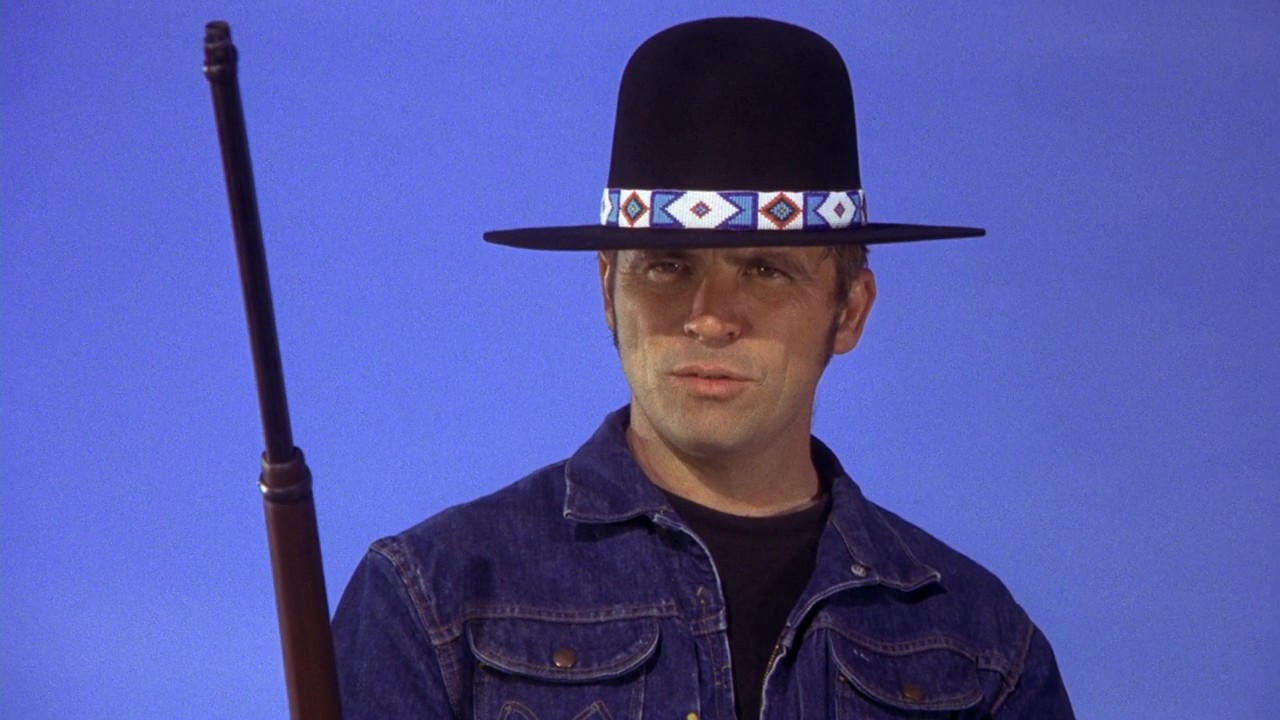
Memo. To: Greg O'Connor From: Billy Jack


"When policemen break the law, then there isn't any law - just a fight for survival."

-  Billy Jack*

*Hero of the 1971 movie Billy Jack, which became a counter-culture hit all over the English-speaking world. Billy was part Native American and all Green Beret (until he quit the special forces in disgust at what was happening in Vietnam and returned stateside to get in touch with his indigenous heritage). Billy's mastery of the martial arts, combined with his radical political views, not only made him "right-on" but also right handy when a wealthy rancher, his redneck bully of a son and the corrupt local deputy-sheriff started making life difficult for the troubled kids up at the "Freedom School" on the nearby reservation. The movie's theme-song, One Tin Soldier, may be listened to here.

This posting is exclusive to the Bowalley Road blogsite