Showing posts with label NZ Race Relations. Show all posts

Monday, 5 April 2021

A Bigger Impact: Class Still Trumps Race - At least In The UK.

Worlds Apart: According to the report of the British Commission on Race and Ethnic Disparities: “family structure and social class had a bigger impact than race on how people’s lives turned out”. These are not the sort of findings that New Zealand fighters against "White Supremacy" and "Colonisation" are eager to receive.  

TELLING PEOPLE THINGS they don’t want to hear may be interpreted as either an act of bravery, or foolishness. In a world grown extraordinarily sensitive to charges of racism, a government report which states that “family structure and social class had a bigger impact than race on how people’s lives turned out” is bound to create controversy. But, this is exactly what the British Commission on Race and Ethnic Disparities (CRED) has done, and controversy is exactly what it has got.

In one of those ironies with which history abounds, the Report, commissioned by Boris Johnson’s Conservative Government in the aftermath of the world-wide “Black Lives Matter” protests of 2020, and which highlights the critical role played by social class in generating inequality, has “disappointed” Sir Keir Starmer, leader of the British Labour Party. Starmer’s namesake, Keir Hardie (1856-1915) a pioneer of working-class representation in the British parliament, would have found Starmer’s response ideologically incomprehensible.

According to a BBC news report (2/4/21), the CRED Report found evidence that “factors such as geography, family influence, socio-economic background, culture and religion had ‘more significant impact on life chances than the existence of racism’.”

It is difficult to think of a statement more calculated to upset those for whom white racism – personal and institutional – constitutes the key explanation for the negative experiences and life outcomes of people living in Black, Asian and minority ethnic communities. The only information likely to prove more “triggering” is the CRED Report’s finding that, in terms of raw numbers, there are more white families living in poverty in Britain than black families.

Since whites make up the overwhelming majority of UK citizens, this might seem like a trivial finding. The very important issue it raises, however, is the impact of life experiences completely unrelated to race upon the way people’s lives unfold. The closure of a factory, or a coal mine. Extended periods of unemployment. The impact of clinical depression on familial relationships. The consequences of drug and alcohol abuse. All of these are equal opportunity misfortunes: experiences related much more closely to one’s location in the socio-economic power structure than to the colour of one’s skin.

The same socio-economic dynamics are, of course, at work in New Zealand. Indeed, those with good memories will recall a very similar debate which erupted over the “Closing the Gaps” policy promoted, and then abandoned, by the Helen Clark-led coalition governments of 1999-2008. Exactly as has occurred in Britain, the research undertaken in what appeared to be a race issue came back with the unwelcome news that the “gaps” in New Zealand society were generated overwhelmingly by socio-economic factors.

The problem which then confronted Clark and her Finance Minister, Michael Cullen, was that any programme actually capable of closing the gap between working-class and middle-class New Zealanders would be prohibitively expensive. Limiting such a programme to lifting Maori alone out of poverty, however, would inevitably provoke an electorally fatal political backlash from the working-class whites left behind. Unsurprisingly, the controversial programme was quietly shelved.

Over the course of the nearly 20 years that separates “Closing the Gaps” from the promises of the present Labour Government, the power of class-based arguments to influence government policy has declined considerably. Excluding the overwhelmingly middle-class trade unions catering to the health and education sectors and the public service, the trade unions’ purchase on the New Zealand working-class has been reduced to almost nothing. (Today, less than 7 percent of private-sector workers belong to a union.) In the third decade of the twenty-first century, the most powerful ideological currents flowing through New Zealand society are those relating to race and gender. Among professional policy advisers and analysts “class” has become a dirty word.

Benefitting hugely from the rise and rise of “Identity Politics” in New Zealand society have been those Maori families sufficiently well-placed to have benefitted from the professional and managerial opportunities arising out of the Treaty of Waitangi settlement process. The well-credentialed children of this rapidly expanding Maori middle-class are now preparing to have another crack at closing the gaps between Maori and Pakeha.

Before that can happen, however, it is vital that the sort of observations contained in the British CRED Report be rendered practically unsayable in New Zealand. In this regard, the research project entitled Whakatika is certain to prove immensely helpful. Based on more than 2,000 face-to-face interviews, the project details its respondents’ experience of Pakeha racism. Be it the racist “micro-aggressions” perpetrated by individuals; or the “unconscious bias” manifested across virtually all of this country’s “colonial” institutions; Whakatika reports a racism so pervasive that it is difficult to avoid the conclusion that the maintenance of racial inequality is basic to the preservation of Pakeha identity.

Nearly 80 percent of respondents, for example, considered the portrayal of Maori by the non-Maori media to be negative all of the time or often. Nearly 90 percent reported either experiencing or witnessing discriminatory treatment of Maori in shops. The conclusions drawn by the study’s authors were unequivocal:

The results of Whakatika show the need for broad anti-racism activities that are based on mana motuhake and that strengthen Māori connections to te taiao, our lands, rivers, mountains and harbours. Similarly, the results indicate that racism and discrimination are so widespread that they will never be conquered through isolated activities, such as unconscious bias training, alone. Addressing racism requires a constant, consistent, Māori-focused multipronged approach.

Given that the authors’ definition of the problem: “Racism is an attack on our rangatiratanga. It maintains colonial power structures, systematically disadvantaging Maori.”; it is difficult to see the sort of arguments and observations advanced in the CRED Report being presented here without irresistible pressure being brought to bear upon the Labour Government to have them declared wrong, objectionable and unacceptable.

Leading the charge in this respect will be Labour’s Maori caucus. It is large enough now to prevent the party’s Pakeha leaders from replicating the Clark-Cullen duck-shove of twenty years ago. This time, a “Māori-focused multipronged approach”, based upon the rangatiratanga guaranteed by Te Tiriti, will be allowed to proceed – Pakeha working-class, or no Pakeha working-class.

The problem, of course, is that if a great many more factors are at work in the generation of social inequality than one’s ethnic origins, then the “Māori-focused multipronged approach” is doomed to fail. If “geography, family influence, socio-economic background, culture and religion” all have a role to play in shaping the lives we lead, then any uplift programme which fails to take these factors into account cannot possibly succeed.

If you were to ask a working-class Pakeha if she had ever been looked straight through by a snooty shop assistant falling all over herself to serve the obviously wealthy woman standing behind her, the chances are high that she would say yes. If you were to ask a Pakeha working-class bloke if any middle-class male had ever asked for his opinion on anything other than sport and/or cars, what do you think he would say?

We have spent the last 20 years being made acutely sensitive to the injuries inflicted by racism and sexism. This is a good thing – no question. Not so good, however, is the fact that, over the same 20 year period, the equally debilitating injuries of class have been ever more thoroughly hidden.

Those in a position to do something about it, don’t want to be told; and there are now far too few advisers who are either brave, or foolish, enough to tell them.


This essay was originally posted on the Interest.co.nz website on Monday, 5 April 2021.

Sunday, 16 December 2018

The Salvation Army’s Latest Report: Identifying the Sins – but not the Solutions.

Onward Christian Soldier: The Salvation Army’s Ronji Tanielu talks to The AM Show’s Duncan Garner about “The State of Our Communities” 2018 report.

THE LATEST “State of Our Communities” report from the Salvation Army exposes a worrying fragility in New Zealand’s social relationships. Behind the happy multicultural façade so beloved of politicians and bureaucrats, racial animosities fester and tensions between competing ethnic communities multiply.

The report (based on hundreds of face-to-face interviews in Kaitaia, Whangarei, Manurewa in Auckland, New Plymouth, Hornby in Christchurch and Timaru) describes rising resentment at the manifest economic inequalities afflicting the Maori population of Northland; tensions between old and new immigrant communities in Auckland; and a South Island Pakeha monoculture struggling to comprehend the meaning and purpose of diversity.

That this racial dimension to the state of our communities has been explicitly recognised in the Army’s report is itself exceptional. The preferred response of New Zealand’s core institutions is to insist that, thankfully, inter-ethnic conflict is a phenomenon alien to our society.

The wonder is, however, that an explosion of racial violence has not already torn Northland apart. Immigrants from South Africa marvel at the province’s apparently effortless separation of the races. What the apartheid system struggled to effect in their homeland, Pakeha Northlanders have achieved without recourse to anything so crude as Pass Laws. Kaikohe is poor and brown. Kerikeri is rich and white. And never the twain shall meet.

What the Army’s interviews reveal, however, is an unwillingness on the part of younger Maori to accept this state of voluntary apartheid. After all, the nation’s official ideology attributes huge value to New Zealand’s indigenous heritage. Unsurprising, then, that the impoverished Maori communities of the North are requiring these Wellington-based bi-culturalists to back their positive rhetoric with tangible resources. Upon the speed and fulsomeness of their response, the maintenance of racial harmony in Northland largely depends.

The arrival of new immigrants from East and South Asia in Auckland suburbs hitherto the preserve of immigrants from the Pacific Islands is similarly testing New Zealand’s multicultural assumptions. Cook Islanders, Niueans, Samoans and Tongans were brought to New Zealand as factory workers and labourers. The entrepreneurial traditions of immigrants arriving from India and China have not always fitted easily into communities hitherto dominated by wage workers.

Compounding these economic divergences are the sharp religious differences between the devoutly Christian Pasifika and the followers of the Hindu, Buddhist and Muslim religious traditions. The rigorous secularism of official New Zealand is singularly ill-equipped to deal with the strong feelings that arise when different religious communities are required to practice their faiths in close proximity.

Pakeha living in the South Island are often bemused at North Islanders’ preoccupation with bi- and multiculturalism. In communities of overwhelmingly pale complexion, which most South Island towns and cities tend to be, it all comes across as vaguely obsessional. The racial homogeneity of provincial centres like Timaru encourages all manner of easy assumptions about what constitutes a “real” New Zealander – along with some potentially dangerous misapprehensions about how easy it is (or should be) for outsiders to “fit in”.

Southern Man’s obtuseness on matters cultural largely explains his preoccupation with the malign effects of inadequate and/or unaffordable housing in his community. There is no clearer manifestation of poverty than homelessness, and nothing breeds fear, anger and resentment faster than the obvious sufferings of the poor.

Overlay that economic distress with the even more terrifying effects of drug-dealing, and the addictions upon which the drug suppliers’ business model depends, and you have a sure-fire recipe for continuously escalating social anxieties revealing themselves in periodic outbreaks of moral panic.

The severity of these panics is accentuated by the tendency of racially and/or economically homogenous middle-class communities (in both islands) to give the manufacture, distribution and sale of illegal drugs a luridly racial cast. If it’s not the shadowy members of Chinese triads and Mexican drug cartels, it’s the scary bros from Black Power and the Mongrel Mob doing the business. That the organised criminals controlling the New Zealand drug trade – especially the scourge of methamphetamine – are, overwhelmingly, wealthy Pakeha, is a fact too frightening for their middle-class neighbours to acknowledge.

In its essence, the Salvation Army’s report contributes yet another collection of personal testimonies to the multitude already enumerating the unrelenting social cruelties of capitalism. Not that the Army couches its analysis in such godlessly Marxist terms. This is, after all, a Christian denomination determined to demonstrate the redemptive power of faith in action. “Thy Kingdom come”, enjoins the Lord’s Prayer, “Thy will be done on Earth, as it is in Heaven.” The Sallies try to do good one family, one person, one soul, at a time.

Yet even these Good Samaritans in uniform cannot ignore entirely the systemic character of the sins they are pledged to wage war against. The correlation of high numbers of Maori with high levels of poverty; of high levels of poverty with high levels of homelessness and drug abuse; is difficult to miss.

The hardest test for any Christian is to locate the source of human wickedness. Attributing the ills of society to the moral weakness of their victims is always easier than fighting those who made the wrong too strong to resist. Though they call themselves an army, the Sallies have, historically, tended to go to war against the symptoms of sin. Vanquishing the causes of human distress: imperialism, racism, economic exploitation; poverty and social despair; they prefer to leave to God.

To date, not a conspicuously successful strategy for replicating Heaven on Earth.

This essay was originally posted on The Daily Blog of Friday, 14 December 2018.

Thursday, 4 June 2015

The Coefficients Of Despair: MSD's Plan To Rescue The Poor From Themselves.

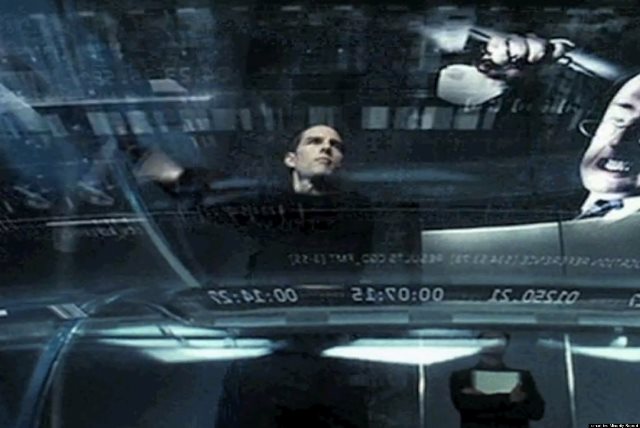
Pre-Crime-Fighting: The Ministry for Social Development's interest in Preventive Risk Modelling, as a technique for identifying and rescuing vulnerable children before they grow up to become a burden on society, is strikingly reminiscent of the plot of the science-fiction movie Minority Report. Accusations of racial profiling are inevitable.
 
HOW LONG WILL IT BE, I wonder, before the Ministry of Social Development (MSD) is accused of racial profiling? Given the statistical techniques currently being developed by the Ministry to identify “vulnerable” clients, such an accusation is practically inevitable.
 
In collaboration with the University of Auckland, the MSD is perfecting a technique for filtering out all but the worst offenders when it comes to deficient education, poor health, inadequate housing, a history of family violence and/or criminal offending. A filtering process relying upon such variables, however, cannot fail to generate a strong racial bias. In terms of the raw numbers, Pakeha will probably still predominate, but Maori and Pasifika will, almost certainly, find themselves significantly over-represented.
 
The MSD’s problem is that they cannot avoid using such controversial techniques for identifying vulnerable clients. Downside political risks notwithstanding, they are fundamental to the National Government’s new approach to managing New Zealand’s welfare system. Expressed in its simplest terms, this new approach is about identifying the individuals and families most likely to become a long-term drain of the state’s resources – and making sure that they don’t.
 
Serious criminal offending, for example, imposes colossal costs upon the state. A person convicted of murder, manslaughter, rape, child abuse, aggravated robbery and/or serious assault can expect to serve anything from 5 to 20 years in prison – at a minimum cost to the taxpayer of $100,000 per year. And that figure does not include the cost of repairing and rehabilitating the victims of criminal offending. The enormous expense of hospitalisation. The loss of productivity associated with the victims’ pain and suffering. All these social costs could be dramatically reduced if the people most likely to impose them could be rescued, early, from themselves.
 
One of the solutions, according to the MSD, may be found in the statistical technique known as “predictive risk modelling”. According to the Ministry’s own website, a ground-breaking piece of research undertaken by a project team, led by Professor Rhema Vaithianathan of the University of Auckland, has “developed a predictive risk model for children in a cohort who had contact with the benefit system before age two. These children accounted for 83% of all children for whom findings of substantiated maltreatment were recorded by age 5.”
 
The Ministry further reported that “predictive risk modelling had a fair, approaching good, power in predicting which of the young children having contact with the benefit system would be the subject of substantiated maltreatment by age five. This is similar to the predictive strength of mammograms for detecting breast cancer in the general population.”
 
Given the well-attested link between childhood abuse and serious criminal offending in later life, the possibilities arising out of Professor Vaithianathan’s and her team’s research are obvious. If predictive risk modelling (PRM) could identify with relative precision which children, in which families, were most likely to suffer abuse, appropriate “wrap-around” intervention by the MSD, the Police, Child Youth and Family, the Department of Corrections and the Department of Courts could ensure that the predicted abuse (and everything likely to flow from it in the future) never happened.
 
The popular culture reference you’re looking for here is the film Minority Report. Based on the novella by science-fiction writer Philip K. Dick, the movie is set in a futuristic Washington DC, where a special “precrime” squad of police officers use “psychic technology” to arrest and convict murderers before they commit their crime.
 
Now, it would be quite unfair to suggest that PRM is in any way analogous to “psychic technology”, but it’s undeniable that the former’s widespread use in our social welfare system would give rise to just as many ethical questions as Philip K. Dick’s pre-crime-fighters.
 
In the section of the University of Auckland study relating to PRMs ethical ramifications, the Project Team drew the MSD’s attention to the dangers of the data arising from its application being misinterpreted:
 
“It must be acknowledged that some of the data and predictor variables used by the proposed model are highly likely to be misinterpreted by at least some audiences. The decision not to report coefficients in this report, for instance, was based in part upon the belief that the insignificant contribution those factors make to the power of the tool was outweighed by the likelihood of crude and misleading interpretations of that information given existing social prejudices and stereotypes.”
 
Which brings us back to our original question concerning racial profiling. It would be most surprising if the unwillingness of the Auckland academics to identify all the coefficients used in their predictive algorithms was not, at least in part, related to race as a predictive factor in the maltreatment of children. It would, however, be equally surprising if the prospect of Maori and Pasifika families being targeted for special “precrime” intervention on behalf of their infant offspring was not met with loud, sustained, and entirely justifiable protest.
 
There is something profoundly disturbing in the very notion that science possesses the power to predict who will – and who will not – inflict harm upon their fellow human-beings. That, somehow, a computer programme can winnow out from tens-of-thousands, the one family in which violence will be done to a child.
 
Because, even if we could be sure that the child identified through PRM was bound, in every case, to suffer abuse if some form of welfare intervention did not take place, there is another, deeper, question that must be confronted. If individual cases of abuse could be predicted and prevented, what incentive would there be to address the systemic causes of human tragedy?
 
If Maori and Pasifika appear more often than they should among the perpetrators of child abuse it is only because they appear more often than they should among all the other “coefficients” of dysfunction: illiteracy; the diseases of poverty and overcrowding; the psychological deterioration caused by long periods of unemployment; the mental disintegration associated with drug addiction. These pathologies are the symptoms of class as well as racial oppression. Capitalism and colonialism are “coefficients” too.
 
Let us leave the final word to another artefact of pop-culture. Perhaps the most surprising of all Elvis Presley’s hits is his extraordinary rendition of Scott Davis’s song, In The Ghetto. To those seeking to transform our social welfare system into something resembling science-fiction, I would strongly recommend Elvis’s poignant retelling of the story of a boy whose fate was sealed at birth: not by the choices he or his mamma made, but by the system that left them with so few:
 
And as her young man dies
On a cold and grey Chicago morning,
Another little baby child is born
In the Ghetto.
 
 
Video courtesy of YouTube
 
 
This essay was originally posted on The Daily Blog of Wednesday, 3 June 2015.

Wednesday, 6 August 2014

Privileged Status

The Settling Of Social Scores: The poor of Paris leer at the abused body of the Princesse de Lamballe, friend of Queen Marie-Antoinette and, ironically, a passionate advocate of social reform. Jamie Whyte's comparison of the "privileged" legal status of Maori with the legal privileges of the Aristocracy of pre-revolutionary France inevitably raised the ghosts of the Revolution's aristocratic victims. In the words of the Race Relations Commissioner, Dame Susan Devoy: “Equating Maori New Zealanders to French aristocrats who were murdered because of their privilege is a grotesque and inflammatory statement.”
 

Maori are legally privileged in New Zealand today, just as the Aristocracy were legally privileged in pre-revolutionary France.
 
Jamie Whyte, Act Party Leader, 26 July 2014
 

REPROVED BY DAME SUSAN, condemned by the Maori Party, castigated by most of the news media, it remains to be seen whether Jamie Whyte’s equation of Maori legal “privileges” with the feudal privileges of the French aristocracy was electorally clever or stupid.
 
The example of Don Brash’s Orewa Speech undoubtedly looms very large before any right-wing political leader whose party is languishing in the opinion polls. The National Party leader’s notorious address to the Orewa Rotary Club, in which he promised to nullify nearly all of Maoridom’s political rehabilitation since the 1970s, saw his party’s poll ratings advance by an unprecedented 17 percentage points. It put the National Opposition back in the race – with a vengeance!
 
The New Zealand electorate, it seems, is one vast racist itch just waiting for a scratch. And if it remains as easily satisfied as it was ten years ago, then Whyte’s speech to the Act Party’s Hamilton conference – and all the fallout from it – should produce a statistically significant up-tick in his party’s support.
 
And really, what else could Jamie do? The New Zealand voter is ill-disposed toward philosophical speculation and debate. The finer points of John Locke’s defence of individual liberty and the role played by private property in its preservation, are not the stuff of all that many Pakeha conversations. The merits or otherwise of their Maori neighbours, on the other hand, remains the subject of lively speculation.
 
Richard Prebble understood and accepted this inconvenient truth about the New Zealand voter. He had watched good-naturedly as Roger Douglas and Derek Quigley (Act’s founders) toured the country (on millionaire Craig Heatley’s dime) preaching the pure gospel of neoliberalism to anyone who would listen. Which, as Prebble already knew, would always be far too few to secure a solid footing for Act in the new MMP parliament. He had the data, he knew what it would take to move 5 percent of his fellow Kiwis into Act’s camp – and it wasn’t John Locke.
 
What Jamie Whyte lacks, however, is his predecessor’s wry political cynicism. If he was to raise again the divisive issue of Maori “privilege” (at Act’s campaign manager, Richard Prebble’s insistence?) then he was determined to do so with all the panache of a swashbuckling Cambridge philosopher. Not for him the mean-spirited snarling of the hard-bitten provincial voter that Prebble translated so well. No, he would wage war on the legal privileges of Maoridom in the guise of an antipodean Robespierre.
 
“Maori are legally privileged in New Zealand today,” Whyte told Act’s annual conference in Hamilton, “just as the Aristocracy were legally privileged in pre-revolutionary France.”

Really?
 
Presumably, in making this bold comparison, our Cambridge graduate had some notion of what those aristocratic privileges included, even if many in his audience, subscribing to Henry Ford’s view that “history is bunk”, did not.
 
Let’s list just a few of them:
 
·        The French Aristocracy were exempt from taxation.

·        French aristocrats presided over their own seigneurial courts – i.e. they were able to try their own tenants for any beaches of the law alleged to have taken place on their own estates.

·        Deceased tenant farmers of aristocratic land were prevented, under the law of mainmorte (the “dead hand”) from bequeathing the tenancy rights they enjoyed whilst living to their descendants. Upon their death the right to use the property reverted to its aristocratic owner who was then free to dispose of it as he saw fit – even at the cost of evicting the deceased tenant’s family. The aristocrat could, of course, be “persuaded” against this course of action by the tenant’s descendants paying their lord a “fine” for the right to go on farming the land.

·        Aristocrats also enjoyed a range of monopolies within their domains. For example, requiring tenants to have their grain ground in the aristocrat’s mill.

·        In many parts of France, a tenant wishing to get married had first to acquire his or her lord’s permission.

·        The aristocrat’s prior permission was also required before a tenant farmer could vacate his tenancy – i.e. move away from the lord’s estate.

·        To secure these aristocratic consents it was customary for tenants to pay yet more “fines”.
 
Do any of these legal privileges bear any resemblance to the supposed legal privileges enjoyed by Maori? Are Maori exempt from taxation? Do Maori preside over their own courts? Are Maori able to prevent the alienation of their tribal resources by imposing restrictions on their tenants’ ability to bequeath, sell or otherwise transfer their interest in tribal property? Do Maori enjoy monopolies over specific goods and services? Is prior permission required from Maori before a citizen is able to exercise his or her rights?
 
Perhaps the most questionable aspect of Whyte’s historical comparison was the aspect the Race Relations Commissioner, Dame Susan Devoy, picked up on in her statement of Wednesday, 30 July, in which she stated: “Equating Maori New Zealanders to French aristocrats who were murdered because of their privilege is a grotesque and inflammatory statement.” Quite true, because to link the French Aristocracy and the French Revolution is to conjure up images of angry crowds, clattering tumbrils, rolling drums and the sudden descent of Madame Guillotine’s blade.
 
The historical details surrounding the persecution of the French Aristocracy are, as is so often the case, even worse. The guillotining of condemned aristocrats in the manner so vividly described by Charles Dickens in A Tale of Two Cities certainly did take place, but at least as many more aristocrats met their deaths at the hands of the Parisian Mob. In a grotesque settling of centuries-old social scores, aristocratic families were dragged from the relative safety of the city’s overcrowded prisons and butchered in the streets. Whipped up to a frenzy by such fanatical foes of privilege as Jean-Paul Marat, the poor of Paris fell upon these defenceless men women and children and quite literally tore them to pieces.
 
These are dangerous precedents to play with in a country whose racial and social prejudices lie buried in such shallow graves. Politicians who make persistent, but groundless, claims that a minority of the population is enjoying legal privileges which the majority of ordinary citizens do not possess, can hardly hold themselves blameless when those same ordinary citizens turn against that minority. Or, God forbid, upon them.
 
As the great Russian playwright, Anton Chekov, once remarked: “If in the first act you have hung a pistol on the wall, then in the following one it should be fired. Otherwise don’t put it there.”
 
This essay was originally posted on The Daily Blog of Monday, 4 August 2014.

Tuesday, 26 March 2013

National's Two-Fingered Gesture

Sending A Message: Justice Minister, Judith Collins, has responded to criticism of her appointment of Dame Susan Devoy as Race Relations Commissioner with the highly revealling comment: “The far left does not have a monopoly on caring about race relations.” History suggests, however, that if the Left doesn't have a monopoly on, then the Right isn't even in the market for, improved race relations.

DAME SUSAN DEVOY’s appointment as Race relations Commissioner sends a very clear message. But about what? And to whom?
 
An answer may be found in Justice Minister Judith Collins’ observation that: “The far left does not have a monopoly on caring about race relations”.
 
Ms Collins packs a great deal of political information into this typically belligerent statement.
 
It speaks powerfully and directly to the Right’s long-standing resentment at finding itself, again and again, on the morally indefensible side of history.
 
From the mid-1970s, the National Party positioned itself, politically, as the defender of the Pakeha majority against any and all charges of racism that the Maori minority, and others, were increasingly levelling against them.
 
According to National, race relations in New Zealand were extremely healthy, and it was an affront to this country’s internationally celebrated reputation for fairness and tolerance to suggest otherwise.
 
This position became increasingly untenable as, over the course of the 70s, 80s and 90s, a new generation of historians systematically demolished New Zealand’s great foundational myths: the version of history which the inheritors of colonialism had so assiduously constructed since the wars and confiscations of the Nineteenth Century.
 
The most important to be taken apart was the Myth of the Moriori.
 
For decades, New Zealand schoolchildren were taught that their country’s first inhabitants, the Moriori, had been wiped out by the Maori – the warlike, culturally superior race of settlers who supplanted them.
 
For the Europeans who had replaced Maori as the dominant racial group in New Zealand, the Moriori Myth was morally indispensable. By establishing an historical narrative based on successive waves of settlers, each one stronger and better fitted for survival than the last, the European conquest and despoliation of the Maori could be painted as part of a “natural” progression.
 
“We” (the Pakeha) were no worse than “they” (the Maori) when it came to asserting the right of the stronger to overpower the weaker. We were, however, “better” than they were – because rather than wipe out the people who’d stood in our way, we “advanced” Europeans were willing to share with the vanquished all the “benefits” of Western Civilisation.
 
That the Maori had not fared as appallingly as Australian Aborigines or the Native Americans spoke eloquently of New Zealand’s “progressive” record of race relations.
 
The true and tragic story of the Moriori people (of the Chatham Islands) offered as little to Pakeha as it did to Maori. (Which probably explains why both races were content to connive in its extraordinary distortion.)
 
The myth was , however, of such critical importance to Pakeha self-perception that, even today, you still find many New Zealanders clinging tenaciously to its reassuring message of moral equivalence.
 
Conservative New Zealanders remained highly resistant to the unpalatable truths emerging from their nation’s colonial past. Rather than let the new historical research bring about a re-evaluation of their previous assumptions concerning race, they and their National Party representatives became even more determined to uphold all the old shibboleths.
 
National’s defence of the Springbok Rugby Tour of 1981 not only made it a target for the entire New Zealand Left (from Labour to the Workers’ Communist League) but, as events steadily vindicated the arguments of the protesters, it also helped to foster a deep-seated sense of right-wing grievance.
 
Nelson Mandela Free: The National Party has found it very difficult to accept that on the question of Apartheid - as on so many other racial questions - the Left has been vindicated, and the Right condemned, by History.
 
The Left had accused the Right of being on the wrong side of history, and History had been unkind enough to concur. Politically, National had no option but to accept the enhanced role of the Treaty of Waitangi (and its tribunal) and celebrate the victory of Nelson Mandela’s African National Congress (once described as “terrorists” by Sir Robert Muldoon) but it rankled.
 
Oh yes, it rankled.
 
And as those historical victories were transmuted into a framework of human rights recognition and protection (building on the more liberal Sir Keith Holyoake-led National Party’s Office of the Race Relations Conciliator, and the Labour Prime Minister, Sir Geoffrey Palmer’s, Bill of Rights Act) the Right’s sense of grievance – of being put-upon by what it labelled “political correctness” – grew and festered in the body politic.
 
Just how large this cancer had grown was revealed in 2004 when National Party Leader, Dr Don Brash’s, “Nationhood” speech, at Orewa, saw his party’s position in the Colmar-Brunton opinion poll advance by a record 17 percentage points.
 
National’s narrow defeat in 2005, and Dr Brash’s successor, John Key’s, tactical alliance with the Maori Party, both muted and diverted the Right’s angry rejection of the Left’s “political correctness”. Anti-Maori prejudice was channelled into hard-line welfare and law-and-order “reforms” – measures guaranteed to hit Maori New Zealanders the hardest.
 
Dame Susan’s appointment is emblematic of National’s continuing denial of its historical moral delinquency. With her controversial announcement, Ms Collins simultaneously delivers reassurance to an aggrieved Right, and an obscene, two-fingered gesture to “the far left”.
 
This essay was originally published in The Press of Tuesday, 26 March 2013.

Friday, 17 February 2012

A Modern Mark Anthony?

All Honourable Men: Is Paul Holmes playing Mark Anthony to John Key's Julius Caesar? In response to Maoridom's attack on the Government's "partial" privatisation programme did he decide to let slip the dogs of Pakeha racism? Is it possible he wrote his grossly offensive Weekend Herald column not to praise, but bury, Clause 9 of the State Owned Enterprises Act?

“CRY ‘HAVOC!’ and let slip the dogs of war!” These are the incendiary words that Mark Anthony puts into the mouth of Julius Caesar’s ghost as he surveys the bloody work of his assassins. Though Mark Anthony insists he’s come “to bury Caesar – not to praise him”, his true purpose is to turn Rome’s citizens against the “honourable men” who have slain his – and Rome’s – best friend.

How would a modern Mark Anthony provoke revolution?

A few years ago, Wellington’s Circa Theatre staged a “modernised” version of Shakespeare’s Julius Caesar in which Mark Anthony’s speech is beamed into a Roman pub. Its motley collection of patrons are at first barely interested in the live television broadcast from Caesar’s funeral, but gradually, word by word, they get drawn into Mark Anthony’s superbly constructed speech until, thoroughly “ruffled up”, they pour onto the streets in “rage and mutiny”.

Equally, a modern Mark Anthony might avail himself of talk-back radio, or the columns of a mass-circulation newspaper, to capture the attention of his countrymen, ruffle up their spirits, and “put a tongue” into every one of their wounds and grievances.

Were he in a position to do so, a modern Mark Anthony might cry ‘Havoc!’ and let slip the dogs of war across the whole media: television, radio, Internet and press.

But to what purpose? Mark Anthony had two: to revenge Caesar death, and to deal a death-blow to the tottering Roman Republic. How better to achieve these aims than by setting the Roman mob against Brutus: Caesar’s assassin and the Republic’s staunchest defender?

If we translate the Shakespearian drama into a contemporary New Zealand context, who best fits the description of Mark Anthony? Who has stepped forward to defend Caesar and attack his enemies? Who took advantage of a solemn civic occasion to shout in the ears of the sleeping dogs of war? Who, with carefully chosen words, has ruffled up the spirits of his countrymen to rage and mutiny?

Who else but Mr Paul Holmes?

From the “bully pulpit” of his column in the weekend edition of the NZ Herald, was it not Mr Holmes who unleashed a storm of criticism against the whole of Maoridom? Did he not call for Waitangi Day – “a bullshit day”, “a day of lies” – to be abandoned, and for the Treaty itself to be cast aside? Was it not Mr Holmes who, in his rhetorical fury at Waitangi Day protest, suggested that every person of Maori descent was guilty of “bashing their babies”? Did he not say that if the ghosts of family members who fought and died at Gallipoli, El Alamein and Casino were somehow able to witness the event, none could be persuaded that Waitangi Day was “anything but filth”?

In unleashing this vicious and indiscriminate attack against Waitangi Day, the Treaty, and all things Maori, Mr Holmes must have known that he was striking at the very heart of the relationship which binds the Maori Party to the National Party. Nor would it have escaped him that, by rousing the sleeping dogs of Pakeha racism, he was putting that relationship in danger. Given the precarious balance of political forces in the House of Representatives, why would he want to do any of these things?

Unless, Mark Anthony-like, his purpose was to assist his beleaguered friend, the Prime Minister, by toppling something that, already fatally weakened, was about to fall?

The Maori Party’s concern at the damage even the partial sale of state assets could inflict upon the Treaty Partnership, and its threat to withdraw from its Confidence & Supply Agreement with the Government, have clearly been interpreted as an attack on John Key. A case of “E tu Tariana?” Has he voiced in private, what he cannot publicly declare: that the judicially-defined “Treaty Partnership” has outlived its usefulness?

Is that why Mr Holmes cried ‘Havoc!’ and let slip the dogs of Pakeha racism? Not to praise Clause 9 – but to bury it?

This essay was originally published in The Dominion Post, The Otago Daily Times, The Waikato Times, The Taranaki Daily News, The Timaru Herald and The Greymouth Star of Friday, 17 February 2012.

Friday, 8 October 2010

Driving In Illiberal Circles

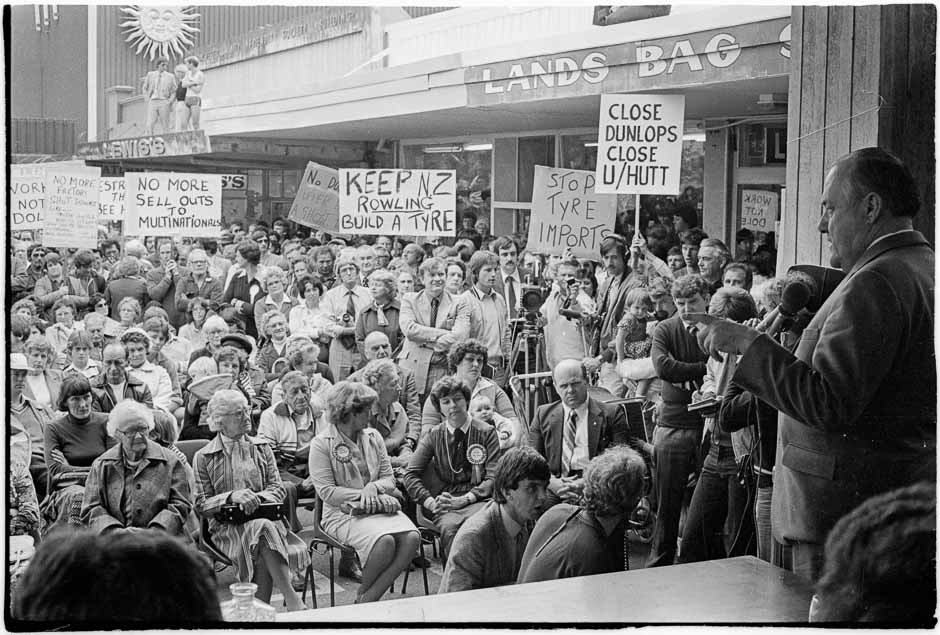
However did he win? Rob Muldoon addresses a National Party-organised campaign rally in the Upper Hutt Mall, 1981. Our eyes are drawn immediately to the placards carried by the Labour-supporting rubber workers, but it was the voting strength of all those undemonstrative electors listening attentively to "Mr Muldoon" which counted on election day. Disgraced Breakfast host, Paul Henry, may have many more supporters out there than Liberal New Zealand likes to think.

LIBERAL KIWIS said it so often that conservative comedians turned it into a joke: "I don’t know how Rob Muldoon got elected – nobody I know voted for him!"

You’d be surprised how many liberals struggled to see the humour in that sentence. Conservatives, on the other hand, got the joke straight-away.

They, at least, understood that liberal New Zealand constituted a small, self-referential elite that was ideologically, culturally and socially cut off from the overwhelming majority of the population.

And that, of course, was the whole point of the joke.

In the isolated liberal communities of academia, the artistic community, the news media and whatever passed for bohemia in the 1970s hardly anyone ever voted for the National Party.

Hence liberal New Zealand’s profound sense of shock and dislocation when the rest of the population turned away from Bill Rowling’s Labour Government in 1975.

I well recall the day, a few weeks before the 1975 General Election, when I found myself in a room chock-full of the Wellington cultural elite. In one corner sat the acting head of the Arts Council, a couple of nationally renowned poets occupied the sofa, and the rest of the space was filled up with writers, film-makers, academics and art students.

I had not long returned from a hitch-hiking tour of the South Island, during which I’d exchanged ideas with all sorts of New Zealanders. Mile after mile of these conversations had left me harbouring serious doubts about the longevity of Bill Rowling’s Labour Government.

Norman Kirk, it seemed, had been a man like themselves. But Bill Rowling? (Not to mention all those "intellectuals" surrounding him!) Well, he was a different matter.

Though they struggled to put it into words, many of the motorists who picked me up clearly believed the country was slowly slipping from their grasp. There were too many people like me, they said. Too many footloose, restless and unanchored youngsters. Too many long-haired hippies willing to challenge the ideas and institutions upon which they had built their lives.

"Rob Muldoon will sort your lot out", they would say, grinning widely. But I couldn’t help noticing that in their eyes there wasn’t the slightest trace of mirth.

Among the gaggle of liberal worthies I’d joined that day was the headmaster of my old secondary school – a wise, tolerant and generous man I greatly admired. I told him what I’d heard on my travels and asked for his thoughts on the imminent election.

"Don’t worry, Chris," he reassured me, "New Zealand will never vote for a man as far to the right as Muldoon."

Certainly, no one in that room did.

Thirty-five years later, with Breakfast host, Paul Henry, offering-up yet another gobbet of reactionary tripe to his television audience, I couldn’t help recalling those 1975 conversations.

They helped me resist the temptation to add yet another liberal voice to the cacophony of outraged protest.

That the redoubtable Joris de Bres, acting on behalf of left-thinking liberals everywhere, would bring to bear the full weight of the Race Relations Conciliator’s office, I hadn’t the slightest doubt. Just as I was certain that every left-wing blogger capable of spelling "bigot" and "redneck" would be reaching for the nearest keyboard.

Recalling those thirty-five-year-old conversations, I was equally certain that there wouldn’t be a single liberal commentator who didn’t consider Mr Henry’s comments regarding the identity of Governor-General Anand Satyanand to be both adolescent and unforgivable.

There’d be no votes for Mr Henry in liberal circles.

But what about out on the road?

What would New Zealanders living outside the charmed circles of Kiwi liberalism have to say about Mr Henry’s outburst?

"For crying out loud, mate, he was only saying what right-wing buggers like me are thinking. That Governor-Generals are supposed to be like everybody’s grand-dad – stuffed shirts with heads of white hair and plums in their mouths. At least they were when I was a kid.

"This guy we’ve got now, Satyanand or-whatever-his-name-is. Wasn’t he one of Aunty Helen’s appointments? Someone who ticked all the politically-correct boxes?

"That’s all Henry was trying to say for God’s sake. That Satyanand only got the job because the Labour Government needed to shore up its vote in the immigrant community. It’s hardly bloody rocket science – is it?"

To which I’d have to reply: "No, mate, it isn’t."

This essay was originally published in The Timaru Herald, The Taranaki Daily News, The Otago Daily Times and The Greymouth Evening Star of Friday, 8 October 2010.

Wednesday, 26 May 2010

Coming Apart, Or Holding Together?

Ethnic Defection - Balkan Style: The fate of the former state of Yugoslavia offers a tragic rejoinder to all those New Zealanders (Maori and Pakeha) who see no dangers in posing the question: "Why not apart?"

IT WAS the NZ Political Review’s most unorthodox article. Written by Roger Openshaw, then a Senior Lecturer (now an Associate Professor) of Education at Massey University, "Why Not Apart?" was published in July 1992 and called for the deliberate, carefully managed, dissolution of New Zealand’s unitary state.

In Openshaw’s utopian scenario, an implausibly disinterested "interim" government would, "invite the tending of charters on behalf of any group or syndicate for the setting up of an independent successor state somewhere within the present boundaries of New Zealand." None of these "successor states" could have a population of less than 15,000, or more than 100,000, citizens.

I was never quite sure whether Openshaw was pulling the collective leg of NZPR’s readers, or whether he was offering them a serious constitutional alternative. All I would say now is: "Be careful what you wish for!"

Because until John Key rather belatedly slammed the door in the Tuhoe negotiators’ faces, Openshaw’s deconstructed New Zealand was on the point of becoming reality.

Those same negotiators expressed "surprise" at Key’s intervention in the Treaty settlement process. According to their spokespeople, Tuhoe and the Crown were only a few days away from announcing the return of the Urewera National Park to the Tuhoe "nation". The tribe’s negotiators were also confident of securing a large measure of mana motuhake – self-government – for Tuhoe.

As one of the very few tribes not to have signed the Treaty of Waitangi, the ultimate objective of Tuhoe leaders was to oversee the creation of an independent tribal polity alarmingly akin to Openshaw’s "successor state".

Well, I’m surprised they were surprised. How’s it possible that grown men and women, living in a sophisticated, unitary and democratic 21st Century state, could seriously entertain the notion that their Government was about to voluntarily surrender its sovereignty over 200,000 hectares of national territory?

They may say they were encouraged to hope for such an outcome by the Prime Minister, or the Treaty Negotiations Minister, Chris Finlayson, or both. But that only deepens the mystery. Regardless of what was said to them by the Crown’s negotiators, Tuhoe should have known enough about their Pakeha compatriots to realise that any decision to hand back the territory confiscated by Settler Governments during the 19th and 20th Centuries wouldn’t be allowed to stand.

The fate of Yugoslavia (still in the brutal process of unravelling at the time Openshaw wrote "Why Not Apart?") stands as a stark warning of what can happen (even to a federal state) when ethnic defection is permitted to gather momentum. No sooner had Slovenia been allowed to secede from Yugoslavia, than Croatia – emboldened by its neighbour’s success – followed suit. Serbia, intent upon protecting Serb interests in the defecting entities, mobilised its superior military resources. The Bosnian Muslims, caught geographically between Orthodox Serbs and Catholic Croats, had no option but to declare their own independence. The cost in terms of human suffering was immense.

But can anyone doubt that something very similar would have happened here, had the National-led Government’s Treaty negotiators not been reined in by the Prime Minister?

Had Tuhoe been granted mana motuhake, could Tuwharetoa (who, like Tuhoe, never signed the Treaty) have demanded anything less? And if self-government was granted to Tuhoe and Tuwharetoa, how long would it take Tainui to reassert its rights in the Waikato? Certainly no less time than it would take the largest Maori tribe, Ngapuhi, to reassert its rights across the whole of Northland.

In their current presentations to the Waitangi Tribunal, the Ngapuhi people are already advancing the argument that, because the Northern Chiefs never surrendered their sovereignty to the British Crown, the New Zealand State’s writ should no longer, strictly-speaking, be permitted to run in Ngapuhi territory.

If such challenges to the sovereignty of the New Zealand State are not forcefully refuted – and soon – life in New Zealand is destined to take a very decided turn for the worse.

Not that Pakeha should blame Maori for attempting to recover what was taken from them by force or fraud over the course of the past 170 years. On the contrary, they should ask themselves what they would do if a foreign power began buying-up their turangawaewae: farm by farm, mine by mine, business by business? Wouldn’t they resist?

Interestingly, Openshaw’s argument in "Why Not Apart?" is that the unitary state constructed by Pakeha New Zealanders since 1840 is simply not worth defending:

"[I]f we should indeed decide to dismantle our failing unitary state, we will be able to exploit the one considerable advantage New Zealand has over other countries; namely that there is no strong national culture. There is no genuine New Zealand nationalism nor is there any New Zealand people in the sense that there is a French people, an American people or even an Australian people."

This view is more common among the deracinated left-wing intellectuals of New Zealand academia that many of their compatriots may realise. And it is matched on the Right by the neoliberal conviction that the unstoppable processes of globalisation have made the nation-state a historical anachronism. In the current round of Treaty negotiations these two world-views have come together – with potentially disastrous results.

Because, as the Foreign Minister, Murray McCully, who reportedly led the charge in Cabinet against the signing away of the Urewera National Park, understands – there is a New Zealand people, and they do have a national culture, and they will not sit idly by while their country and their culture is casually dismembered and thoughtlessly destroyed.

The Prime Minister is to be congratulated for heeding the advice of his more experienced Cabinet colleagues. And his party was no doubt hugely relieved to hear him say: "there is no room for separatism in New Zealand".

Now all he has to do is convince his allies in the Maori Party that they have reached the outer limits of what is politically "workable".

For make no mistake, if New Zealand is Yugoslavia, then the Pakeha are the Serbs. And just as Yugoslavia was the historical achievement of the Serbs, New Zealand is the historical achievement of its settlers and their descendants who built it, and defended it, and who still, in spite of separatists and globalisers, love it.

Why not apart?

Because New Zealanders, Maori and Pakeha, only have a future – together.

This essay was originally published in The Independent of Thursday, 20 May 2010.

Friday, 13 November 2009

A World Of Our Own

"Did you call these Pakeha mofos 'mofos', mofo?": Pakeha New Zealanders outrage at Hone Harawira's use of the Black American expletive speaks volumes about their fundamental isolation from the all-too-contemporary manifestations of New Zealand's colonial legacy.

IF THE REACTION to Don Brash’s infamous "Orewa Speech" proved that "biculturalism" had failed to "take" among a large number of Pakeha, Hone Harawira’s brutal e-mail to Buddy Mikaere offers proof that the bicultural ideal is similarly resented by many Maori.

This should worry John Key.

If New Zealand’s official ideology pleases neither Maori nor Pakeha; if the smouldering resentments fanned into flame nearly six years ago at Orewa still glow; then how much confidence can the Prime Minister (or any Pakeha politician) have that Treaty settlements negotiated between the Crown and Maori will "take"?

In 2004 the "political class" closed ranks over race relations. No less than Don Brash, Helen Clark validated the fears and suspicions of the Pakeha nation. Only a fool could read the Foreshore & Seabed Act as anything other than a ruthless and unequivocal assertion of Pakeha power.

The Maori reaction: the massive hikoi of protest that filled Parliament grounds in May 2004; Tariana Turia’s defection from Helen Clark’s government; the formation of the Maori Party; followed with Newtonian precision.

But, nothing was resolved.

National’s narrow loss to Labour in 2005 merely put off the day of reckoning.

For the next three years Pakeha New Zealand, at odds with itself, was consumed by other issues. The vexed question of race-relations was pushed onto the back-burner. When they entered the polling booths in 2008 most voters had more pressing priorities.

But not the Maori Party. For Tariana Turia, Pita Sharples et al, the priorities remained unchanged. Their mission was to roll back the bipartisan obliteration of Maori aspirations symbolised by the Foreshore & Seabed Act, and to make their party the indispensable partner of whichever of the two main Pakeha parties secured a plurality of the popular vote. They were determined that, henceforth, the electors on the Maori Roll, through the Maori Party, would exercise the casting vote of New Zealand politics.

The events of the days following the 2008 election were, therefore, interpreted very differently by Maori and Pakeha.

For Maori, National’s offer of partnership was seen as proof of the pivotal role the Maori Party is destined to play in New Zealand’s political and constitutional affairs. The Prime Minister had to keep the Far-Right at arm’s length or risk re-energising Labour. He needed them more than they needed him.

For Pakeha, however, John Key’s outreach to the Maori Party was seen not as a forced concession, but as a generous gesture of reconciliation and inclusion. The very fact that the Prime Minister, with Act’s support already in his pocket, didn’t need the votes of the Maori Party, merely confirmed the generosity of inviting Ms Turia and Dr Sharples to join his government.

To a dyed-in-the-wool Maori nationalist like Hone Harawira, the Maori Party’s decision to accept the Prime Minister’s invitation must have looked like very high-risk politics. With the overwhelming majority of the Maori Party’s voters being semi-skilled or unskilled workers, there was a real danger of it being perceived as cuddling-up to their White and Brown bosses.

The Maori Party’s equivocation over Nick Smith’s Emissions Trading Scheme, coupled with its support for National’s cutbacks to ACC, strengthened this perception considerably.

Mr Harawira’s intemperate response to Mr Mikaere bears eloquent testimony to the Te Tai Tokerau MP’s frustration with the situation in which he and his party now find themselves.

The decision to work with National (or, one suspects, any Pakeha-led party) requires the Maori Party to demonstrate an ongoing ability to both propose and accept reasonable compromises.

But, to someone holding Mr Harawira’s nationalist beliefs, it was the Maori people’s willingness, over the past 150 years, to make "reasonable compromises" with the Pakeha authorities that led to the alienation of 63 million acres of Maori land. And, it clearly enrages him that "puritanical" Pakeha politicians and journalists were unwilling to characterise the trading-off of an inconsequential meeting in Brussels for a day in Paris – "The City of Light" – as his own "reasonable compromise".

New Zealand’s official "bicultural" ideology enjoins its citizens to walk in two worlds with understanding and respect. But reality tells a very different story. Maori New Zealanders have no choice when it comes to walking in two worlds. Pakeha New Zealanders do - and most of us choose to stay in our own.

It’s enough to make a saint swear.

This essay was originally published in The Dominion Post, The Timaru Herald, The Taranaki Daily News, The Otago Daily Times and The Greymouth Evening Star of Friday, 13 November 2009.

Saturday, 7 November 2009

Putting The Beach Beyond Our Reach

Putting the beach beyond our reach: Both Maori and Pakeha have a mutual interest in taking the foreshore and seabed off the market - permanently.

THE IDEA of vesting the ownership of the foreshore and seabed in the tupuna (ancestors) of the coastal-dwelling Maori hapu (clans) is nothing if not imaginative. Property developers and mining companies are very resourceful, but (as far as I know) they’ve yet to master time travel.

In addition to permanently taking the foreshore and seabed off the market, "Tupuna Title" would also encourage the conservation of New Zealand’s coastal environment. As kaitiaki (guardians) of resources passed down to them by their ancestors, local hapu would have powerful cultural and legal incentives to protect and pass-on the rights of customary usage to their children and grandchildren.

But, how would Pakeha New Zealanders relate to this revolutionary legal concept? The short answer is: with considerable difficulty.

For a start, we’d have to be willing to embrace a radical expansion of the number of things which cannot be bought and sold. The most important of these prohibitions relate to the human person. Since the abolition of slavery in the early part of the 19th Century, it has been illegal to sell or buy human-beings – or any part thereof. Our persons are also legally protected against intentional injury, and the State is prohibited from inflicting cruel or unusual punishment upon our bodies.

The creation of "Tupuna Title" would extend the idea of legal inviolability to the coastal territories and customary rights of New Zealand’s first inhabitants. In a very real sense, these would become an extension of their bodies: things that could never be legally bought, sold, injured or abused.

Once Pakeha New Zealanders got their heads around this extension of legal inviolability, a new compact with the Maori clan-guardians of the foreshore and seabed could be negotiated. In return for reposing the title to this resource in their ancestor’s hands, and placing it beyond the reach of legal confiscation, hapu would grant to Pakeha the inalienable right to access and enjoy New Zealand’s beaches.

But, are we Pakeha ready to embrace a concept as radical as "Tupuna Title"? Or, would we rather the whole of New Zealand’s foreshore and seabed remain vested in the Crown – which we, through our dominant position in Parliament, control? What are the chances of Pakeha giving that up?

No better, I would say, than the chances of the iwi-based Maori corporations having any truck with the notion that their interests should be subordinated to those of the individual hapu and whanau – whose claims to exercise customary usage remain the strongest.

It was the Ngati Apa iwi, and its repeatedly refused applications to establish a commercial aquaculture enterprise in the Marlborough Sounds, that precipitated the legal and political debate which gave birth to the Maori Party.

That debate was both framed and articulated by the growing class of Maori middle-class professionals. They have become the party’s principal advisers, just as the top layer of Maori businessmen have become its principal supporters. Unsurprisingly, it is for the Maori middle-class and the large iwi corporates that the Maori Party now speaks.

What the Maori Party is seeking, on their behalf, is a legal formula for turning the customary rights of hapu into profitable opportunities for iwi entrepreneurs.

The Green Party co-leader, Metiria Turei, sees it like this:

"The most likely outcome is repeal [of the Foreshore & Seabed Act] but legislation which results in exactly the same situation: a confiscation; a denial of access to the courts; the benefits going to some, perhaps, of the wealthier Maori organisations, but not to the hapu and the whanau on the ground who came to our select committee and pleaded with us to protect their customary title."

It’s hard to fault Ms Turei’s reasoning. To date, all of the Government’s statements on the issue have been framed in terms of negotiations between iwi and the Crown. The simplest solution – returning to the legal status quo ante and allowing the Courts to determine customary title on a case-by-case basis – is regarded by everyone (except Act) as too risky politically.

With only the Green Party willing to champion hapu rights, it’s pretty clear that the question of who "owns" the foreshore and seabed will be settled by some sort of "deal" between iwi and the Crown (i.e. the Maori Party, National and Labour).

I seriously doubt whether the concept of "Tupuna Title" will make the cut.

This essay was originally published in The Timaru Herald, The Taranaki Daily News, The Otago Daily Times and The Greymouth Evening Star of Friday, 6 November 2009.

Wednesday, 14 October 2009

Ten Years Ago This Week: The Battle of Wounded Tree

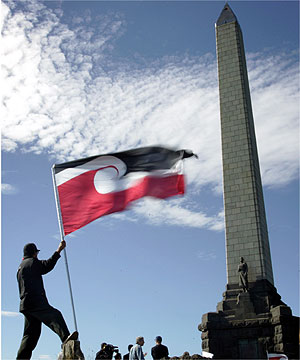
Ironic Victory: The destruction of the iconic tree at the top of Auckland's One Tree Hill was celebrated by Maori nationalists as a victory for tino rangatiratanga. Curiously, the presumably more offensive obelisk - erected in 1940 to celebrate 100 years of European colonisation - was left untouched.

THE SYMBOLISM was perfect. Standing in front of the repeatedly savaged pine tree at the summit of Auckland’s One Tree Hill, the ACT Leader, Richard Prebble, announced his party’s determination to wind up the Treaty Settlement process, abolish the Waitangi Tribunal and do away with the Maori Seats.

That lonely pine tree symbolises something more than the historical contradictions which lie at the heart of New Zealand’s race relations; it is also a powerful metaphor for the vulnerability of the existing bi-partisan consensus on Treaty settlements. Like the damaged pine, the settlement process is currently protected by a complex arrangement of barriers, supports, and surveillance equipment; the priority for National and Labour being to keep it alive for as long as possible. The big – and so far unanswered – question confronting the two major parties is the same question confronting the Auckland City Council vis-à-vis its doomed pine tree: "What do we replace it with?"

ACT’s bold answer to that question is "nothing". And there can be no doubt that their Gordian Knot solution to New Zealand race relations will be welcomed by the very large number of Pakeha New Zealanders, whose patience with the Treaty Settlement process ran out a long time ago.

Richard Prebble’s decision to locate ACT beyond the Pale of elite opinion on the Treaty reflects not only the growing strength of the right-wing populist faction inside his party, but a broader intuition that the "Cultural Revolution" which swept New Zealand during the 1970s and the early 1980s is on the wane. Race and Gender lay at the heart of the "new social movements" which emerged from the tumult of the late 1960s. In the course of their "long march through the institutions" young radical lawyers like Margaret Wilson and Jane Kelsey became highly skilled at using the legal system to further their anti-racist and anti-sexist agendas. The crowning moment of the anti-racist cause came in 1987 when Lord Cooke of Thorndon and his judicially active Court of Appeal used the New Zealand Maori Council v Attorney General case to confer a quasi-constitutional status upon the Waitangi treaty.

The use of the legal system to further the liberal/radical agenda proved to be a highly effective method of achieving social change. Measures which would never have seen the light of day had they been dependent upon the will of popularly elected parliamentarians, acquired legal force through the decisions of an unelected judiciary. In this respect New Zealand was merely following the precedent established by the United States Supreme Court, which, under its activist Chief Justice, Warren Burger, had become the "Liberal East Coast Establishment’s" secret weapon. Whether the issue was the "bussing" of black children into "white" school districts, or the right of a woman to seek an abortion, the Supreme Court was able to over-ride the wishes of often-hostile legislators and impose social change from above.

The problem with this method of achieving social change is that it quite consciously bypasses the grimy business of winning over ordinary voters, in favour of a strategy designed to influence elites. The Ngai Tahu leader, Sir Tipene O’Reagan, has made no secret of his preference for dealing with "The Crown" - the populist instincts of the democratically elected Parliament being much less to his taste.

Many Treaty activists profited by this approach. Throughout the late 1980s and on through the 1990s, numerous small companies composed of dedicated anti-racists won lucrative contracts from both the public and private sectors to explain the significance of The Treaty to high level bureaucrats and managers. Offering a volatile mixture of revisionist history, romanticised anthropology, and coercive group psychology, these slick commercial units became expert at inducing "white guilt" in their clients. Dissenting opinions were shamed into silence, and the Treaty elevated to a level approximating holy writ.

The irony of this approach is that it matches in almost every respect the strategic political template of the New Right. Like the social liberals on the Left, the neo-liberals on the Right made little attempt to win over the "masses", concentrating instead on the commanding heights of the business community, the news media, and the state bureaucracy. In New Zealand, the New Right also zeroed in on the political party of the working class, transforming Labour into the unlikely vehicle of a top-down "revolution".

In some cases – Fran Wilde’s, for example – the Social Liberal and New Right agendas came together in the same politician. Wilde - the champion of that other great liberal cause – gay liberation – is now a powerful advocate of the National Government’s free-trade agenda. Even the Prime Minister, Jenny Shipley, a woman of impeccable New Right credentials, does not feel out of place at the Hero Parade, or walking hand-in-hand with the Maori nationalist leader, Titewhai Harawira.

For those at the bottom of the social heap – including many Maori - all this judicial activism and political correctness has been particularly confusing. For generations inculcated with the social democratic values of the 1930s, 40s, and 50s, expectations of the state have predominantly centred on the quest for social and economic "justice". Fundamental to that quest was the principle of equality – that regardless of race, colour or creed, all New Zealanders possessed the same rights. This was the principle which kept hundreds of New Zealand soldiers on their troopships in Capetown harbour during the Second World War. When the South African authorities denied Maori soldiers leave to disembark, their Pakeha comrades declared that if all of them could not go ashore, then none of them would go ashore. Back then the differences between the races were held to be far less significant than the similarities. Today it’s the other way ‘round.

Working class New Zealanders also resent the moral condescension of Social Liberalism; its confident assumption of intellectual, cultural and ethical superiority over "rednecks", "boguns", "Westies", and other troglodyte entities. Separated by geography, education, and social status from the often brutal realities of multi-racial New Zealand, the Treaty’s advocates are unwilling to concede any validity to the arguments of their opponents. At street level, however, the accentuation of difference – especially on racial lines – frequently leads to the formation of gangs and other mutual defence organisations. Between the theory and the practice of racial autonomy there is room for an alarming amount of social pathology. Working class New Zealand clings to Governor Hobson’s "one people" ideal for some very practical reasons.

Which is not to say that the righting of past wrongs is not a worthy and necessary objective of public policy, merely that legal triumphs in the courtroom, the Select Committee, and the Waitangi Tribunal may not cut much ice in Otara or West Auckland. To the Maori worker on the dole, possessing only a rudimentary grasp of his genealogy, and lacking any facility for the Maori language, the multi-million dollar Treaty settlements have so far brought little in the way of tangible benefits. They may yet come, but while we wait for the Tainui and Ngai Tahu Corporations to "deliver", the statistics on Maori health, education, incarceration, and employment get worse – not better.

It is to be hoped that Richard Prebble’s speech from One Tree Hill will engender some much needed debate on the future of Maori/Pakeha relations, and that the ensuing discussion ranges well beyond the narrow parameters set by National and Labour. If that occurs, then ACT’s policy release from beneath Auckland’s wounded tree may end up having an even greater impact than Mike Smith’s all-too-eloquent chainsaw.

This essay was originally published in The Independent of 13 October 1999.