Tuesday, 12 August 2014

The Responsibilities Of Power

This Land Is My Land: Yes, but if we want to keep it out of foreign hands then New Zealand will have to abandon its 30-year adherence to the doctrines of free trade and unrestricted foreign direct investment. And that will cost us more than many of us may be willing to pay.
 
SO, LABOUR’S going to block the sale of Lochinver Station. The political party which proudly attached New Zealand’s signature to the People’s Republic’s first free trade agreement with a western nation is now proposing to slap the Chinese government in the face. Forgive me, but in the absence of a wholesale repudiation by Labour of its longstanding commitment to free trade, I just don’t see this happening.
 
At the heart of the free trade doctrine lie two fundamental and related provisions: Most Favoured Nation status and National Treatment. In a nutshell, these two provisions are about non-discrimination; about governments promising not to play favourites and undertaking to treat foreigners no better or worse than they treat their own people.
 
These provisions are fundamental to free trade policies for the very simple reason that free trade is impractical without them. Without a foreign government’s undertaking that your country’s exports will be treated no better or worse than those of the “most favoured nation” with which it currently does business, what possible incentive would your own country have to open up its markets to the products of foreigners? And why would anyone attempt to establish a business in a foreign land if it was immediately lumbered with obligations and restrictions from which local businesses are exempt?
 
David Cunliffe, David Parker and Phil Goff (especially Phil Goff) understand the vital importance of reciprocity in international trade relations. The idea that they will intervene to nullify Shanghai Pengxin’s perfectly legal purchase of Lochinver Station – thereby signalling to China and rest of the world that Labour is abandoning its longstanding commitment to the core provisions of international free trade is, frankly, laughable.
 
Why, then, have they given such an undertaking?
 
The answer, of course, is because all the indications point to the conclusion that New Zealanders are adamantly opposed to the idea of their country’s farms being sold to foreigners. With an election looming, and a potential coalition partner, NZ First, promising to ban foreigners from swallowing up New Zealand’s green and pleasant land, Labour’s strategists clearly believe they have no choice except to say: “Me too!”
 
Now there is nothing intrinsically wrong with a political party opting to embrace a more protectionist stance on trade issues. New Zealand’s was, for many years, a highly protected economy with import quotas and high tariffs to protect local industries. The rest of the world accepted this because, for the most part, the rest of the world subscribed to very similar notions of economic management.
 
But, times have changed.
 
Officially, the rest of the world no longer believes in protectionism. The IMF and the World Bank, not to mention the World Trade Organisation, take a very dim view of countries which persist with (let alone re-erect!) barriers to the free movement of goods and services around the world. The fact that many larger and more powerful countries (the USA, the EU, Japan, Russia, South Korea) still maintain substantial barriers to trade, especially in agricultural products, may be a sore point with the New Zealand government, but it is not one it can do much about. From the mid-1980s, successive New Zealand governments (beginning with the fourth Labour Government) have progressively stripped away all the impediments to free trade. As a very small country, determined to achieve unrestricted access to the world’s markets for its predominantly agricultural exports, we could hardly do less.
 
All of which makes it extremely unlikely that a Labour-led Government would do anything so foolish and provocative as to over-rule an Overseas Investment Office-approved sale of Lochinver Station to Shanghai Pengxin. Not unless they actually wanted to see New Zealand’s exports held up for weeks on the Chinese docks!
 
It is critical to the future prosperity of New Zealand that its political leadership, even at the risk of incurring the electorate’s wrath, remain steadfast in its adherence to the principles of open markets and open borders. And if that means rehearsing the arguments in favour of free trade, as well as pointing out the likely consequences of denying the benefits of Most Favoured Nation status and National Treatment to a trading partner as vital to this country’s economic interests as the People’s Republic of China – then so be it.
 
It is easy to secure the approbation of the masses by telling them what they want to hear. Much harder is the task of convincing one’s fellow citizens that the cost of the changes they are demanding is well beyond what most of them would be willing to pay.
 
Small parties without prospect of ever being in a position to formulate the core policies of the state are free to promise voters the diplomatically and economically impossible. The leaders of parties large enough to make a difference have a duty to accept the responsibilities of power.
 
This essay was originally published in The Press of Tuesday, 12 August 2014.

F**king John Key: How Kim Dotcom And Internet-Mana Transformed The Right Into Their Best Recruiters.

Finding The Right Words: To an electorate grown weary of the bland rhetoric of parties content to play politics-by-numbers, Kim Dotcom's invitation to "bring down the government" has a novel and, for a great many younger New Zealanders, irresistible appeal.

ARE YOU READY FOR A REVOLUTION? When was the last time anybody asked a crowd of young New Zealanders that question? Seriously? When was the last time a political party, with a reasonable chance of putting at least five people into Parliament, had five candidates for whom the idea of participating in a revolution wasn’t utterly abhorrent?
 
Honestly? The last time such a thing happened was nearly 100 years ago, when Peter Fraser openly admitted that, were he in Russia, he would be a Bolshevik; and when Labour’s first parliamentary leader, Harry Holland, in his maiden speech, informed the New Zealand Parliament that:
 
“We of the Labour Party come to endeavour to effect a change of classes at the fountain of power. We come proclaiming boldly and fearlessly the Socialist objective of the Labour movement throughout New Zealand; and we make no secret of the fact that we seek to rebuild society on a basis in which work and not wealth will be the measure of a man’s worth.
 
“We do not seek to make a class war. You cannot make that which is already in existence. We recognise that the antagonisms which divide society into classes are economically foundationed,  and we are going, if we can, to end the class war by ending the causes of class warfare.”
 
Both Peter Fraser and Harry Holland were former members of the militant trade union organisation known as the “Red Feds” (The New Zealand Federation of Labour) and were well versed in the ways of inspiring their mostly young audiences. Being good Edwardians, they would have shied away from the public use of Anglo-Saxon expletives but, as good Socialists, they would not have hesitated to state in 3,000 impassioned words what a boisterous crowd of Canterbury students this week condensed into just three. Confronted with this government’s and this prime minister’s record, the essence of Peter Fraser’s and Harry Holland’s message would also have been: “Fuck John Key!”
 
The young advisers to the Internet-Mana Party, at whose urging the in/famous FJK clip was posted on YouTube (21,665 hits and counting) knew what they were doing. Quite apart from accurately anticipating the reaction of their peers, they also hazarded a shrewd guess as to how the “offensive” clip would be received by the political and media guardians of the status-quo.
 
And they have not been disappointed. Almost to a person, the conservative commentariat has condemned Internet-Mana in the most extravagant terms. PR maven and political commentator, Matthew Hooton, tweeted that the clip contained images reminiscent of a Munich beer-hall circa 1920, thereby setting in motion a Kim-Dotcom-as-Adolf-Hitler meme that within hours would infect huge chunks of the mainstream media. Curiously, very few media commentators appeared to consider how gratefully such criticism might be received by a movement whose primary objective is to be seen as the antithesis of everything old and well-behaved and conventional and boring.
 
The over-riding goal of Internet-Mana is to be branded as dangerous and transgressive. The Powers-That-Be have co-operated splendidly.
 
Then again, they may have had no choice. The internal polling of the major political parties may well be detecting the invisible effects of what the visible manifestations of Internet-Mana’s efforts are signalling. The packed halls and enthusiastic chanting of the hundreds of young people who have turned out for the party’s public meetings may simply be the tip of a vast iceberg of political re/engagement on the part of those who usually keep well away from the electoral fray. The pool of voters may be expanding; bringing into play for the first time since 2005 the marginalised, the disillusioned, and – most alarmingly for the forces of the Right – the angry and aggrieved. The sort of people who need very little excuse to begin chanting – “Fuck John Key!”
 
This is the stuff of nightmares for the Right. Rising participation in the electoral process has always spelled doom for conservative administrations. John Key’s best-case scenario has always been one of mass political somnambulance: in which hundreds of thousands of voters, convinced by the pollsters and their journalistic interpreters that the election was already won, would march, zombielike, into the polling-booths and make the media’s prophecies come true. Kim Dotcom’s unparalleled ability to disturb and disrupt has put this fantastical scenario to the sword. Even worse (from John Key’s perspective) the political spell he has cast cannot now be recalled.
 
Even were all the rumours of dark secrets soon to be revealed proved correct, the effect of their release would likely be very different from that anticipated by their purveyors. The Establishment, in its hysterical reaction to the FJK clip, has already demonstrated a willingness to do almost anything to upend Internet-Mana’s campaign. Even the most scurrilous revelations will now be received by the insurgent party’s target audience as yet further proof of the extraordinary lengths to which the Powers-That-Be will go to bring Dotcom down.
 
The optimum strategy to derail Dotcom was always to completely ignore him. But even that option is now denied his enemies. In his Auckland Town Hall meeting of the 15 September Dotcom has laid a trap which the National Government cannot escape. If it attempts to persuade the news media to stay away from the meeting and/or wilfully misrepresent its significance, Dotcom’s case will be made against Key with a force equal to or greater than any evidence he may, with Glenn Greenwald’s internationally visible assistance, produce.
 
Like Brer Fox and his Tar Baby, Kim Dotcom has, in Internet-Mana, created an object which the Prime Minister and his allies simply could not resist. In his version of the story, however, there will be no Briar Patch into which the Prime Minister can, like Brer Rabbit in “Uncle Remus’s” famous tale, be conveniently thrown and thus escape his fate. If all goes according to Dotcom’s plan, the refrain upon which this story ends will not be “Born and bred in the Briar Patch, Brer Fox! Born and bred in the Briar Patch!” but “Fuck-John-Key! Fuck-John-Key! Fuck-John-Key!”
 
This essay was originally posted on The Daily Blog of Friday, 8 August 2014.

Saturday, 9 August 2014

World War I - Whodunit?


I’VE AN IDEA for a television documentary – one I probably should have had two years ago. If it had occurred to me then, and I’d found someone to back it, it would be on your screens right now. This is, after all, the week in which we commemorate the outbreak of the First World War.
 
My idea is to treat the outbreak of the war as a cold case, with a crusty old Chief Inspector and an idealistic young Detective Sergeant.
 
The documentary (“docu-drama” is a better description) begins with the Detective Sergeant approaching the Chief Inspector with what he claims is evidence of a gross miscarriage of justice.
 
He points out that Germany’s confession of “war guilt” in the Treaty of Versailles was extracted under duress.
 
“For goodness sake!”, he tells the Chief Inspector, “the country was still being blockaded. It’s population was starving. There was rioting in the streets. And, as if that wasn’t enough, the armies of France, the British Empire and the USA were camped on its doorstep. What choice did she have?”
 
“That’s all very well,” says the Chief Inspector, “but for the past 100 years the evidence of Germany’s guilt has been regarded as overwhelming: proved beyond reasonable doubt.”
 
“Well, the Allied Powers would say that, wouldn’t they?”, says the Detective Sergeant. “I mean, they were hardly going to admit that the death of so many of their sons was the result of their own nefarious machinations – were they?”
 
The Chief Inspector demands to know if the Detective Sergeant has anything in the way of fresh evidence. Something solid enough to have the whole case re-opened.
 
The Detective Sergeant slams down a book by Cambridge historian, Chris Clark – The Sleepwalkers: How Europe Went to War in 1914.
 
“The question, as always, in a crime such as this is ‘Cui bono?’ – who benefits? The evidence suggests that it was Serbia that had the most to gain. Its great dream was a South Slav nation – ‘Yugoslavia’ – which Serbia would dominate. But Yugoslavia could only be constructed upon the ruins of the Austro-Hungarian Empire, and that would require a general European war.”
 
“You’re saying Serbia wanted a general European war?”
 
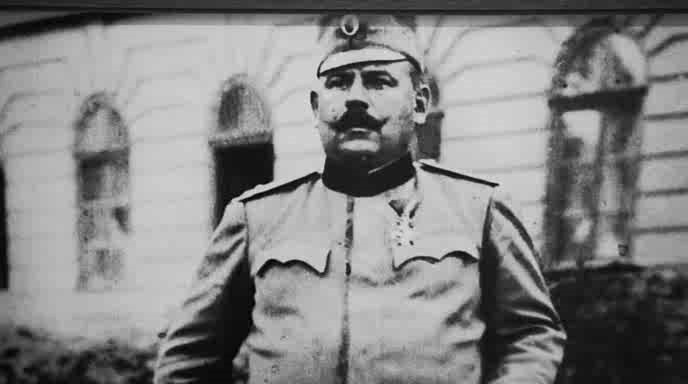
Dragutin Dimitrijevic: Serbia's Head of Military Intelligence. He not only wanted a general European war - he triggered it.
 
“Not only did they want it – they triggered it!”, exclaims the Detective Sergeant. “Gavrilo Princip, the Bosnian assassin of the Archduke Franz Ferdinand, heir to the Austro-Hungarian throne, was the wind-up toy of Serbian military intelligence. The latter’s boss, Dragutin Dimitrijevic, was certain that the Archduke’s death would provoke a war with Austria and that this, in turn, would draw in Serbia’s protector, Imperial Russia. Once the Russians moved, a general war was inevitable.”
 
“Hmmm”, says the Chief inspector, “it’s pretty thin.”
 
“Okay, but there’s more”, says the Detective Sergeant. “The entire Serbian economy, bankrupted by the Balkan Wars of 1912 and1913, was being kept afloat by French and Russian loans. So Dimitrijevic wasn’t going to move without the go-ahead from Paris and St Petersburg.”
 
“Wait a minute. Are you saying that the French and the Russians gave the green light to Franz Ferdinand’s assassination?”
 
Raymond Poincare: The French president was present in St Petersburg in the midst of the assassination crisis, which he helped to fan into war.
 
“Petty much, pretty much. Maybe not the assassination specifically, but definitely something in the nature of a casus belli – a cause for war. How else do you explain the fact that in the twelve months immediately preceding the outbreak of war, the French President, Raymond Poincaré, was present in both London and St Petersburg. Hell’s teeth! The man was actually in Russia at the exact moment the crisis was unfolding!”
 
“What are you saying?”
 
“I’m saying that Poincaré, having confirmed the anti-German faction at the British Foreign Office still had Foreign Secretary Sir Edward Grey’s ear, made sure he was in St Petersburg to steady Tsar Nicholas’s nerves.”
 
“His motive?”
 
“Revanche! Chief Inspector. Revenge! Poincaré was born in Alsace – the province stolen by Germany in 1871.”
 
“And the Russians?”
 
“Constantinople! They were terrified that Germany’s friendship with the Turkish Empire would stymie their plans for seizing the Bosphorus – gateway to the Mediterranean.”
 
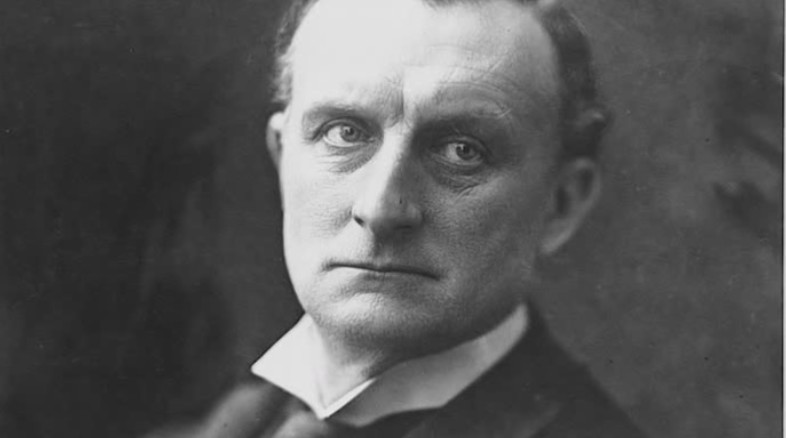
Sir Edward Grey: The British Foreign Secretary who famously remarked on the eve of World War I: "The lamps are going out all over Europe, we shall not see them lit again in our lifetime." Less well known is his role in extinguishing them!
 
“And Great Britain?”
 
“She had no choice but to go along – if only to keep St Petersburg’s attention on the Balkans and away from India.”
 
“But Germany invaded Belgium!”, objected the Chief Inspector.
 
“Facing a war on two fronts: what other choice did she have?”
 
Now, tell me these aren’t the ingredients for a gripping whodunit – History’s ultimate cold case?
 
This essay was originally published in The Waikato Times, The Taranaki Daily News, The Timaru Herald, The Otago Daily Times and The Greymouth Star of Friday, 8 August 2014.

Friday, 8 August 2014

No Cookies! But Maybe The Balance Of Power: Why Kelvin Davis And The Labour Right Are So Scared Of Internet-Mana.

On Message And On Fire: The Labour Right are terrified that having established a parliamentary bridgehead the Internet-Mana Party will play the role of the broader Left’s staunch chorus, with Hone Harawira, Annette Sykes, Laila Harre and John Minto passing withering judgement upon the antics of a back-sliding Labour Caucus.
 
THE CRUDE POLITICAL GAMBIT of Kelvin Davis and his supporters in Te Tai Tokerau has fallen flat. His plans to knock Internet-Mana out of the electoral race have been revealed and the Maori voters of the North will punish him severely. Not only for his confrontational and abusive rhetoric, but also for the rank ingratitude and disloyalty he has displayed toward Labour. The rest of the country can only shake their heads in wonder at the strategic stupidity of the man.
 
Davis is, after all, the candidate to whom the Labour Party’s Ranking Committee gifted a very favourable position on the Party List. His role in Te Tai Tokerau was not to go all out to take the seat from Hone Harawira, but to maximise Labour’s Party Vote. It is staggering that Davis and his allies have been unable (or unwilling) to grasp the simple fact that the welfare of the people of the North will be most effectively secured by a victory in the forthcoming election for the parties of the Left – of which Internet-Mana is rapidly becoming a critical component.
 
The scuttlebutt in left-wing circles is that Davis has been “rarked up” by Labour’s ABC Faction, who not only need their leader, David Cunliffe, to fail on 20 September, but who are also determined to deny Internet-Mana a parliamentary bridgehead. Their plans to haul Labour back to the “centre” (the Right’s code word for an ideological position acceptable to Business New Zealand, Federated Farmers and the mainstream news media) will suffer a serious setback if Hone Harawira, Annette Sykes, Laila Harre and John Minto get to play the role of the Left’s staunch chorus – passing withering judgement upon the antics of a back-sliding Labour Caucus.
 
In this effort, the Labour Right is marching in lock-step with the National Party’s and the right-wing news media’s political objectives. The more intelligent among them understand that, over a three year term, an Internet-Mana presence in the House has the potential to haul back “Overton’s Window” from its present location well to the right of the political spectrum and reposition it much closer to the left. The overwhelming priority across the entire New Zealand Right is, therefore, to strangle this potential left-wing Hercules in his cradle. Wittingly or unwittingly, Davis has allowed himself to become a pawn in its game. How else to explain his willingness to be associated with David Farrar and Cameron Slater, the twin serpents sent to dispatch the Left’s infant hero?
 
The ABC Faction’s tactical priority is to smear David Cunliffe as Internet-Mana’s secret enabler: the politician who’s promising publicly to have nothing to do with Kim Dotcom’s creation while all the time secretly plotting to give Maori Affairs to Hone, Social Welfare to Laila Harre, and Foreign Affairs to John Minto. They are well aware of how badly the idea of any kind of Labour “deal” with Internet-Mana is playing with young, reasonably-skilled but indifferently-paid women workers whose extremely limited grasp of politics is almost exclusively informed by what Patrick Gower, Tove O’Brien and Corin Dann tells them on the six o’clock news.
 
In the past, these young women: retail workers, hairdressers, receptionists and office personnel of all kinds; have provided Labour with the numbers necessary to evict National Governments. Without them, securing victory becomes extremely problematic. Helen Clark lost what British snobs would call the “Chav Vote” to the dashing John Key in 2008 and poor old Phil Goff never seriously tempted them in 2011. David Cunliffe just might win them back in 2014, but not with Kim Dotcom looming behind him like a pantomime demon.
 
It is this need to distance himself from Dotcom and his allies that explains Cunliffe’s refusal to call out Davis for the dangerous political distraction he has become. Indeed, in a funny sort of way, Davis’s extreme animus towards Harawira and Dotcom has played into the Labour Leader’s hands. It has enabled him to reiterate in even more unequivocal language that Labour will have no truck with Kim Dotcom; that there will be no electorate deals done with Internet-Mana; and that no Internet-Mana MPs will be invited to serve in any coalition Cabinet over which Cunliffe presides. In Andy Williams’ immortal words to the importunate Cookie Bear: “Not now. Not ever. Never. No cookies!
 
Such is the general ignorance which still surrounds the MMP electoral system, however, that many of those reassured by Cunliffe’s rejection of the Internet-Mana Party may be shocked to discover on Election Night that they have somehow managed to win seats in Parliament. What’s more, as the sworn enemies of John Key’s government, if the numbers are there for David Cunliffe to become Prime Minister with Internet-Mana’s support they will happily make him so. This will undoubtedly provoke an outcry from those who interpreted Cunliffe’s “Internet-Mana will have no place in a Labour-led Government” as meaning “We will not accept the votes of Internet-Mana’s MPs in assembling the support needed to form a government.”
 
If that turns out to be the case, then New Zealanders are in for a crash-course in constitutional realities. They will discover that if Internet-Mana have the numbers to make David Cunliffe the Prime Minister, they will almost certainly also have the numbers to prevent John Key from resuming office. Whether some of the voters like it or not; whether National likes it or not; whether the mainstream news media likes it or not; and whether Kelvin Davis likes it or not; if the rules of MMP return the Internet-Mana Party in sufficient numbers to break the National Government and install a Labour-Green coalition – then that’s exactly what it will do.
 
This essay was originally posted on The Daily Blog of 6 August 2014.

Wednesday, 6 August 2014

Privileged Status

The Settling Of Social Scores: The poor of Paris leer at the abused body of the Princesse de Lamballe, friend of Queen Marie-Antoinette and, ironically, a passionate advocate of social reform. Jamie Whyte's comparison of the "privileged" legal status of Maori with the legal privileges of the Aristocracy of pre-revolutionary France inevitably raised the ghosts of the Revolution's aristocratic victims. In the words of the Race Relations Commissioner, Dame Susan Devoy: “Equating Maori New Zealanders to French aristocrats who were murdered because of their privilege is a grotesque and inflammatory statement.”
 

Maori are legally privileged in New Zealand today, just as the Aristocracy were legally privileged in pre-revolutionary France.
 
Jamie Whyte, Act Party Leader, 26 July 2014
 

REPROVED BY DAME SUSAN, condemned by the Maori Party, castigated by most of the news media, it remains to be seen whether Jamie Whyte’s equation of Maori legal “privileges” with the feudal privileges of the French aristocracy was electorally clever or stupid.
 
The example of Don Brash’s Orewa Speech undoubtedly looms very large before any right-wing political leader whose party is languishing in the opinion polls. The National Party leader’s notorious address to the Orewa Rotary Club, in which he promised to nullify nearly all of Maoridom’s political rehabilitation since the 1970s, saw his party’s poll ratings advance by an unprecedented 17 percentage points. It put the National Opposition back in the race – with a vengeance!
 
The New Zealand electorate, it seems, is one vast racist itch just waiting for a scratch. And if it remains as easily satisfied as it was ten years ago, then Whyte’s speech to the Act Party’s Hamilton conference – and all the fallout from it – should produce a statistically significant up-tick in his party’s support.
 
And really, what else could Jamie do? The New Zealand voter is ill-disposed toward philosophical speculation and debate. The finer points of John Locke’s defence of individual liberty and the role played by private property in its preservation, are not the stuff of all that many Pakeha conversations. The merits or otherwise of their Maori neighbours, on the other hand, remains the subject of lively speculation.
 
Richard Prebble understood and accepted this inconvenient truth about the New Zealand voter. He had watched good-naturedly as Roger Douglas and Derek Quigley (Act’s founders) toured the country (on millionaire Craig Heatley’s dime) preaching the pure gospel of neoliberalism to anyone who would listen. Which, as Prebble already knew, would always be far too few to secure a solid footing for Act in the new MMP parliament. He had the data, he knew what it would take to move 5 percent of his fellow Kiwis into Act’s camp – and it wasn’t John Locke.
 
What Jamie Whyte lacks, however, is his predecessor’s wry political cynicism. If he was to raise again the divisive issue of Maori “privilege” (at Act’s campaign manager, Richard Prebble’s insistence?) then he was determined to do so with all the panache of a swashbuckling Cambridge philosopher. Not for him the mean-spirited snarling of the hard-bitten provincial voter that Prebble translated so well. No, he would wage war on the legal privileges of Maoridom in the guise of an antipodean Robespierre.
 
“Maori are legally privileged in New Zealand today,” Whyte told Act’s annual conference in Hamilton, “just as the Aristocracy were legally privileged in pre-revolutionary France.”

Really?
 
Presumably, in making this bold comparison, our Cambridge graduate had some notion of what those aristocratic privileges included, even if many in his audience, subscribing to Henry Ford’s view that “history is bunk”, did not.
 
Let’s list just a few of them:
 
·        The French Aristocracy were exempt from taxation.

·        French aristocrats presided over their own seigneurial courts – i.e. they were able to try their own tenants for any beaches of the law alleged to have taken place on their own estates.

·        Deceased tenant farmers of aristocratic land were prevented, under the law of mainmorte (the “dead hand”) from bequeathing the tenancy rights they enjoyed whilst living to their descendants. Upon their death the right to use the property reverted to its aristocratic owner who was then free to dispose of it as he saw fit – even at the cost of evicting the deceased tenant’s family. The aristocrat could, of course, be “persuaded” against this course of action by the tenant’s descendants paying their lord a “fine” for the right to go on farming the land.

·        Aristocrats also enjoyed a range of monopolies within their domains. For example, requiring tenants to have their grain ground in the aristocrat’s mill.

·        In many parts of France, a tenant wishing to get married had first to acquire his or her lord’s permission.

·        The aristocrat’s prior permission was also required before a tenant farmer could vacate his tenancy – i.e. move away from the lord’s estate.

·        To secure these aristocratic consents it was customary for tenants to pay yet more “fines”.
 
Do any of these legal privileges bear any resemblance to the supposed legal privileges enjoyed by Maori? Are Maori exempt from taxation? Do Maori preside over their own courts? Are Maori able to prevent the alienation of their tribal resources by imposing restrictions on their tenants’ ability to bequeath, sell or otherwise transfer their interest in tribal property? Do Maori enjoy monopolies over specific goods and services? Is prior permission required from Maori before a citizen is able to exercise his or her rights?
 
Perhaps the most questionable aspect of Whyte’s historical comparison was the aspect the Race Relations Commissioner, Dame Susan Devoy, picked up on in her statement of Wednesday, 30 July, in which she stated: “Equating Maori New Zealanders to French aristocrats who were murdered because of their privilege is a grotesque and inflammatory statement.” Quite true, because to link the French Aristocracy and the French Revolution is to conjure up images of angry crowds, clattering tumbrils, rolling drums and the sudden descent of Madame Guillotine’s blade.
 
The historical details surrounding the persecution of the French Aristocracy are, as is so often the case, even worse. The guillotining of condemned aristocrats in the manner so vividly described by Charles Dickens in A Tale of Two Cities certainly did take place, but at least as many more aristocrats met their deaths at the hands of the Parisian Mob. In a grotesque settling of centuries-old social scores, aristocratic families were dragged from the relative safety of the city’s overcrowded prisons and butchered in the streets. Whipped up to a frenzy by such fanatical foes of privilege as Jean-Paul Marat, the poor of Paris fell upon these defenceless men women and children and quite literally tore them to pieces.
 
These are dangerous precedents to play with in a country whose racial and social prejudices lie buried in such shallow graves. Politicians who make persistent, but groundless, claims that a minority of the population is enjoying legal privileges which the majority of ordinary citizens do not possess, can hardly hold themselves blameless when those same ordinary citizens turn against that minority. Or, God forbid, upon them.
 
As the great Russian playwright, Anton Chekov, once remarked: “If in the first act you have hung a pistol on the wall, then in the following one it should be fired. Otherwise don’t put it there.”
 
This essay was originally posted on The Daily Blog of Monday, 4 August 2014.

Tuesday, 5 August 2014

Reaping The Whirlwind

Dresden, February 1945: Our parents and grandparents received the news of Dresden's destruction with equanimity. We were at war. By 1945 the civilian population of Germany had ceased to be "collateral damage", they were now regarded as legitimate targets. Israel's deliberate targeting of civilians in Gaza is not without precedent.

SUCH A BRIEF RESPITE. Barely time to find water – let alone food. And all around the shelter fires blazing unchecked. She did not tell her children what she had seen in the streets. Could not admit, even to herself, what lay there. Where was God, she wondered, amidst all this death? As if in answer, the sirens wailed again, their harsh note of alarm rising and falling like the cry of some gigantic beast in pain. In the shelter they could already hear the ominous drone of the bombers. And then, the thud, thud, thud of the bombs.
 
God may have been absent from Dresden on St Valentine’s Day 1945, but the Devil was there and he had brought the fires of Hell with him.
 
My wife and I have been arguing about Gaza. She demands to know what benefit Israel could possibly derive from deliberately bombing and shelling innocent women and children? I asked her what benefit our grandparent’s generation derived from ordering the bombing of Dresden – a city packed with refugees posing no threat to either the British, the Americans or the Russians? By February 1945 the Allies were driving Adolf Hitler’s battered armies before them and in less than three months the war in Europe would be over. Why unleash a firestorm on one of Germany’s most beautiful cities? Why kill 25,000 people, most of them women and children, needlessly?
 
Sir Arthur “Bomber” Harris justified the Allies’ terror bombing of German cities in explicitly biblical terms:
 
“The Nazis entered this war under the rather childish delusion that they were going to bomb everyone else, and nobody was going to bomb them. At Rotterdam, London, Warsaw and half a hundred other places, they put their rather naive theory into operation. They sowed the wind, and now they are going to reap the whirlwind.”
 
Those words may sound harsh to New Zealanders living in the twenty-first century, but in the ears of our parents and grandparents they sounded both true and just. In the eyes of Hitler’s enemies, Nazism was an unmitigated evil which had to be destroyed – by any means necessary.
 
Once a nation thrusts itself into the unrelenting horrors of war, its over-riding priority is to end them, on the most favourable terms possible, as quickly as possible.
 
Almost exactly 100 years ago, at the outbreak of the First World War, Great Britain’s first lord of the admiralty, Winston Churchill, ordered the Royal Navy to institute a complete naval blockade of Germany. Of this ruthless strategic decision he would later write: “The British blockade treated the whole of Germany as if it were a beleaguered fortress, and avowedly sought to starve the whole population – men, women, and children, old and young, wounded and sound – into submission.”
 
These are not pleasant facts to dwell upon. The terror-bombing of civilians. The deliberate starvation of whole populations. And yet, these were, indisputably, the tactics employed by “our side” in both world wars. Unsurprisingly, when paying our respects to “the glorious dead” on ANZAC Day, we prefer to draw a veil across the inglorious death we inflicted in return.
 
I wonder, were it possible to travel back in time and confront our parents’ and grandparents’  younger selves about these measures; if we could demand to know their justifications for acquiescing, without protest, in these crimes against humanity: how would they respond?
 
I think they would look at us strangely. I think they would shake their heads in disbelief. I think they would reply, simply: “We are at war.”
 
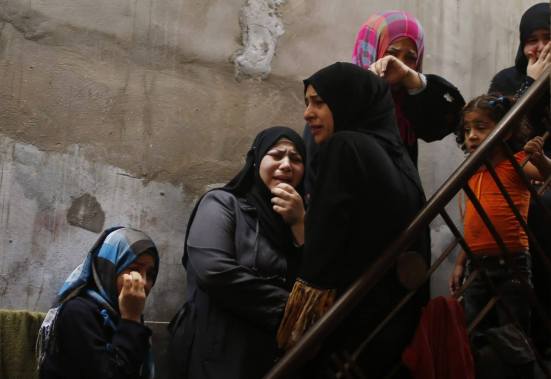
That same incomprehension is similarly imprinted on the faces of Israelis when the world demands to know why their jets and artillery are pounding Gaza until the rubble bounces; why the whole of the Gaza Strip is being treated, in Churchill’s words, “as if it were a beleaguered fortress” and why “the whole population – men, women, and children, old and young, wounded and sound” are being ruthlessly bombed and shelled and starved into submission.
 
“Does the world not understand that we are at war?” Israel asks.
 
“They that sow the wind, shall reap the whirlwind.” So said the Prophet Hosea. If Bomber Harris could quote the Bible, can Israel not quote the Torah?
 
Gaza, July 2014.
 
Such a brief respite. Barely time to find water – let alone food. And all around the UN school fires blazing unchecked. She did not tell her children what she had seen in the streets. Could not admit, even to herself, what lay there. Where was Allah, she wondered, amidst all this death? As if in answer, the sirens wailed, their harsh note of alarm rising and falling like the cry of some gigantic beast in pain. In the shelter they could already hear the hideous screech of the jets. And then, the thud, thud, thud of the bombs …
 
This essay was originally published in The Press of Tuesday, 5 August 2014.

Monday, 4 August 2014

Cost-Benefit Analyses

Getting The Visuals Right: John Key's decision to lend the National Party's support to the so-called "Anti-Smacking Bill" not only reassured his more moderate supporters that he was not beholden to the Far Right, but also allowed him to share the stage with Helen Clark on the six o'clock news. Here, it seemed to say, is a leader in waiting.
 
IT WAS A BOLD STRATEGIC DECISION which has since repaid the courage required to make it several times over. In the run-up to the 2008 General Election John Key could so easily have cemented-in the extreme Right to his electoral coalition by opposing the so-called “Anti-Smacking Bill”, but he did not. To the utter consternation and dismay of Family First’s, Bob McKroskie, and many other social conservatives, the Leader of the National Party Opposition did precisely the opposite.
 
Instead of fighting the measure, John Key offered Helen Clark the support of himself and his socially liberal National Party colleagues – thereby guaranteeing the passage of Sue Bradford’s Private Members Bill by a decisive majority. At a stroke all the bitter memories from 2005 and Don Brash’s secret alliance with the Exclusive Brethren Church were wiped away. Middle-class liberals could now vote for John Key’s National Party with a clear conscience.
 
Key’s decision also secured him some invaluable “visuals”. Voters watching the six o’clock news saw the Prime Minister and the Leader of the Opposition striding in lock-step towards a pair of lecterns, from which, as equals, they delivered the good news about the proposed changes to Section 59 of the Crimes Act.
 
It was a major propaganda triumph for Key because until that moment the voters had not been sure that the new leader of the National Party was for real. Talk is cheap. But to cut adrift a potentially huge number of angry voters was potentially very costly.
 
For the first time New Zealanders had seen the former currency trader’s ruthless decision-making technique in action.
 
There was no disputing the fact that the forces of social conservatism were expecting National’s new leader to throw them a bone. But what would be the political benefit of doing so? The Far Right was desperate to be rid of Helen Clark’s government and the surest way of doing that was by giving National its Party Vote. That meant that its support was already safely banked in National’s account.
 
But what about the votes of those who saw themselves as occupying the centre of the political spectrum? If he threw the Far Right a bone how would they react? Centrists were nowhere near as hostile to Helen Clark as the social-conservatives. Should they become convinced that behind this new fellow’s pleasant smile and friendly wave there lurked a dangerous extremist they might conclude that it wasn’t time for a change after all.
 
In the end Key’s cost-benefit calculation was a simple one. The Centre was much more important to National’s election chances than the Far Right. Bob McKroskie and his ilk would just have to live with it.
 
And last Monday evening Key did it again.
 
This time the cost-benefit calculation involved the electoral utility of Colin Craig’s Conservative Party.
 
Were National to withdraw its candidate from East Coast Bays in expectation of Mr Craig taking the seat, then socially conservative voters would be reassured that thanks to MMP’s “coat-tail” provisions every vote cast for the Conservative Party would count. The resulting surge in their Party Vote would, post-election, assist National in mustering the numbers needed to govern. Wouldn’t that be a considerable benefit?
 
But at what cost? Among those crucially important centrist voters, the prospect of Colin Craig coming anywhere close to Government was deeply worrying. Not the least of their concerns was his policy of deciding highly complex and deeply emotive issues by referendum. How long would it be before capital punishment and abortion were placed on the ballot-paper? If John Key threw Colin Craig a bone of such dangerous dimensions, then they might just decide to hold their nose and cast their votes for David Cunliffe or Russel Norman.
 
It was 2008 all over again. Where was the benefit in taking on a swag of passengers from the starboard side of the good ship National, if the cost was to see an even larger number hurriedly disembarking to port?
 
Sorry Colin.
 
This essay was originally published in The Dominion Post, The Waikato Times, The Taranaki Daily News, The Timaru Herald, The Otago Daily Times and The Greymouth Star of Friday, 1 August 2014.