Monday, 27 April 2020

Of Devs, Other Universes, And China’s Covid Choices.

Looking Backwards - And Forwards? The writer and director of the TV mini-series, Devs, Alex Garland, clearly anticipates that quantum computing and quantum mechanics are going to be inextricably entwined. This allows him to play with the weird paradoxes of quantum physics – like matter being in, and not in, our universe at the same time. These raise the possibility of there being more than one universe. Or many. Or even an infinite number of universes! If that’s the way it is, however, then wouldn’t it mean that an infinite number of pasts – and futures – are also possible?

DEVS is a fantastic futuristic television mini-series – which ends next week on Soho. Now, don’t worry, there will be no spoilers in this post, so please feel free to read on. It’s certainly not giving too much away to say that in addition to serving up a riveting plotline and a first rate cast, Devs also offers master classes in both the future of information technology and philosophy.

Driving the drama forward is the age-old debate between those who believe that human-beings possess free will and those who insist that, since every effect must have a cause, our “choices” are entirely predetermined. Devise a computer of sufficient capability, Devs’ determinists insist, and not only will it allow you to see back into the past, but also forward into the future.

Mind-bending stuff.

Once you enter this territory, however, the question inevitably arises: “Which past and which future?” The writer and director of Devs, Alex Garland, clearly anticipates that quantum computing and quantum mechanics are going to be inextricably entwined. This allows him to play with the weird paradoxes of quantum physics – like matter being in, and not in, our universe at the same time. These raise the possibility of there being more than one universe. Or many. Or even an infinite number of universes! If that’s the way it is, however, then wouldn’t it mean that an infinite number of pasts – and futures – are also possible? And wouldn’t it then follow, logically, that in this “multiverse” anything you can imagine happening either will happen, or, has happened already?

Here then, in the spirit of Devs, is one of the infinite number of histories of the Covid-19 virus and the global pandemic which it spawned.

In a biological research facility on the outskirts of Wuhan, in China’s Hubei province, scientists create a new, highly infectious and potentially deadly coronavirus. Unfortunately, lax handling protocols result in a number of the research facility’s staff becoming infected. With terrifying speed the virus spreads through Wuhan’s 11 million inhabitants. Alerted to its unchecked community transmission by a conscientious physician, the Chinese authorities are faced with a daunting series of choices.

The most noble choice is, obviously, to contain the disease within China’s borders and do everything possible to prevent it from infecting the rest of humanity. This option, however, is fraught with risk. What if the virus mutates into something even deadlier? What if it cannot be contained? What would such an outbreak do to China’s already faltering economy? How could the Chinese Communist Party preserve its power in the face of tens-of-thousands – perhaps millions – of fatalities? And what would China’s enemies do? Would they help? Or, would they stand back and watch the regime of Xi Jinping go under?

In the very large subset of worlds in the multiverse where this most ruthless sort of political calculation prevails, such questions tend to lead political leaders away from noble choices. This case was no exception. The government of Xi Jinping adopted a policy of strategic inaction. It delayed informing the World Health Organisation of the virus’s extraordinary infectiousness. More crucially, it delayed shutting down Wuhan, Hubei, and China itself, until the virus was safely aboard the world’s airlines and winging its way unheralded across the planet.

If humanity suddenly had to contend with a new coronavirus, then, from the perspective of Beijing, it was far preferable to have the whole of humanity contending with “Covid-19” (as it would soon be called) than only that fraction of humanity residing within the borders of the People’s Republic of China. To have protected the rest of the world – particularly its most powerful nations – from the virus’s devastating economic side-effects would have been indistinguishable from allowing China to be defeated in a major war. Sharing Covid-19 with the rest of the world made much more sense in geopolitical and economic terms than heroically bearing its burdens alone. Receiving the world’s praise is one thing; giving the rest of the world the whip hand over your country’s future is something else altogether.

Having allowed the virus to escape, it then behoved the Chinese Government to do all within its power to mitigate its effects and, if at all possible, stamp it out. Obviously, the first country to come out the other side of what was now a global pandemic would enjoy a tremendous advantage over all those other nations still stricken and locked down by the presence of Covid-19 in their populations. Certainly, China did not lack the totalitarian apparatus necessary to contain and eliminate the virus among its own people.

Even in another universe, far, far away, it would not have taken long for those well-schooled in the realities of ruthless political calculation to grasp what China had done. Could they prove it? No. But proof is not always required when the logic of a particular course of action is so compelling. If every effect has a cause, then it is no great matter to work one’s way back through each successive stage of a crisis to locate the first move, the first “choice”, that set it in motion.

Small wonder that China’s principal rival, the United States is so agitated by the bind in which it now finds itself. It simply cannot afford to be locked down, but it lacks the totalitarian apparatus needed to drive its population through the slaughter associated with acquiring “herd immunity” in the shortest possible time. Even if it did (and astutely exploited the Patriot Act offers a sufficiently ruthless American government tremendous scope) the United States has chosen, democratically, to afflict itself with its worst President ever. To look upon an America more riven with sectarian hatred and social division one would have to travel back in time to the Civil War of 1861-65.

If the Chinese Government operating in this alternative universe had been in possession of the time-mastering super-quantum-computer at the heart of the action in Devs, it could not have played its hand with more far-sighted political acuity. China took an “accident” (if you believe in such dubious concepts) and turned it into an opportunity to take over the world.

Not to worry, though. There are plenty of other universes where this didn’t happen. We might even be living in one.

This essay was originally posted on The Daily Blog of Friday, 24 April 2020.

Friday, 24 April 2020

Deposing Simon Bridges Would Be A Mistake.

If Not Him, Who? Surrendering to a run of bad news seldom makes the headlines any better. Opposition Leader Simon Bridges may have many faults, but he is, at least, a known quantity. Of his potential replacements: Paula Bennett, Judith Collins, Mark Mitchell and Todd Muller: those not generally detested by the voters are generally unknown to them.

DEPOSING SIMON BRIDGES as Leader of the Opposition would cause the National Party more problems than it would solve. Yes, Bridges is difficult to like and prone to serious lapses in political judgement, but he is also capable of exploiting the Government’s weaknesses with considerable aplomb. It is this strength that National needs to keep in play as the country counts down to the General Election. Truly bad things are coming down the pike and Labour lacks the depth of political talent required to deal with them. In the same way a tree can hide in a forest, Bridges’ failings may soon become much harder to spot.

Keeping its collective nerve will admittedly be difficult for the National caucus. Very soon appalling private poll results will be confirmed by equally appalling public ones. Bridges’ favourable/unfavourable numbers will test the patience of his colleagues to the limit. And the dazzling halo of public acclaim currently crowning the Prime Minister can only make National’s parlous political situation even harder for its parliamentary team to bear.

But bear it they must. Surrendering to a run of bad news seldom makes the headlines any better. Bridges may have many faults, but he is, at least, a known quantity. Of his potential replacements: Paula Bennett, Judith Collins, Mark Mitchell and Todd Muller: those not generally detested by the voters are generally unknown to them. Worse still, all bar Muller hail from the National Party Right, and Muller’s allegedly “wet” credentials are far from unimpeachable. (In party politics, just about everything is negotiable!) In short, if the National Caucus does lose its nerve, then the public’s most likely reaction will be either “Not her!” or “Who’s he?”

What this dilemma reveals is the party’s failure to equip itself with enough politicians of sufficient stature to meet all contingencies. How differently the party was positioned in 2002, following National’s worst ever electoral defeat. Bill English may have led his colleagues to the crushing repudiation of a 20.9 percent Party Vote, but when the smoke had cleared Don Brash and John Key were seated comfortably on the Opposition Benches. The former was particularly well-suited to lead National back into electoral contention, and the latter had everything it took to carry the party forward to victory in 2008. Scanning the Opposition’s ranks in 2020, it is simply not possible to identify either a Don Brash- or a John Key-in waiting.

Giving New Zealand a National Party leader even further to the right than Bridges would be an invitation to electoral ruin. By the same token, electing a new leader of no fixed ideological abode would immediately prompt the question: “Why did they bother?” It would also prove that National’s caucus lacks the wit to recognise the winning combination it already has.

Bridges has already proved his ability to fasten his sharp little teeth firmly around Labour’s jugular if its representatives and advisers are silly enough to give him the opportunity. One has only to recall his successful exploitation of the Treasury’s Budget Papers foul-up to be reminded of the harm Bridges can inflict when he gets the chance. On that occasion he seriously compromised the Minister of Finance’s “wellbeing”. Grant Robertson has seldom looked so irked!

More seriously, Robertson now has Paul Goldsmith marking him on the economic wing. National’s finance spokesperson may strike voters as a fairly cold fish, but given Goldsmith’s role is to forensically deconstruct the Government’s response to the Covid-19-induced recession with icy detachment and unrelenting severity, his rather chilly persona may be no bad thing. That Bridges and Goldsmith have become close friends and allies only makes the wisdom of keeping both of them at the head of National’s column all the more compelling.

What every member of National’s caucus can do for their all-too-frequently hapless leader is remind him constantly of the fundamental importance of political timing. How different things would have been this week if Bridges had restricted his response to the Prime Minister’s extension of the Level 4 Lockdown by a further week to one of calm, but guarded, support. If he’d followed this with a heartfelt shout-out to all the small businesses struggling to stay afloat in the Covid-19 flood he would also have been superbly set up for what unfolded the following day at the Epidemic Response Committee.

Labour thought itself very fortunate to secure the services of Dr Deborah Russell. Her academic expertise in taxation made her a sitter for Cabinet. That is to say – it did. Because her performance at the Select Committee on Tuesday, 21 April was not the sort that enhances political careers. Russell’s almost total lack of empathy for the thousands of small business owners facing ruin as a result of the Lockdown will not be forgotten in a hurry by the individuals and families involved. Insinuating that their acute financial vulnerability was evidence of business incompetence, was like rubbing salt in an open wound. Symptomatic of the ever-widening gulf between Labour’s professional-managerial recruits and the rest of the country, the New Lynn MP’s condescension recalls Hilary Clinton’s infamous description of Trump’s followers as “a basket of deplorables”.

Had he not buried himself under an avalanche of public (or, at least, Facebook) opprobrium by responding so gracelessly to the Prime Minister’s announcement, Bridges could have pilloried Russell for her insensitivity and ignorance. National’s core supporters among the nation’s small and medium-sized enterprises could have been reassured – inspired even – by their party leader.

“I may not have Jacinda’s star-power,” he could have said, “but I know – because hundreds of you have told me – what it’s like to lie awake all night wondering how to save the business you have poured your whole life into building up. How dare a well-paid academic-turned-Labour-politician criticise that sort of effort and dedication? What did she earn her doctorate for – cruelty?”

With problems whole lot worse than Dr Russell’s insensitivity heading Labour’s way, all Simon Bridges and his Finance spokesperson need to do, is let the Coalition Government’s predictably over-cautious and ideologically-arid policies speak for themselves.

Jacinda only has five months to teach her colleagues to speak the language of empathy and kindness. If she fails, then National’s words of condemnation and reproach will be more than enough to unseat her.

This essay was originally posted on The Daily Blog of Thursday, 23 April 2020.

Long Live The People's Dictatorship!

Doing What The People Say: If Jacinda Ardern’s Government is to be branded “near dictatorial” for doing everything New Zealanders expect of it, then: “Long live the people’s dictatorship!” is the only democratic response.

DEMOCRACY AND DICTATORSHIP have always been curiously intertwined. I say “curiously” because, contrary to the generally accepted view, they are not opposites. If democracy reposes power in the people, then dictatorship provides an answer to the questions: Who should give expression to the people’s power? Who guarantees that what the people say is done? A dictator may also be a protector. Someone to whom the people voluntarily entrust their safety and security in times of dire emergency.

At moments of extreme peril to the state, the Senate and People of the ancient Roman Republic would confer upon a trusted citizen the extraordinary office of ‘dictator’. For a limited period of time that citizen was permitted to exercise all political and military authority single-handedly.

The most famous Roman dictator was Cincinnatus. According to legend, this conservative aristocrat was called away from his plough by a delegation of the Republic’s leading citizens to defend Rome from its enemies the Aequi. Having fulfilled this mission, Cincinnatus dutifully relinquished his power and returned to his estate.

Kings and dictators also have a lot in common. A strong king was able to defend his subjects from the depredations of his nobles. The “King’s Justices” overruled the functionaries of the local aristocrat against whom humble folk ordinarily found themselves powerless. A “good” king was one who protected the bodies and property of his subjects. A “bad” king allowed his barons to run riot with both.

It is not the unimpeded exercise of executive power that is in-and-of-itself evil; but the purposes to which such power may be put.

Those who protest the “undemocratic” and “near dictatorial” emergency regime set in place to combat the spread of the Covid-19 virus in New Zealand are guilty of seriously mischaracterising the present Lockdown and the necessarily comprehensive restrictions required to give it force.

The Prime Minister, Jacinda Ardern, along with her ministers and public officials were vouchsafed emergency powers by the House of Representatives in the name of the New Zealand people. It is in our name that she is waging the campaign to eliminate Covid-19. We have the right to demand that she protect us, and she has the duty to do exactly that. What could be more democratic than a political leader armed with all the power necessary to carry out the people’s will? If she stops doing what we have asked her to do, then we have plenty of ways of letting her know. (Anyone who doubts the power of the people to make their displeasure felt should take a look at Simon Bridges’ Facebook page!)

No, those raising all these “democratic” objections to the Covid-19 Emergency Regime do not strike me as having the people’s interests at heart. Quite the reverse in fact. Like the robber barons of old, they resent the power of the Prime Minister to protect our bodies at the expense of their property.

For thirty-five years, those same robber barons have steadily stripped the state of the power to intervene on behalf of its people. They are terrified that the Covid-19 Pandemic is exposing the enormous risks imposed on ordinary people by this deliberate policy of disempowering the state. They are even more frightened of the example our Prime Minister is providing of how beneficial the power of the state can be when applied conscientiously. The world looks at the egregious failures of Donald Trump and shudders; it observes the astonishing successes of Jacinda Ardern and cheers.

But surely, as a defender of Free Speech, I must uphold the rights of “non conformists and dissenters” to question authority? Questioning authority in good faith and without the dishonourable intentions of “Gotcha! Journalism” is one thing; shouting “Fire!” in a crowded theatre is another.

But if the theatre really is on fire? What then?

Well, then you do your best to assist the theatre staff evacuate the building swiftly and safely. You certainly don’t stand up and start telling the terrified patrons that they’re being led in the wrong direction; that the exit is actually over here; and, anyway, the staff of the burning theatre across the street are doing a much better job!

If Jacinda Ardern’s Government is to be branded “near dictatorial” for doing everything New Zealanders expect of it, then: “Long live the people’s dictatorship!” is the only democratic response.

This essay was originally published in The Otago Daily Times and The Greymouth Star of Friday, 24 April 2020.

Tuesday, 21 April 2020

NZ Military Getting Ready To Aid The Civil Power.

Black Helicopters! Just because armed idiot misogynists hellbent on overturning the Covid-19 rules are feeling ever-so-slightly paranoid, doesn't mean the NZDF isn't out to get them!

IT WAS EASY to miss amidst the information overload of Lockdown at Level 4. A curiously thin news story, published by Stuff on 15 April, concerning “a routine military exercise” in South Auckland. The New Zealand Defence Force (NZDF) was keen to reassure people living in the area that the sound of gunfire, loud explosions and helicopters flying overhead were nothing to be concerned about. But, as is so often the case with NZDF media releases, that wasn’t the whole story – not by a long (and potentially deadly) shot.

Any government facing a crisis on the scale of the Covid-19 Pandemic will, at a pretty early stage in the proceedings, be briefed by their senior law enforcement and military advisers on how best to respond to a serious outbreak of civil disorder. For the likes of Jacinda Ardern and Grant Robertson this was likely to have been a sobering – and scary – experience.

The number of sworn police officers in New Zealand currently stands at around 10,000. The NZDF musters roughly the same number, 10,000, with a further 2,000 men and women in reserve. In other words, in a nation of just under 5 million, the state can call upon just 22,000 trained personnel to enforce its will. That’s one trained enforcer for every 227 citizens.

Obviously, the state’s best option, when faced with a serious outbreak of civil disorder, is to concentrate as many of its enforcers as possible at the scene. Equally obviously, those enforcers need to be trained and equipped to quell such disorder swiftly and decisively. To achieve this objective with a minimum of violence and injury, the first responders should ideally be police officers trained in crowd control – i.e. a “riot squad”.

This was the preferred option for maintaining law and order during the Springbok Tour protests of 1981, and it was highly successful. Only outside Eden Park on the final day of the Tour did the Police contemplate calling upon the military to aid the civil power. Armed naval personnel were mustered in readiness, but fortunately their services were not required. The “thin blue line” held.

Of course the overwhelming majority of anti-Apartheid protesters were law-abiding members of the New Zealand middle-class, and the main co-ordinating body of the anti-tour movement, the Halt All Racist Tours organisation (HART) was officially committed to non-violent civil-disobedience. That being the case, the highly-trained “Red” and “Blue” riot squads, equipped with visored helmets, metal shields and long batons, were more than equal to the task of making sure the games went ahead. They were bested by the protesters only once – at Hamilton’s Rugby Park.

Serious civil disorder arising out of the prolonged imposition of the lockdown rules is, however, unlikely to be undertaken by idealistic protesters committed to non-violent action. One has only to take in the images now flooding out of the United States, of loud and aggressive Trump supporters openly flouting the social-distancing rules imposed by state governors and legislatures. At present, most (but not all) of these protesters are unarmed. Should that change, however, the potential for a calamitous  eruption of violence is all too real.

Now, New Zealanders are not Americans: as a people we are about “fairness” much more than we are about “liberty”. But, as the reaction to the Government’s attempts to institute a more rational system of controlling the possession and use of firearms has made clear, there is a vocal minority of New Zealanders who appear to have absorbed completely the “gun culture” of the United States and clearly intend to replicate it their own country. Socio-economically, these folk tend to be found running New Zealand’s small businesses and farms. Most of them are men, and an alarming number of them seem to have enormous difficulty coming to terms with the fact that New Zealand is led by a young, progressive, mother of one.

When that same young woman is telling these guys that they have to stay at home; that their small businesses must remain shut; and that they are not permitted to go hunting with their precious firearms; then there has to be a reasonable chance that at least some of them are going to take a leaf out of the play-book of Trump’s supporters in Michigan and Wisconsin and demand that the economy be “liberated” from the Lockdown. How big a step is it, after all, from the infamous placard declaring Jacinda to be “a pretty communist” and the one carried high by a Trump supporter proclaiming “Social Distancing = Communism”?

Whenever they're confronted with courage and/or complexity, the idiot right call it communism.

All these angry white men, itching to lock and load their guns and hit the streets in protest should, however, pause and think again about those military exercises in South Auckland. Because it’s a pretty safe bet that what’s being trained there in secret is a ready-reaction force. In the worst case scenario, when Police intervention has failed to persuade destructive, violent and armed protesters to disperse, then this is the military unit that will be called upon to aid the civil power.

Idiot armed misogynists determined to overturn the nation’s efforts to eliminate the Covid-19 virus will need to learn that the arrival of this force is a very bad sign indeed. Its only purpose is to disperse armed and violent offenders swiftly and decisively – if necessary by the use of deadly force. Harsh? Certainly. But the rest of New Zealand will cheer them on. Why? Because Kiwis will not tolerate a bunch of violent, armed and self-entitled right-wing thugs putting them and their loved ones at risk. Moreover, unlike the President of the USA, New Zealand’s prime minister has absolutely no interest in encouraging them do so.

This essay was originally posted on The Daily Blog of Tuesday, 21 April 2020.

Sunday, 19 April 2020

"PANDEMIC - The Movie" Has Only Just Begun.

Big Screen Excitement: If New Zealand’s experience of Covid-19 was a movie we’d only have been watching for about 20 minutes. The main characters of “Pandemic – The Movie” have been introduced and have risen splendidly to meet the script’s first big challenges. We’re all rooting for Jacinda and Ashley – willing them to succeed. But, even as our identification with the heroes grows stronger, a little voice is reminding us that “Pandemic” still has 100 minutes left to run.

SO FAR, SO BLOODY FANTASTIC! All around the world people are watching the press conferences of New Zealand’s prime minister and comparing them to whatever you call those performances featuring the President of the United States. Imagine how decent, intelligent Americans must feel as they compare and contrast the style and the substance of these two very different political leaders. The experience must surely be as harrowing for them as it is affirming for us.

The cynics will object, of course, that it’s easy to be “nice” when everything is going well. Which is true. But, here’s the thing: New Zealanders’ experience of the Covid-19 Pandemic has been so much less fraught than the Americans’ because our system and our leadership rose to meet this extraordinary challenge and theirs did not. Our politicians and civil servants, acting together, and supported by the overwhelming majority of the people, made the right choices at the right time and for the right reasons – which is why everything is going so well. Better than many of us dared to hope.

If this was a movie, however, we’d only have been watching for about 20 minutes. The main characters of “Pandemic – The Movie” have been introduced and the best of them have risen splendidly to meet the script’s first big challenges. We’re all rooting for them – willing them to succeed. But, even as our identification with the heroes grows stronger, a little voice is reminding us that “Pandemic” still has 100 minutes left to run.

Because even if New Zealand succeeds in eliminating the Covid-19 virus – and that is still a long way off – our Prime Minister and her colleagues must meet the much larger and more daunting challenge of the virus’s economic consequences. The Treasury’s most optimistic scenario predicts an unemployment rate of around 10 percent as the New Zealand economy struggles to lift itself off its knees. Some economists are expecting as many as a third of this country’s business enterprises to fail. It is difficult to fully appreciate what this means in simple human terms: the collapse of so many hopes and dreams; the rising level of anxiety and despair; the dangerous casting about for someone or something to blame.

If the first 20 minutes of “Pandemic” have been inspiring, the next 60 are likely to be bloody terrifying.

How so? Because wrestling with an economic crisis is a very different proposition from managing a public health crisis. When it comes to the economy there is (as yet) no equivalent character to the steadfast and reassuring Director-General of Health, Dr Ashley Bloomfield. Economists like to think of their profession as a science, but it isn’t. “Political-Economy”, as people used to call economics, is a much more honest descriptor. It captures the central role which politics plays in how a society organises the means of production, distribution and exchange.

As Lenin rightly recognised, the whole complex business of how any particular society functions is reducible to just two one-word questions: Who? Whom? Or, as Leonard Cohen, rather less tersely, puts it in his song “Democracy”, economics is all about “the homicidal bitchin’ that goes down in every kitchen to determine who will serve and who will eat.”

People may be willing to let the scientific experts like Ashley Bloomfield, Michael Baker, Siouxsie Wiles, and Shaun Hendy guide them through a medical emergency, but a willingness to be guided by the often conflicting advice of bankers, industrialists, trade unionists and academics, is much less likely. Convincing New Zealanders to “unite against the economic depression” will be several orders of magnitude more difficult that convincing them to unite against Covid-19. Unity against a potentially deadly coronavirus is much more easily achieved than uniting the rich and the poor in a common struggle to rebuild a collapsing economy. That will be a much more daunting task.

Daunting – but not impossible. Already emerging from the present crisis is a broad intellectual consensus that the answers to the questions Who? Whom? which the Powers-That-Be have for the past 35 years deemed acceptable will no longer suffice. The Covid-19 Pandemic has brought home to all people of good will the indispensable nature of the state. Not even the Global Financial Crisis of 2008-09 was sufficient to topple the ideological hegemony of neoliberal economics, but this latest global catastrophe has brought it crashing down.

And this time, the neoliberal economists and financiers know it. Their efforts at self-defence have, however, been spectacularly self-defeating. The reason for this lack of success is simple. At its core, neoliberalism is a sociopathic ideology, and sociopathology is, by definition, incapable of recognising its own core deficiencies: grandiosity, narcissism, amorality and a complete lack of empathy.

The neoliberal “solutions” to the present crisis reflect these deficiencies. Their protagonists simply cannot comprehend why ordinary decent people recoil in horror from their campaign to “save the economy” by allowing the old, the sick and the weak to die in their tens-of-thousands. People may not know much about economics, but they are still perfectly capable of distinguishing right from wrong. The howling moral vacuum at the heart of Neoliberalism has finally been exposed by – of all people – the neoliberals themselves.

Though finished strategically, the tactical response of Neoliberalism in extremis is certain to enliven the middle section of “Pandemic”. But, if Jacinda Ardern, Grant Robertson, and whoever emerges as the humane economist equivalent of Dr Ashely Bloomfield, can maintain the tone and poise displayed in the battle against the virus, then the battle against the economic crisis may unfold in an equally satisfactory fashion.

Then again, the Government may not need an economic expert character. In his address to business leaders of 15 April, the Finance Minister, Grant Robertson, may have taken the burden of leading and explaining New Zealand’s economic recovery on to his own shoulders. These words in particular suggest that, in Robertson, the hour has met the man:

“The importance of the role of the state has been underlined by this crisis. I hold a strong personal belief in the power of the state to do good. It is through a well-funded, highly functional public service, that we have had the ability to coordinate and provide leadership for New Zealanders, guiding both the public health response and the economic response to this crisis.

“I believe it is of the utmost importance that the state continues to play an active part in the economic recovery, providing leadership and direction as we move forward through the challenging times ahead.

“Finally, I know that what we have asked New Zealanders to do in this crisis is huge. As we have all had to make sacrifices in doing our bit to stop the spread of the virus, so too will we all have a part to play in our economic recovery.”

It’s hard to imagine a better answer to the questions: Who? Whom? Especially since Robertson’s answer to both questions is the same:

Us.

It would certainly guarantee “Pandemic” a happy ending.

This essay was originally posted on The Daily Blog of Friday, 17 April 2020.

Friday, 17 April 2020

Hurricane Covid.

Predictable Disasters: Scientists the world over have been warning their respective governments about the inevitability of a global pandemic for decades. They have urged them to prepare for outbreaks of new strains of infectious diseases against which their citizens, having no immunity, will find themselves acutely vulnerable. Those scientists’ warnings have been vindicated but, tragically, they have not, for the most part, been heeded.

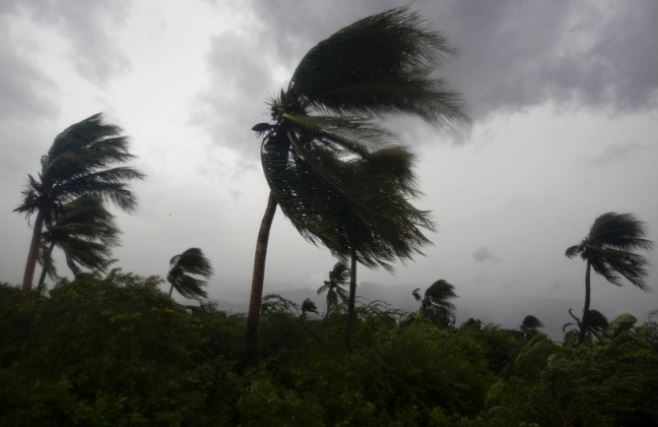
HURRICANES are particularly destructive and often deadly natural phenomena. The number of fatalities arising out of the annual “hurricane season” in the Caribbean, however, have been consistently lower in Cuba than in neighbouring islands. Why? It’s not that Cuba is spared the attentions of serious hurricanes. Hurricanes strike the island as regularly as they strike any other in the Caribbean. The simple answer is that the socialist government of Cuba puts the welfare of its citizens at the very top of its list of priorities. This leaves Cuba unusually well prepared for the entirely predictable extreme weather events to which its geographical location is prone. That preparation saves lives – many lives. The capitalist island states of the Caribbean have different priorities. Those priorities cost lives – many lives.

Scientists the world over have been warning their respective governments about the inevitability of a global pandemic for decades. They have urged them to prepare for outbreaks of new strains of infectious diseases against which their citizens, having no immunity, will find themselves acutely vulnerable. To be ready for these global pandemics, scientists have counselled politicians and civil servants to make sure that excess capacity is built into their countries’ hospitals, and to stockpile vast quantities of personal protective equipment (PPE). They have also urged the creation of detailed “pandemic plans” so that state agencies know exactly what to do when mass infection and death threaten their populations.

The scientists’ warnings have been vindicated but, tragically, they have not, for the most part, been heeded. A global pandemic has indeed struck, but only a handful of nation states were in any way prepared for the outbreak of the Covid-19 virus. In the overwhelming majority of countries the recommended preparations were not implemented. Indeed, far from being given excess capacity, hospitals and health services around the world have been consistently underfunded and their capacity to mount a successful pandemic defence diminished. Only in those countries seriously threatened by the SARS coronavirus outbreak of 2002-03 (China, Hong Kong, South Korea, Taiwan, Singapore, Thailand) was there anything resembling a well-prepared and effective public health response.

To properly prepare a nation for the outbreak of a potentially fatal infectious disease requires a state committed unequivocally to prioritising the general welfare of its citizens. Building in excess capacity in terms of trained staff, ICUs and hospital beds, and stockpiling PPE, should be regarded as simple governmental prudence by the electorate and the required fiscal resources allocated without serious objection. Politicians decrying such preparations as an unwarranted imposition on “the taxpayer” should elicit only angry condemnation and derision. Naturally, such states will, for many decades, have supplied universal, publicly funded and provided healthcare services to their citizens as of right.

The response of an ill-prepared nation would be altogether different. Possessing only the rudiments of a public health system, or a formerly robust public health system that has been consistently underfunded for decades, the necessary infrastructure for combatting a deadly pandemic would be absent. Poor and marginalised citizens, unable to afford the diagnosis and care they needed would present themselves to health professionals only when their condition had worsened to the point where they could be categorised as critical and hospitalised. This delay in seeking care has contributed significantly to the catastrophic overloading of hospitals – both public and private – that the world has witnessed in New York City and in the Italian region of Lombardy.

The absence of effective public health services, coupled with debilitating levels of poverty and inequality, is not, however, the worst feature of a nation ill-prepared to protect its citizens from natural disasters. To those glaring practical deficiencies must be added an equally glaring moral deficiency which makes national ill-preparedness on a criminal scale practically unavoidable.

That deficiency is the certitude pervading ruling elites and their enablers that, excepting themselves, human-beings are best considered “means to an end”. An “end” determined by themselves. It’s an attitude best summed-up in the verbal manoeuvre featured in HBO’s comedy-drama series “Succession”. When confronted with evidence of their criminal negligence, the series’ billionaire protagonists cynically dismiss it with the cryptic abbreviation “NRPI”. What does NRPI stand for? “No Real People Involved”.

If, in the face of disaster, only the rich are considered real enough to save, then the poor and the weak will soon be regarded as dispensable illusions.

This essay was originally published in The Otago Daily Times  and The Greymouth Star of Friday, 17 April 2020.

Thursday, 16 April 2020

"Plan B" - Pitching The Devil's Bargain To Generation X.

Have I Got A Deal For You! Ah, yes, the Devil’s Bargain. Transacted in all manner of guises, but always with the same intent: the transformation of the human individual from an “end” into a “means”.

THE SPEED at which the ruling elite has moved to defend itself has been surprisingly slow. It should have been clear from the first onset of the Covid-19 crisis that it was capable to wreaking havoc upon the political-economy of the global status quo. Its first defensive moves were, however, politically clumsy and morally grotesque. Expecting grandparents to make the ultimate sacrifice for the sake of their grandchildren, as the more outlandish members of the American Right advocated, struck most people as horrific. Clearly, a more nuanced solution was required.

Accordingly, the key demographic target of neoliberal capitalism’s defenders shifted from the elderly Baby Boomers (1946-1965) to the notoriously prickly Generation X (1966-1985). This is, after all, the demographic which has made intergenerational injustice its special study. To hear Gen-Xers tell the story, the Boomers managed to get through most of their lives without experiencing much more than a few relatively mild recessions. Admittedly, the American Boomers had the Vietnam War to contend with (and doesn’t it show!) but New Zealand’s Boomers cruised blissfully through the post-war sunshine with the barely a trouble in the world.

Generation X’s bad luck was clear to comedians and cartoonists from the get-go. One of the best of their early jokes depicted a Boomer wearing a T-shirt emblazoned with the classic Seventies formula for happiness: Sex. Drugs. Rock&Roll. His Gen-X companion’s T-shirt was less upbeat. Its three words referenced the grim Eighties’ declension of the Boomer’s hedonistic trinity: Aids. Crack. Punk&Rap.

No sooner was all the fun taken out of promiscuity, recreational drug-taking and popular music, than the unlucky Gen-Xers were hit by the full force of the neoliberal revolution. All the benefits of the social-democratic state – enjoyed to the full by their fortunate parents – were whipped away from them. Indebted, de-unionised, unhoused: life wasn’t so much a bowl of cherries, as a plateful of fleshless cherry-stones.

Was the arrival of the Internet and the smartphone sufficient compensation for the Global Financial Crisis and the onrush of Climate Change? Maybe. Even so, for too many of the years they have been alive, the news has made pretty grim reading for Generations X, Y and Z. And now, as if all of the above trials and tribulations weren’t enough, the world’s under-55s find themselves in the midst of a global pandemic.

Where’s the justice in that?

Although the academic Judas Sheep promoting their evidentially-challenged and scientifically tendentious “Plan B” (essentially a plea for pursuing ‘herd immunity’ from Covid-19) don’t make it explicit, they presumably see an element of divine justice in the virus’s preference for older people’s vulnerable immune systems. Their own generation and their children’s are much less likely to die from Covid-19 than Mum and Dad and/or Grandma and Grandpa. It’s almost as if God has finally relented and thrown these younger generations a chunk of good luck.

But, has he?

The dissident academics’ preference is for science, not theology, so expecting them to spot the profound moral challenge which the Almighty has just set down on the younger generations’ plate is probably too tall an order. It lies there, nonetheless, and all of these scientists’ crude consequentialist philosophising cannot remove it.

They do their best to ignore it, however, by reaching for the utilitarian philosopher’s substitute for God: “The greatest good for the greatest number.” It’s a formula that has always appealed to the kind of hard-line, ideologically-driven capitalists who presumably recruited these (to borrow Lenin’s trenchant epithet) “useful idiots”. Certainly, the individuals fronting “Plan B” all possess a facility for fine calculation to make a bean-counter proud. 

Which should be accorded more value, these ethical accountants now demand: The right to life of the elderly and the chronically ill – a quarter of the population; or, the right to a prosperous economic future of the other three-quarters? The contention being, that a point will surely be reached in the course of the current crisis when protecting the rights of both fractions becomes impossible. It is then that the Prime Minister, Jacinda Ardern, and her ministers will be required to answer the very hardest of questions.

In the words of the Plan-B-Boys’ advance guardsman, Matthew Hooton, opining in the NZ Herald of Saturday, 4 April 2020:

“The first unbearable question is at what point, if ever, we decide that the immediate social and economic costs are too high to continue with a lockdown, if elimination or suppression fail. The second is who pays those costs, and when.”

Hard? Oh yes – and it only gets worse:

“Ardern and all of us have no choice but to take [the] risks [flowing from the harms attendant upon catastrophic economic collapse] into account while grappling with the ethics of the decisions ahead. It may be repulsive to express it explicitly, but a protracted suppression strategy would materially and perhaps permanently damage the lives of the two million New Zealanders under the age of 30 to briefly maintain the life expectancy of some thousands of people in their 80s.”

Or, rephrasing Hooton’s argument even more repulsively: At what point do we let Grandpa die, so that we, his grandchildren, can have a crack at the sort of life our grandparents and parents were able to live?

Ah, yes, the Devil’s Bargain. Transacted in all manner of guises, but always with the same intent: the transformation of the human individual from an “end” into a “means”. Here’s how the nineteenth century Russian novelist Fyodor Dostoyevsky presents the Devil’s Bargain in The Brothers Karamazov, when Ivan confronts his brother, Alyosha, with the classic utilitarian dilemma:

Tell me straight out, I call on you—answer me: imagine that you yourself are building the edifice of human destiny with the object of making people happy in the finale, of giving them peace and rest at last, but for that you must inevitably and unavoidably torture just one tiny creature, and raise your edifice on the foundation of her unrequited tears — would you agree to be the architect on such conditions? . . . And can you admit the idea that the people for whom you are building would agree to accept their happiness on the unjustified blood of a tortured child, and having accepted it, to remain forever happy?

What Dostoyevsky grasps here is what always slips through the fingers of the crude utilitarians. Happiness cannot be created out of unhappiness. Life cannot be purchased with Death. Another great Russian novelist, and dissident, Alexander Solzhenitsyn, grasped it also. When the young pacifists of the Eighties put it to him that if the choice was between Communism and nuclear annihilation, then surely it was better to be Red than dead? His answer was always the same: “No. Better to be dead than to live as a scoundrel!”

And, if memory serves, there was another seeker after the truth who had something to say about the Devil’s Bargain. A carpenter and teacher from Nazareth, in First Century Galilee. His words may be old, but even after two thousand years they bear repeating:

“For what shall it profit a man, if he shall gain the whole world, but lose his soul?”

This essay was originally posted on The Daily Blog of Thursday, 16 April 2020.