Tuesday, 12 May 2015

Standing For Something

Mephistopheles In A Savile Row Suit: Lynton Crosby (of the infamous Crosby/Textor firm of right-wing political consultants) conducts a master-class on behalf of the Patchwork Foundation. Crosby's catch-phrase "When in doubt - stand for something" is one the Left would do well to ponder.
 
“WHEN IN DOUBT, stand for something.” So says Lynton Crosby, the man who, according to the UK’s Guardian newspaper, “really won the election for the Tories”. On the face of it, Mr Crosby’s catchphrase appears to be a statement of the bleeding, bloody obvious. But, the fact that he has had to reiterate it again and again over the course of his long and highly successful career as a political campaign adviser, strongly suggests that to a great many people in politics the need to “stand for something” isn’t obvious at all.
 
An old friend of mine, a Labour Party activist in Glasgow – God help him – was railing at me about the shallowness of the Scottish National Party’s (SNP) candidates and their paucity of policy. He’d just witnessed good Labour MPs, who had stood by their constituents through the bitter years of Thatcherism, wiped out by callow youths barely old enough to shave. It wasn’t right. It simply shouldn’t have happened.
 
But what did Labour stand for? That was the question which so many of Scottish Labour’s former supporters could no longer answer. It’s why so many of them voted for the SNP. Because the Nationalists unquestionably stood for something. Not just for independence – although that was hugely important – but for the sort of society that more and more Scots have come to believe only independence can bring.
 
Crucially, for my embittered friend in Glasgow, that’s the society which Labour’s founding heroes – like the Scotsman, Keir Hardie – promised to build. The society that Tony Blair effectively cancelled when he persuaded the Labour Party to remove the in/famous  “Clause IV” from its constitution.
 
Clause IV had promised:
 
To secure for the workers by hand or by brain the full fruits of their industry and the most equitable distribution thereof that may be possible upon the basis of the common ownership of the means of production, distribution and exchange, and the best obtainable system of popular administration and control of each industry or service.
 
That’s what Labour used to stand for. That’s what hundreds of thousands of Scots believe a party of the working-class should still stand for. That Labour no longer stands for anything remotely resembling Clause IV is why the SNP’s derisive nickname “Red Tories” was able to wreak such historic havoc upon the electoral map of Scotland.
 
After defining what they stand for, the next thing Lynton Crosby advises his conservative clients to do is attempt to define what their opponents stand for. The effectiveness of this strategy may be seen in the way Labour’s democratic socialist objectives have been made to stand for (at best) union tyranny and gross inefficiency, or (at worst) secret policemen and concentration camps.
 
“The socialist objectives of Clause IV confuse ends with means,” the Blairites helpfully parroted throughout the early 1990s, “the triumph of Labour’s values cannot be secured by the methods of the now defunct Eastern Bloc.” As if the UK’s welfare state, its National Health Service (NHS) and nationalised industries were in any way comparable to the totalitarian Stalinist regime of the Soviet Union. As if the privatisation of the UK’s water supply and railway network has been a roaring success. As if the hollowing-out of the NHS (under both Conservative and Labour governments) has made Britons healthier or happier.
 
What, then, do the Tories stand for? Supplying a politically persuasive answer to this, the most important of questions, is how Lynton Crosby really earns his money. The most truthful answer: the Conservative Party stands for the untrammelled right of those already in possession of wealth and power to make and acquire more; would not play well with “the man down there on the corner waiting for the bus”. Even so, Mr Crosby’s and his ilk’s description of Conservative aims and objectives is only slightly altered.
 
What contemporary conservatism stands for is the right of persons possessing the requisite energy and talent to acquire wealth and power without unwarranted obstruction or restriction. In a funny sort of way, this formulation is not so very far from “Old Labour’s” promise to “secure for the workers by hand or by brain the full fruits of their industry.” The difference, of course, is that the Tories expect the workers to secure these on their own.
 
Labour used to be feared by the people the Conservative Party represents because it stood ready to expose this “you can make it on your own” mantra for the cruel con it has always been. That Labour was so easily defeated in England and Scotland last Friday is almost entirely due to the fact that it no longer offers workers any answer except “make it on your own”.
 
That is Mr Crosby’s greatest triumph: not only helping the Tories to remember what they stand for; but making Labour forget.
 
This essay was originally published in The Press of Tuesday, 12 May 2015.

Saturday, 9 May 2015

Power To The (Right) People! How Neoliberalism Stole The Left's Best Ideas.

False Pretences: The extreme unpopularity of neoliberalism forced Labour's neoliberals to mask their true intentions behind a rhetoric that owed as much, if not more, to the Left than the Right.
 
AT THE CORE of contemporary New Zealand politics lies a bitter argument about the nature and purpose of the state. Eighty years ago the Labour Party radically changed the configuration and responsibilities of the New Zealand State, setting in place a legal and institutional framework that endured, largely unchanged, until the mid-1980s. Between 1985 and 1995, however, both the Labour and National parties embarked on an historic (if unmandated) mission to both re-shape and re-purpose the New Zealand State.
 
In this they were only partially successful. Much of the First Labour Government’s “Welfare State” remains in place. Health and education retain their fundamentally public character. Sixty thousand “State Houses” and their tenants continue to call the state their landlord. And, twenty-five years of privatisation notwithstanding, much of New Zealand’s key infrastructure: the railways, an airline, energy generation and transmission; remain either wholly or partially in public hands.
 
The Right is impatient to complete the neoliberalisation of the New Zealand State. The Left, however, cannot make up its mind whether it should defend the institutions and achievements of the past (including those of the 1980s) or set about creating a new state – one fit for twenty-first century New Zealanders to live in. The National Party’s remarkable political success since 2008 is explained almost entirely by this left-wing indecision. If Labour and the Greens cannot agree, and quickly, upon a common forward path, then the neoliberal transformation of New Zealand will become an accomplished fact.
 
The completion of the neoliberal project will not, however, be undertaken honestly. Most New Zealanders, if asked, will reject the idea of privatised health and education – just as, when they were asked in the 1980s and 90s, they rejected the idea of privatising the Bank of New Zealand and NZ Post. In 2014, campaigning openly and honestly for its hard-line neoliberal programme, the Act Party attracted just 16,000 Party Votes nationwide – less than half of the Mana-Internet Party’s 34,000.
 
The extreme unpopularity of neoliberalism forces neoliberals to mask their true intentions behind a rhetoric that owes as much, if not more, to the Left than the Right. Charter Schools, for example, are sold to the public as the only effective means of raising the educational attainment levels of society’s most disadvantaged groups. A crude education-for-profit boondoggle is thereby represented in the most vivid left-wing hues: a radical solution to the problems caused by an indifferent, highly-bureaucratised state. After all, what could be more conducive to achieving social justice and freedom than empowering local communities to organise themselves out-from-under the overbearing, one-size-fits-all tutelage of the public education system?
 
And how does the Left respond? In just about every case, by championing the bureaucracy, standing behind the sector unions (whose symbiotic relationship with the bureaucracy is seldom acknowledged) and by condescendingly denying the capacity of poor and disadvantaged parents to recognise what is good for their children. The reaction of these parents – who are also voters – is readily imagined.
 
The sadly ironic fact about this all-too-effective political jiu-jitsu is that the Right borrowed it more-or-less holus-bolus from the radical reformers of the 1960s and 70s. Leftists from that era will readily recall the book Summerhill by A. S. Neill – which demanded the radical devolution of pedagogical power to its intended recipients – the pupils themselves. Nor will left-wing Baby Boomers have forgotten radical psychologist R. D. Laing’s ruthless deconstruction of the bourgeois nuclear family (with all its attendant psychopathologies). In a society that was itself insane, argued Laing in The Politics of Experience and The Divided Self, those whom we label “mad” may actually be the most well-adjusted of us all.
 
In short, the intellectual leaders of the so-called “New Left” did not hesitate to identify the highly-centralised and deeply authoritarian institutions of the bureaucratic welfare state as prime targets for radical reform.
 
Not even the trade unions escaped the New Left’s revolutionary critique. The leaders of organised labour (who, in the United States, had come out in favour of the Vietnam War) were branded as collaborators and sell-outs whose overweening power and influence needed to be redistributed downwards to the workers on the shop-floor.
 
If these themes still resonate politically, it is only because the New Left’s critiques of the post-war Welfare State were all-too-accurate. What began as a means of liberating working-class people from the “five giant evils” - Want, Idleness, Ignorance, Squalor and Disease - which had tyrannised them throughout the laissez-faire era, had, by the 1960s, morphed into an equally overbearing overseer of the citizen’s social conduct. Rather than freeing working people from the ravages of capitalism, the Welfare State had only made them more fit for its purposes.
 
Near the end of Ken Loach's 2012 film The Spirit of ’45, a number of the contributors draw attention to “the worm in the bud” of the Labour Party’s radical 1945 programme. Its weakness, as they saw it, lay in the fact that the nationalised industries were to be run “for and on behalf of” – but not by – the people. Stripped of its potent symbolism, Labour’s programme amounted to little more than replacing the competing (and, therefore, highly inefficient and often dangerous) hierarchies and bureaucracies of the private sector with a smaller number of new hierarchies and bureaucracies operated by the state. In the immortal words of The Who’s Won’t Get Fooled Again: “Meet the new boss – same as the old boss.”
 
The extraordinary success of the neoliberals’ wholesale appropriation of the New Left’s rhetoric against highly centralised, authoritarian bureaucracies – especially those operated by the state – can only be countered by a Left that’s prepared to re-appropriate and intelligently advance its pilfered political programme. By once again promoting devolution as a general political principle, left-wing parties would immediately expose the falsity of the neoliberals’ position. The advocacy of genuine “consumer rights” in our schools, universities, hospitals, shops, offices and factories would alert working people to their true position in both the private and public bureaucracies of contemporary capitalism.
 
Those who object that the Labour Party would never embrace such a radical strategy have obviously never heard of the devolutionary, worker empowering initiatives of the Fourth Labour Government. The Regional Employment and Access Councils (REACs) which operated on a tripartite basis – i.e. their members were drawn equally from employers, unions and community organisations – would have intervened even more successfully in the labour market had they been required to operate with just a little more transparency and accountability. The Trade Union Education Authority, generously funded to equip union delegates with the skills necessary to be effective workplace advocates, was another successful initiative of the Fourth Labour Government. (The Rogernomes didn’t have it all their own way!)
 
Today, of course, we have Whanau Ora. Conceived by Tariana Turia as a means of empowering Maori families to avail themselves directly of the services and resources currently provided piecemeal through a bewildering multitude of state welfare agencies, this Maori Party initiative is probably the most radical exercise in devolution ever sanctioned by the New Zealand State. Considerable criticism (much of it merited) has been directed at the programme, but that should not lead to it being rejected out-of-hand by the Left. With full transparency and accountability built into its processes, Whanau Ora could yet furnish New Zealand’s progressive community with a whole new model for “consumer” empowerment.
 
A state in which initiatives like Whanau Ora can flourish will look very different from the state created by Labour in the 1930s. But the Left must not be afraid to both re-imagine and re-purpose the sort of institutional structures needed to deliver a better life for working people in the twenty-first century. The neoliberals have already proved the rhetorical and political potency of the proposition that people should be allowed to manage their own affairs. To do so, however, they first had to steal the Left’s best ideas. It’s high time the Left repaid the compliment by stealing them back.
 
This essay was originally posted on The Daily Blog of 8 May 2015.

Friday, 8 May 2015

Still Building Jerusalem? British Labour And The "Spirit Of '45".

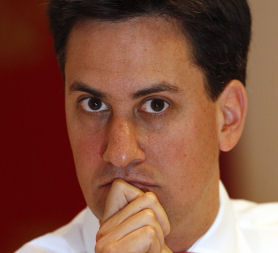
Man Of The Hour? After five years of right-wing economic austerity, the British Labour Party leader, Ed Miliband, should be celebrating an historic landslide victory this morning – not casting his eyes, warily, north of the border.
 
UNLESS THE POLLSTERS have got it very wrong, it’s probably too soon to say who has won the UK General Election. After five years of right-wing economic austerity, that’s extraordinary. The British Labour Party should be celebrating an historic landslide victory this morning – not casting their eyes, warily, north of the border, to where the Scots really are celebrating an historic electoral rout.
 
A great part of the problem afflicting labour and social-democratic parties all over the western world is the vast gulf that now separates the party activist from the party voter. Though many of Labour’s activists may have grown up in families only one generation removed from the mean streets of working-class existence, that gap is all important.
 
In the UK, the activist’s grandparents may have been among the tens-of-thousands who gathered outside Transport House on 26 July 1945 to celebrate Labour’s crushing victory over the old order, and to sing – no, not The Red Flag – but Jerusalem, the English poet, William Blake’s, great summons to moral and spiritual transformation.
 
I will not cease from mental fight
Nor shall my sword sleep in my hand
Till we have built Jerusalem
In England’s green and pleasant land
 
That “Spirit of 45” was hot enough to keep up the pressure in Labour’s political boilers for another quarter-century.
 
Victory! The British Labour Party leader, Clement Atlee, celebrates his own re-election and Labour's landslide victory on the night of 26 July 1945.
 
The wholesale democratisation of British society, which the Spirit of 45 catalysed, made possible the next great wave of political transformation. Building on the solid economic foundations of the Welfare State, the post-war “Baby Boom” generation extended Labour’s revolution into the fraught territory of race, gender and sexuality. These “new social issues”, which also included the struggles against nuclear annihilation and environmental desecration, recalled to the men and women of 45 the words of the old trade union song, Bread and Roses:
 
Small art and love and beauty their trudging spirits knew
Yes, it is bread we fight for, but we fight for roses, too
 
The great hope, of course, was that, in the next generation – the Baby Boomers children – this  great, two-pronged assault on inequality and injustice would culminate in a new kind of society: a society in which economic and social democracy would finally be able to clothe the bare skeleton of political democracy with living flesh and blood.
 
That this did not happen is explained, at least in part, by the fact that the men and women of 1945 built too extensively and too well. Full employment, strong trade unions and massive social housing programmes joined with free public health and education to produce a generation for whom the gut-wrenching realities of want, ignorance, idleness, squalor and disease had retreated to the realm of parental memory. The power of collectivism, so essential to the defeat of those evils, would also fade. Increasingly the question asked was not: “What do we need?” But “What do I want?”
 
As the thirty-year period of reconstruction, which fuelled the great post-war boom, fell victim to stagnation and the most successful rear-guard action in defence of profit and privilege the world has ever seen, the ideological separation of social from economic freedom saw the fire beneath Labour’s boiler shrink to embers and ashes.
 
By the time Tony Blair’s “New” Labour Party confessed to being “intensely relaxed about people becoming filthy rich”, it was clear that the Spirit of 45 was dead. A Labour Party that no longer burns to create a society in which none are filthy rich, and none obscenely poor, isn’t a “new” Labour Party; it’s not a Labour Party at all.
 
Does Ed Miliband understand this? Does he now accept that Labour, by upholding “economic freedom” as an unqualified good, has contributed hugely to the burgeoning social inequalities against which he’s spent the last five years campaigning? We must hope so.
 
We must also hope that in the ten minutes he spent chatting with the visiting New Zealand Labour Leader, Andrew Little, he reiterated the futility of promising to get tough on inequality, without also promising to get tough on the causes of inequality.
 
That mental fight, in both the UK and New Zealand, remains to be fought. A generation still waits for their bows of burning gold, their arrows of desire; for their spears – oh clouds unfold! – for the chariots of fire that only a real Labour Party can give them.
 
This essay was originally published in The Waikato Times, The Taranaki Daily News, The Timaru Herald, The Otago Daily Times and The Greymouth Star of Friday, 8 May 2015.

Tuesday, 5 May 2015

Drowning In Lattés: Why Labour’s Future Must Not Be Dictated By The “Metropolitan Elite”.

Latte Sipping, Mac Using, Prius Driving, Liberal Elitists Need Not Apply: So long as Labour's policies are framed according to the priorities of the metropolitan elite, its chances of reclaiming the 150,000 to 200,000 suburban and provincial votes it needs to once again become a "40 percent party" are negligible.
 
WHETHER THE UNITED KINGDOM has a Labour Prime Minister by the end of this week remains to be seen. What cannot be disputed, however, is that among Labour’s traditional working-class constituency, much of the Conservative/Liberal Democrat Government’s programme remains surprisingly popular.
 
Four out of five trade union members, for example, told pollsters that they thought the £26,000 cap on benefits was a good idea. Indeed, Matt Ridley, Member of the House of Lords and author of the bestselling book, The Rational Optimist: How Prosperity Evolves, reports that “Tory candidates out canvassing tell me they are finding that welfare reform, while horrifying the metropolitan elite, is most popular in the meanest streets — where people are well aware of neighbours who play the system.”
 
If this wasn’t true, it is hard to explain how, after five years of swingeing austerity, the Conservative Party is polling neck-and-neck with Ed Miliband’s Labour Party.
 
To hear the British Left tell it, the last five years have been an unmitigated social disaster. It’s a claim which, if true, would be propelling Labour towards a landslide electoral victory. But, if the experts are agreed on anything about the 7 May election, it’s that, outside of Scotland (where the Scottish National Party are poised to win every one of Scotland’s Westminster seats) it’s not going to be anyone’s sort of landslide.
 
What horrifies “metropolitan elites” has, however, come to dominate the policies of both the British and New Zealand Labour Parties. Highly educated and socially liberal, the party activists of both countries would rather see their parties split in two than endorse the “reactionary” views of their working-class supporters. That these views might be shared by sufficient voters to materially boost Labour’s chances of winning general elections deters them not one bit.
 
Take, for example, Phil Goff’s “Nationhood” speech of December 2009. Designed to undermine the Maori Party by driving a wedge between its elite backers in the Iwi Leadership Group and ordinary working-class Maori, Goff’s speech immediately drew sharp internal criticism from his party president, Andrew Little, and the new MP for Wellington Central, Grant Robertson. Rather than see the Labour Party flare into open factional warfare over its leader’s alleged appeal to the redneck vote, Goff’s strategy was quietly abandoned.
 
And yet, six years later, Andrew Little is being advised to woo precisely the same redneck vote which he and his current finance spokesperson were so quick to disavow back in 2009. Not in so many words, of course, but under the oft-quoted objective of restoring the Labour Party to its former status as a “forty percent party”.
 
To lift Labour from its shattering 2014 result (604,534 votes or 25.1 percent of the popular vote) to the 41.1 percent it received in 2005, Little will have to locate an additional 375,000 votes. In other words, he needs to lift Labour’s game by at least 15 percentage points.
 
Now, 15 percentage points is a very large gap to make up, but it’s not impossible. In July 2002, the National Party’s vote fell to just 20.9 percent, and yet, on 17 September 2005, led by Don Brash, National polled 39.1 percent – an 18.2 percentage point recovery in just 38 months! It can be done.
 
But, if Labour believes it can haul itself back into electoral contention without, as a vital part of that process, playing to the “reactionary” views of the 150,000 – 200,000 voters who have, in the nine years since Labour last won a General Election, crossed over to National, then they’re dreaming. And if they were to convince themselves that such massive losses could be made good without offering these “reactionary” turncoats a full-blooded “Orewa Moment”, then they would be even more misguided.
 
At Orewa, Brash spoke over the heads of the “metropolitan elite” to National’s angry electoral base, reassuring them that their instincts about the country were sound and would be heeded. Andrew Little, at a place of equal symbolic resonance (the Michael Joseph Savage memorial?) needs to do the same. Labour must reassure its remaining – and potential – voters that it is determined to be guided, once again, by the needs and aspirations of ordinary, hard-working, law-abiding provincial and suburban New Zealanders.
 
For this to work, the fundamental power of decision must be returned to the communities in which the problems of social and economic deprivation manifest themselves. In matters relating to employment, welfare, education, health, policing and justice, local citizens must be given much greater choice; a much louder voice; and much more security.
 
Labour needs to stop seeing the existing state bureaucracy as the answer to all of society’s problems. Instead, it must convince the ordinary voter that his/her problems can only be addressed effectively by equipping society with a new kind of state.
 
And if that horrifies the “metropolitan elite” – too bad.
 
This essay was originally published by The Press of Tuesday, 5 May 2015.

Friday, 1 May 2015

Eagle Or Dragon? In the Coming Pacific Century, Which Side Are We On?

Eagle Or Dragon? New Zealand’s determination to preserve this close relationship with the US explains the consistent refusal of its political, diplomatic and trade representatives to acknowledge the near-insuperable contradictions at the heart of the TPPA policy. No one is willing to answer the question: “How can New Zealand expect to go on enjoying the benefits of free-trade with China, after joining a US-brokered agreement intended to limit China’s freedom of action?”
 
EAGLE OR DRAGON? As the United States prepares to join the Trans-Pacific Partnership Agreement (TPPA) that’s the choice New Zealand may soon have to make. The TPPA entered this world as a New Zealand initiative: this country’s bold attempt to edge its economy around the stalled Doha Round of trade talks; but that’s not what it is now. In its current guise, the TPPA is both a diplomatic and economic containment measure, configured in the United States and aimed directly at the Peoples Republic of China.
 
President Obama has quite openly declared that only the TPPA can prevent the Pacific basin from becoming an arena in which “China sets the rules”. Just how determined he is to prevent that from happening may be judged by his willingness to let the TPPA rip apart the unity of his own Democratic Party and wrong-foot the campaign of his putative successor, Hillary Clinton. When it comes to the geo-political objectives of the TPPA, President Obama is taking no prisoners.
 
Which leaves New Zealand in an extremely invidious position, diplomatically-speaking. Our increasing dependence on the Chinese economy leaves us acutely vulnerable to Beijing’s displeasure. Were the TPPA to become a reality, and if China was looking for a trading partner upon which to visit her extreme displeasure – pour encourager les autres – then New Zealand offers the perfect target. We are small; we are weak; we are non-Asian; and we have made a diplomatic fetish out of being “very, very, very good friends” of the United States.
 
New Zealand’s determination to preserve this close relationship with the US explains the consistent refusal of its political, diplomatic and trade representatives to acknowledge the near-insuperable contradictions at the heart of the TPPA policy. No one is willing to answer the question: “How can New Zealand expect to go on enjoying the benefits of free-trade with China, after joining a US-brokered agreement intended to limit China’s freedom of action?”
 
New Zealand’s political leaders are constantly reassuring their people that there is nothing to prevent them from having their cake and eating it too. No reason why their country can’t go on selling its milk-powder to China as well as doing everything possible to reassure the United States of New Zealand’s unswerving loyalty to the US-led security alliance, epitomised by the so-called “Five Eyes” agreement. Indeed, so confident were these politicians that the trading relationship with China was indestructible that they contemplated hacking into the communications of its Auckland Consulate and passing on the information directly to the US National Security Agency!
 
New Zealand’s blind loyalty to the United States (to the point of alienating its major trading partner) raises the question of whether or not the TPPA should be broad enough in scope to replace, if necessary, the increasingly vulnerable NZ-China Free Trade Agreement. Were the United States to open its borders to all the dairy products New Zealand could send – as China has done – then the economic and diplomatic interests of this most loyal of America’s allies could be brought into alignment.
 
It’s a outcome that would, almost certainly, make New Zealanders feel more comfortable than they do currently. The many cultural and political differences between the authoritarian, state-capitalist Asian superpower and tiny, liberal-democratic New Zealand argue strongly against the two countries ever being able to develop the sort of ties that bind Kiwis to Americans.
 
By all accounts, however, the TPPA will not open the American (or the equally lucrative Japanese) market to New Zealand’s dairy exporters. Like all superpowers down the ages, the United States takes for granted the loyalty of its allies and feels no obligation to reward their steadfastness with anything more than sentimental rhetoric. That making the Pacific safe for another American century might entail some small sacrifices on America’s part simply does not occur to US negotiators. It is the interests of their agribusiness giants, not ours, that will prevail – along with those of all the other transnational corporations whose profits are underwritten by American power.
 
It is entirely possible, therefore, that New Zealand could end up with the worst of both worlds. Bound diplomatically and militarily to the American Eagle, with very little in the way of reciprocal economic benefit, while regarded with mounting suspicion, even hostility, by the Chinese Dragon – upon whose good-will New Zealand’s economic prosperity increasingly depends.
 
This essay was originally published in The Waikato Times, The Taranaki Daily News, The Timaru Herald, The Otago Daily Times and The Greymouth Star of Friday, 1 May 2015.

Wednesday, 29 April 2015

From Foreign Correspondent To Folk Singer: Cameron Bennett Plays The Ika Seafood Bar And Grill

"I'm Cameron Bennett": Singing songs that blend the intensely personal with the robustly political.
 
FOR YEARS he filled our television screens with the images of a troubled world. "I'm Cameron Bennett", he'd say, by way of introducing himself, and then whisk us off to wherever people were bleeding. This was back in the days when the term "public service broadcasting" still meant something to the state-owned broadcaster. A time when, if the crisis was serious enough, Bennett's bosses would fly him to where it was happening. And there he'd stand, his lanky frame clad in the dusty, desert-toned safari jacket that became his trademark, and remind us all how lucky we were to live in New Zealand.
 
That Cameron Bennett might be a pretty solid left-winger never once occurred to me. Fairness and balance were the professional watchwords of TVNZ, even in the 1980s and 90s, and Bennett was careful to keep his personal opinions behind the camera. Only friends and workmates got to know the man who sang and played the guitar so engagingly; the folksinger who said in song all the things he could not say on screen.
 
It was, therefore, a delightful surprise to encounter Cameron Bennett, folksinger, at the Ika Seafood Bar & Grill on Tuesday night (28 April). Yes, the very same Ika Seafood Bar & Grill that, just a fortnight ago, hosted a "Table Talk" discussion about the fate of Campbell Live. Laila Harre (Ika's owner and manager) had organised that event in collaboration with the Campaign For Better Broadcasting and The Daily Blog, but Tuesday night's entertainment fell under the heading of "Ika Salon" - Harre's own monthly offering of intellectual (as opposed to purely culinary) sustenance.
 
And what a fine repast it was! Bennett's hour-long set was a mixture of the intensely personal and the robustly political.
 
Certainly, tackling the two great tragedies of the last six years, Pike River and the Christchurch Earthquakes, struck me as a brave thing to do. Such grim events, so close to the surface of our collective memory, often elude the songwriter's craft. But in Pike 29 and Jerusalem Road, Bennett offers a more than adequate response to these landmark events. The former is the more traditional of the two, harking back to the bleak mine disaster ballads of Appalachia. Jerusalem Road, however, takes a very different route. Working into his spare lyrics the imagery and religious references of Colin McCahon's paintings, Bennett has crafted a sombre but very powerful song.
 
Bennett's repertoire encompassed everything from the exploits of the West Coast mass-murderer, Stanley Graham, to the experiences of a grandfather wounded in the Great War and the closure of Dunedin's Hillside Workshops. For a Dunedin man, this latter song was especially moving.
 
We're flesh and blood, flesh and blood,
Standing shoulder-to-shoulder in the Carisbrook mud.
But who will stand for us?
 
The two songs that really struck home, however, were Bennett's very personal recollections of the community in which he grew up. If anyone had asked me whether it was possible to write a great song about the Auckland suburb of Howick, I would have laughed them out of the room. But in his bitter-sweet The Place That I Come From, Bennett captures the enforced innocence of New Zealand suburbia in the 1970s. The references to Picton Street and Stockade Hill pins the location down geographically, but the jagged recollections of disruption and distance are universal.
 
Then there was True Believers - the song that, even as I made my way out onto Mt Eden Road, I was still humming softly. A hymn to the sense of infinite possibility that was the special possession of the Baby Boom generation, True Believers tells the story of all those young men who responded to the challenge of being masculine in a new way in the uptight New Zealand of the 1960s and 70s:
 
Letting our hair grow curled
Believing we could change the world
 
In a grown-up country, the song-writing and musical talents of a man like Cameron Bennett would find a much wider audience than a café-full of Laila's friends and comrades. If New Zealand had been able to keep its public service broadcasting intact - as the citizens of Australia and Europe have done - there would be space in the schedule for showcasing this little country's extraordinary artistry. Not in the amped-up fashion of The X-Factor, but gently, sensitively, intelligently.  
 
In the manner of Cameron Bennett.
 
This review was posted simultaneously on The Daily Blog and Bowalley Road of Wednesday, 29 April 2015.

Would John Key Have Pulled A Right-Wing Ponytail?

Set And Setting: Was the Prime Minister's harassment of waitress, Amanda Bailey, a form of political punishment? The behaviour of right-wingers when confronted with left-wingers in "places where they don't belong" is often both punitive and confrontational.
 
DID THE PRIME MINISTER pull Amanda Bailey’s pony-tail because her “strong political  points of view” conflicted with his own? (We know that Ms Bailey holds strong political views because that information was passed on to the NZ Herald’s gossip columnist, Rachel Glucina, by her employers.)
 
Now, many New Zealanders will object that a waitress’s political views cannot be used to justify prime-ministerial hair-pulling. They’re right, of course, but I hope they’ll bear with me a little longer, because an examination of the way powerful right-wingers behave in the presence of left-wingers promises to recast John Key’s acknowledged misconduct in a new and very interesting light.
 
Let me give you an example of the phenomena I’m describing from my own experience. Some years ago, I was the guest of the French Ambassador at his official residence in Thorndon. An hour or so after my arrival, the Ambassador and his guests were joined by the former Prime Minister of New Zealand, Jim Bolger. Spying me, Mr Bolger called out in a very loud voice: “Good God, Trotter, when did they let you out of jail!”
 
"Good God, Trotter, when did they let you out of jail!" - Jim Bolger.
 
I took his “jest” in good part and joined in the rather startled laughter of the other guests. But I did wonder how the former Prime Minister would have responded had our positions been reversed. Would Mr Bolger have openly challenged the misbehaviour of a person holding such elevated political rank? Or would he, like me and Ms Bailey, have let the indiscretion (or, in the case of the Parnell waitress, the first of many indiscretions) pass?
 
Jim Bolger, the blunt King Country cocky and son of impoverished Irish settlers, may well have returned fire without inhibition, I simply don’t know. What did intrigue me, however, was the former National Party leader’s motivation. Quite simply, I believe it was shock. Encountering a well-known left-winger in what, to Mr Bolger, must have seemed the most unlikely of settings, can only have been profoundly surprising.
 
And, perhaps, just a little affronting. Because the presence of a person holding views so radically at odds with his own was likely received by Mr Bolger in the same way as a soldier on neutral ground would respond to the presence of a soldier from an enemy army. One can no longer speak freely, for fear of giving away important secrets. One’s behaviour, too, must be carefully controlled – lest the enemy be given an opportunity for ridicule or reproof.
 
Was this how Ms Bailey’s presence at Rosie’s Café, in upmarket Parnell, was perceived by the Prime Minister and his right-wing supporters from the neighbourhood? Did they fear that their “fun and games” and “horseplay” were being silently judged by this left-wing waitress? Had she overheard them saying things that might – if taken out of context – have sounded just a little bit racist, sexist or homophobic? And wasn’t that just a little bit unfair? That John Key, his wife Bronagh, and their friends and neighbours, couldn’t let their hair down and speak freely without every word and action being recorded and used as evidence by this young thought-policewoman?
 
It may not even have been conscious on Mr Key’s part. His fondness for dangling tresses is now well attested in the photographic and video record. But it’s also possible that the urge to tug Ms Bailey’s ponytail was driven by the same feelings that prompted Mr Bolger to put me so firmly in my place at the French ambassador’s residence.
 
The New Zealand Right has always had huge difficulty in accepting the Left’s socio-political legitimacy (and it’s by no means alone in this). Throughout the Cold War, self-identifying as a left-winger was tantamount to acknowledging high treason in the eyes of many National supporters. Trade unionists, particularly, were received with venomous hostility by National, which “made its bones” as a conservative political party by brutally enforcing the great Waterfront Lockout of 1951.
 
But the Cold War isn’t the sole explanation. The New Zealand Right’s hatred of the Left predates the onset of the Cold War by several decades – extending all the way back to the strike-breaking actions of the Reform Party government of William Massey. It has also survived the Right’s victory in the Cold War. To declare oneself a person of the Left, even in the twenty-first century, is to define oneself as not-quite-fit for polite company: “Good God, Trotter, when did they let you out of jail!”
 
With each tug of Ms Bailey’s “tantalising” pony-tail, was the Prime Minister sending a very similar message of “light-hearted” political disapproval? Was he telling her: ‘You really shouldn’t be here, but, since you are, it’s only fair that you join in (even unwillingly) all the “horseplay”, all the “fun-and-games”, in which the other wait-staff at Rosie’s Café happily engage.’?
 
What’s the matter, Amanda? Can’t you take a joke?
 
This essay was originally published in The Press of Tuesday, 28 April 2015.