
Showing posts with label Benjamin Franklin. Show all posts

Tuesday, 7 February 2017

Drawing Together, Not Breaking Away.

The Birth Of A Nation: On 6 February, New Zealanders celebrate not a severance of political ties, but their creation. The Treaty of Waitangi binds together two distinct entities: the indigenous people of New Zealand and the British Crown. It is a statement of undertakings and obligations: a drawing together, not a breaking away.
 
THE CITY OF PHILADELPHIA, in 1787, was roughly the size of Whanganui. Its muddy streets, ill-lit and reeking of horse dung, had for five months been thronged by representatives of the thirteen former colonies of King George III. Bewigged gentlemen in swallow-tail coats and silk stockings had laboured through a sweltering summer and on into the milder airs of Autumn to crown their successful war against the British with a constitution to unite the fractious states of America.
 
There is story, probably apocryphal, but beloved by Americans nonetheless, that one of the principal framers of the American constitution, Benjamin Franklin, upon emerging from the final session of the Convention on 27 September 1787, was accosted by a cluster of his fellow citizens demanding to know whether, after all that talking, Americans had been given a monarchy or a republic. Franklin’s reply was typically terse – and telling. Pausing amidst the jostling spectators, he answered: “A republic – if you can keep it.”
 
That day marks the true birth of the United States of America. It is not, however, the day upon which Americans celebrate their nationhood. America’s national day is the fourth of July – the day when, in 1776, the thirteen colonies declared their independence from Great Britain.
 
It is the promises of that declaration’s author, Thomas Jefferson: his ringing sentences about all men being created equal; possessing “certain unalienable rights”; specifically, “life, liberty and the pursuit of happiness”; that they remember and celebrate. The complicated machinery of their own self-government, the document which begins: “We the People” is honoured, but not with marching bands and fireworks.
 
How different America’s Independence Day is from our own Waitangi Day.
 
On 6 February, New Zealanders celebrate not a severance of political ties, but their creation. The Treaty of Waitangi binds together two distinct entities: the indigenous people of New Zealand and the British Crown. It is a statement of undertakings and obligations: a drawing together, not a breaking away.
 
The Treaty offered the descendants of its signatories’ only the roughest sketch of what a future New Zealand constitution might look like. A document more at odds with the universal pretentions of the American Declaration of Independence could hardly be imagined.
 
It is the contractual nature of the Treaty: the multiple opportunities for conjecture and dispute that it offers each successive generation; which has determined the manner in which New Zealanders mark the birth of their nation. It is the reason why, year after year, our political leaders are drawn back to the Waitangi Treaty Grounds.
 
Those who argue that New Zealanders, like Americans, should celebrate their national day with marching bands, fireworks and other noisy displays of chauvinistic self-congratulation, misunderstand Waitangi Day fundamentally. In moral terms, New Zealand is not an accomplished fact, but an evolving proposition. A proposition concerning which the two parties which came together on 6 February 1840 – the Crown and tangata whenua – still have a lot to say. That’s why Waitangi Day continues to be an argument-in-progress – rather than a celebration.
 
It is also why the Prime Minister’s absence from this year’s celebrations at Waitangi is so regrettable. Certainly, communications from Te Tii Marae were confused and disrespectful, but Bill English did not need to draw attention to their authors’ foolishness. He could, instead, have made a virtue of the Marae authority’s expectations of silence.
 
By characterising Waitangi Day as an occasion for the Crown to listen rather than speak, he could have affirmed the unique historical experiment which the Treaty represents. The moot that commenced at Waitangi 177 years ago: Can tangata whenua and the Crown construct a nation in which the claims of the former are not obliterated by the greed of the latter?
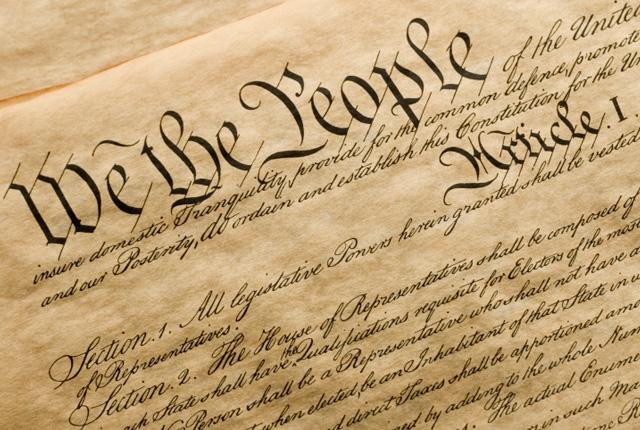
 
"A republic, if you can keep it." - Benjamin Franklin on the US Constitution.
 
It is a question that America’s founding fathers did not trouble themselves to either ask or answer. The only reference to the indigenous inhabitants of North America in Jefferson’s declaration describes them as “merciless Indian savages”. The United States Constitution, itself, in defiance of the egalitarian promises of 1776, took care to stipulate that, for the purposes of determining the states’ population, slaves would be counted as three-fifths of a person.
 
In 1863, as the argument over the Treaty’s meaning turned bloody in New Zealand, President Abraham Lincoln spoke at Gettysburg of “a new nation, conceived in Liberty, and dedicated to the proposition that all men are created equal”.
 
“Now we are engaged”, he continued, “in a great civil war, testing whether that nation, or any nation so conceived and so dedicated, can long endure.”
 
The United States endured – just. But, in the century-and-a-half since the Civil War, Lincoln’s proposition has been tested repeatedly.
 
Waitangi Day reminds us that our own proposition of nationhood is still to be resolved.
 
“A republic, if you can keep it.”
 
The Treaty, if we’re prepared to honour it.
 
 
This essay was originally published in The Press of Tuesday 7 February 2017.

Friday, 19 April 2013

Let Liberty Be Our Shield

How Much Love We Could Show: Norway's response to terrorism was to call for more openness, more democracy and, yes, more love. When it comes to the power of government, Thomas Jefferson warned, "the people themselves are its only safe respositories".
 
THE UNITED STATES Department of Homeland Security, dangerously overloaded with surveillance and interception powers, could not save the Boston Marathon. But, then, no one could have saved the Boston Marathon. Short of imposing a monitoring regime of Orwellian proportions – one which would utterly obliterate all civil rights and democratic freedoms – no state can promise its citizens absolute safety.
 
The world is a dangerous place.
 
Assailed by its dangers, the most important thing a government can do is make sure that by its actions it does not contribute to the world becoming a less free or a more oppressive place.
 
When New Zealand experienced its last terrorist attack – the bombing of the Rainbow Warrior in 1985 – the first response of the David Lange-led Labour Government was not to bring down a series of draconian “security” measures. His instinct was to allow the NZ Police to get on with their job.
 
Note that: the NZ Police. Not the NZ Security Intelligence Service, and certainly not the Government Communications Security Bureau. Those agencies had proved completely worthless as protectors of New Zealand’s national security.
 
In spite of our membership of the UKUSA Agreement, and after years of loyal (some would say sycophantic) service to our Cold War “allies”, not one of them saw fit to warn us that a French “Black Ops” team was about to launch a deadly attack on a British registered vessel moored peacefully at an Auckland wharf.
 
A Deadly Blow: Neither the SIS, the GCSB, nor any of New Zealand's so-called "allies", provided the New Zealand government with the slightest warning that the French were planning to attack the Greenpeace vessel Rainbow Warrior when it docked in Auckland. The culprits were identified by the NZ Police - aided by the New Zealand people.
 
And the NZ Police – magnificently assisted by a host of Kiwi sticky-beaks – did a splendid job. Indeed, if our Aussie “mates” had held the French “getaway boat” in Norfolk Island (as the New Zealand authorities had requested) then we would have nabbed the whole gang.
 
Why were the Police so successful? Because New Zealanders trusted them. When the Police asked for help in apprehending the people who had done this (because, let’s not forget, French saboteurs’ bombs had taken the life of Greenpeace photographer Fernando Pereira) everyone who harboured even the slightest suspicion of “Swiss” newly-weds, or who’d noticed anything remotely out of the ordinary on the night of 10 July 1985, did not hesitate to call the cops.
 
No gang of terrorists can escape the surveillance of an entire nation. “National Security” only has meaning if we are all, collectively, determined to preserve it.
 
In 2011, the Norwegians gave the world additional proof. The response of Norway’s government to the shocking slaying of 77 of its citizens – many of them teenagers – by a right-wing racist terrorist, Anders Behring Breivik, was very different from that of the United States Government in the aftermath of the 2001 terrorist attacks on New York and Washington.
 
At a memorial service in Oslo Cathedral, the Norwegian Prime Minister, Jens Stoltenberg, declared: “We must not allow this attack to hurt Norwegian democracy: the proper answer to such violence is more democracy, more openness … No one has said it better than the [young woman] who was interviewed by CNN: ‘If one man can show so much hate, think how much love we could show, standing together.’”
 
And stand together they did. In Oslo, on 25 July 2011, more than 200,000 people gathered to show their solidarity for the victims of Breivik’s savagery, and to demonstrate their commitment to Norway’s proud traditions of social and political democracy.
 
“Every government degenerates when trusted to the rulers of the people alone”, wrote the author of the American Declaration of Independence, Thomas Jefferson. “The people themselves are its only safe depositories.”
 
How depressing that John Key, so strong an admirer of all things American in every other respect, should place so little value on the words of America’s most illustrious Founding Father.
 
How unfortunate that the example of his own country’s, and Norway’s, democratic response to terrorism has been lost on him.
 
How disappointing to see our liberties sacrificed to the Prime Minister’s reactionary notions of security.
 
And, how extraordinarily insulting to hear Mr Key justify empowering the GCSB to spy on his fellow citizens with some uncorroborated story about Weapons of Mass Destruction. (As if that alarmist excuse had not failed its deceitful fabricators’ once before!)
 
It was Benjamin Franklin who wrote: “Those who would give up essential liberty to purchase a little temporary safety, deserve neither liberty nor safety.”
 
Another American Founding Father we’d all do well to heed.
 
This essay was originally published in The Waikato Times, The Taranaki Daily News, The Timaru Herald, The Otago Daily Times and The Greymouth Star of Friday, 19 April 2013.

Tuesday, 11 September 2012

A Democratic Canterbury - If You Can Keep It

If You Can Keep It: Framer of the US Constitution, Benjamin Franklin, understood what many New Zealanders seem to have forgotten: that democracy is not, and must never become, someone else's game; a spectator sport. If Cantabrians wish to keep their democratic institutions - they must fight for them.
 
CANTABRIANS, why aren’t you on the streets? This National-led Government has overturned your democratic rights for a second time – to barely a murmur of protest. In the face of such political passivity, what’s to prevent the politicians responsible for cancelling two regional council elections from cancelling twenty?
 
There is a cautionary (and possibly apocryphal) tale which describes Benjamin Franklin emerging from the 1787 Constitutional Convention in Philadelphia and being accosted by a local woman who demanded to know what form of government he and his fellow delegates had given her. “A republic, madam,” Franklin is supposed to have replied, “if you can keep it.”
 
A Republic, if you can keep it. Roughly translated from the Latin, res publica means “this thing of ours”. Franklin knew what many New Zealanders appear to have forgotten, that democracy is not, and must never become, someone else’s game; a spectator sport.
 
This thing of ours. This arrangement we have worked out among ourselves. This set of rules we have devised to keep us free, and to prevent the high and mighty from traducing our rights, making off with our property and turning us into slaves. This is the most valuable thing we, as ordinary New Zealanders, possess. And if we allow “this thing of ours” to become “that thing of theirs”, then all our constitutional guarantees and safeguards are rendered useless – and we are lost.
 
Apart from the passivity of Canterbury’s people, there is another indicator that the province is in danger of relinquishing its grip on res publica. It is contained in the joint declaration from Local Government Minister, David Carter, and Environment Minister, Amy Adams. Right here, in this sentence:
 
“In the interests of Canterbury’s progress, and to protect the gains the Commissioners have made, the Government has decided the best option is to continue with the current governance arrangement.”
 
Note, particularly, David Carter’s use of the word “governance”. Over the course of the past quarter-century this word has slithered, unbidden and almost unremarked, into our leaders’ political vocabulary. Most people assume that “governance” is simply a dandified version of “government”. An expression used by politicians and bureaucrats in order to sound more knowledgeable than the average citizen.
 
But, most people would be wrong. “Governance” is the word used by those who seek to curb and control the naturally obstreperous and decidedly messy processes of democratic government. Why? Because “government of the people, by the people, for the people” – as Abraham Lincoln so succinctly defined the democratic impulse – cannot be relied upon to deliver the “right” results. “Governance” is all about delivering the outcomes that “government” cannot deliver. The outcomes which unfairly benefit minorities and/or vested interests. The private designs and schemes which the open and unfettered transaction of public business inevitably expose to the scorn and sanction of an outraged electorate.
 
Canterbury’s current “Governance” has, therefore, some very important questions to answer.
 
What, precisely, is the nature of “the gains” that its Government-appointed Commissioners have made? Cantabrians might well ask. They might also ask which individuals and groups have benefited most from the “progress” Canterbury’s appointed rulers have (allegedly) been making? And by what right Central Government continues to deny the citizens of the Canterbury region access to the machinery of self-government, and the democratic authority to determine their own future?
 
The answers to these (and many more) questions are certainly not to be found in the Ministers’ Joint Statement. Neither, I might add, is the word “democracy”.
 
That these constitutional and political burdens should be laid upon a city and a province already groaning beneath the weight of natural disasters and a stuttering economic recovery rubs additional salt into already-painful wounds. It’s almost as if, perceiving the region’s capacity for resistance to be dangerously compromised, the Government has seized the opportunity to conduct a malign constitutional experiment upon its exhausted population.
 
For its appointed Regional Council is not Canterbury’s only instance of elite “governance” supplanting local and democratic “government”. The Christchurch Earthquake Recovery Authority and its all-powerful Minister, Gerry Brownlee, are further expressions of the Government’s determination to be presented with only the “right” results. Cantabrians might also contemplate how frequently the word “governance” trips off the tongues of Christchurch City Council bureaucrats, and how often City Councillors determined to do their democratic duty are charged with making the city council “dysfunctional” – the very same charge which condemned their regional council to death.
 
Cantabrians, the love you bear for your region, along with your determination to shape its destiny, is being tested. The promise you were given, that regional democracy would be restored in 2013, has been broken. This National-led Government now waits to see how far you, the people of Canterbury, will go to keep your res publica.  Every New Zealander who still believes in democracy waits with them.
 
This essay was originally published in The Press of Tuesday, 11 September 2012.