
 |
| Box Office Poison: The script for Labour’s sequel to Unite Against Covid-19 is turning out to be a disaster. Where are winning lines like “Go hard, go early” and “The Team of Five Million”? Compared to these, “I totally reject the premise of your argument!”, just doesn’t cut it. And how could anyone think that “traffic light system” would have the same impact as “elimination strategy”? |
KEVIN GOETZ is hardly a household name, but his influence on popular culture is immense. He is the acknowledged master of movie audience research and very few big budget films make it to the screen without his input. Interviewed by RNZ’s Jim Mora on his Sunday Morning programme of 3 April 2022, Goetz’s observations about movie audiences produced a number of insights with distinctly political applications.
Take film festivals, for example, which, according to Goetz, have become almost exclusively the preserve of Baby Boomers.
Certainly, the excitement generated among young university students of the 1970s whenever the latest film festival programme appeared was palpable. Late night screenings sold out, matinees boasted full houses. And, after each screening, what then passed for cafes and coffee-houses were filled with earnest young people discussing the finer points of the latest movie by Bergman or Antonioni.
With Goetz assuring Mora that New Zealand audiences remain uncannily akin to American audiences, it’s safe to assume that the same film-festival-attending demographic profile holds true for this country. Likewise, his observations concerning millennials.
Whether it be film festivals or live television broadcasts – like the Oscars – the millennial generations no longer care enough about movies to attend or watch such events. Indeed, in the age of Netflix and its many imitators, it takes a blockbuster of jaw-dropping awesomeness to get millennial bums on cinemas seats.
Translating all this to politics is, of course, quite unscientific and speculative – but interesting nonetheless. Demographics (and their more sophisticated cousin, psychographics) have played a key role in political campaigning for decades. The reason for this is simple: demographic divisions are real.
Consider the latest findings from Research New Zealand. According to Managing Partner Emanuel Kalafatelis, 36 percent of New Zealanders aged 18+ were “happy” that vaccine mandates have, for the most part, been lifted. Those “unhappy” about their removal represent 27 percent. Break down the results demographically, however, and big gaps open up. Among those aged 18-34, only 20 percent are unhappy. But, among those aged 55+ the number declaring themselves unhappy with the move away from vaccine mandates rises to 36 percent.
One’s location on the generational time-line really does matter.
So, looking at the general election of 2020, what might Goetz have to say about the outcome? One of the first things the author of “Audience-ology” might note is the solid uptick in voter turnout. In 2017, itself a pretty interesting contest, the turnout was 79.8 percent. Three years later, however, that figure had climbed 2.7 percentage points to 82.5 percent – the highest turnout in 21 years.
Is there any serious doubt that the 2020 election result was the enthusiastic audience response to an electoral blockbuster called Unite Against Covid-19? There’s no disputing that, for the previous eight months, New Zealanders had been living through a sequence of historical events unparalleled since World War II. What’s more, they had won.
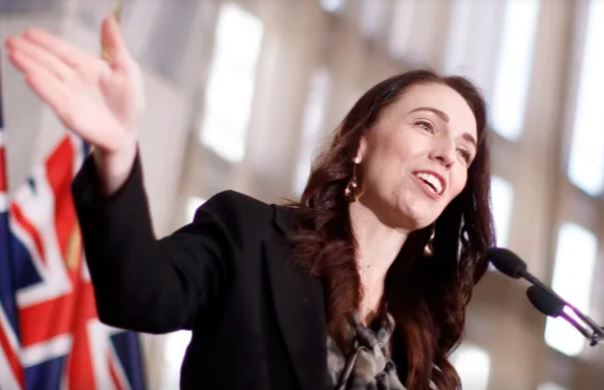
Compared to other countries, New Zealand had emerged from the Covid-19 pandemic practically unscathed. It had been a powerful drama, the star of which, Prime Minister Jacinda Ardern, had delivered an Oscar-winning performance. On the evening of 17 October 2020, Ardern’s outstanding talent was recognised when the “Academy” returned her Labour Party to office with an absolute majority.
But, as any Hollywood director knows, the only thing more difficult than creating one cinematic blockbuster, is coming up with two blockbusters back-to-back. And as all cinema-goers know, the sequel to a hit movie is (with the obvious exception of Godfather II) is never as good as the original.
Unite Against Covid-19 was a hit across all the demographics: young and old; rich and poor; left and right; black and white. Audiences loved it. Reading the results, Goetz would have understood immediately that he was in the presence of a political phenomenon. His next thought, however, would almost certainly have been: “How do Labour’s producers top that?”
The brutal answer would seem to be: they don’t. True to form, the sequel to Unite Against Covid-19 is turning out to be a flop. Researching audience reaction, Goetz would be hard put to present the film’s producers with a formula for matching their original box-office success.
For a start, the script is a disaster. Where are winning lines like “Go hard, go early” and “The Team of Five Million”? Compared to these, “I totally reject the premise of your argument!”, just doesn’t cut it.
And the plot: who the hell came up with such an obvious train wreck!
How could anyone think that “traffic light system” would have the same impact as “elimination strategy”? The same person, presumably, who decided to make the movie about the Coronavirus’s comeback? Did nobody think to tell him that there’s absolutely no feel-good factor in hundreds of thousands of Omicron infections and a steadily rising Covid death toll?
Then there’s the lead character, herself, who has undergone a truly baffling transformation. No longer the resolute protectress of her team of five million, the sequel has Ardern giving in repeatedly to business lobbyists and bullying journalists. Not content with stripping the PM of her heroic virus-beating skills, the script has her failing at just about everything else she attempts. Fighting poverty, beating homelessness, grappling with climate change: she makes a complete hash of the lot.
Honestly, the sequel’s plot points to an entire shift of genre: from multiplex blockbuster, to dreary arthouse critique of neoliberal capitalism. In short, pure box-office poison.
Can it be rescued? Is there still time for a complete re-write? And, if so, into what?
Goetz would begin with the demographics. He’d point out that the audience for dreary arthouse movies is infinitesimal. The millennials – who Labour must draw out in unprecedented numbers to have the slightest hope of holding onto power – just don’t care about the bleak realities of neoliberal capitalism. They need something big and bold and existentially threatening to attract and hold their attention.
Like?
Like climate change and the right-wing political parties’ determined efforts to thwart all Jacinda’s attempts to fight it.
Or?
Or, making the next election a tooth-and-nail battle against those who would cast New Zealand into a devastating race war. Paint National and Act in the colours of Trump-like right-wing populism. Portray their leaders as crazies prepared to see the whole country set ablaze – just so long as they can watch it burn from the Ninth Floor of the Beehive. At the last possible moment, have the Prime Minister re-capture the indomitable spirit of Unite Against Covid-19 by pitching the best that is in New Zealand against the worst.
Helluva re-write! But Goetz, knowing how closely the psychographics of New Zealand audiences match those of the United States, would almost certainly advise Labour’s producers not to throw good money after bad.
From the perspective of the man who “gets inside the heads of movie watchers like nobody else”, back-to-back Labour blockbusters would just be too much to expect.
This essay was originally posted on the Interest.co.nz website of Monday, 4 April 2022.
