
Predictable Disasters: Scientists the world over have been warning their respective governments about the inevitability of a global pandemic for decades. They have urged them to prepare for outbreaks of new strains of infectious diseases against which their citizens, having no immunity, will find themselves acutely vulnerable. Those scientists’ warnings have been vindicated but, tragically, they have not, for the most part, been heeded.
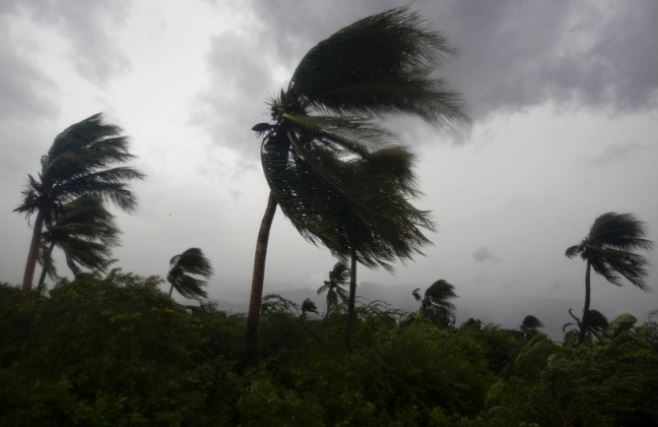
HURRICANES are particularly destructive and often deadly
natural phenomena. The number of fatalities arising out of the annual
“hurricane season” in the Caribbean, however, have been consistently lower in
Cuba than in neighbouring islands. Why? It’s not that Cuba is spared the
attentions of serious hurricanes. Hurricanes strike the island as regularly as
they strike any other in the Caribbean. The simple answer is that the socialist
government of Cuba puts the welfare of its citizens at the very top of its list
of priorities. This leaves Cuba unusually well prepared for the entirely
predictable extreme weather events to which its geographical location is prone.
That preparation saves lives – many lives. The capitalist island states of the
Caribbean have different priorities. Those priorities cost lives – many lives.
Scientists the world over have been warning their respective
governments about the inevitability of a global pandemic for decades. They have
urged them to prepare for outbreaks of new strains of infectious diseases
against which their citizens, having no immunity, will find themselves acutely
vulnerable. To be ready for these global pandemics, scientists have counselled
politicians and civil servants to make sure that excess capacity is built into
their countries’ hospitals, and to stockpile vast quantities of personal
protective equipment (PPE). They have also urged the creation of detailed
“pandemic plans” so that state agencies know exactly what to do when mass
infection and death threaten their populations.
The scientists’ warnings have been vindicated but,
tragically, they have not, for the most part, been heeded. A global pandemic
has indeed struck, but only a handful of nation states were in any way prepared
for the outbreak of the Covid-19 virus. In the overwhelming majority of
countries the recommended preparations were not implemented. Indeed, far from
being given excess capacity, hospitals and health services around the world
have been consistently underfunded and their capacity to mount a successful
pandemic defence diminished. Only in those countries seriously threatened by
the SARS coronavirus outbreak of 2002-03 (China, Hong Kong, South Korea,
Taiwan, Singapore, Thailand) was there anything resembling a well-prepared and
effective public health response.
To properly prepare a nation for the outbreak of a
potentially fatal infectious disease requires a state committed unequivocally
to prioritising the general welfare of its citizens. Building in excess
capacity in terms of trained staff, ICUs and hospital beds, and stockpiling PPE,
should be regarded as simple governmental prudence by the electorate and the
required fiscal resources allocated without serious objection. Politicians decrying
such preparations as an unwarranted imposition on “the taxpayer” should elicit
only angry condemnation and derision. Naturally, such states will, for many
decades, have supplied universal, publicly funded and provided healthcare
services to their citizens as of right.
The response of an ill-prepared nation would be altogether
different. Possessing only the rudiments of a public health system, or a
formerly robust public health system that has been consistently underfunded for
decades, the necessary infrastructure for combatting a deadly pandemic would be
absent. Poor and marginalised citizens, unable to afford the diagnosis and care
they needed would present themselves to health professionals only when their
condition had worsened to the point where they could be categorised as critical
and hospitalised. This delay in seeking care has contributed significantly to the
catastrophic overloading of hospitals – both public and private – that the
world has witnessed in New York City and in the Italian region of Lombardy.
The absence of effective public health services, coupled
with debilitating levels of poverty and inequality, is not, however, the worst
feature of a nation ill-prepared to protect its citizens from natural disasters.
To those glaring practical deficiencies must be added an equally glaring moral
deficiency which makes national ill-preparedness on a criminal scale practically
unavoidable.
That deficiency is the certitude pervading ruling elites and
their enablers that, excepting themselves, human-beings are best considered “means
to an end”. An “end” determined by themselves. It’s an attitude best summed-up
in the verbal manoeuvre featured in HBO’s comedy-drama series “Succession”.
When confronted with evidence of their criminal negligence, the series’
billionaire protagonists cynically dismiss it with the cryptic abbreviation
“NRPI”. What does NRPI stand for? “No Real People Involved”.
If, in the face of disaster, only the rich are considered real
enough to save, then the poor and the weak will soon be regarded as dispensable
illusions.
This essay was originally published in The Otago
Daily Times and The Greymouth
Star of Friday, 17 April 2020.
