Showing posts with label NZ-China Free Trade Agreement. Show all posts

Thursday, 30 July 2015

How Smart Is Tim Groser? Will We End Up Panning Or Praising New Zealand's Trade Minister?

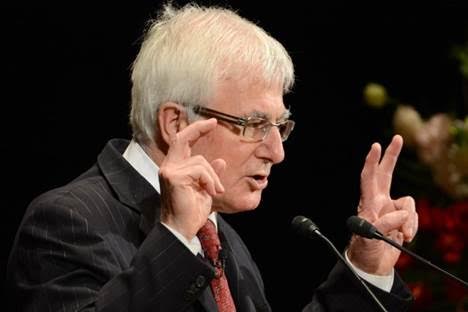
Diplomatic Genius, Or Corporate Minion? From its humble origins as a modest New Zealand trade initiative, the TPPA has always been viewed by Tim Groser (above) as the Kiwi sprat to catch an American mackerel. New Zealand corporates just ain't that clever!
 
TIM GROSER may be a lot smarter than even his most fervent supporters claim. It’s just possible that the Trans-Pacific Partnership Agreement (TPPA) – as currently drafted – is the document he had in mind all along. That, from its humble origins as a modest New Zealand trade initiative, the TPPA was always viewed by Groser as the sprat to catch a giant USA mackerel.

With the benefit of hindsight, it is clear there was never the slightest chance that the United States was ever going to sit back and let a handful of small Pacific states set up a free-trade zone from which it was excluded. As a pretty shrewd geopolitician, Groser would also have realised that, as the US slowly disengaged from its military entanglements in the Middle East, there was a very high probability that its struggle with China in the Pacific – disrupted by 9/11 and all that it inspired – would be resumed.

A comprehensive free-trade agreement, including an increasingly apprehensive Japan – but  excluding the Peoples Republic of China – was an obvious “next move” for a United States determined to reassert its hegemony over the nations of the Pacific Rim. It was also an obvious “next move” for New Zealand, whose economic fortunes were, to a potentially dangerous degree, becoming entwined with those of its principal protector’s principal rival.
 
The plausibility of this argument depends entirely on how skilled at playing geopolitical chess you are willing to believe this country’s diplomats and trade envoys truly are.
 
Who was it, for example, who initiated the process which led to the New Zealand-China Free Trade Agreement (FTA): New Zealand or China?
 
This country’s preference, for at least the past two decades, has been an FTA with the United States. Was it the latter’s refusal to negotiate seriously (i.e. to commit to the liberalisation of its agricultural sector) that persuaded the Ministry of Foreign Affairs and Trade (MFAT) to focus its attention, instead, on the Chinese? Because, in addition to boosting our exports, the New Zealand-China FTA also provided our diplomats with the precious bonus of just a little leverage vis-à-vis our “very, very, very good” friends in Washington. Groser, himself, is at pains to reassure anybody who asks, that should the TPPA negotiations fall through, New Zealand will not be left without options. Sceptics are invited to ponder the significance of New Zealand’s early decision to join the Chinese-initiated Asian Infrastructure Investment Bank.
 
Could Tim Groser and his colleagues at MFAT really be so smart? Is it possible that, sometime in the next few days, New Zealand will put its signature to a document that gives its key exporters the best of both worlds? Not only a vastly rewarding economic relationship with the second most powerful economic entity on the planet; but also the long-sought and much-desired prize of a free-trade agreement with the world’s mightiest nation? Well, yes, it is possible. And, if it happens, Tim Groser’s much anticipated appointment as this country’s next ambassador to the United States will have been well-earned.
 
From Washington, Groser will be supremely well-positioned to judge just how serious the developing struggle between the US Eagle and Chinese Dragon has become. With the TPPA in place, he will, of course, be free to choose between these two heraldic beasts. Free access for New Zealand’s agricultural exports to all the markets of the Pacific Rim – especially those of the USA, Canada and Japan – will mean that if push eventually comes to shove, New Zealand’s economic eggs will not be concentrated in the basket labelled “Made in China”.
 
A Peoples Republic of China beset by crashing stock markets and a rapidly slowing pace of economic growth will soon be faced with even greater difficulties. Constant economic expansion has been utterly crucial to the Communist Party of China’s ability to keep its population, if not happy, then at least quiescent. Mass unemployment, sharpened by the mass impoverishment of China’s rural and urban stock market investors, could very easily panic China’s leaders into a series of ultra-nationalist distractions in the South China Sea or along the Sino-Indian border. Very quickly, having all our economic (and most of our diplomatic) eggs in a single Chinese basket could prove to be very awkward.
 
Many New Zealanders are fearful of the TPPA. They worry about the future of Pharmac and are alarmed at the prospect of becoming enmeshed in the coils of the Investor State Dispute Settlement process. While these are by no means insignificant issues, there are much greater dangers out there that we would be most unwise to ignore. Looking back, we may yet have cause to feel relieved that the TPPA was wound up in July-August 2015. And even those on the left of New Zealand politics may feel just a little bit thankful that Tim Groser was where he was, when he was.
 
This essay was originally posted on The Daily Blog of Wednesday, 29 July 2015.

Tuesday, 14 July 2015

Chinese Whispers.

New Imperiums For Old: China now stands where Britain stood: an economic colossus with expectations of this country that New Zealanders are only reluctantly beginning to comprehend. The thought that the Chinese might want something in return for opening up their market to our milk powder and baby formula has come very late to the ordinary Kiwi.
 
SONJA DAVIES was only in Parliament for six years. But, she could hardly have chosen a worse six-year period to be a Labour MP. Her time as MP for the Wellington seat of Pencarrow (1987-1993) coincided with the crescendo of Rogernomics and the splitting of the Labour Party. It was not a happy time for the celebrated feminist and trade union fighter, and she was only too happy to hand her seat over to Trevor Mallard and get out.
 
It wasn’t just the awfulness of life in the Labour Party in the late-1980s and early-90s that depressed Sonja Davies. As a shrewd observer of both local and international politics, she rapidly became aware that New Zealand was passing through a period of fundamental cultural and economic re-orientation. What concerned her most was how little New Zealanders were being told and, therefore, how little they knew, about the changes that were radically reshaping what it means to be a New Zealander.
 
“If people had any idea about the scale of these changes,” she confided to me early in her first term as MP for Pencarrow,” they’d be horrified. It’s been decided that New Zealand’s future lies in Asia. That’s got massive implications – but most people haven’t a clue. No one asked them and certainly no one’s telling them.”
 
Sonja Davies: People would be horrified.
 
New Zealand’s embrace of Asia (remember Jim Bolger’s startling comment that “New Zealand is an Asian country”?) was a policy driven by the same elite group of bureaucrats and businesspeople that had sponsored Roger Douglas’s “Quiet Revolution”. New Zealand’s once heavily-protected economy had been thrown open to the world in anticipation of the world’s major economies doing the same.
 
Significantly, the corollary of the free movement of capital, goods and services across international borders – the free movement of peoples – remained largely unexamined. Most New Zealanders simply did not realise that if their country was determined to trade freely with the whole world, then, more and more, its population would come to resemble the people with whom it was trading. If most of those people hailed from Asia, then New Zealand would, indeed, become “an Asian country”.
 
Why Asia? Simply because the traditional destinations for New Zealand’s exports, Europe and the United States, were largely satiated markets. Even worse, they remained highly protected markets. Throughout Asia generally, however, and, more specifically, in China, it was evident that millions of hitherto poor peasants and workers would soon be entering the ranks of a new and materialistically inclined “Middle Class”.
 
And, if history was any guide, one of the principal effects of these millions of Chinese becoming wealthy would be a dramatic change in their dietary habits. The demand would go up for protein, protein and more protein. And protein was – and is – what New Zealanders do best. Increasingly, the diplomatic and trade focus shifted from the global free trade chimeras of APEC and the Doha Round of the WTO, to the golden prize of a single, bilateral, free trade agreement with the People’s Republic of China.
 
That agreement was the crowning achievement of the Helen Clark-led Labour Government (1999-2008) and there can be no disputing its enormous and beneficial impact on the New Zealand economy. Equally indisputable, however, are the profound socio-cultural and political impacts of China becoming this country’s largest trading partner.
 
The New Zealand historian, James Belich, describes the political and socio-cultural effects of New Zealand being transformed into Britain’s “protein factory” as “The Great Tightening”. Essentially, this country was re-colonised by British capitalists and its population re- educated accordingly. That the process was carried out by people who looked like us and talked like us – our own kith and kin, as it were – did not make it any less destructive of our national sovereignty. More than 18,000 young New Zealanders’ died in World War I: their blood exchanged for our butter’s guaranteed access to the British market. New Zealand’s Prime Minister, William Massey, was happy to pay the butcher’s bill.
 
China now stands where Britain stood: an economic colossus with expectations of this country that New Zealanders are only reluctantly beginning to comprehend. The thought that the Chinese might want something in return for opening up their market to our milk powder and baby formula has come very late to the ordinary Kiwi.
 
That Labour is leading the discussion about how much, precisely, the Chinese have a right to expect from New Zealanders is entirely fitting. After all, it was Labour who sealed the deal. It was Labour, too, who presided over the electorally unmandated “turn” towards Asia in the late-80s. That they are, at last, addressing the misgivings expressed to me by Sonja Davies’ all those years ago, is to be applauded – not condemned.
 
Labour’s Chinese whispers have nothing to do with racism. They’re about national sovereignty and the people’s will.
 
This essay was originally published in The Press of Tuesday, 14 July 2015.

Tuesday, 12 August 2014

The Responsibilities Of Power

This Land Is My Land: Yes, but if we want to keep it out of foreign hands then New Zealand will have to abandon its 30-year adherence to the doctrines of free trade and unrestricted foreign direct investment. And that will cost us more than many of us may be willing to pay.
 
SO, LABOUR’S going to block the sale of Lochinver Station. The political party which proudly attached New Zealand’s signature to the People’s Republic’s first free trade agreement with a western nation is now proposing to slap the Chinese government in the face. Forgive me, but in the absence of a wholesale repudiation by Labour of its longstanding commitment to free trade, I just don’t see this happening.
 
At the heart of the free trade doctrine lie two fundamental and related provisions: Most Favoured Nation status and National Treatment. In a nutshell, these two provisions are about non-discrimination; about governments promising not to play favourites and undertaking to treat foreigners no better or worse than they treat their own people.
 
These provisions are fundamental to free trade policies for the very simple reason that free trade is impractical without them. Without a foreign government’s undertaking that your country’s exports will be treated no better or worse than those of the “most favoured nation” with which it currently does business, what possible incentive would your own country have to open up its markets to the products of foreigners? And why would anyone attempt to establish a business in a foreign land if it was immediately lumbered with obligations and restrictions from which local businesses are exempt?
 
David Cunliffe, David Parker and Phil Goff (especially Phil Goff) understand the vital importance of reciprocity in international trade relations. The idea that they will intervene to nullify Shanghai Pengxin’s perfectly legal purchase of Lochinver Station – thereby signalling to China and rest of the world that Labour is abandoning its longstanding commitment to the core provisions of international free trade is, frankly, laughable.
 
Why, then, have they given such an undertaking?
 
The answer, of course, is because all the indications point to the conclusion that New Zealanders are adamantly opposed to the idea of their country’s farms being sold to foreigners. With an election looming, and a potential coalition partner, NZ First, promising to ban foreigners from swallowing up New Zealand’s green and pleasant land, Labour’s strategists clearly believe they have no choice except to say: “Me too!”
 
Now there is nothing intrinsically wrong with a political party opting to embrace a more protectionist stance on trade issues. New Zealand’s was, for many years, a highly protected economy with import quotas and high tariffs to protect local industries. The rest of the world accepted this because, for the most part, the rest of the world subscribed to very similar notions of economic management.
 
But, times have changed.
 
Officially, the rest of the world no longer believes in protectionism. The IMF and the World Bank, not to mention the World Trade Organisation, take a very dim view of countries which persist with (let alone re-erect!) barriers to the free movement of goods and services around the world. The fact that many larger and more powerful countries (the USA, the EU, Japan, Russia, South Korea) still maintain substantial barriers to trade, especially in agricultural products, may be a sore point with the New Zealand government, but it is not one it can do much about. From the mid-1980s, successive New Zealand governments (beginning with the fourth Labour Government) have progressively stripped away all the impediments to free trade. As a very small country, determined to achieve unrestricted access to the world’s markets for its predominantly agricultural exports, we could hardly do less.
 
All of which makes it extremely unlikely that a Labour-led Government would do anything so foolish and provocative as to over-rule an Overseas Investment Office-approved sale of Lochinver Station to Shanghai Pengxin. Not unless they actually wanted to see New Zealand’s exports held up for weeks on the Chinese docks!
 
It is critical to the future prosperity of New Zealand that its political leadership, even at the risk of incurring the electorate’s wrath, remain steadfast in its adherence to the principles of open markets and open borders. And if that means rehearsing the arguments in favour of free trade, as well as pointing out the likely consequences of denying the benefits of Most Favoured Nation status and National Treatment to a trading partner as vital to this country’s economic interests as the People’s Republic of China – then so be it.
 
It is easy to secure the approbation of the masses by telling them what they want to hear. Much harder is the task of convincing one’s fellow citizens that the cost of the changes they are demanding is well beyond what most of them would be willing to pay.
 
Small parties without prospect of ever being in a position to formulate the core policies of the state are free to promise voters the diplomatically and economically impossible. The leaders of parties large enough to make a difference have a duty to accept the responsibilities of power.
 
This essay was originally published in The Press of Tuesday, 12 August 2014.

Friday, 9 August 2013

Removing The Blinkers Of Free-Market Devotion

The March Of Folly: The Chinese Communist Party, speaking through the Xinhua News Agency, has called time on New Zealand's slavish devotion to neoliberal economics. If we are serious about restoring New Zealand's reputation after the Fonterra contamination scandal, then our obsession with applying market-based solutions to every problem must end.

“ONE COULD ARGUE the country is hostage to a blinkered devotion to laissez-faire market ideology.”
 
That, at least, is how one anonymous Xinhua commentator views the New Zealand dairy industry’s latest contamination scandal.
 
I say “at least” because the Xinhua News Agency’s opinion pieces generally reflect the thinking of the Chinese Government. Its sharply-pointed political critique should, therefore, remind us that, all glib neoliberal references to “Chinese Capitalism” aside, it is still the Communist Party of China that rules in Beijing.
 
That Xinhua opinion piece should also dispel any notion that Beijing is indifferent to the politics of its tiny, South Pacific, trading partner. Having drawn attention to our blinkered devotion to laissez-faire capitalism, Xinhua’s writer helpfully provided his readers with a telling example of its effects:
 
“Many New Zealanders fell victim to this when the construction industry was deregulated two decades ago resulting in damp and leaky homes that quickly became uninhabitable.”
 
Sometimes it takes an outsider to correctly diagnose an affliction to which its sufferers – that’s us! – have become inured.
 
The People’s Republic of China survives and thrives today because, unlike the Soviet Union, it was able to set aside the dogmatic certainties of its revolutionary founders before the damage they were inflicting became irreparable. (Who knows what might have happened if a Mikhail Gorbachev had taken power in Russia at the same moment that Mao Zedong’s pragmatic successor, Deng Xiaoping, set China on its new path to a mixed economy?)
 
Some have summarised Deng’s economic position as: tolerating as much market as possible, while retaining as much state as necessary. It certainly marked a radical departure from Mao’s “iron rice bowl”, which attempted to impose a raw equality of outcomes upon the entire Chinese population.
 
But, in allowing the market to do what the market does best (which no Chinese leader has ever construed to mean everything!) Deng was not deviating one step from the Chinese Revolution’s three central objectives: to remove the burden of foreign domination; to allow the Chinese people to stand up; and to create the material conditions for their country’s future prosperity.
 
Whether that prosperity was unleashed by the market, or planned and executed by the state,  was, according to Deng, something to be dictated by the circumstances prevailing in each case – not by the inflexible dogma of the Communist Party in Beijing.
 
“It doesn’t matter if a cat is black or white”, Deng was fond of saying, “so long as it catches mice.”
 
It is now a matter of some urgency that we all grasp the fact that New Zealand is one of the mice the Chinese cat has caught. It is what the sharp tone of the Xinhua opinion piece is reminding us.
 
China singled New Zealand out among all the Western nations by granting us the huge advantage of a Free Trade Agreement. This vast, and still rapidly expanding, economic power agreed to take everything we could send her. In doing so, the Chinese Communist Party effectively guaranteed New Zealand’s prosperity for the next hundred years.
 
We have been very quick to pat ourselves on the back for this achievement. Indeed, to hear our politicians talk, one could easily get the impression that the whole thing was their idea. But such small nation chauvinism is misguided; it’s fatuous; and very, very dangerous.
 
What has been true for the last 3,000 years, remains true: that China never confers a benefit without a guarantee of reciprocation. She has opened her markets to our agricultural exports, and she expects those exports to be safe. She has consented to let us feed her children, and she expects New Zealand’s infant formula to be free of botulism.
 
Since 1984, New Zealand politicians have trumpeted the notion that the market is all-wise and all-powerful. That regulation – especially “heavy-handed” regulation – is unnecessary. John Key, in particular, has consistently devalued the goal of “100% Pure New Zealand” by declaring it a mere aspiration: “It’s like saying ‘McDonald’s, I'm loving it’ – I’m not sure every moment that someone’s eating McDonald’s they're loving it ... it’s the same thing with 100 Percent Pure. It’s got to be taken with a bit of a pinch of salt.”
 
Well, not any more, Prime Minister. Not if we want China’s doors to remain “a bit” open.
 
The era of “blinkered devotion” is over.
 
This essay was originally published in The Waikato Times, The Taranaki Daily News, The Timaru Herald, The Otago Daily Times and The Greymouth Star of Friday, 9 August 2013.