Friday, 10 October 2014

Unfretful Voters

The People's Choice: The contemporary conservative voters’ faith in the policies of their Prime Minister is no more susceptible to being undermined by dissident journalism than their predecessors’ was by militant unionism. New Zealanders, it seems, will forgive many sins in the name of maintaining stability and preserving prosperity.
 
A HOT WAR in Korea. Record prices for New Zealand’s agricultural exports. Overseas shipping companies waxing wrathful over restrictive practices and unneedful delays. A belligerent trade union unwilling to back down. A National Government slowly recovering the use of its political muscles after 14 years on the Opposition benches. Mix all these factors together and something’s bound to happen.
 
And something did.
 
The Waterfront Dispute of 1951 is remembered now (when it is remembered at all) as a mighty industrial stoush. The Watersiders and their allies squaring-off against the ship-owners and the first National Government under Sid Holland – a man every bit as belligerent as the watersiders’ leader, Jock Barnes.
 
Not surprisingly, Sid Holland won.
 
But that was then and this is now. Sixty-three years on, who cares? In 2014, “organised labour” is a fading historical memory. Today, outside the public sector, barely one worker in ten carries a union card. For young, twenty-first century Kiwis, the tales of ’51 might just as well be the tales of Ancient Greece.
 
Except it’s not the tale of the Watersiders’ heroic defeat that I want to tell. That’s an old story and Dick Scott told it much better than I ever could in his book 151 Days. No, the story I’m interested in is the story of how New Zealanders reacted to the events of 1951. And that is a story with some very distinct contemporary echoes.
 
This is how the veteran broadcaster, Gordon Dryden, remembered 1951 in his memoir Out of the Red:
 
“In my view the emergency regulations introduced on 26 February 1951 slashed at everything I believed in about journalism. It became against the law to report both sides of the story of the biggest industrial dispute in New Zealand history. It became against the law to make donations to help feed the families of workers who were on strike. It became unlawful for opponents of the Government to hold meetings.”
 
Dryden, in 1951, “was much more concerned with the issue of press freedom and democracy.”
 
But these were not the concerns of a clear majority of New Zealanders: 54 percent of whom delivered a resounding endorsement of Sid Holland’s draconian regulations by casting their votes for the National Party in the Snap Election of 1 September 1951.
 
And it wasn’t only the ordinary voters who declined to be outraged by the National Government’s sudden and unprecedented curtailment of civil liberties. In 1951, New Zealand boasted dozens of daily newspapers, but not one editor or proprietor prepared to put his freedom on the line for the freedom of the press. Nor was there a single judge willing to tender his resignation rather than enforce a law which would not have been out of place in Stalin’s Russia.
 
But, that was then.
 
In August 2014, the investigative journalist, Nicky Hager, published a book exposing the manner in which a person employed in the office of the Prime Minister, and Judith Collins, the Minister of Justice, colluded with a prominent right-wing blogger and a slew of working journalists to undermine, discredit and attack opponents of John Key’s National Government.
 
The many thousands of New Zealanders who read Mr Hager’s Dirty Politics were convinced that its revelations could not fail to erode the voters’ support for Mr Key and his colleagues. Like Gordon Dryden, their concerns were about “the issue of press freedom and democracy”.
 
But, they were wrong.
 
The contemporary conservative voters’ faith in the policies of their Prime Minister is no more susceptible to being undermined by dissident journalism than their predecessors’ was by militant unionism. New Zealanders, it seems, will forgive many sins in the name of maintaining stability and preserving prosperity.
 
Not even the news that, just twelve days after the 2014 election, Mr Hager’s house was subjected to a 10-hour search by five police officers, responding to the complaint of the right-wing blogger whose hacked e-mails constitute the core of the Dirty Politics exposé, is likely to impair the celebratory temper of the conservative Kiwi voter.
 
In his celebrated essay, Fretful Sleepers, written in the months following the 1951 confrontation, the New Zealand writer, Bill Pearson, observed:
 
“The New Zealander delegates authority, then forgets it ... There is no one more docile in the face of authority.”
 
If that was true then, is it still true now?
 
This essay was originally published in The Waikato Times, The Taranaki Daily News, The Timaru Herald, The Otago Daily Times and The Greymouth Star of Friday, 10 October 2014.

Anticipating Trouble

Keeping A Weather-Eye Out: If John Key truly wishes to challenge Richard (“King Dick”) Seddon’s record for political longevity, then he should weigh very carefully the costs and benefits of mobilising mass resistance during his government’s third term. Successful prime ministers will always anticipate trouble, but wise ones do not seek it.

JOHN KEY BELIEVED he knew what was in Nicky Hager’s book. He was wrong. Instead of containing a host of embarrassing stories about New Zealand spying on its friends in the South Pacific, and intercepting the secrets of its largest trading partner, Dirty Politics concentrated on matters much closer to home. For nearly a fortnight, the Prime Minister and his advisers struggled to deflect Mr Hager’s revelations. Ultimately, shutting down Dirty Politics required measures of unprecedented severity: the forced resignation of a cabinet minister in the middle of an election campaign.
 
The much ballyhooed “Moment of Truth” proved to be a very different story. Knowing in advance who was on Kim Dotcom’s guest-list made matters considerably easier for the Prime Minister. Long before the “moment” arrived, Mr Key had prepared his defences and rehearsed his attack-lines. Though Glenn Greenwald put on a very brave face for his fellow journalists, the Pulitzer Prize-winner was obviously discomforted by the fierceness of Mr Key’s counter-punching. One can only imagine the mighty sighs of relief (on both sides!) as his plane took off for Brazil.
 
Anticipating trouble is one of the most important skills a political leader can master. Even more important, however, is knowing how to deal with trouble when it arrives.
 
One of the many questions Labour Party members and supporters would no doubt like to put to David Cunliffe is why he was so very bad at anticipating events which were readily predictable.
 
Mr Cunliffe had been a Member of Parliament for nearly three years when Mr Hager’s third book, Seeds of Distrust, unleashed the so-called “Corngate” scandal in the midst of the 2002 election campaign. Would it not, therefore, have been prudent for the Leader of the Opposition and his advisers to prepare for a similar eventuality in 2014? Was there no one in Labour’s ranks sufficiently well-acquainted with Mr Hager to give Mr Cunliffe some idea of what was coming? Of course there were, but they were never asked.
 
Nor was Mr Cunliffe sufficiently flexible as a politician to take advantage of Dirty Politics when it was released. A politician more willing to risk all for the keys to Premier House might have seized upon Mr Hager’s revelations and forged them into a weapon of deadly political effect. But, the moment came … and then it went.
 
What, then, should the Prime Minister, and whoever is unlucky enough to be elected leader of the Labour Party, be anticipating over the next three years? What are the pitfalls Mr Key’s government should try to avoid? What potential problems will his opponents seek to exploit?
 
Education and the Environment would seem to be the most likely arenas of conflict for the National Government. Significant – and politically highly contentious – changes are proposed in the way both New Zealand’s education system and its environment (both urban and natural) are managed. Neither of these vital spheres are lacking in defenders.
 
The powerful teacher unions stand athwart all roads leading towards privatised education. Any attempt to expand dramatically the roll-out of “Partnership Schools”, or strengthen the Government’s “National Standards” regime in the primary sector, will almost certainly be met with concerted union resistance.
 
This may not be seen as altogether a bad thing by Mr Key and his colleagues. The opportunity to strike a crippling blow at the most powerful of the public sector unions may prove too tempting a trophy for a third-term National Government to resist. Plenty of helpful advice on how to beat public sector unionists will no doubt be forthcoming from the Canadian Conservative Party and the US Republican Governors of Wisconsin and Michigan.
 
Would the public rise in defence of the teachers and their unions? Twenty years ago the answer would have been “Yes”. But now? With the anti-union response to The Hobbit dispute in mind, Mr Key might just be willing to roll the dice.
 
Linked as it is in the public’s mind with dirty dairying, mining in national parks, deep-sea oil-drilling and the governments’ (both local and national) support for environmentally damaging and financially dubious irrigation ventures, the reform of environmental legislation will be a wager hazarded for much higher stakes.
 
With Labour crippled – probably beyond recovery – the Greens will be looking to use National’s environmental “reforms” as the springboard for establishing themselves as the only effective Opposition party. In alliance with Greenpeace, they will do all they can to put themselves at the head of a mass protest movement of young and old, rural and urban, Maori and Pakeha.
 
If John Key truly wishes to challenge Richard (“King Dick”) Seddon’s record for political longevity, then he should weigh very carefully the costs and benefits of mobilising mass resistance during his government’s third term. Successful prime ministers will always anticipate trouble, but wise ones do not seek it.
 
This essay was originally published in The Press of Tuesday, 7 October 2014.

Friday, 3 October 2014

Post Mortem At The Pub

Next Move? "Adapt or go under was the only choice Labour gave us, Trev, and now they must do the same.”

“SO, WHADDYA RECKON, TREV? Is Labour finished, or what? Can you stop crying into your beer long enough to give me a professional political post mortem?”
 
Trevor Bright was used to his uncle’s jibes, he’d been hearing them long enough. Ever since he’d announced that he was off to university to study politics, his Uncle Bruce had made a point of quizzing him on matters political – especially those relating to the Left.
 
“I’m not crying into my beer, Uncle Bruce. Anyone who kept an eye on the polls could hardly have been surprised by the election result.”
 
“Oh, go on with you, Trev! You were always telling me the polls were crap. They only contacted people with landlines, you said. Young people with cell-phones were never contacted, you said. National’s numbers were always 5 percentage points too high, you said. You’ve changed your tune a bit, haven’t you?”
 
“Yes, but I was only talking about a couple of specific polls, Uncle Bruce. The various ‘Polls of Polls’ got it just about spot-on. I looked at those on the Friday night and my heart sank. I knew the Left was in for a drubbing.”
 
“Drubbing? Nephew, that was more than a drubbing, that was a bloody massacre! I heard some bloke on the radio saying that Labour’s come full circle. That they polled about the same as they did the very first time they contested a general election, way back in 1919. Is that true?”
 
“I’m afraid it is, Uncle Bruce. In both 1919 and 1922 Labour polled almost exactly the same as it did a fortnight ago: 24 percent.”
 
“Except that back then Labour was the new kid on the block, wasn’t it? A bit like Values or the Greens – only much more popular. Sheesh, can you imagine how chuffed that lot would’ve been to get 24 percent on their first trot? But Labour’s not the new kid on the block anymore, is it Trev? It’s the 98 year-old geezer on the block. So I’ll ask you again: Is Labour finished?”
 
Trevor knew that there was a lot more to his uncle’s question that a mischievous desire to rark-up his  academic nephew. For many years Bruce Bright had been an active member of the Meatworkers Union. He’d been a leading delegate and was one of the union’s most formidable shed orators. When Uncle Bruce got going, you had to hold on tight to the furniture or risk being blown away. He remembered the Christmas dinner a few years ago when the onetime Labour supporter had really let it rip. It was an indictment he’d never forget.
 
“Labour did it to us, Trevor. Our own party. I remember watching the blokes walking out of the works on that last day; heads down, silent, gumboots scrunching the gravel. And there wasn’t a damn thing that I, or the Union, could do to help them.
 
“The Nats had always put the boot into working people – it was expected. But these bastards, the members of the so-called “Fourth Labour Government”, they’d done much more than that. Right under our noses, they’d restructured the whole damn country. Only when it was too late did we realise that, in the brave new world Roger Douglas had made for us, working people had only two choices: they could adapt; or they could go under. We were on our own.”
 
Trevor looked up from his glass of lager into the full force of his uncle’s gaze.
 
“I’ve a friend in Rongotai, in Wellington, Uncle Bruce, who tells me that in streets which used to return a solid Labour vote, people’s allegiances are now split between the local MP, Annette King, and the National Party. The funny thing is, Uncle, that the people in these streets: highly-skilled, self-employed contractors and their families – some of them living in renovated state houses – used to look upon Labour as ‘their’ party. But on 20 September most of them Party Voted National for the third election in a row. The tragic thing is that most of the families living in the un-renovated state houses didn’t vote at all.”
 
Bruce Bright blinked away tears and tipped back his glass.
 
“Good! Because it’s no more than they deserve. Adapt or go under was the only choice Labour gave us, Trev, and now they must do the same.”
 
This short story was originally published in The Waikato Times, The Taranaki Daily News, The Timaru Herald, The Otago Daily Times and The Greymouth Star of Friday, 3 October 2014.

Tuesday, 30 September 2014

Changing Leaders Will Not Be Enough

Trial By Ordeal: The techniques of the Seventeenth Century Witchfinders-General might be preferable to the process Labour has adopted to uncover the reasons for its woeful performance in the 2014 General Election. It's a pity the Party has not allowed itself to be guided by the National Party's response to its own, even worse, debacle back in 2002.
 
WHY DOES LABOUR do this to itself? Yes, they have just suffered an unprecedented (post-1922) election defeat, but that’s only because the 2014 General Election was itself unprecedented (post-1951).
 
And, besides, I’m tempted to say ‘so what?’ In 2002 the National Party suffered an even more embarrassing result when Bill English led his party to its worst defeat ever. National’s Party Vote plunged from a bad 30.5 percent in 1999, to an even worse 20.9 percent in 2002. (A whopping percentage point slide of 9.6, compared to David Cunliffe’s 2.8.)
 
The interesting thing about that debacle, however, is not what the National Party did in response, but what it didn’t do.
 
For a start, it didn’t change its leader. National understood (as Labour apparently does not) that a debacle on the scale of 2002 has many more contributing factors than simply a poor performance by the party leader. Defeat on such a scale is clear evidence of systemic – as well as personal – failures. Which is why the first priority of National’s hard-headed businessmen and farmers was to give the party organisation a very solid kick in the bum – not to sack Bill English. (He would keep.)
 
In the months following its 2002 defeat National thoroughly renovated itself: achieving for the Right what Jim Anderton, between 1979 and 1984, had achieved for the Left. Namely, the transformation of an ageing party into a vehicle more appropriately aligned to the economic, social and political context in which it operated.
 
Crucial to the success of such operations is the concentration of decision-making power in the hands of those best equipped to wield it. Under MMP, one of the most important functions to  streamline is the formation of the Party List. National has achieved this by means of an all-powerful board of directors; the Greens by giving the job to their party members. For Labour, however, the list formation process remains the Party’s Achilles’ heel.
 
Bluntly, party list formation in the Labour Party is a colossal rort; a travesty of democratic principle on the scale of the “rotten boroughs” that once allowed the British aristocracy to control the composition of the House of Commons. More horse-trading takes place during this dangerously opaque process than at an Irish county fair – with considerably worse outcomes.
 
It’s ironic really, because Labour once boasted the most ruthless and centralised mechanism for selecting candidates of all the political parties. Seventy years ago it was the selector representatives of the all-powerful Labour Party Executive who called the shots – and they seldom missed. If imitation is the sincerest form of flattery, then National, when renovating its structures, post-2002, paid Labour the most fulsome of compliments.
 
The tide of democratisation which has swept over Labour since the departure of Helen Clark (a “Red Tsar” if ever there was one!) rules out any return to the days of Peter Fraser’s politburo. The next logical step, therefore, is to follow the Green Party’s example by passing over the responsibility for drawing up Labour’s List to the whole membership.
 
Applying the principle of one-person, one-vote, would necessitate another important reform of Labour’s rules: the identification of every member of an affiliated trade union wishing to be associated with the Labour Party. This would mean that the opinions of trade unionists would be registered individually, by secret ballot, not collectively, in public. It would also end forever the frankly corrupt practice of trade union general secretaries cogitating alone in their Wellington offices, and then voting “on behalf” of their unasked and voiceless membership.
 
Those New Zealanders who have been puzzled by the glaring discrepancy between the votes cast for Labour’s electorate candidates and Labour’s share of the Party Vote, have yet to grasp the level of distortion the Party’s list selection processes have wrought upon the public’s perception of what Labour has become. There are Labour MPs and candidates (Stuart Nash take a bow) who are both well-known and well-liked in their electorates. And then there’s the Labour Party itself, an institution which, to an increasing number of New Zealanders, is neither well-understood nor well-liked.
 
If Labour learns anything from its latest drubbing at the polls, then it should be this. Electoral success must no longer be left to the vagaries of candidate and list selection processes which owe more to ideological obsessions and sectoral horse-trading than to the needs of Labour’s electoral base. Labour’s great failing is that its representatives, with a handful of worthy exceptions (mostly Maori and Pasifika) have gradually ceased to resemble the people whose Party Votes it demands.
 
The National Party, upon being sternly reprimanded by the voters for similar political failings, quietly and efficiently set about making sure that their players matched their supporters. The results were spectacular. If Labour accomplishes a similar transformation, then it can expect the same.
 
This essay was originally published in The Press of Tuesday, 30 September 2014.

Sunday, 28 September 2014

The Left Triumphant! A Counterfactual History Of The Last Twelve Months.

Looking Like A Winner? David Cunliffe had everything to play for - and lost. Had he played differently, Saturday 20 September, rather than a debacle, could have been a triumph.
 
DID IT REALLY HAVE TO END LIKE THIS? Reading through the commentary threads of the left-wing blogs it is impossible to not feel the anger; the sense of betrayal; the impression of having had something vital ripped from their grasp that many left-wing voters are still experiencing. Political parties are supposedly the vessels in which the hopes and dreams of whole classes of people are carried to power. How did the parties of the Left fail so spectacularly? Could it possibly have ended differently?
 
Of course it could. The debacle of 20 September 2014 was anything but inevitable. Different choices could very easily have produced spectacularly different results.
 
Let us begin with David Cunliffe’s victory of 15 September 2013. Not only was this a democratic triumph for the ordinary members and union affiliates of the Labour Party, it was also a revitalising tonic for Labour supporters and voters across the country.
 
For two weeks New Zealanders had been reminded of what Labour was all about – or, at least, what it was supposed to be about. They responded by sending Labour soaring to 37 percent in the polls. Given that the Helen Clark-led Labour Party had won power in 1999 with just 38 percent of the vote, Cunliffe and his team were poised upon the threshold of an election year from which they had every chance of emerging triumphant.
 
What happened in the three months following that historic vote set the scene for the disaster the Left has just experienced.
 
What happened? Well, that’s the whole point isn’t it? Nothing happened. Spring turned into summer and Cunliffe did very little to build upon his September victory. The Labour Party’s annual conference was allowed to come and go without the slightest attempt to demonstrate to a waiting New Zealand in what way the new Labour leader was in any politically obvious respect different from the old one.
 
So consider, instead, this counterfactual history of the past twelve months.
 
*  *  *  *  *

CUNLIFFE ANNOUNCES the appointment of Matt McCarten as his Chief-of-Staff not in February 2014, but in September 2013. The new Leader of the Opposition’s Office is thus galvanised into action immediately – not five months later.
 
In his speech to CTU's biennial conference in October, Cunliffe announces his intention – as both Prime Minister and Minister of Labour – to establish a comprehensive commission of inquiry into workplace conditions and employee aspirations. It will be the biggest and most thorough exercise in public consultation ever attempted in New Zealand, and at the end of the process the country will have a blueprint for workplace relations that the people themselves have drafted. At the 2017 election New Zealanders will have the opportunity to vote this blueprint up or down. If they vote it up, then working-class New Zealanders, and the new institutions they have brought into being, will find themselves – for the first time in a long time – at the centre of the political stage.
 
In November, with the reverberations of his workplace policy still echoing around the country, Cunliffe flies into Wigram for his party’s annual conference. Instead of the damp squib this gathering turned out to be (full of backstairs arm-twisting to shut down the debate on lifting the age of retirement and blunt the growing union opposition to the TPPA) the conference offers the clearest possible signal that Labour and the Greens will be fighting the 2014 election as partners – not antagonists.
 
On the Sunday afternoon, Cunliffe is joined on stage by Russel Norman and Metiria Turei, and, to tumultuous applause, the three politicians jointly announce their common policies on Climate Change and Ending Child Poverty. Like the 1998 Alliance Conference in Albany, the Wigram Conference gives New Zealanders an abiding and highly persuasive image of unity and common purpose.
 
To conclude his first 100 days as Labour leader, Cunliffe celebrates the festive season by launching his autobiography. The book, published by Craig Potton, and begun when Cunliffe was banished by David Shearer to the back-benches, sets out not only the story of Cunliffe’s life, but also his vision for New Zealand’s future. In an instant, the problem of what to give every Labour Party member and supporter for Christmas is solved. The Press Gallery, too, has something to read at the beach.
 
Early in the new year, with Cunliffe’s, the Greens' and Mana leader, Hone Harawira’s blessing, Matt McCarten sets up a very secret meeting with Kim Dotcom. “We all share a common goal,” Matt grins, “we all want to get rid of the Key Government. Perhaps you might like to assist the three left-wing Opposition parties with a substantial financial donation?
 
“To many New Zealanders,” he tells the big German, “you have become a sort of folk hero. So they’ll forgive you for donating money to John Key’s opponents. What they will not forgive, however, is any attempt to intervene directly in the country’s politics. By sponsoring a new political party, for example. If you want someone other than Judith Collins to be the Minister of Justice after 2014, then what Labour, the Greens and Mana are proposing is by far the best option.”
 
Cunliffe’s next call, early in 2014, is to his publisher, Craig Potton. With the 2002 precedent of Nicky Hager’s Seeds of Distrust firmly in his mind, he asks Potton to think very carefully before publishing another of Nicky’s books in the middle of an election campaign. “If such a publishing venture is planned,” he says, “could you and Nicky, at the very least, keep all the Opposition leaders in the loop? A Labour-Green-Mana victory may well hinge on how you manage the release of another one of Nicky’s exposés.”
 
In the very depths of the winter of 2014, Cunliffe and McCarten, working with Helen Kelly of the CTU, organise a mass union meeting in the Telstra Events Centre in Manukau. Before an audience of 8,000 workers, Cunliffe, Norman, Turei and Harawira jointly announce their “Fairer Taxes For A Fairer New Zealand” package. “The 1 percent,” Cunliffe thunders, “will make a contribution to New Zealand’s future commensurate with their obscene wealth!” “The polluters will be made to pay”, the Greens promise. “We will feed the kids!” Hone bellows – to a crowd already on its feet and cheering.
 
In the final fortnight of the election campaign the “New Tomorrow Road Trip” makes its way from Kaitaia in the North to Invercargill in the South. A gleaming cavalcade of busses (paid for by Dotcom’s millions) snakes its way through New Zealand’s green and pleasant land carrying the Labour, Green and Mana leaders into every major city in the country.
 
It ends in the Auckland Town Hall on the Thursday before the election. Packed to the Gods the audience listens intently as Cunliffe speaks about his upbringing as a preacher’s son. "I have always believed that there is something bigger in this world than the individual," he tells the hushed hall, "and that there are things more valuable than money." His words echo across Aotea Square, where thousands more are also listening. "The men and women who inspire humanity do not look back, at the past; or down, on their opponents; they look forward, to the challenges that lie ahead; and, if we are very lucky, up, towards the mountains we have yet to climb. There are men and women who fit that description with me on this stage tonight, and, God willing, they will be with me in Government on Sunday morning."
 
*  *  *  *  *
 
HISTORY is about the choices men and women make. Had better choices been made over the past 12 months, then the unemployed, beneficiaries, the working poor, young New Zealanders trying to buy their first home, university students burdened down by debt, all those in need of caritas – the love that so terrifies the Right – might now be celebrating the beginning of a new chapter in the history of New Zealand progressivism.
 
For their sake, as well as our own, we must do better next time.
 
 
This essay was originally posted on The Daily Blog of Friday, 26 September 2014.

Friday, 26 September 2014

Where Has The Election Left The Left?

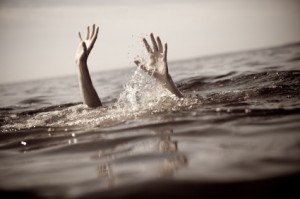
Not Waving, Drowning: Herein lies the problem. Labour must change. Labour will change. Labour cannot change. Not even under the blows of an electoral sledgehammer called Twenty-Four Percent.
 
WHERE HAS LABOUR’S worst defeat in 92 years, left the Left? Before answering that question, it might be helpful to offer a few suggestions as to where National’s stunning electoral victory has not left it.
 
The wailing and gnashing of teeth from some left-wing tweeters and bloggers notwithstanding, the Left is not in some antipodean approximation of Nazi Germany, or even Fascist Italy. Nor has it been deposited, overnight, in the Kiwi equivalent of George W. Bush’s post-9/11 America. John Key is not der Fuhrer, or even il Duce. And Steven Joyce is not Dick Cheney, waiting to be whisked away to “an undisclosed location”.
 
No. The Left, along with everybody else, is still right here in staunchly democratic New Zealand: still in full possession of all the rights and privileges required to mount another assault on the Treasury Benches in 2017.
 
And Labour is also here. The largest of New Zealand’s left-wing parties can be found sitting dejectedly amongst the wreckage of a pretty comprehensive election defeat. But that’s alright, because Labour’s been there before, and, if history is any guide, will be there again – although, hopefully, with a decent series of election victories in between!
 
But before it can raise its arms above its head in triumph, Labour has a very long vale of tears to pass through.
 
It will be a bitter and painful journey for many within the party. There are groups and factions which have waxed powerful in what used to be Labour’s big tent – not noticing that, as they grew larger, the number of ordinary party members who were ready and willing to remain inside the tent with them was growing smaller and smaller and smaller.
 
What these groups also fail to acknowledge is that no matter how big and powerful they may have grown within the Labour Party, in the world outside their size and influence is considerably less.
 
The unions, for example, remain one of the key components of Labour’s institutional architecture, but in the much broader context of New Zealand society as a whole union density has fallen from roughly 50 percent of the workforce to just under 20 percent. (In the private sector it is even worse, with barely one in ten workers belonging to a trade union.)
 
Similarly, in a country where so many young women still feel the need to preface any discussion of gender relations with the disclaimer “I’m not a feminist …” just how sensible was it to require gender quotas to be written into Labour’s constitution? Or to speak out loud and long in defence of a “man ban”?
 
Perhaps the Women’s Council of the Labour Party should draw a lesson from the fate of Sweden’s “Feminist Initiative”. Founded in 2005, this left-wing feminist political party has consistently failed to breach Sweden’s 4 percent electoral threshold. In the Swedish general election of 14 September, the Feminist Initiative polled just 3.1 percent of the vote.
 
Labour women might also ponder the significance of a recent poll showing fewer than one New Zealand male in five being willing to cast a Party Vote for Labour.
 
Of course, anyone attempting to make this case within the Labour Party will be howled down as a right-wing misogynist stooge of the employing class.
 
And therein lies the problem. Labour must change. Labour will change. Labour cannot change. Not even under the blows of an electoral sledgehammer called Twenty-Four Percent.
 
Resolving this conundrum will require some exceptionally canny political management.
 
One solution might be to commission two external reviews of Labour’s values and structures: one from the democratic-socialist Left, the other from the social-democratic Right. And since it is pretty clear that Labour’s caucus is spoiling for a fight, let the contenders declare their preference for one or the other. That way the inevitable Leadership Contest can double as a party-wide plebiscite on which ideological and organisational future the membership feels most inclined to follow.
 
If the membership opt to go Left they will be voting to turn Labour into a niche party without the slightest hope of ever again receiving 40 percent of the Party Vote. But, if they turn Right, Labour will lose 40 percent of its members.
 
As Jim Anderton advised me 34 years ago; so would I advise them now: “Build your footpaths where the people walk.”
 
This essay was originally published in The Waikato Times, The Taranaki Daily News, The Timaru Herald, The Otago Daily Times and The Greymouth Star of Friday, 26 September 2014.

Wednesday, 24 September 2014

Uncomplicated Loyalties: Why Cunliffe and the Labour Left Cannot Win

Unequal To The Task: In the twelve months he has been leader of the Labour Party, David Cunliffe has made plenty of mistakes of his own, but these should not in any way detract from the mistakes that were made for him. The political and business establishment had even more to fear from a Cunliffe-led Labour Party forming a government in 2014 than the ABC faction of his own caucus.

THE STORY of David Cunliffe’s leadership of the Labour Party has been one of missed opportunities and unforced errors. That he was the only choice available to those who wanted to rid the Labour Party of its neoliberal cuckoos is indisputable. Equally indisputable, however, is that he has proved unequal to the task.
 
It is worth recalling the observations I made back in February following the announcement that Matt McCarten had been appointed as Cunliffe’s Chief-of-Staff:
 
[T]he Left has been given an extraordinary opportunity to prove that it still has something to offer New Zealand ….. If Cunliffe and McCarten are allowed to fail, the Right of the Labour Party and their fellow travellers in the broader labour movement (all the people who worked so hard to prevent Cunliffe rising to the leadership) will say:
 
“Well, you got your wish. You elected a leader pledged to take Labour to the Left. And just look what happened. Middle New Zealand ran screaming into the arms of John Key and Labour ended up with a [pitiful] Party Vote … So don’t you dare try peddling that ‘If we build a left-wing Labour Party they will come’ line ever again! You did – and they didn’t.”
 
Be in no doubt that this will happen – just as it did in the years after the British Labour Party’s crushing defeat in the general election of 1983. The Labour Right called Labour’s socialist manifesto “the longest suicide note in history” and the long-march towards Blairism … began.
 
The cuckoos (a.k.a the “ABCs”) are now poised to reclaim control of the Labour Party caucus and organisation to a degree not seen since the departure of Helen Clark. Not only will they purge the Leader of the Opposition’s Office of Cunliffe and his immediate entourage, but they will also ensure that the current party President, Moira Coatsworth, and the General Secretary, Tim Barnett, are eased out of their positions. A concerted effort will also be made to rid the party’s NZ Council of all those known to be sympathetic to Cunliffe and his vision. Within the trade union movement there will be a strong push for “left unity” and the choice and management of affiliate delegates to and at regional and annual conferences will be given much closer attention.
 
By the time the 2015 annual conference of the Labour Party convenes in Palmerston North, delegates will be welcoming a new leader, electing a new president and general secretary, and contemplating a NZ Council already shorn of most of its left-wing radicals. The delegates, too, will likely be a very different bunch. At the level of the Labour Electorate Committees there will be a concerted effort to provide delegate credentials only to those “approved” by the dominant caucus faction. The names of people not wanted at the conference will be discreetly circulated to the new leader’s most reliable supporters. Challenges to dissidents should be expected.
 
Right down to the lowest levels of the Labour Party, politics is about to get very ugly.
 
Is there no way back for Cunliffe and the Left? No way at all?
 
No, there is not.
 
To understand why one needs to understand the average Labour activist. While a minority of active members are driven by ideology, the vast majority are driven by a mixture of sentiment and loyalty. These emotions have either been programmed into them by their upbringing – as in “I remember Norman Kirk” – or through a longstanding personal relationship with their local Labour MP. The strength of these emotions means that when push comes to shove the Labour Party’s activist base will almost always defer to the wishes of the parliamentary caucus, or, if that fails, to appeals by the party hierarchy to rally in Labour’s defence.
 
That these traditional appeals to sentiment and loyalty failed to keep the membership quiescent for the six years after 2008 bears testimony to the iron grip in which Helen Clark held the party organisation for an unprecedented 15 years. Pressures for a more democratic Labour Party had been building for some time under Clark (especially during her final term as PM) and they burst forth in the form of constitutional and policy innovations following her departure. The effective coronation of Phil Goff as party leader in 2008, followed by the caucus’s refusal to acknowledge Cunliffe as the membership’s choice in 2011, gave the rank-and-file’s reforms an even sharper edge.
 
The high tide of the democratisation process coincided with the election of Cunliffe over the objections of the parliamentary caucus in September 2013. Cunliffe himself was only too aware of the momentous potential for change which his election signified. A left-wing party strong enough to dictate the composition and policy direction of its parliamentary representatives constituted a clear and present danger to New Zealand’s 30 year-old bipartisan consensus in favour of neoliberalism. Cunliffe’s efforts to reassure his colleagues that he had no intention of availing himself of that potential proved unsuccessful. There were simply too many Labour MPs with personal and political fortunes that could not survive the subordination of the Labour Caucus to the Labour Party.
 
The wider political and business establishment had even more to fear from a Cunliffe-led Labour Party forming a government in 2014. Cunliffe made plenty of mistakes on his own, but these do not in any way detract from the mistakes that were made for him.
 
And now the Labour Party membership and affiliates find themselves between a rock and a hard place. They must decide between engaging in a long and bitter internal struggle for ideological and organisational supremacy with their own MPs; or, by rediscovering their former, uncomplicated loyalties to party hierarchy and parliamentary caucus, avert the bloody consequences of a civil war from which neither side would likely emerge as a viable political force.
 
All my experience of the Labour Party tells me that it will capitulate to its parliamentary wing. Rank-and-file and affiliate union members know that their MPs are full-time political professionals who, in this sort of battle, can count on the support of virtually the entire New Zealand establishment. The news media, in particular, can be relied upon to portray the caucus as reasonable and responsible, while painting Cunliffe and the party as a bunch of loony lefties dangerously out-of-touch with “Middle New Zealand”. That being so, and with such wise old Labour Party heads as its former General Secretary, Mike Smith, and its current Policy Council sage, Professor Nigel Haworth, counselling moderation and caution, the membership will, once again, like Orwell’s “Boxer” in Animal Farm, allow the pigs to harness them to the plough.
 
This essay was posted simultaneously on Bowalley Road and The Daily Blog on Wednesday, 24 September 2014.