Showing posts with label Auckland Super-City. Show all posts

Tuesday, 17 December 2013

Laughing-Stock City?

Testing Times: Auckland's Mayor, Len Brown, not only faces the certainty of being formally censured by his Council, but will also have to contend with a concerted effort by councillors to pare down the considerable executive powers granted to the "super-city's" leader by its principal political architect, the then Local Government Minister, Rodney Hide.
 
IS AUCKLAND about to join Toronto? A city with a mayor some would dearly like to be rid of but cannot sack?
 
Auckland’s Len Brown may not have smoked crack cocaine or clean-bowled an elderly councillor in the council chamber, like the rampaging Toronto Mayor Rob Ford, but he is fast engendering a very similar sort of cringe factor.
 
Like Toronto, Auckland is its country’s commercial heart. Politically, it plays a similarly pivotal role. Who leads a city like Toronto or Auckland matters. Getting stuck with a laughing-stock mayor would be but a short step away from becoming a laughing-stock city.
 
That Auckland could finds itself contemplating that possibility is due to a peculiar constitutional anomaly.
 
At the national and regional levels of government in New Zealand our leaders are chosen from representatives elected by the people. The prime minister serves at the pleasure of a parliamentary majority. Regional chairs are similarly answerable to a majority of their fellow councillors.
 
 At the level of our districts, towns and cities, however, the position of mayor is filled by direct election. It is a very curious constitutional arrangement, because, with the exception of Auckland City, the people elected to lead our local bodies are vested with no special executive powers, do not control their council’s budget and may not even enjoy the support of a majority of their fellow councillors.
 
Quite how New Zealand ended up with these popularly elected but essentially powerless mayors is a bit of a mystery. We certainly didn’t inherit the practice from our colonial forebears. In the United Kingdom – and Australia – the mayoral chain goes around the neck of the council’s majority leader (or his or her nominee).
 
Certainly, the British and Australian practice makes for a much more powerful and coherent style of local government. Mayors chosen in this fashion know, from the very beginning of their terms, that the numbers are there around the council table to carry forward the plans they announced during their election campaigns. Majority support also protects them from having the council’s budget wrested from their control.
 
Most importantly, if they suddenly start behaving bizarrely – like smoking crack cocaine – or embark on an orgy of unauthorised spending, then their fellow councillors can simply bust them back to the ranks and elect a new mayor.
 
The new Auckland “super city” was intended to be something else entirely. Its principal political architect, former local government minister Rodney Hide, wanted a city that could get things done swiftly and efficiently. That ruled out the parliamentary model of the UK and Australia which, being dominated by local political parties, was prone to pork-barrelling and horse-trading. Not being a conspicuous fan of either pork-barrelling or horse-trading, Hide opted instead for a lean, mean governance machine presided over by a mayor equipped with unprecedented executive powers.
 
No doubt the sort of figure Hide had in mind as the first mayor of his new super-city was a charismatic business tycoon; someone who could transform the Office of the Mayor into the workplace of a tough-minded, no-nonsense political CEO.
 
But that was not what he got.
 
Auckland’s first “super mayor” turned out to be a rather daffy family lawyer from South Auckland. A great emoter and prone to random outbursts of song, Mayor Len Brown did not, in my view, appear to be either tough-minded or no-nonsense. He was, however, possessed of a keen legal mind and very quickly appreciated the possibilities inherent in the “executive mayoralty” Hide had bequeathed him.
 
Using the super mayor’s budgetary independence and patronage powers, Brown very rapidly constructed what I believe was a well-nigh impregnable political position within the governance structures of Auckland City. So much so that he could, without the slightest trace of irony, instruct his councillors to “leave their politics at the [council chamber] door”.
 
One of the greatest dangers confronting politicians who, like Brown, have been successful in protecting themselves from just about every kind of political attack, is to mistake impregnability for invulnerability. Those who believe themselves safe from their enemies’ attacks are all-too-often un-done by their own personal weaknesses.
 
So it proved with Toronto’s Rob Ford, and, in a very different way, I believe Auckland’s Len Brown has suffered the same fate.
 
In both cases, it is their council and their city that is being forced to pay the price.
 
So eager was Hide to set up his new and streamlined governance structure for the super-sized Auckland City that he neglected to include in its constitutional design any mechanisms for bringing a wayward super mayor to heel.
 
Even the president of the United States is subject to impeachment. But, short of being convicted of a serious crime, adjudged a bankrupt or declared insane, the mayors of Toronto and Auckland are effectively unsackable.
 
A bad mayor could, potentially, do a lot of damage in three years. The people of Toronto and Auckland deserve better mechanisms for keeping their elected Mayors on the straight and narrow.
 
This essay was originally published in The Press of Tuesday, 17 December 2013.

Saturday, 13 March 2010

Rogerpolitics

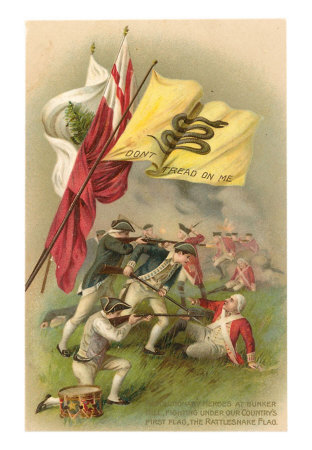
Don't tread on me! If Rogernomics represented neoliberalism's all-out assault on the institutions of social democracy, Rogerpolitics reflects a sinister shift of focus by the radical Right. The targets now are the core institutions of the bourgeois-democratic state itself. In the face of the new Auckland "supercity"'s corporate tyranny, the time has come to sound again the battle cry of the world's first bourgeois-democratic revolution "No taxation without representation!"

"ROGERPOLITICS" is Mike Lee’s, the Auckland Regional Council Chairman’s, evocative description of what’s happening to New Zealand’s largest city.

If "Rogernomics" represented the triumph of private over public interests in economic matters, "Rogerpolitics" stands for the elevation of private over public decision-making in the political sphere.

What’s happening in Auckland: the anti-democratic character of its new "super-city" council’s constitution, and the democracy-proof structures of its new "Council Controlled Organisations" (CCO) are developments the rest of New Zealand should be following closely – very closely.

Because, if what is being set in place in Auckland is allowed to stand, it will be tried elsewhere. City by city, region by region, the Auckland Right’s mutant political virus will spread, and in all too short a time, "Rogerpolitics" will be ready to leap the species barrier from local to central government.

When that happens, our entire system of responsible government will fall under its shadow, and the future of democracy itself will be imperilled.

Just consider the facts.

At the moment, the citizens of Auckland’s four big cities: Auckland, Manukau, North Shore and Waitakere; are represented by a total of 75 councillors (roughly one councillor for every 15,000 residents). The new super-city, into which the four present cities, plus the smaller, semi-rural, peripheral districts of Rodney and Franklin are being subsumed, will have just 20 councillors (one for every 70,000 residents). In other words, the democratic efficacy of the ordinary Aucklander’s vote is being reduced by more than 75 percent!

"How in the blue-blazes", you may well be asking yourself , "is a city councillor supposed to adequately represent 70,000 residents?"

Believe me, Aucklanders are asking themselves the same question.

Some were hoping against hope that the answer would be provided in the form of beefed-up community boards. But they must now be feeling cruelly disappointed. The constitutional powers and duties of the 19 community boards (handed down to Aucklanders by the unelected Auckland Transition Agency) offer not the slightest prospect of either effective democratic participation or representation. Their members have the power to suggest, to enquire and to complain, but they cannot require the Auckland City Council to do anything at all.

So, the democratic deficit of the Auckland supercity’s council and community boards is a large one. But it fades into insignificance when compared to the wholesale elimination of citizens’ rights entailed in the new city’s seven CCOs.

As Phil Twyford, Labour’s spokesperson on Auckland issues and a member of the parliamentary select committee currently scrutinising the legislation setting up the super-city, puts it: "They are wrapping 90% of Council operations up into commercial entities with their own boards of directors and CEOs. These commercial entities can meet in secret and won’t have to publish agendas, minutes, or subject themselves to members of the public asking pesky questions."

This takes us to the heart of what "Rogerpolitics" is attempting to foist upon Aucklanders – and, ultimately, upon all New Zealanders.

Just about everything your local authority does: supplying you with water, taking away your waste, constructing your streets and roads, running your public transportation system and civic amenities; will be bundled-up and vested in commercial institutions beyond the control of even your councillors. In this way the "Rogerpoliticians" intend to privatise the public sphere.

We will be given the shadow of democracy – but not the substance. There will still be local government elections, but those we elect to public office will have nothing to do. No, that’s not quite right. Those we elect will be able to do nothing.

A mayoral candidate, or slate of candidates, may promise to change this, or reform that, but once inside the Council Chamber they will discover that all the wires attached to the levers of power have been cut. All the important decisions affecting the lives of their constituents will be in the hands of unelected CCO directors. These government-appointed business-people will get 90 percent of citizens’ rates – but citizens will get zero percent say in the way their money is spent.

And what’ll soon be true for Aucklanders’ rates, will eventually be true of all our taxes.

Which is why we must tell the "Rogerpoliticians" what the American revolutionaries told King George III: "No taxation without representation!" Emblazoning on our banners the same tightly coiled serpent – and beneath it the same insurrectionary slogan:

"Don’t tread on me!"

This essay was originally published in The Timaru Herald, The Taranaki Daily News, The Otago Daily Times and The Greymouth Evening Star of Friday, 12 March 2010.

Thursday, 1 October 2009

The Auckland Racket

Roads to Real-Estate: Auckland always has been, and remains, a racket.

AUCKLAND has always been, and looks set to remain – a racket. At its heart lie two crucial elements: land, and the transportation networks that inflate its value. To be a true Aucklander one must have a proper understanding of this all-important relationship: real estate = roads, roads = real estate.

The man who first demonstrated the centrality of this relationship was Auckland’s most notorious merchant adventurer, Thomas Russell. It was Russell and his political cronies who, in the early 1860s, persuaded Governor George Grey to build the Great South Road – a feat of military engineering which not only made war with the Maori King Movement inevitable, but also (and this, of course, was its true purpose) transformed Auckland, and the lush plains of the Waikato, into a happy hunting ground for property speculators and developers.

Auckland, as a viable commercial centre, owes its existence to the war made possible by Mr Russell’s Road, and to all the other roads the speculators and developers who came to dominate the city’s ruling class have, for nearly 150 years, persuaded the rest of New Zealand to build for them.

It’s been a constant struggle – to secure this public subsidisation of private greed – and at the forefront of the public fightback has been the Auckland Racket’s perennial rival: the state-owned railways.

Railways and the State have enjoyed a long and mutually rewarding historical relationship in New Zealand. Not only did they knit a geographically chellenging nation together, but they also provided successive governments with a cheap and effective model of urban and rural development.

Though costly to construct, New Zealand’s railway network largely paid for itself by opening up vast swathes of the countryside to settlement. The Crown, as New Zealand’s primary title-holder, was able to recoup the capital required to lay the track and acquire the locomotives and rolling-stock by selling-off the land the railway passed through. As a means of building a nation it had only one significant drawback: it severely restricted the profit-making opportunities for private speculators.

It was the internal combustion engine that rescued the Auckland racket – but only in the nick of time.

Had the rail-based plan for its post-war development been carried out, Auckland would’ve been a very different city. Drawn up by the Ministry of Works between 1946 and 1949 – the final term of the First Labour Government – the plan called for a much more compact city than the sprawling conurbation we know today. Following the Hutt Valley model, public housing would’ve been clustered around the stations of an electrified commuter rail network linking all the communities of the isthmus. The main arterial roads would have gone ‘round, rather than through, the MoW’s Auckland.

It was the election of the First National Government that saved the Auckland Racket from Labour’s social architects and the MoW’s civil engineers. By the mid-1950s, National in Wellington, working hand-in-glove with its local-government surrogate, Citizens & Ratepayers, had hauled Auckland’s future out of its electric railway unit and thrown it onto the back seat of the property developers’ Bentley. Auckland became a loose collection of taxpayer-subsidised (but privately constructed) dormitory suburbs, held together by taxpayer-funded (but privately exploited) motorways.

Instead of becoming the southern hemisphere’s Copenhagen, Auckland became a cut-price Los Angeles.

And that’s the way the people who run the Auckland Racket would like to keep it. Sixty years after Labour’s plan was ditched, the NZ Herald is still trumpeting the virtues of the automobile and the motorway, and belittling the advocates of rail.

In an editorial headed "ARC’s ‘green’ transport plan ignores reality", the paper blithely declares: "Auckland is not and never will be a ‘compact and contained urban form’. Its environment and terrain invite sprawl. The regional plan has been trying for 10 years to contain coastal ribbon development and force population growth into higher density concentrations near railway stations.

"Aucklanders have resisted for good reason. They have come to the region for its coastlines and climate. Planners of land use and transport need to work with the demonstrable demand, not against it."

No prizes for guessing exactly who will be constructing all that "coastal ribbon development" – the very same people responsible for generating all that "demonstrable demand".

Seldom has the Auckland Racket’s ingrained hostility towards any and all forms of democratic urban planning been so overtly displayed. The Herald’s leader-writer openly celebrates the pending elimination of the Auckland Regional Council and its replacement by the new Auckland "SuperCity": "… Auckland’s transport will then be managed by an ad hoc authority representing the Government as well as the Auckland Council."

In other words, the very same arrangement that characterised the region’s development in the 1950s, 60s, 70s, 80s and 90s. When the Auckland Racket’s political friends in Wellington repeatedly forced the long-suffering New Zealand taxpayer to fund the construction of a succession of multi-million dollar motorways, linking together an ever-growing number of multi-million dollar subdivisions, erected by the Queen City’s indomitable clique of multi-millionaire property speculators and developers.

Opponents of the new Auckland SuperCity have characterised it as a thinly disguised mechanism for privatising what remains of the region’s publicly-owned assets. No doubt there are those among the new structure’s boosters who drool at the prospect, but privatisation may not, in the end, turn out to be their principal objective.

One has only to consider the fiasco over the Cabinet’s attempt to split the Rodney District Council in half, to see the Auckland Racket’s extraordinary political influence at work.

First get a new road built from Albany to Puhoi – thereby opening up the northern "coastal ribbon" that’s in such "demonstrable demand". Then, re-design the entire political architecture of the Auckland region so that you and your mates can get their hands on the aforesaid real-estate without having to clamber over all those pesky democratic hurdles.

It’s just possible, however, that the Auckland Racket has over-reached itself. Have none of the people behind the SuperCity scheme ever paused to ask themselves: "What if we fail to win control of the new council?" Like the Great South Road, Auckland’s new constitutional framework is designed to facilitate plunder, but, when you think about it, Mr Russell’s Road could just have easily brought the Waikato Maori into the city, as kept them out.

The Auckland Racket simply must win next year’s election – it can’t afford to lose.

This essay was originally published in The Independent of Thursday, 1 October 2009. 

Friday, 28 August 2009

National's Altered Course

Heading for disaster? Key's decision to abandon National's neoliberal moderation and embrace Act's hard-line neoconservatism over the question of Maori representation on the Auckland "supercity" council
signals a major - and quite possibly disastrous - change of course by his government.

JOHN KEY’S decision to appease both ACT and the far-right of his own party by refusing to make provision for Maori representation on the new Auckland "supercity" council will be remembered as the moment his government turned away from neoliberalism and embraced neoconservatism.

It’s an embrace the Prime Minister will live to regret, because in surrendering to the most conservative political elements of his party’s vastly expanded constituency, he has set in motion the processes of electoral decay which National and its leader, until this week, had so spectacularly defied.

Elderly New Zealanders, and those living on farms and in provincial cities and towns have been prioritised over younger voters, and those living in the major metropolitan centres. The values and, more importantly, the anxieties which shaped our past have been accorded greater political weight than the beliefs and aspirations of those who will build New Zealand’s future.

Most importantly, a government which, up until now, had been guided by a coherent set of political principles – the principles of neoliberalism – and which had held steady to that course, has been wracked by sharp divisions over the administration’s proper course. The lessons of the past, which National’s new captain appeared to have learned, are now in the process of being unlearned. That being the case, the political mistakes made by Jenny Shipley, Bill English and Don Brash will, almost certainly, be repeated.

The historical reality Mr Key is most at risk of unlearning is that the great shifts in political sentiment and expectation which convulsed New Zealand in the 1980s and 90s were driven by two very powerful forces. One was the society-wide move away from collectivism and towards individualism. And the other was the rise of broadly-based citizens’ movements against ethnic-, gender-, and sexuality-based discrimination.

In responding to these two powerful trends, Labour discovered it was relatively easy to adapt its pitch to accommodate the demands of the new social movements. Satisfying the expectations of the anti-collectivist "free-marketeers", however, could be achieved only at the cost of splitting the party.

National’s conservative members faced precisely the opposite problem. They found the policies of economic liberalism broadly acceptable (at least in the short term) but rejected utterly the powerfully disintegrative influence social liberalism exerted on traditional moral values.

What made Neoliberalism, as an ideology, so peculiarly suited to the temper of the times: it’s "point of difference" if-you-will; was that it could quite happily, and without serious philosophical contradiction, accommodate the expectations of both economic and social liberalism. The electoral landscape was thus transformed.

On the face of it, therefore, the support agreements which Mr Key forged with Act and the Maori Party following the 2008 election looked set to deliver a super-charged neoliberal government. The Act leader, Rodney Hide, enjoyed the reputation of being not merely a staunch economic liberal, but also a libertarian – someone for whom racial, gender and sexual discrimination was totally unacceptable. What’s more, the Maori Party leadership, for whom ending anti-Maori discrimination was non-negotiable, also showed encouraging signs of embracing the "aspirational" values of the National Party’s individualist philosophy.

What neither Key, nor the electorate, grasped, however, was that in spite of its radical neoliberal rhetoric on matters economic, Act is very far from being a neoliberal party. In spite of the best efforts of its founder Sir Roger Douglas, Act remains what its first leader, Richard Prebble, made of it – a neoconservative party.

Act attracts votes not on the basis of its neoliberal economic dogma, but on the strength of its deeply conservative social policies. It is, in fact, profoundly illiberal on such issues as crime and punishment, war and peace, indigenous rights, and more latterly, the right to inflict "good" parental correction. Rodney Hide, in spite of his personal preferences, must embody these policies or forfeit the leadership of his party.

A positive libertarian (one who construes liberty as empowering the individual, rather than disempowering the state, and who, in constitutional terms, preserves the rights of the minority against the tyranny of the majority) would’ve had no difficulty accepting the Royal Commission’s recommendations regarding Maori representation.

Had Mr Key required Act to live up to its boast of being "the liberal party" on 3 June, Mr Hide’s bluff would’ve been called. Instead, by giving-in to neoconservative pressure, he’s diverted National from its winning course.

This essay was originally published in The Timaru Herald, The Taranaki Daily News, The Otago Daily Times and The Greymouth Evening Star of Friday, 28 August 2009.

Friday, 17 July 2009

The Face in the Mirror

The Face in the Mirror: The culture of the new Auckland "supercity" is being formed right now - by the people in charge of the transition process. Those on the Left who decry Laila Harre's appointment to the Auckland Transition Authority need to ask themselves: "Who would you rather have in charge?"

IN her 2007 Bruce Jesson Memorial Lecture, Laila Harré quoted the former boss of the British Transport and General Workers Union, Moss Evans, who famously quipped: "When I look in the mirror when I am shaving I don’t see the face of the man who will bring down capitalism."

With her characteristic drier-than-dry humour, Harré joked that: "Of course like your typical union member today, I don’t get to first base on this one. I’m female."

At the time, Harré had only recently been elected National Secretary of the National Distribution Union (NDU). The election had been a hard-fought affair, but she’d run with the posthumous blessing of veteran union boss, Bill Andersen, who’d long admired her industrial and political skills. These were evident not only during her time as a Cabinet Minister in the Labour-Alliance coalition government of 1999-2002, but also in the "Nurses are worth more" campaign she masterminded for the Nurses’ Organisation between 2003-05.

While it’s been common knowledge for some time that Harré wouldn’t be seeking a second four-year term as National Secretary of the NDU, her latest appointment, to a senior human resources role in the new Auckland Transition Agency (ATA) has come as a major surprise.

Or, perhaps, that should be "shock". Because, if the reaction from some of the Left’s heavyweight commentators to Harré’s new job is anything to go by, she should not only forget about ever getting to Moss Evan’s first base, but consider herself disqualified from playing the trade-union/anti-capitalist game altogether.

Writing in his "Frontline" blog on Fairfax’s Business Day, the veteran leftist, John Minto, declared darkly that: "It was an inspired move to approach her and those involved will be overjoyed she accepted. Not because she will do a good job for them, which she will, but because she will provide the type of broad political cover for the agency which money can’t buy. The agency gets the added bonus that she will be the public face of the mass redundancies which will follow."

The killer-line in Minto’s posting makes very clear just how seriously he judges his former comrade’s apostasy: "Harré’s decision to join the process of corporatising and de-democratising Auckland governance will help ease Aucklander’s fears."

That statement is almost certainly true, but should we join Minto in judging Harré’s ability to allay not only Aucklanders, but Auckland local authority employees’ fears – a bad thing?

For revolutionary socialists, the pithy historical truth packed into Moss Evans "face in the mirror" quip has always been anathema. Far from seeing the trade unions as bargaining instruments, operating on their members behalf, whilst remaining firmly embedded within, and governed by the logic of, the capitalist economy, (Evan’s and Harré’s view) the revolutionary sees them as battering-rams; weapons of mass-membership destruction to be wielded against the entire capitalist system. In this all-or-nothing mindset, if you’re not part of a "fighting union", you’re not part of a union at all.

All well and good, of course, if you enjoy revolutionary rhetoric and the intoning of long-forgotten union anthems, but it butters no parsnips in the grim business of amalgamating the workforces of seven local authorities in a way that preserves the wages and conditions of those who get to stay, while ensuring adequate compensation for those who have to go.

That is a job that has to be done: a job that will be done. So the only thing to decide, really, is the sort of person you want to do it.

Are you looking for someone who has demonstrated over and over again her commitment to the rights of working people? Someone who understands and believes in the trade unions’ role of looking after employees’ interests? Someone with the education and vision to grasp the rich opportunities for creating and defining the new Super-City’s human resources "culture"?

Or, are you seeking a ruthless, union-busting, hatchet-man to set the tone for the new Auckland’s industrial relations environment? An ice-cold neo-liberal ideologue instead of a passionate social-democrat?

The Chief Executive of the ATA, Mark Ford, may see Harré as nothing more than "cover" for his dark designs to "corporatise and de-democratise Auckland governance", but I don’t think so. On the contrary, I believe the decision to appoint Harré is evidence of bold and imaginative thinking on the part of – and at the heart of - the ATA.

Certainly, the Key Government’s acquiescence in the appointment of such a prominent left-winger may simply reflect its urgent need to undo the damage done to National’s re-election chances by Rodney Hide and the shadowy right-wing forces urging him forward, but I think there is more at work here than mere party manoeuvring.

Those of us with long memories will recall that Mark Ford was one of the business experts recruited by the left-wing writer and politician, the late Bruce Jesson, during his 1992-95 term as Chair of the Auckland Regional Services Trust (ARST) – a body whose membership included Laila Harré. And I know, from many conversations with Bruce, just how much he admired Ford’s professional skills. The two became close allies in what turned out to be the ARST’s phenomenal (and unlooked-for) success in retaining Auckland’s publicly-owned assets, and in retiring its massive debt. Ford still sits on the Bruce Jesson Foundation.

Is it really beyond the comprehension of critics like Minto, that just as Jesson was able to admire the positive qualities of Ford the right-wing businessman; Ford, himself, may have found an equal amount to admire in the intellectual strength and political creativity of left-wingers like Jesson and Harré?

Inevitably, the proof of the pudding Ford and Harré have cooked-up will be in the eating. Neither protagonist is a fool, so we must assume that, fully aware of the consequences of failure, both have comprehensive exit-strategies prepared.

Harré, in particular, is well-positioned to profit from any demonstration of bad-faith on the ATA’s part. Having proved her commitment to the Super-City plan, and undertaken to give it as progressive a character as possible, who could blame her – should Minto’s dire predictions prove correct – for stepping away from the ATA, and ranging herself alongside other representatives of the intelligent and moderate Left, in the Super-City elections of 2010?

The face in Harré’s mirror my not be destined to bring down capitalism, but it could very easily play a role in bringing down John Banks.

This essay was originally published in The Independent of Thursday, 16 July 2009. 

Monday, 25 May 2009

Making the Protest Count

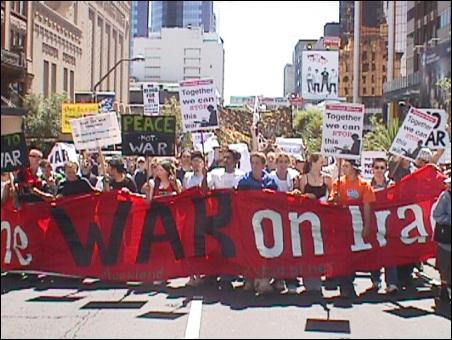
Auckland's last really big political demonstration, the 2003 protest against the Iraq War. The march stretched the full length of lower Queen Street, and was estimated at 20-25,000 strong. Today's hikoi (no pics available as yet) was the same size - but the mainstream news media put its strength at between 2,000 and 7,000. Why?

I’VE JUST RETURNED from the Auckland hikoi to discover that the mainstream news media are downplaying the significance of the demonstration by citing absurdly low estimates of the turnout.

Radio New Zealand is the worst offender, running for the past two hours with a figure of 2,000 (barely enough people to fill a city block).

The NZ Herald at least quotes a police officer, whose (wildly inaccurate) estimate was 5,000-7,000 marchers.

Now, let’s get real.

The march extended the full length of lower Queen Street – i.e. from the assembly-point in QEII Square to the Town Hall.

Just so we’re clear: that means that as the front ranks were arriving at the Town Hall, the last ranks were leaving the Square.

What’s more, the marchers occupied the full width of the carriageway – i.e. they stretched right across the road, from pavement to pavement.

This makes the calculation of the demonstration’s size very simple – if you know your history.

Since the late-1960s there have been several demonstrations that occupied the whole of lower Queen Street. There was the 1971 "Mobe" (mobilisation) against the Vietnam War. Ten years later there was the May 1st "Mobilsation Against the Tour" march up Queen Street. In 1983 there was a big union protest against Muldoon’s Wage-Price Freeze. In 1991 there was an even bigger union protest against the Employment Contracts Bill. In 2002 there was the Anti-GE March, and in 2003, Auckland’s last really big demonstration – until today – against the Iraq War.

Contemporary media cited those protests at between 20,000 and 30,000 strong.

Have human-beings doubled or tripled in size since 2003? Of course not! So where do these absurd figures of 2,000, 5,000 and 7,000 come from?

Is it because the reporters on the spot (and the policemen) have so little experience of large political demonstrations that they simply have no idea how to estimate their true size? I hope so, because the alternative – that reporters and the Police are deliberately underestimating the size of the protest for political/ideological reasons – is just too upsetting to contemplate.

Something historic happened on the streets of Auckland today. It would be nice if the news media could report it accurately.

FOOTNOTE: If we assume lower Queen Street to be roughly a kilometre in length and about 30 metres wide we get an area of 30,000 square metres. Now, if every protester is assumed to occupy just one square metre of space as he or she moves up Queen Street – that’s a maximum of 30,000 protesters, or, allowing for the odd gap, a minimum of 20,000. Basic arithmetic, really. What’s the matter with all our journalists!

Friday, 24 April 2009

Size Matters!


Christchurch's futuristic Art Gallery: In 1993 Christchurch won the Carl Bertelsmann Prize, and was declared "The Best Run City in the World". That was when it had a ratio of 1 city councillor to every 13,000 citizens. In 2004 the Local Government Commission decided to increase that ratio to 1 councillor per 20,000 citizens. Five years on, and the "People's Republic of Christchurch" has degenerated into "Sideshow Bob" Parker's Tory Circus. Look upon Christchurch, Aucklanders - and despair!

THE rest of New Zealand’s mirth at the Auckland’s mayors’ bitchy reaction to the National-Act-Maori Party Government’s plans for an Auckland "super-city" is easily imagined. To non-Auckland eyes the region’s civic leaders must come across like six little boys in a sandpit arguing over who gets to play with the digger.

As a shrewd Cantabrian, the Local Government Minister, Rodney Hide, knows how impatient the rest of New Zealand gets with this sort of bickering. Residing in much smaller local authorities, most Kiwis simply don’t understand how different North Shore City is from Manukau, or grasp the sheer size of the cultural gulf separating John Bank’s Remuera from Bob Harvey’s Henderson. By casting himself as the sensible adult: someone willing to confiscate the digger and frog-march the squabbling mayoral urchins out of the Auckland sandpit; Mr Hide knows he can only go up in the rest of the country’s political estimation.

But, I suspect the rest of the country would think much less kindly of the Local Government Minister if he announced his decision to merge Invercargill with Dunedin; Oamaru with Timaru; Ashburton with Christchurch; or New Plymouth with Wellington. And, I don’t think their citizens would find anything funny in a plan to reduce the number of councillors elected to represent them by more than two-thirds. They might laugh at the idea of their towns and cities being broken up into dozens of neighbourhood "boards", responsible for bottle-stores, brothels, graffiti and dog-catching, but it would be the sort of laugh people give when their car breaks down miles from nowhere – and it starts to rain.

Southerners should be very thankful that the brute facts of geography militate against their suffering Auckland’s fate. The 200-plus kilometres separating Dunedin’s and Invercargill’s citizens will always be their best guarantee of political independence. Auckland’s curse is that communities which were once a day’s ride from one another are now (on a good day) less than an hour’s drive away. Auckland – in a conceptual sense – is an accident of technology. Trains, trams, busses and cars have encouraged civic amnesia, and the unique histories of Auckland’s villages, towns and cities are largely forgotten.

"Well, that’s progress", I hear all you southerners say – and maybe you’re right. But if we must all be bound to the wheel that draw us together, then let us at least ensure that it is supported by many spokes.

The designers of the Auckland super-city placed good governance ahead of good government: the power to make decisions affecting people’s lives, before a lively people’s decision-making power.

Members of the American school of local government architecture, they have worked from the elitist principle of "fewer but better" elected representatives. By "better", incidentally, they generally mean businessmen.

Like Tucson, Arizona, USA, whose 525,529 citizens are represented by just six city councillors – a ratio of 1:87,588. I suppose we should be thankful Mr Hide settled on a ratio of 1:65,000.

Comparison with European local government is instructive. Not-surprisingly, nations with a recent history of tyranny tend to place a much higher value on representative institutions. The Berlin City Council, for example, has 149 members – a ratio of 1:23,000. While the City Council of Paris – as befits the cradle of revolutionary democracy – boasts 163 councillors: a ratio of 1:13,300 – lower than Waitakere’s!

The Royal Commission on Auckland Governance, or Mr Hide, could have given Auckland an equally generous example of democratic architecture. Simply by deciding to preserve the current ratio of councillors to citizens, they would have created a Greater Auckland Assembly of 70 members. Sheffield – half Greater Auckland’s size – has 84. Glasgow, a city of 580,690 has 79 councillors (1:7,350)

Berlin, Paris, Sheffield, Glasgow: these are among of the most progressive and best governed cities in the world. Yes, their councils are large, but it's their size that gives them the edge over cities organised on the American model of "fewer but better".

And, if you’re riposte to these figures is: "Ah, but those are all overseas examples. This is New Zealand." Think about this.

Christchurch, a city of 316,221 used to have a city council of 24 (A councillor to citizen ratio of 1:13,175 – about the same as Paris.) In 1993, that high level of democratic representation, and the progressive policies which flowed from it – especially the increased efficiency of communal services in competition with private enterprise – had earned Christchurch the coveted Carl Bertelsmann Prize, and the title of "Best Run City in the World. Tragically, in 2004, the Local Government Commission, egged on by Canterbury businessmen, and, once again following the American model of local government, slashed the number of Christchurch City Councillors to just 16 (1:20,000).

Since then, the city has lost its democratic edge. The Council is now thoroughly dominated by its pro-privatisation bureaucracy, and ruled by a right-wing populist celebrity mayor. The "People’s Republic of Christchurch" has degenerated into "Sideshow Bob" Parker’s Tory Circus.

Look upon Christchurch, Aucklanders – and despair.

The above is a slightly modified version of the essay which appeared in The Timaru Herald, The Taranaki Daily News, The Otago Daily Times, and The Greymouth Evening Star on Friday, 17 April 2009.