Showing posts with label Cancel Culture. Show all posts

Saturday, 30 September 2023

The New “Emperor’s New Clothes”.


“‘BUT HE HASN’T GOT ANYTHING ON,’ a little boy said ….. ‘But he hasn’t got anything on!’ the whole town cried out at last.”

On this optimistic note, Hans Christian Andersen brings his cautionary tale of “The Emperor’s New Clothes” to an end.

Andersen’s children’s story was written nearly two centuries ago, in the 1830s. One can only imagine, how he might caution his readers in 2023.

* * * * *

“WHAT DID YOU SAY!”

The little boy spun round in alarm, to find himself staring up at an Imperial Guardsman.

“I-I-I said, the Emperor hasn’t got anything on, sir”, the boy stammered.

Around them the laughter ceased, as if the whole town had suddenly been struck dumb.

“What a wicked thing to say!” the Guardsman roared. “Anybody who isn’t a complete fool can see that he is attired in the finest suit of clothes the Empire can contrive!”

“But-but, he isn’t, sir, he isn’t wearing anything.”

“What’s going on here? said the Guardsman’s Sergeant, pushing his way through the silent and rapidly thinning crowd of townspeople. Why aren’t these people cheering their Emperor?”

“It’s this child, sir”, the Guardsman replied. “He shouted out that the Emperor hadn’t got anything on.”

“Where are his parents? Who is responsible for this child?” demanded the Sergeant.

Twisting his cap in his shaking hands, the boy’s father shuffled forward.

“What kind of parent are you to let your offspring shout out such false, harmful and subversive disinformation! How is the social cohesion of the Empire to be maintained if little boys are permitted to express themselves with such freedom?”

“I’m most dreadfully sorry,” the boy’s father stammered, “I shall see to it that the boy is severely punished.”

“I’m afraid it’s not quite as simple as that, the Sergeant replied. “Your boy’s behaviour raises some very serious questions about the home environment in which he’s being reared. You had best lead us to your place of residence immediately.”

Flanked by the two Guardsmen, and their tall pikes, father and son made their way through the narrow streets of the town to their home. Drawing her other children to her side, the boy’s mother watched the little party approach.

“What’s going on, husband?” she enquired, casting a worried glance in the direction of the armed men.

“Our son said the Emperor hadn’t anything on, when, plainly, he was dressed in the finest suit of clothes I have ever seen”, her contrite spouse replied, half-smiling at his grim escort.

“But he didn’t, Mama!”, her son expostulated. “If he had been wearing clothes, then I would have seen them. I mean, you’re wearing clothes, Papa is wearing clothes, these men, under their armour, are wearing clothes!”

“Oh my foolish boy,” his mother exclaimed, “what have I told you about contradicting other people’s claims?”

The boy hung his head and mumbled: “That people are entitled to their beliefs – no matter how ridiculous.”

“And?” His mother prompted, tapping her foot in frustration.

“And that it is unkind to undermine people’s ideas about themselves – no matter how utterly bizarre those ideas may be.”

Hearing this, the Sergeant stepped forward, glowering at the woman and her son.

“But this will not do at all, madam, not at all. You are teaching your children that people’s beliefs about themselves – and their attire – may be wrong. You are suggesting that in spite of being sincerely held it is, nevertheless, entirely possible that people can be mistaken in their beliefs. Indeed, you would appear to be saying that it is possible your boy may be perfectly correct. That the Emperor really hasn’t got anything on. That our Head-of-State is walking naked through the streets! But that is treason, madam, treason pure and simple!”

“No! No! My wife is no traitor, sir. She is merely a little simple-minded. She places an altogether unreasonable amount of faith in what she perceives through her senses. She does not understand how wishing something to be true can actually make it so. Like the Emperor’s new clothes – which are real, quite real, for the very simple reason that the Emperor believes them to be real!”

“And what Emperor’s believe to be real,” the Sergeant interjected, “must be real.”

“Yes, sir”, the boy’s father agreed.

“Yes, sir”, echoed his mother.

“Yes, sir”, said the boy – with fingers crossed.


This satire was originally published in The Otago Daily Times and The Greymouth Star of Friday, 29 September 2023.

Thursday, 20 January 2022

The Totalitarian Impulses Driving “Consequences Culture”.

Hang The “Consequences”! To suggest that it is somehow okay for the Left to punish people for exercising their freedom of expression – because that is what the Right did, and does – is not only nonsensical ethically, but it also strongly suggests that not too far below the surface of the individuals making such a claim there lurk some disturbingly totalitarian tendencies.

THE BATTLE OVER FREE SPEECH is only likely to grow more intense in 2022. If the Labour Government persists with its plans to eliminate “hate speech”, and if its allies continue to expand that highly contentious term’s definition, then the conflict promises to be epic.

At risk will be nothing less than right of New Zealanders to speak and write freely about their beliefs. Should the year end with a broad definition of hate speech written into New Zealand law, then the 2023 Election will be a particularly vicious and unforgiving affair. Regardless of who wins, the essential fabric of civility that protects the practice of our democracy will be rent beyond repair.

Already that fabric is showing signs of serious wear and tear. In a recent comment, uploaded to the Bowalley Road blog, I read with dismay the following sentences concerning “Cancel Culture”:

“Perhaps we should call it consequences culture instead of cancel culture. You say something people don’t like using your freedom of speech, people can react in various ways using their various freedoms to criticise or punish you for it. Grow a pair and suck it up.”

What makes this statement so concerning is the framing of political and/or cultural debate as a rule-free zone, in which participants should not only expect to be criticised, but also punished, for expressing opinions with which others disagree.

Ominously, the gratuitous addition of the unabashedly sexist taunt “grow a pair and suck it up” makes it clear that the incoming “criticism” is much more likely to consist of the sort of vicious personal abuse that typifies contemporary social media, than the rational, informed and elegantly-styled offerings of traditional critical literature.

It is, however, the word “punish” that is most concerning. The idea that one should expect to be punished for expressing oneself honestly and forthrightly, strikes at the very heart of our democratic culture. But, before attempting to flesh out what is meant by that term, let us take some time to examine the philosophical parameters of a “consequences culture”.

In one sense, all cultures are consequences cultures. In all societies there are customs, conventions and laws, the flouting and/or breaking of which inevitably entails consequences. The taking of another’s life without just cause brings retribution in all human communities. Expecting anything else would be entirely unrealistic.

Societies also exist, however, in which the articulation of certain ideas risks the direst consequences. To insult the Prophet Mohammed in a devoutly Muslim country will almost certainly result in the blasphemer being put to death. Attempt to use your freedom of speech in Belarus, especially by questioning the legitimacy of the current President, Alexander Grigoryevich Lukashenko, and punishment will come hard and fast.

In such settings it is simply nonsensical to speak about the existence of freedom of expression. No one is free who, the moment they attempt to exercise their freedom, is subjected to some form of punishment. Historically, the only leftists who subscribed to such a notion tended to be Stalinists and Maoists of the most extreme kind.

Stalin and Mao’s intolerance of free speech was based squarely on the proposition that their variant of the communist ideology was the closest approximation to the truth of which humanity was capable. To suggest otherwise constituted a crime against the truth, and against all the benefits that flow to humanity from the truth. To attack and defame the disseminators of the truth was tantamount to attacking and defaming humanity itself. To speak thoughts and articulate beliefs in contradiction of the “party line” identified oneself instantly as an “enemy of the people” – deserving of the most severe punishment.

Did the Far-Right behave similarly? Of course it did. Most of the twentieth century was terribly scarred by the horrific human consequences of regimes which arrogated to themselves total power and total control over their peoples’ lives. To suggest that it is somehow okay for the Left to punish people for exercising their freedom of expression – because that is what the Right did, and does – is not only nonsensical ethically, but it also strongly suggests that not too far below the surface of the individuals making such a claim there lurk some disturbingly totalitarian tendencies.

The moral superiority of liberal-democratic nations over authoritarian and totalitarian states is manifested in the political tolerance and civility that constitute their core.

The American artist Norman Rockwell captures to perfection the tolerance and civility crucial to the exercise and preservation of a free-speaking democracy.

With the obvious caveat that no government is obliged to remain inactive in the face of speech and/or behaviour posing an imminent and direct threat to the physical safety of the persons and property of other human-beings, the democratic state declines to designate certain ideas, beliefs and attitudes as either compulsory or forbidden. With the faith in reason and science which their forbears inherited from the Enlightenment, democrats remain firm in their conviction that the truth is what emerges from the free and frank exchange of ideas by people unconstrained by the fear of saying something that will result in them losing their job, being locked-up – or worse.

This all-important faith in the truth-revealing power of free discussion and debate imposes upon the citizens of democratic states a very particular code-of-conduct. People are to be heard respectfully. Any rebuttal of their arguments should be delivered civilly and on the basis of evidence and reasonable conjecture. Under no circumstances should abusive or threatening behaviour be tolerated by those either engaged in, or observing, such debates. Crucially, in the twenty-first century, the rules that apply to these flesh-and-blood debates, apply with even more force to debates conducted on-line.

Consequences culture, or cancel culture? The distinction is more apparent than real. To claim that the most appalling and psychologically damaging personal abuse is nothing more than “criticism”; and to punish those who take an unpopular point of view by pressuring their employers, or boycotting their businesses; is to identify oneself not only as an enemy of the tolerance and civility our democratic system must uphold to survive, but also as a common-or-garden bully.

The haters and the bullies can protest that their motivations are pure and uplifting until they are hoarse. The perpetrators of terrible deeds always justify their actions by claiming they were carried out for the long-term benefit of someone or other. But we have heard these “you can’t make an omelette without cracking a few eggs” arguments forever. At best, they signal a we-know-best infantilisation of the very communities they are purporting to assist. At worst, it’s the cracking of a few eggs that drives them forward. They’re either condescending snobs or psychopaths.

Those are the labels Labour’s caucus risks pinning on themselves if they fail to step back from their ongoing assault on New Zealand’s democratic culture. Only power, and the lust to retain it – at any cost – are located at the top of the social pyramid. Truth, and the freedom it makes possible, are always to be found further down. Forget that, and the consequences for any anti-democratic government are certain to be very serious indeed.


This essay was originally posted on The Daily Blog of Thursday, 20 January 2022.

Tuesday, 18 January 2022

Cancelling The Cancellers.

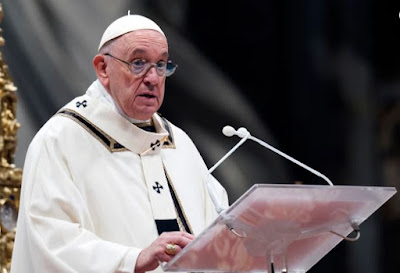
Defender Of The Faiths: Pope Francis sees cancel culture as a threat to the open, compassionate and forgiving human society he has always championed.


WHAT SHOULD WE MAKE of Pope Francis’ condemnation of “cancel culture”? There will be some who argue that the opinions of an ageing male celibate who somehow learned, back in the 1970s, to sup with Argentina’s murderous generals, should not be received as the gospel truth. Others will insist that the Pope’s unique moral and political perspective is especially important in these increasingly censorious times. What is indisputable, however, is the fact that if the impact of cancel culture is sufficient to ruffle the papal cassock, then the phenomenon is clearly a great deal more dangerous than many of us cared to believe.

Francis, no mean scholar in his own right, sees cancel culture as a threat to the open, compassionate and forgiving human society he has always championed:

“Under the guise of defending diversity,” says Francis, “it ends up cancelling all sense of identity, with the risk of silencing positions that defend a respectful and balanced understanding of various sensibilities.” Shrewdly appropriating the concepts and language of those most closely associated with cancel culture, the Pontiff characterised this willingness to silence cultural and political challengers as “a form of ideological colonisation.”

This is fighting talk and no mistake. Those members of the Labour and Green caucuses for whom the rigors of cancel culture arouse nothing but enthusiasm would be wise to draw back and think carefully about what the Pope’s words might portend. As the leader of the world’s largest Christian community (and New Zealand’s largest Christian denomination) Francis, like all his predecessors, wields not only religious, but also an inescapable measure of political power. As a general rule, it is most unwise for a political party to pick a fight with the Catholic Church.

Wise, or not, Labour and the Greens have already aligned themselves with causes and policies that are alienating not just Catholics and other Christians, but also those New Zealanders who fall under the heading of cultural conservatives. They have done this with considerable confidence, most probably because the major, non-evangelical, churches long ago acknowledged the moral hegemony of secular “progressivism”.

Over the past three or four decades, the Anglicans, Presbyterians and Methodists have learned how to get along by going along with the cultural radicalism of the Powers That Be. As society’s fierce and unyielding conscience, the major denominations have almost entirely vacated the field of intellectual battle. Inevitably, politicians and public servants have come to see Christianity as a social movement populated by the sort of people who flock to hear the likes of Brian Tamaki: poorly-educated rubes, incapable of mounting a coherent argument against necessary social and cultural reforms.

Back in the days of Cardinal Tom Williams, Dean Richard Randerson, and the Salvation Army’s Major Campbell Roberts, right-wing politicians of all descriptions were constantly challenged to defend their neoliberal economic policies against the aforementioned clerics’ well-argued Christian critiques.

On contemporary social and cultural issues, however, the political class is seldom tested. The Catholic Church’s opposition to abortion and homosexuality, never intellectually robust, was ultimately swept aside by the secular advocates of reform. On the questions of indigenous rights and racial justice, however, the Left and all but the most rabid evangelical Christians tended to be allies rather than adversaries. It has been a long time since progressive New Zealand was confronted with a theologically-inspired counter-attack it could not easily brush aside.

That this has fostered a large measure of ideological hubris is evidenced by the disinclination of the progressive political class (and their bullet-makers in the universities) to debate with – rather than cancel – any individual or organisation disposed to challenge their refusal to defend freedom of expression, uphold the scientific method, acknowledge the most basic biological realities, or treat the writing and teaching of history as anything other than an opportunity to propagate the idéologie du jour.

While this intellectual arrogance remained contained within the walls of academe and/or parliamentary select committee rooms, the rest of New Zealand paid it scant attention. The realisation has, therefore, been slow to dawn on the ordinary voter that, if allowed to go unchallenged and unreproved, extreme ideas have a nasty habit of becoming extreme policies and, ultimately, extremely alarming laws of the land.

Three years jail-time for engaging in “hate speech” is a more draconian maximum sentence than the one available for male-against-female assault. Apropos of which, in a remarkable display of parliamentary unity, maleness and femaleness have themselves become matters of purely personal preference – which all other citizens are now legally bound to acknowledge and respect. Officially, New Zealand history is now the history of Māori. The rest of us, when not actually engaging in colonialist oppression, are, apparently, just passing through. Constitutionally, co-governance will steadily replace democracy. As the tyrannical creation of privileged white males, majority-rule has clearly run its course.

What better case could be made for the reality of Pope Francis’ “ideological colonisation”. Like the “godless communism” of the Māori – so deplored by the British colonisers of the nineteenth century – the democratic sensibilities of ordinary New Zealanders have become outrageous and outdated cultural shibboleths. Away with them!

When Leonard Cohen sang, in his prophetic 1992 album, The Future:

And everybody knows that the Plague is coming
Everybody knows that it’s moving fast
Everybody knows that the naked man and woman
Are just a shining artifact of the past


I wondered what he meant. But now, as he says, “everybody knows”.

Human cultures and societies are at once frighteningly fragile and reassuringly resilient. As he struggled to rescue the victims of the Argentinian junta’s vicious military rule, Jorge Mario Bergoglio had every reason to study closely the impact of a mindset dedicated to imposing just one answer to life’s challenges and mysteries. And how ultimately fruitless all such impositions turn out to be.

The absolute necessity of allowing cultures and societies to breathe. The horrors that attend every attempt to enforce ideological uniformity upon the unruly diversity of the human species. The man who would become Pope Francis learned these lessons up close and personal – not the least of which was the complicity of so many in his own church in the mortal sins that orthodoxy, rampant, both provokes and sanctions.

That this Pope has invited the Vatican’s diplomatic representatives to resist the global trend towards a dangerous and unforgiving secular orthodoxy, gives cause to hope that Francis may yet champion unequivocally what he has, to date, only hinted at – doctrinal heterodoxy.

To be “truly inclusive”, Francis told God’s diplomats, means “starting from different viewpoints” and “not cancelling but cherishing the differences and sensibilities that have historically marked various peoples”. This could only be achieved, he argued, through “reciprocal trust” and “willingness to dialogue”.

In the words of his own message marking the 2022 World Day of Peace: by “listening to one another, sharing different views, coming to agreement and walking together.”


This essay was originally posted on the Interest.co.nz website on Monday, 17 January 2022.