Showing posts with label Christianity. Show all posts

Friday, 24 June 2022

Matariki: Thoughts and Questions.

Guided By The Stars? This gift of Matariki, then, what will be made of it? Can a people spiritually unconnected to anything other than their digital devices truly appreciate the relentless progress of gods and heroes across the heavens? The elders of Maoridom must wonder. Can Te Ao Māori be concentrated into the equivalent of spiritual orange-juice – to be distributed freely every June in a handy cultural packet? “Here you are Tau Iwi – just add water!”

HOW DO YOU FEEL ABOUT MATARIKI? Are you delighted that, at last, New Zealand has a holiday entirely unrelated to its colonial heritage? A holiday, moreover, that celebrates the natural cycles of a South Pacific island chain, rather than the western extremities of a vast northern continent. Coinciding with the Winter Solstice, Matariki, like Christmas in its original setting, marks the year’s turning: away from the constraining darkness; towards the liberating light.

Or, do you see Matariki as something contrived and imposed? A festival seized upon for ideological purposes? A holiday with an agenda attached?

And how does that make you feel? Guilty? Do you blame yourself for harbouring sentiments driven, consciously or unconsciously, by racism? Or, does it make you feel angry? Do you blame the Government for creating a holiday that highlights the cultural differences between its citizens? Are you antagonised by the state’s presumption that these differences are something to be celebrated?

Then again, you may be a strong believer in secularism. If you’re “not big on religion”, as most non-religious Kiwis tend to say when subjected to spiritual inquiries, you may be experiencing a twinge or two of impatience when you see, hear and read references to Matariki that embrace without challenge its overtly religious content. Your brow may furrow even more deeply when you consider the likely consequences of attempting such a challenge.

Is it not the height of hypocrisy to laugh along with the atheists who poke fun at the Christian eucharist, only to recoil in horror from the suggestion that there might be something just a wee bit peculiar about offering-up a cooked meal to a random configuration of stars?

For a country which, historically, has eschewed the very idea of a state religion, isn’t it also a little jarring to hear state broadcasters helpfully instructing New Zealanders on the ways in which their new state-sanctioned religious festival can be appropriately celebrated?

As anyone who has ever watched the excellent television programme, Waka Huia, will attest, Te Ao Māori pulses with spiritual life. Mountains, rivers, forests, the stars that fill the sky, all are sentient and powerful entities. One approaches them with reverence – and caution – as is fitting when dealing with ancient and holy ancestors to which one is inextricably and irrevocably connected.

It is to be wondered if the men and women who walk in this world are pleased, or alarmed, when they see Matariki – and all it portends – transformed into a public holiday, thoughtfully supplemented with a handy Cole’s Notes summary of the complex spiritual significance of the nine rising stars. Will they experience the emotions of devout Christians as Christmas and Easter approach?

To those who sincerely embrace the Christian faith, these public holidays have been transformed into crass orgies of commercialism. Santa and the Easter Bunny have ruthlessly shoved aside the manger and the cross. People stuff their faces: they bicker, fight, get drunk; and, just maybe, shed a maudlin tear when a particularly effective rendition of “Silent Night” rises above the hubbub of the shopping-mall.

Not that this bothers the overwhelming majority of Kiwis, for whom Christmas was long ago transformed into a celebration of family and friendship. Not for us the dark of winter. Our Christmas is a secular quest for sunshine and happy release. We Pakeha are a people of the middle: beginnings and endings are not really our style.

This gift of Matariki, then, what will be made of it? Can a people spiritually unconnected to anything other than their digital devices truly appreciate the relentless progress of gods and heroes across the heavens? The elders of Maoridom must wonder. Can Te Ao Māori be concentrated into the equivalent of spiritual orange-juice – to be distributed freely every June in a handy cultural packet? “Here you are Tau Iwi – just add water!”

Too harsh?

Isn’t it possible that Matariki may yet prove a cure for, rather than a cause of, racist contention? Maybe, as the Earth grows warmer, and the pretensions of science and modernity are increasingly laid bare, the hunger of all Aotearoans for gods and heroes will increase. Perhaps, when we realise that these islands are all we’ve got, the thought may grow in our hearts and minds: If all things are, indeed, related and alive, then why not be guided by the stars?


This essay was originally published in The Otago Daily Times and The Greymouth Star of Friday, 24 June 2022.

Sunday, 17 April 2022

The Third Man.

The Road To Emmaus: That same day two of them were going to a village called Emmaus, about seven miles from Jerusalem. They were talking with each other about everything that had happened. And as they talked and deliberated, Jesus Himself came up and walked along with them. But their eyes were kept from recognizing Him. Luke 24:13-16 (Painting by Chris Antenucci)

“DO YOU REMEMBER that man passing us?” Benjamin shielded his eyes against the bright sunlight, gazing intently at the three figures well ahead of them on the road.”

“Surely you mean men, brother? Those two have been ahead of us ever since we left Jerusalem.”

“No, no. Not them. I’m talking about the third man. You must see him, Isaac, the man in the middle? I don’t remember him overtaking us, but he must have. Didn’t you see him pass by?”

“Nobody has passed me all day, Benjamin. The road has been unusually quiet. No one behind us, and just those two up ahead. Although, now that I look, I see what you mean. There are definitely three of them, now. That is strange.”

“Jerusalem is awash with strange happenings these days. This last week in particular. Did you hear what happened at the Temple?”

“Who hasn’t, Benjamin? It was that Galilean preacher. They say he lost his temper completely. Threw over the tables of the money changers. When I first heard about it I wondered whether he might be one of us – a Zealot. From what people were saying he was angry enough.”

“One of us? No, no. The Galilean wasn’t a Zealot. Somebody tested him with a question about Rome’s latest tax. Do you know what he said?”

“I do, as a matter of fact. Ezra told me. He was standing right beside him. The Galilean said: ‘Render unto Caesar the things that are Caesar’s, and unto God the things that are God’s.’”

“What was that supposed to mean, anyway? Render unto Caesar? No Zealot would say that. No true Jew counsels surrender to the Romans!”

“I’m not sure that he was counselling surrender, brother. There is something else in his answer, something that speaks between the words.”

“These vagabond preachers are all the same, Isaac. They speak in riddles. Words that can be taken to mean anything you want them to mean. Sometimes I think Israel consists of nothing but words. Would that we had as many swords – and men brave enough to use them!”

“Well, you cannot quibble with the Galilean’s courage, Benjamin. Crucifixion is a horrible death, and he bore it bravely.”

“You were there? You saw him die?”

“I was, and I did, brother. If our struggle for Israel requires us to suffer the same rebel’s death, then I hope we bear it as stoically.”

“Did he say anything before he died?”

“He did – and it amazed me. As they nailed him to their bitter tree and hauled him up against the sky, he said: ‘Forgive them Father, for they know not what they do.’”

“Forgive them! Truly? That makes no sense. Why? And who did he mean by Father?”

“His followers whispered that he was the Son of God, Benjamin. Yes, God. Not a title the Romans were willing to accept – or the High Priest. Although the Galilean himself was, reportedly, content to be known as the Son of Man.”

“He sounds mad, Isaac. Just another preacher who has spent too long under the desert sun.”

“Speaking of the sun, Benjamin. The one we have been travelling under is about to set. Shall we follow the example of the trio up ahead and purchase some supper and a bed for the night? The inn at Emmaus is comfortable I hear, and travellers speak highly of its bread and wine.”

“I did not think the third man was going to join his companions. He seemed determined to continue his journey, but they prevailed upon him.”

“A wise choice, it will be night soon.”

Seated at one end of the long table that filled the dining room, the two brothers broke the still warm loaf of bread that had been placed before them, washing down each mouthful with the dark red contents of the wine-jug.

Benjamin leaned forward and whispered to Isaac.

“There is something going on at the end of the table, brother, between those three. See how they stare at the face of he who joined them on the road? Though how he got past us unseen I’ll never know.”

“It is passing strange, brother, but stranger still is the certainty that grows in me that I have seen the third man somewhere before.”

“Where, brother? Where did you see him?”

“Upon Golgotha.”


This short story was published in the Otago Daily Times and The Greymouth Star at Easter 2022.

Friday, 21 January 2022

The Political Logic Of Martyrdom.

Consequences: The reason the world remembers the martyrdom of the third century Christian, Perpetua, and the abolitionist, John Brown, is, of course, the stakes. Both martyrs understood that the consequence of their actions, would be death. What greater stake can there be than one’s own life? The political logic of martyrdom – its extraordinary inspirational power – lies precisely in the implied value of what the martyrs give up their lives to secure.

PERPETUA’S END was nothing if not grisly. This young Roman mother, from a respectable family, had already been horribly gored by a bull and then struck on the head by a sword wielded by a young gladiator. It was not, however, a fatal blow. With blood pouring down her face, the preternaturally calm young Christian reached for the offending blade and guided it firmly to her throat. This time the gladiator’s thrust proved fatal, and Perpetua collapsed limply upon the sandy floor of the Carthage arena.

In normal circumstances, the delivery of the coup de grace was received by Roman audiences with enthusiastic applause. These were, after all, criminal executions. This time, however, the audience took in the pathetic tableau of the young mother’s crumpled and bloodstained body in shocked silence. If Perpetua was a criminal, then she was a very strange one.

Perpetua’s martyrdom in the Carthage arena, 203AD.
What distinguishes Perpetua’s martyrdom from so many others is that a great deal of the detail was provided by the young woman herself. Indeed, Perpetua’s journal, recording her thoughts and experiences in the days leading up to her death, is one of the very few documents written by a woman to have come down to us from the classical era. The gory details of her execution in the arena were, like her journal, the record of an eye witness. We even know the exact date of the day she died: 7 March 203AD.

It is worth exploring why that Roman audience was stunned into silence that March afternoon. A century earlier, they would not have been.

In the first century of the Common Era, the Roman world had very little respect for Christians. They were seen as oddballs and weirdos. Some, hearing they ate flesh and drank blood during their rituals, condemned them as cannibals. For the most part, their obdurate refusal to acknowledge the divinity of the Emperor was dismissed as straightforward treason. In short, first-century Romans would say they deserved everything they got.

A century later, however, and Roman confidence in the established religious and political order was waning. The essentially transactional nature of classical paganism struck many as increasingly empty and unfulfilling. What had seemed like madness and fanaticism in the steadfast refusal of the Christians to compromise their faith, now struck many of the more thoughtful Romans as admirable – even heroic.

It also made them curious. What could possibly be so important to these people that, rather than toss a few grains of incense at the Emperor’s statue, they were willing to die? What sort of God could inspire such unflinching devotion?

This is the powerful political logic of martyrdom: its unparalleled ability to make people ask important questions about fundamental issues. For Christian martyrs like Perpetua, the fundamental issue was their relationship with God. In her journal she describes how her parents pleaded with her to relent and do as the Roman governor commanded – if only for the sake of her new-born babe. Quietly, but firmly, she refused.

Political martyrs display exactly the same uncompromising behaviour. In the eyes of many of his contemporaries, the abolitionist, John Brown, was a murderous, Bible-quoting fanatic from the killing-fields of “Bloody Kansas”. But his botched attempt to foment a slave uprising in Virginia, for which he was tried, found guilty and executed, transformed him, more-or-less overnight, into the symbolic harbinger of a civil war to free the slaves.

“John Brown’s body lies a-mouldering in the grave”, the abolitionists sang, “But his soul goes marching on!” Not many years would pass before the tune of “John Brown’s Body” became Julia Ward Howe’s extraordinary “Battle Hymn of the Republic.”

The secret to the incredible surges of feeling inspired by the courage of Perpetua and the symbolic sacrifice of John Brown is, of course, the stakes. Both martyrs understood that the consequence of their decisions, of their actions, would be death. What greater stake can there be than one’s own life? The political logic of martyrdom – its extraordinary inspirational power – lies precisely in the implied value of what the martyrs give up their lives to secure.

Who would have heard of Perpetua if her parents had paid a fine and secured her release? Who would have heard of John Brown if he had been remanded in custody for ten days and then released on a good behaviour bond?


This essay was originally published in The Otago Daily Times and The Greymouth Star of Friday, 21 January 2022.

Tuesday, 18 January 2022

Cancelling The Cancellers.

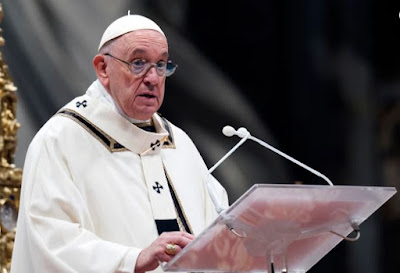
Defender Of The Faiths: Pope Francis sees cancel culture as a threat to the open, compassionate and forgiving human society he has always championed.


WHAT SHOULD WE MAKE of Pope Francis’ condemnation of “cancel culture”? There will be some who argue that the opinions of an ageing male celibate who somehow learned, back in the 1970s, to sup with Argentina’s murderous generals, should not be received as the gospel truth. Others will insist that the Pope’s unique moral and political perspective is especially important in these increasingly censorious times. What is indisputable, however, is the fact that if the impact of cancel culture is sufficient to ruffle the papal cassock, then the phenomenon is clearly a great deal more dangerous than many of us cared to believe.

Francis, no mean scholar in his own right, sees cancel culture as a threat to the open, compassionate and forgiving human society he has always championed:

“Under the guise of defending diversity,” says Francis, “it ends up cancelling all sense of identity, with the risk of silencing positions that defend a respectful and balanced understanding of various sensibilities.” Shrewdly appropriating the concepts and language of those most closely associated with cancel culture, the Pontiff characterised this willingness to silence cultural and political challengers as “a form of ideological colonisation.”

This is fighting talk and no mistake. Those members of the Labour and Green caucuses for whom the rigors of cancel culture arouse nothing but enthusiasm would be wise to draw back and think carefully about what the Pope’s words might portend. As the leader of the world’s largest Christian community (and New Zealand’s largest Christian denomination) Francis, like all his predecessors, wields not only religious, but also an inescapable measure of political power. As a general rule, it is most unwise for a political party to pick a fight with the Catholic Church.

Wise, or not, Labour and the Greens have already aligned themselves with causes and policies that are alienating not just Catholics and other Christians, but also those New Zealanders who fall under the heading of cultural conservatives. They have done this with considerable confidence, most probably because the major, non-evangelical, churches long ago acknowledged the moral hegemony of secular “progressivism”.

Over the past three or four decades, the Anglicans, Presbyterians and Methodists have learned how to get along by going along with the cultural radicalism of the Powers That Be. As society’s fierce and unyielding conscience, the major denominations have almost entirely vacated the field of intellectual battle. Inevitably, politicians and public servants have come to see Christianity as a social movement populated by the sort of people who flock to hear the likes of Brian Tamaki: poorly-educated rubes, incapable of mounting a coherent argument against necessary social and cultural reforms.

Back in the days of Cardinal Tom Williams, Dean Richard Randerson, and the Salvation Army’s Major Campbell Roberts, right-wing politicians of all descriptions were constantly challenged to defend their neoliberal economic policies against the aforementioned clerics’ well-argued Christian critiques.

On contemporary social and cultural issues, however, the political class is seldom tested. The Catholic Church’s opposition to abortion and homosexuality, never intellectually robust, was ultimately swept aside by the secular advocates of reform. On the questions of indigenous rights and racial justice, however, the Left and all but the most rabid evangelical Christians tended to be allies rather than adversaries. It has been a long time since progressive New Zealand was confronted with a theologically-inspired counter-attack it could not easily brush aside.

That this has fostered a large measure of ideological hubris is evidenced by the disinclination of the progressive political class (and their bullet-makers in the universities) to debate with – rather than cancel – any individual or organisation disposed to challenge their refusal to defend freedom of expression, uphold the scientific method, acknowledge the most basic biological realities, or treat the writing and teaching of history as anything other than an opportunity to propagate the idéologie du jour.

While this intellectual arrogance remained contained within the walls of academe and/or parliamentary select committee rooms, the rest of New Zealand paid it scant attention. The realisation has, therefore, been slow to dawn on the ordinary voter that, if allowed to go unchallenged and unreproved, extreme ideas have a nasty habit of becoming extreme policies and, ultimately, extremely alarming laws of the land.

Three years jail-time for engaging in “hate speech” is a more draconian maximum sentence than the one available for male-against-female assault. Apropos of which, in a remarkable display of parliamentary unity, maleness and femaleness have themselves become matters of purely personal preference – which all other citizens are now legally bound to acknowledge and respect. Officially, New Zealand history is now the history of Māori. The rest of us, when not actually engaging in colonialist oppression, are, apparently, just passing through. Constitutionally, co-governance will steadily replace democracy. As the tyrannical creation of privileged white males, majority-rule has clearly run its course.

What better case could be made for the reality of Pope Francis’ “ideological colonisation”. Like the “godless communism” of the Māori – so deplored by the British colonisers of the nineteenth century – the democratic sensibilities of ordinary New Zealanders have become outrageous and outdated cultural shibboleths. Away with them!

When Leonard Cohen sang, in his prophetic 1992 album, The Future:

And everybody knows that the Plague is coming
Everybody knows that it’s moving fast
Everybody knows that the naked man and woman
Are just a shining artifact of the past


I wondered what he meant. But now, as he says, “everybody knows”.

Human cultures and societies are at once frighteningly fragile and reassuringly resilient. As he struggled to rescue the victims of the Argentinian junta’s vicious military rule, Jorge Mario Bergoglio had every reason to study closely the impact of a mindset dedicated to imposing just one answer to life’s challenges and mysteries. And how ultimately fruitless all such impositions turn out to be.

The absolute necessity of allowing cultures and societies to breathe. The horrors that attend every attempt to enforce ideological uniformity upon the unruly diversity of the human species. The man who would become Pope Francis learned these lessons up close and personal – not the least of which was the complicity of so many in his own church in the mortal sins that orthodoxy, rampant, both provokes and sanctions.

That this Pope has invited the Vatican’s diplomatic representatives to resist the global trend towards a dangerous and unforgiving secular orthodoxy, gives cause to hope that Francis may yet champion unequivocally what he has, to date, only hinted at – doctrinal heterodoxy.

To be “truly inclusive”, Francis told God’s diplomats, means “starting from different viewpoints” and “not cancelling but cherishing the differences and sensibilities that have historically marked various peoples”. This could only be achieved, he argued, through “reciprocal trust” and “willingness to dialogue”.

In the words of his own message marking the 2022 World Day of Peace: by “listening to one another, sharing different views, coming to agreement and walking together.”


This essay was originally posted on the Interest.co.nz website on Monday, 17 January 2022.

Friday, 24 December 2021

The Mothers: A Christmas Story.

When Anne saw me she rushed forward and embraced me: her face flushed; her eyes shining; and I knew. Before she even spoke the words I had longed to hear for thirty years, I knew.

IT DISTRESSES ME to admit, even now, that among my neighbours there were those who counselled me to kill them. Mary, they said, had dishonoured my family – a family of wealth and influence. She had dishonoured me, they said, an upright man, caring and generous to the poor. To let such a daughter live, they said, would be an affront to the favour God had shown me.

Fools!

For my wife Anne, and for myself, there could be no greater proof of God’s favour than Mary, our daughter.

We had tried for so long, you see, so very long. The years went by, went by, and, yes, I did well. My business ventures flourished. But, none of it mattered. We were barren, you see, and so were our lives. The blessing and comfort of children, and grand-children, were denied us. Yes, I had gold and silver, and a fine house, and many servants. But the poorest of those servants had sons and daughters, and thus were richer by far than Anne and I.

I prayed – oh, how I prayed! I bargained with the Lord my God as if he were a wine merchant, or an owner of camels. If he would only relent and grant us the gift of a child, well, then he could name his price. I would do anything – everything – he asked of me. If only he would relent.

But he did not relent. The trees in our olive grove grew taller. The vine entwining our gate grew thicker, and Anne and I grew older. Too old, our neighbours whispered. The hope of children and grandchildren ceased to grow. It withered. And, eventually, it died.

It occurred to me that God might have been angered that I bargained with him like a common merchant. Had I grown too tall in my own eyes? Forgotten that man is no more than dust until God’s breath gives him life? I sat with Anne and shared these thoughts with her. In thirty years of marriage her counsel had never failed me.

“Do not chastise yourself so, my husband. I imagine God is used to bargains. But, if you would be at peace with Him, then why not go to Jerusalem, offer sacrifices, make amends?”

How I loved that woman! More then than ever. I covered her comfortingly familiar face with kisses and led her, smiling shyly, to our bedchamber.

Weeks passed, and I busied myself with the preparations for my journey to Jerusalem. All went well. The soldiers on the road were numerous, but well-disciplined. Pretty soon the great Temple of the Lord loomed above me. I purchased a single, snow-white dove. Made my amends with God.

As I stepped out onto the street a passing stranger paused and whispered at my ear: “The Golden Gate, she awaits you there.”

And so she did. When Anne saw me she rushed forward and embraced me: her face flushed; her eyes shining; and I knew. Before she even spoke the words I had longed to hear for thirty years, I knew.

And they bade me kill God’s gift. The fools!

For my daughter Mary did not lie – not even as a child. So, when she, too, became pregnant, and told me plainly that the child was not Joseph’s, the carpenter’s, I believed her. And when she told me of the stranger who, in a whisper, had told her who, and what, the baby in her womb truly was, then, once again, I knew. For when God whispers to us, we believe.

And now my son-in-law, Joseph, and his very pregnant wife, my beloved daughter, are ready to answer the Emperor’s summons to Bethlehem. I could have wished for a better season. Winter’s wind and rain make for difficult travelling. But Mary and her mother chide me for my constant fussing and worrying. Joseph, they remind me, is a strong man, equipped with a stout staff. The little donkey, upon whose back Mary and her precious burden are already seated, is mild-mannered and sure-footed.

Anne takes my hand in hers and squeezes it.

“Do you not remember, Joachim, those months when we rode out together? How we weathered the winter winds?”

How could I forget?

Mary smiles at her old parents.

“Be at peace” she whispers, “I am in the hand of God.”


This essay was originally published in The Otago Daily Times and The Greymouth Star of Friday, 24 December 2021.

Thursday, 2 December 2021

The Fellowship Of The Upper Room.

Render Unto Caesar: What kind of Christian would attempt to persuade his brothers and sisters that the moral imperatives of their faith must not, under any circumstances, be given practical expression in the flesh-and-blood world they inhabit? To suggest, as Luxon does, that faith and politics can – and should – be separated, admits but one of two possible conclusions. Either he does not understand the obligations of a Christian. Or, he isn’t one.

THE FIRST QUESTION: “Is the ‘Upper Room’ a church? Strictly speaking, the answer is ‘No’. It is certainly a place of evangelical Christian fellowship, but if by ‘church’ you mean a dedicated house of worship, with a steeple, stained-glass windows, wooden pews and an ornately carved pulpit, then, no, the Upper Room is not a church. So, Christopher Luxon didn’t lie to RNZ’s Suzie Fergusson on Wednesday morning (1/12/21) when he said he hadn’t been in a church for five years.

Where I come from, however, we would call Luxon’s answer “Jesuitical” – meaning “practicing casuistry or equivocation; using subtle or oversubtle reasoning; crafty; sly; intriguing”. Why? Well just think about Luxon’s answer for a moment or two. Five years ago, Luxon’s political career was just a gleam in Prime Minister John Key’s eye. He was still at the helm of Air NZ, still earning more than $4 million per annum, and, almost certainly, still a key participant in the Fellowship of the Upper Room.

Why not admit frankly to his membership of the Upper Room? What is it about this Fellowship that prompts Luxon and his advisers to make as little of it as possible? The answer lies in the information unearthed by the sort of journalists who know where to go looking on the Internet for linkages between evangelical Christian fellowships and ambitious right-wing politicians. What those searches revealed was an Upper Room pastor of decidedly Trumpian sympathies, whose political views appeared to match those of the American Christian Right. Unsurprisingly, Luxon has done his utmost to put these “interesting” associations as far behind him as possible.

Indeed, his embarrassment is evident in the way he attempts to dissuade journalists from examining his Christian beliefs too closely. He told his first media conference as Leader of the Opposition that his faith had been “misrepresented and portrayed very negatively”. That personal faith, he declared was something that “has grounded me and put me into [a] context that is bigger than myself.” Anticipating the assembled journalists’ next question, he went on to clearly affirm his belief in the “separation of politics and faith”.

Now this is a rather peculiar formulation. Most people who had given the question serious thought would have used the more familiar formulation: the separation of Church and State. There are many sound historical and philosophical reasons for keeping the spiritual and temporal powers in their proper spheres. Theocracies are not comfortable places in which to live.

Jesus himself famously responded to the daunting challenges of power and piety with his wonderfully (and typically) enigmatic: “Render therefore unto Caesar the things which are Caesar’s; and unto God the things that are God’s.”

But keeping “faith” and “politics” separate? Well, that’s a very different matter. Many would argue that no Christian worthy of the name would ever attempt to do such a thing. Was Jesus keeping faith and politics separate when he scourged the money-changers and overturned their tables? When he cried out: “The Scriptures declare, ‘My Temple will be called a house of prayer,’ but you have turned it into a den of thieves!” Was the Galilean carpenter keeping politics on the down-low when he told his followers: “[I]t is easier for a camel to go through the eye of a needle than for a rich person to enter the Kingdom of God!” (One can only speculate about how easy entering Heaven might be for the owner of seven houses!)

What kind of Christian would attempt to persuade his brothers and sisters that the moral imperatives of their faith must not, under any circumstances, be given practical expression in the flesh-and-blood world they inhabit? If the Almighty commands: “Thou shalt not kill.” Then, is it not incumbent upon a Christian legislator to make laws forbidding murder and manslaughter? (And Abortion?) To suggest, as Luxon does, that faith and politics can – and should – be separated, admits but one of two possible conclusions. Either he does not understand the obligations of a Christian. Or, he isn’t one.

Then again, it is possible that he is the sort of Christian that gave us the word I used earlier, “Jesuitical”.

The “Society of Jesus” – The Jesuits – were formed in 1540 to combat the “error” of Protestantism at a time when the Catholic Church and the followers of Martin Luther and his theological reformers were locked in mortal combat for the soul of Christendom. In the bitter religious and military conflicts arising out of the Catholic “Counter-Reformation”, the Jesuit Order became the equivalent of the Pope’s Navy SEALs – an elite ideological force in the defence of the one true faith. As is the case with so many elite units, the ends of the Jesuits’ spiritual combat missions were deemed sufficiently important to justify all manner of means.

Fast-forward to the Twentieth and Twenty-First Centuries, and Christianity is still a religion bitterly divided between those caught up in the struggle to determine what belongs to Caesar and what belongs to God; and those who, heretically, have come to regard the purposes of God and the purposes of Caesar as one and the same.

The former see God’s marching-orders in Jesus’s Sermon on the Mount: and in God’s preferential option for the poor. The latter believe that God exercises his authority through those he chooses to lead a lost and sinful world. Crucially, these need not be good men. Was the murderer and adulterer, King David, a good man? God loved him, nonetheless. All that matters is that such men rise to positions from which the will of God can be made manifest. The American Christian Right understood immediately that Donald Trump wasn’t a good man. But, they believed with all their heart that he was God’s man.

Which of these two groups does Christopher Luxon belong to?

As the Taxpayers Union was quick to point out, a man who took a $4 million pay-cut to enter Parliament was clearly not doing it for the money! Interviewed on camera by Stuff, just hours after becoming the National Party’s new leader, Luxon traces his interest in politics to reading a biography of Winston Churchill – a man who, from an early age, was convinced that God/Destiny had a special purpose for him. The biographies of “great men” have shaped Luxon’s understanding of both business and politics. If the Taxpayers Union is right, and he’s not in Parliament for the money, then why is he there? For the power?

Luxon insists that his goal is to restore National to the paths of moderation. If true, then we must wish him well. But I can’t help recalling his difficulty in responding to Suzie Fergusson’s questions about his faith. To be an evangelical Christian is to be a proud proclaimer of Christ’s “good news” to “all the nations”. No Christian politician should ever be tongue-tied when challenged to declare his mission. Jesus’s “Order of the Day” has not changed in 2,000 years:

“Love the Lord your God with all your heart and with all your soul and with all your strength and with all your mind’ and, love your neighbour as yourself.”

The only world worth fighting for politically, and the only world worth living in, is the world in which Caesar marches to the same order.


This essay was originally posted on The Daily Blog of Thursday, 2 December 2021.

Monday, 4 October 2021

Queen's Pawns Take Bishop.

Suppose They Declared An Apocalypse And Nobody Came: There is much more evidence of Christian faith, hope and charity in Jacinda’s “Team of Five Million”, than there is in any number of false prophets, “Gotcha!” journalists, and “Let the Devil take the hindmost!” business leaders.
  
BRIAN TAMAKI’s feelings of disappointment must have been overwhelming. Looking down from the steps of the Auckland Museum at the 800-1,000 people who turned up to his anti-lockdown rally, the would-be national messiah’s most vivid impression could only have been one of empty space. Where were they? The tens-of-thousands of angry Auckland citizens he had felt quite certain would answer his call? Where was the great sea of human-beings whose roars of support he’d imagined washing over him like the love of God? What had gone wrong?

It is important to remember when dealing with Tamaki that his political instincts are, like his Destiny Church, strong, few and poor. This is, after all, the same man who, in the run-up to the 2005 General Election, was absolutely convinced that his newly-founded Destiny NZ Party would receive hundreds-of-thousands of votes. In vain did more seasoned observers of politics warn him that anything over 1 percent of the Party Vote would be a small miracle. He was having none of it. God was on his side. What God gave him, however, was 0.62 of the Party Vote.

Most people would have drawn the obvious lesson from such a debacle – and quit while they were behind. But Brian Tamaki is not most people. After fifteen years, he and his wife, Hannah, were ready to try again. Predictably, to everyone except Mr and Mrs Tamaki, Vision NZ fared even worse than Destiny NZ at the ballot box. Its share of the Party Vote was just 0.15 percent. Across the entire country fewer than 5,000 people were willing to give Hannah and her visionaries the tick. God’s messages are nothing if not clear!

And still “Bishop” Tamaki perseveres. Still, the visions come of the masses answering his clarion call to rise in rebellion against the manifest sins of this fallen, godless world. (Of course, if the world truly is fallen and godless, then expecting a big turnout against its sinfulness is straining Christian hopefulness to its limits!)

It has yet to dawn on Tamaki that his eschatology is all wrong. If the gospels make anything at all clear, it is that, on the highway to Hell, the traffic is always bumper-to-bumper. In Christian theology, however, the off-road track to salvation has always required a spiritual four-wheel-drive – “and few there be that find it”. Rather than inspiring him, Tamaki’s dreams of huge crowds shouting his name should terrify him. Theologically, they are likely to hail (heil?) from a location well to the south of the Pearly Gates!

Ironically, it is precisely this Christian conviction that “many are called, but few are chosen” that salves the consciences of religiously-inspired anti-vaxxers.

As anyone familiar with the Book of Revelation knows, the imminence of Christ’s second coming is attested to by the rise and rise of an all-powerful totalitarian regime presided over by the Antichrist. More and more will be demanded of the Antichrist’s hapless victims – until they are wholly corrupted and damned. Only a tiny handful of believers will find the moral courage to resist Satan’s lies. Persecuted and martyred for their faith, they will be God’s chosen few. His soul survivors.

So, you see, it really isn’t that big a jump from the Book of Revelation to Facebook. From defying the Antichrist, to refusing to submit to Jacinda’s jabs. Especially when being a member of a tiny, irksome minority is not seen as proof of ethical imbecility, but of moral superiority. If only more people would “do their own research” then they, too, could be saved.

For those who prefer to stay out of rabbit-holes, however, Tamaki and his ilk pose some particularly thorny problems.

A great many Aucklanders watched their television screens with mounting fury on Saturday evening (2/10/21). Why were these people being allowed to break the Covid regulations with seeming impunity? What was the point of following the rules, and being a decent, conscientious citizen, when these fools were flouting the law under the very noses of the Police – and getting away with it? Why were people being allowed to protest in a time of Covid?

The simple answer to that question may well be that, in a time of Covid, the Police are too thinly-stretched to shut down a large protest. Faced with the prospect of mass illegality, the usual Police practice is to bolster local numbers with officers drawn from other parts of the country. In a time of Covid, however, moving large numbers of people around the country is fraught with considerable epidemiological risk. With regional borders closed, the call on Police resources is further amplified by the need to maintain effective check-points. The Auckland Police were also required to maintain their presence at the city’s MIQ facilities.

Police Commissioner Andy Coster may have had no choice except to “negotiate” with Tamaki. Rather than open confrontation, he may have opted for shrewd calculation. If he could extract promises from Tamaki (such as maintaining social distancing and wearing face-masks) which his ill-disciplined followers subsequently failed to honour, it would play out much better for the Police than supplying protest organisers with disturbing images of Police officers forcibly detaining Tamaki, and others, which the “Bishop” and his backers could later exploit for propaganda purposes. After all, the public’s initial shock and dismay at Police inaction could easily be assuaged if, as soon as Tamaki’s followers were safely dispersed, the man himself was very publicly arrested and charged.

That barely 24 hours after his first, Tamaki was publicly promising to hold more rallies, strongly suggests that he and his advisers were, indeed, thoroughly disappointed with the outcome of Saturday’s effort. The low turnout (remove Tamaki’s loyal congregation, and the number of non-Destiny protesters plummets to around the 200 mark) indicates a population which, in spite of his own, and the Right’s, best efforts to stir-up mass dissatisfaction with the Government’s handling of the pandemic, remains steadfast in its determination to keep the Covid faith.

Bruised and battered by events though Aucklanders (and now the people of the Waikato) may be. Frightened by the Delta variant’s stubborn refusal to lie down and die, though the rest of the country has become, there is much more evidence of Christian faith, hope and charity in Jacinda’s “Team of Five Million”, than there is in any number of false prophets, “Gotcha!” journalists, and “Let the Devil take the hindmost!” business leaders.

In the end, Tamaki’s disappointing rally was, curiously reassuring. Let’s not forget that the last time the Auckland Domain hosted a mass political gathering, it saw 20,000 Aucklanders turn out to reaffirm their Prime Minister’s “They Are Us” defence of New Zealand’s devastated Muslim community. While the latest Census figures confirm that New Zealand is no longer a Christian nation, its citizens’ refusal to be moved by sly political sophistry and cheap religious theatrics proves that they have not forgotten its founder’s redemptive message.


This essay was originally posted on the Interest.co.nz website on Monday, 4 October 2021.

Sunday, 4 April 2021

Bloodlines.

The Inward Journey: Indeed, this would appear to constitute the essence of the Gospel of Mary. That the teachings of the Christ are not to be read as a promise of victory over Death; but as an invitation to explore ever more fearlessly the manifold mysteries of Life.

THE EASTER STORY is central to the Christian faith. From Jesus’s crucifixion and resurrection Christians draw the central tenets of their faith: the remission of sins and the promise of eternal life. In twenty-first century ears, it is received as a supernatural tale: one that takes place outside the “real” world; in what the mid-century television producer, Rod Serling, called the Twilight Zone.

Thanks to the patient work of archaeologists and biblical scholars, however, those who eschew supernatural plot devices, have been given the opportunity to construct a very different narrative.

In the Gospel of Mary, for example (unearthed outside Cairo in 1896) it is made clear that Jesus loved Mary Magdalene more than any of the other disciples who accompanied him on his travels through Galilee and Judea. This Gospel is but one of a great many “heretical” documents rigorously excluded from the Christian canon in later centuries. In one of these suppressed scrolls, a male disciple even testifies to observing Jesus kissing Mary on her mouth.

Even in the New Testament, Mary plays a critical role. She is, after all, the first person to see Jesus after his resurrection. And, it is Mary who breathlessly informs the other disciples: “He is risen!”

In Martin Scorsese’s film The Last Temptation of Christ, the obvious implications of this radically heterodox Christian narrative are explicitly explored. He dares us to ask the obvious question: “Were Jesus and Mary lovers?”

Naturally, that question gives rise to an even more unsettling query: “Did Mary become pregnant by Jesus?”

The American novelist, Dan Brown, became a very wealthy man by answering that question affirmatively in his best-selling thriller The Da Vinci Code. The idea of a sacred lineage, descending from Jesus and Mary Magdalene, also constituted the central theme of The Holy Blood and The Holy Grail by Henry Lincoln, Michael Baigent and Richard Leigh – from which Brown drew so much inspiration for his novel.

Lincoln, Baigent and Leigh speculated that the mythical “Sangreal” – or Holy Grail – is a corruption of the medieval French sang real – royal blood – the bloodline of Jesus.

According to Arthurian tradition, the Holy Grail was the cup used by Jesus at the Last Supper, in which Mary Magdalene’s friend and benefactor, Joseph of Arimathea, later collected Jesus's blood after his body was taken down from the cross. For Lincoln, Baigent and Leigh, however, the Holy Grail was also Mary’s metaphorical womb.

By following this heretical line of reasoning, the Resurrection itself takes on a very different aspect. Rather than Jesus reanimating in an earth-shaking surge of divine energy, he lives on, as do all parents, in the bodies and minds of his children: the inheritors not only of his genes, but his inspired insights into the meaning of human existence.

Indeed, this would appear to constitute the essence of the Gospel of Mary. That the teachings of the Christ are not to be read as a promise of victory over Death; but as an invitation to explore ever more fearlessly the manifold mysteries of Life.

Heresy? Of course. Blasphemy? Perhaps. But just consider what might have happened to the Christian religion if the relationship between Jesus and Mary Magdalene had not been suppressed. (And Mary shrewdly identified by the misogynistic Church fathers with the wanton woman taken in adultery. John 8: 1-11) Christianity may well have anticipated the split that still divides Islam. On the one hand, the Sunni: who believe that religious leadership is best bestowed upon those who faithfully reflect the Prophet’s teachings. On the other, the Shia: who believe that only members of the Prophet’s lineage can lay claim to a proper understanding of the Prophet’s words.

The ever practical Romans, having adopted Christianity as the Empire’s official religion, were not about to acknowledge any flesh-and-blood inheritors of that first Easter – steeped as it was in all-too-Roman blood, gore and cruelty. A Jesus that stood at the right hand of the all-powerful Emperor of Heaven, was one thing. A Jesus that lived on through his descendants, and whose emancipatory teachings the ever-expanding family of Jesus and Mary Magdalene struggled ceaselessly to differentiate from the designs and purposes of the mighty, was something else altogether.

Far better a safely Crucified and Risen Christ, than a Jesus whose blood still flows through the beating heart of the World.


This essay was originally published in The Otago Daily Times and The Greymouth Star of Thursday, 1 April 2021.

Monday, 1 March 2021

Sunday Services.

Faith In The Essentials: Fenced-in, almost literally, by motorways. Located, seemingly permanently, at the bottom of politicians’ priority-lists. Heaped with praise for their cultural vibrancy, but not rewarded for it by the presence of white pupils in their public schools, South Aucklanders (like people of colour everywhere) provide their paler compatriots with all manner of “essential services” – at bargain basement rates.

IT APPEARED in my Post Office Box last week: a 48-page, text-heavy, publication calling itself “The Real News”. With Auckland once again at Alert Level 3 and the rest of New Zealand at Level 2, this publication should probably be classed as “Objectionable” by the Chief Censor. It is certainly dangerous enough. Filled with just about every conspiracy and anti-vaccination theory currently circulating about the Covid-19 Pandemic, The Real News comes as close to shouting “Fire!” in a crowded theatre as I have encountered in a lifetime of defending free speech.

Just how dangerous efforts like The Real News can be was made clear by the Auckland City Councillor, Efeso Collins. Speaking to Jack Tame on TVNZ’s Q+A current affairs programme on Sunday morning – just three hours into the lockdown – Collins repeatedly warned the viewing audience that a significant number of the Pasifika people he represents believe in one or more of the many conspiracy theories currently circulating in South Auckland.

He warned of the difficulties that lay ahead in convincing his constituents to accept vaccination against Covid-19 – let alone comply with the rules of lockdown. Just a few hours after appearing on Q+A, Collins tweeted that he had received a number of messages urging him to “repent”, and calling upon “the church” to excommunicate him, for supporting a vaccine roll-out in South Auckland. Publications like The Real News, and the people who peddle their lies on social media, have a lot to answer for.

The comment that struck me most forcefully in Collins’ interview with Tame, however, was his almost throwaway statement that there were whole streets in South Auckland where English – as opposed to Samoan, Tongan or Hindi – was a foreign language. In other words, quite literally, the official messages concerning Covid-19 – and the citizen’s role in combatting it – are not being absorbed by a significant percentage of what is, almost certainly, the most volatile epidemiological environment in New Zealand.

South Auckland isn’t just the location of this country’s largest and most important airport. It is also the place where the goods that arrive in the country’s largest city from all over the world are warehoused. Though not many of Auckland’s better-off citizens often do, one can drive for kilometre after kilometre past these vast structures, out of whose high doors pass the big rigs loaded with everything New Zealand no longer makes.

It was the factories these warehouses have largely replaced that provided the original impetus for the Pacific Island migration that in the 1960s and 70s transformed Auckland into the largest Polynesian city on Earth. Though the car-assembly plants have long-since closed down, the Pasifika workforce remains.

Every night, from the suburbs of Otara, Mangere, East Tamaki, Papatoetoe and Manukau thousands of Samoan, Tongan, Cook Island, Maori and South Asian workers head into the heart of Auckland City to clean the offices of its business enterprises large and small. They perform the same role in its schools and universities, its hospitals, and – crucially – its old people’s homes. Yes, that’s right, the frail elderly – Covid’s favourite victims – are increasingly being cared for by members of the crowded migrant communities who reside, out of sight and (until now) out of mind, south of the Auckland isthmus, between the Tamaki River and Manukau Harbour.

Fenced-in, almost literally, by motorways. Located, seemingly permanently, at the bottom of politicians’ priority-lists. Heaped with praise for their cultural vibrancy, but not rewarded for it by the presence of white pupils in their public schools, South Aucklanders (like people of colour everywhere) provide their paler compatriots with all manner of “essential services” – at bargain basement rates.

The American sociologist, Mike Davis, has written a great deal about this phenomenon, most eloquently in his seminal study of Los Angeles, “City of Quartz”. More recently, however, his gaze has been drawn away from the spatial segregation of the races within the great cities of the United States and towards the sprawling super-cities of the Third World. Long before Covid, Davis recognised the terrifying potential of these vast, densely-populated communities to become the Petri-dishes for epidemiological disaster. In his terrifying 2006 study, “Planet of Slums”, Davis writes: “today’s megaslums are unprecedented incubators of new and reemergent diseases that can now travel across the world at the speed of a passenger jet.”

Touching down in South Auckland.

It stretches the imagination to believe that the people of South Auckland are unaware of the roles assigned to them by the dominant culture. Young Pasifika, Maori and South Asians, in particular, eager to participate in the excitement of twenty-first century urban life will feel keenly the limitations of opportunity implicit in their subordinate socio-economic situation. Unless delivered with extreme sensitivity, by people they trust, the messages of the New Zealand State are likely to be received with (at best) scepticism or (at worst) outright hostility. The stark contrast between what the dominant culture says – and what it does – ensures that such resistance is more-or-less baked-in.

If European New Zealanders – “Palangi” – are generally perceived as deficient in their understanding of, and respect for, the distinct and extremely proud cultures of the South Pacific, their receptiveness to suggestions that the pronouncements of politicians and public servants should not to be taken as the last word on reality is understandable.

Among the intensely pious communities of faith in South Auckland this unwillingness to be swayed by the ideas of godless scientists is very strong – as the “excommunication” demands alluded to in Efeso Collins’ tweet attest. Throw the Covid-related social media explosions of racist bullying into the mix, and the ease with which the pedlars of claims that Covid-19 is a hoax – or even a plot – are able to attract followers is readily explained.

If the growing Palangi consensus in favour of making the vaccination of South Aucklanders a priority is not to be perceived by its intended beneficiaries as confirmation of their status as essential – but unreliable – cogs in the big white machine, then Jacinda Ardern and her colleagues are going to have to radically re-jig their communications strategy.

Such an exercise would not only need to address meaningfully the many cultures of South Auckland, but also the easy assumptions and prejudices of the dominant culture itself. It will take more than words, to break through the resentment and suspicion of people who have been treated for far too long as means rather than ends. Deeds will be needed – as proof of the Government’s good faith. A sharp lift in wages and benefits might be a good start.

Without such gestures of good will, Full Court Press, publisher of The Real News, can be assured of a receptive audience for its new magazine. That cannot possibly be in the national interest. The same might also be said about the attitude of the woman I encountered in my local park, just a few hours after Alert Level 3 came into effect.

“I don’t mean to be judgemental, but …”, she growled, glaring balefully at the state house from which the unmistakeable harmonies of Pasifika hymn-singing were rising. For this Epsom matron, the music was evidence that a very clear violation of the Level 3 rules was in progress. I drew two rather different conclusions: that faith could never be dictated to by science – no matter how incontrovertible; and that this problem – if problem it was – had just moved a lot closer to home.


This essay was originally posted on the Interest.co.nz website of Monday, 1 March 2021.

Tuesday, 6 October 2020

Bringing National To Its Knees.

Take It To The Lord In Prayer: Adding to the internal pressures applied by National’s own right-wing  Christian MPs, is the rise of the even more religiously conservative New Conservative Party. With the latter rumoured to be stripping thousands of Christian votes away from National, is it any wonder Judith Collins fell to her knees in the chapel and began an earnest conversation with God!

WHAT IS WRONG with the picture of Judith Collins at prayer? In her maiden speech to Parliament, Collins testified to her belief in God. Presumably, then, her Christian faith is a longstanding facet of her political persona. Why should anyone take exception to the images of her kneeling in prayer.

There are many reasons for New Zealanders to furrow their brows at these images.

First and foremost, as any reasonably well-educated Christian knows, such public displays of piety are frowned upon by Jesus himself. It took an old-fashioned Sunday school graduate like Winston Peters only a few moments to locate the relevant verses from the sixth chapter of Matthew’s gospel:

And when you pray, do not be like the hypocrites, for they love to pray standing in the synagogues and on the street corners to be seen by others. Truly I tell you, they have received their reward in full. But when you pray, go into your room, close the door and pray to your Father, who is unseen.

It is curious that Judith Collins appears to be unfamiliar with these verses since they precede what is, arguably, the most quoted passage from the New Testament – The Lord’s Prayer. Certainly, a Christian more familiar with Jesus’s teachings would have hesitated to pray in circumstances where her actions would, inevitably, be captured by the news media and broadcast across the entire country. Does praying alone in an empty chapel while the cameras rolled constitute going into your room and closing the door? Or, is it more akin to praying on the street corners to be seen by others?

Even those New Zealanders whose feet have never crossed the threshold of a church or a Sunday school would likely have reacted uneasily to Collin’s display. In part this is a reflection of New Zealand society’s rapidly increasing secularisation. In the 2018 Census, only 37 percent of the population were prepared to declare themselves Christian. Forty years ago, by way of contrast, the fraction of New Zealanders declaring themselves Christian was well in excess of two-thirds. The unavoidable conclusion? That the overt expression of religious belief is fast becoming unusual in New Zealand. Judith Collins praying in the pose of an altar-panel saint looked odd because it was odd.

For political secularists, Collins behaviour is especially objectionable. It has long been a central tenet of New Zealand’s democratic political system that Church and State remain strictly separated. As far back as Nineteenth Century, this principle was reflected in New Zealand legislation. The Education Act of 1877 clearly stipulated that the provision of public education in New Zealand was to be “free, compulsory and secular”.

The only period in New Zealand political history when a citizen’s membership of a specific Christian denomination became an excuse for something pretty closely resembling persecution was during, and immediately after, the First World War. New Zealand’s wartime government was dominated by the right-wing Reform Party leader and Prime Minister, Bill Massey. A member of the rabidly Protestant Orange Order, Massey regarded New Zealand Catholics as both a religious and political threat.

Massey’s bigotry found strong institutional support in the Protestant Political Association. Formed in 1919, the PPA worked hand-in-glove with the Reform Party to maintain the ascendancy of Protestantism in New Zealand. They were especially concerned to block the rise of the NZ Labour Party. Formed in 1916, Labour was strongly supported by New Zealand’s large Irish-Catholic community.

The most notorious instance of religious bigotry in this fractious period of New Zealand history came in 1922 when the Catholic Assistant-Bishop of Auckland, James Liston, was put on trial for sedition for recalling in a speech he delivered on St Patrick’s Day the Irish patriots who fell in the 1916 Easter Rising. The all Protestant jury acquitted him, but could not refrain from noting that Liston had committed “a grave indiscretion”.

On the Left, the vexed question of how to integrate Catholic schools into New Zealand’s secular public education system remained a cause of considerable contention right up until the early 1970s. It was in hopes of bringing this contentious issue to a favourable conclusion that the quasi-official Catholic newspaper “The Tablet” came out openly for the Labour Party in the general election of 1972. The reconciliation effected between Catholics and socialist secularists by the creation of “Integrated Schools” was, however, short-lived. The rise of feminism and the ongoing campaign for a woman’s right to choose to have an abortion pretty much sundered orthodox Catholicism from the secular labour movement.

The success of the so-called “new social movements” – most especially in relation to their expansion of women’s and LGBTQ+ rights – threw the principle of Church/State separation into particularly sharp relief. Increasingly, Christianity retreated into the theology of evangelical fundamentalism, or, in the case of the Catholic Church, rigid doctrinal orthodoxy. Liberal Christianity was in full retreat as the principal protestant denominations turned their faces from the agitation for the creation of gay and lesbian ministers and the right of LGBTQ+ Christians to marry.

For conservative Christians, the willingness of the secular state to legislate over the objections of the churches, had made it necessary for the churches to take control of the state. The most obvious means of securing such control is to increase the influence of conservative Christian morality in the parties of the Right. If conservative parties could be made beholden to conservative Christian voters, then, upon taking office, their legislators could re-enshrine the moral certainties the secularists have so wickedly overturned.

Thanks to groups like the Maxim Institute, this seeding of the socially-conservative Right with Christian candidates has been proceeding steadily for some time. Maxim’s chosen vessel, the NZ National Party, has, for more than fifteen years, been choosing evangelical fundamentalist Christians to represent the party in safe seats. This has progressed to the point where Christian support, if not already crucial to the success of an aspiring leader, is fast becoming so. The recent departure of so many of National’s liberal MPs, and the projected loss of still more in the general election already underway, seems certain to strengthen the influence of National’s Christian Right.

Adding to the internal pressures applied by National’s own Christian MPs, is the rise of the even more conservative New Conservative Party. With the latter rumoured to be stripping thousands of Christian votes away from National, is it any wonder Judith Collins fell to her knees in the chapel and began an earnest conversation with God!


This essay was originally posted on The Daily Blog of Tuesday, 6th October 2020.

Tuesday, 28 July 2020

Killing The Nats With, Of All Things, Kindness.

Powerful Connection: Neoliberalism is the antithesis of everything that has traditionally been associated with the feminine aspects of human nature. Kindness and compassion, nurturance and inclusiveness: such qualities have no place in the neoliberal order. When Jacinda proclaimed her determination to practice the “politics of kindness”, she was, wittingly or unwittingly, raising a revolutionary banner.

WHY ARE THE RIGHT so very, very frightened of Jacinda Ardern? Are the fears of the Mike Hoskings of this world driven solely by the fact that she is a woman? Or, is it about something deeper than that? Is it actually driven by the fact that, as a woman, she is given the cultural space to deploy ideas which would, were she a man, be denied her?

From the moment she became New Zealand’s prime minister in 2017, Jacinda’s signature theme has been “kindness”. Theoretically, there is absolutely nothing to stop a male politician from adopting the theme of “kindness” as his own. The fact that so few – anywhere around the world – have done so is, however, instructive. To elevate kindness and compassion over all the other traditional political virtues, such as strength, sound judgement and decisiveness, is not something 999 out of 1,000 male politicians would do. Why not? Because in the minds of far too many voters such a move would be interpreted as effeminate and weak.

Recall the fate of David Cunliffe? With rare emotional honesty, he responded to the shocking domestic violence statistics presented to him at a conference of Women’s Refuges by telling the assembled delegates that there were times when he was “sorry I’m a man”. How well I recall the evening of the day he uttered those words. My drinking companions, all of them good, card-carrying “progressives”, had their heads in the hands. Male or female – it made no difference – everyone around the table knew that Cunliffe’s heartfelt admission would sink Labour’s campaign. Socialists, feminists, socialist-feminists: we all knew that no New Zealand male, much less one intent on becoming prime minister, could so openly cast aspersions upon Kiwi masculinity and be forgiven.

So ingrained is this fear of being branded weak and effeminate that even female politicians have made it their business to present themselves as the best man for the job. Golda Meir, Indira Gandhi, Margaret Thatcher, Jenny Shipley and even Labour’s own Helen Clark: all of them worked tirelessly to come across as tough, strong, decisive and, yes, ruthless politicians. Each of them, in their own way, echoed the words of Shakespeare’s Lady Macbeth:

Come you spirits
That tend on mortal thoughts, unsex me here,
And fill me, from the crown to the toe, top-full
Of direst cruelty! Make thick my blood,
Stop up the access and passage to remorse,
That no compunctious visitings of nature
Shake my fell purpose, nor keep peace between
The effect and it! Come to my woman’s breasts
And take my milk for gall, you murdering ministers,
Wherever in your sightless substances
You wait upon nature’s mischief! Come, thick night,
And pall thee in the dunnest smoke of hell,
That my keen knife see not the wound it makes,
Nor heaven peep through the blanket of the dark,
To cry ‘Hold, hold!’

Tellingly, it is no great stretch to imagine Judith “Crusher” Collins smiling grimly at Lady Macbeth’s terrifying repudiation of the feminine. Equally tellingly, it is impossible to credibly attribute such sentiments to Jacinda Ardern.

It is Jacinda’s refusal to “thicken her blood” that has caused such fright among the Right. In spite of its apologists’ protestations to the contrary, managing the neoliberal order requires very thick blood indeed. And although neoliberals would recoil from the description, “direst cruelty” is precisely what the free market inflicts upon those lacking the resources to engage with it successfully. In other words, neoliberalism is the antithesis of everything that has traditionally been associated with the feminine aspects of human nature. Kindness and compassion, nurturance and inclusiveness: such qualities have no place in the neoliberal order. When Jacinda proclaimed her determination to practice the “politics of kindness”, she was, wittingly or unwittingly, raising a revolutionary banner.

Jacinda’s response to the Covid-19 Pandemic has proved particularly difficult for the neoliberal order to swallow. Her refusal to place the needs of the few ahead of the needs of the many continues to enrage its defenders. For the first time in 35 years, the New Zealand State has told its business people: its employers, bankers and landlords; that their interests must take second place to those of ordinary working-class New Zealanders. Billions have been – and continue to be – spent to keep the nation’s households functioning. Rights have been constrained, not, this time, in the name of “labour market flexibility”, but in order to keep the whole population safe. For the first time in a long time, the New Zealand government has instructed its people to be something other than “competitive”. For the first time in a long time, it has asked them to treat each other with “kindness”.

The Mike Hoskings of this world are telling New Zealanders not to believe the numbers thrown up by Newshub’s Reid Research poll. They simply cannot accept that the social solidarity which was asked for, and given, during the period of Lockdown has paid such handsome political dividends. Clearly, they are no historians.

Eighty-two years ago, an equally flinty-faced National Party described Labour’s Social Security legislation as “applied lunacy”. The Prime Minister, Mickey Savage, responded that all his government was offering the people of New Zealand was “applied Christianity”. Mickey could say this, of course, with complete confidence. New Zealanders in the 1930s were an actively Christian people. The injunction to “love they neighbour as thyself” constituted the beating heart of the Christian religion. “Humbug!” cried the capitalists. “Amen!” shouted just about everybody else.

The secret of Christianity’s power has always been it’s capacity to integrate its unashamedly feminine values with the all-too-masculine impulses of the classical and feudal regimes it tamed and civilised. For two millennia, frustrated patriarchs have railed against the womanly weakness of this “slave religion”. Everyone from Gibbon to Nietzsche has lamented its tendency to soften and re-direct the all-important will to power that makes societies such wonderful places for men to live in.

New Zealand is no longer the Christian country it was in Mickey Savage’s time, but “kindness” makes a pretty good substitute for “applied Christianity” nonetheless. I strongly suspect that Jacinda knows to the decimal point the mighty harvest of votes her predecessor reaped in the general election of 1938. The 55.8 percent given to Labour for its “applied Christianity” isn’t far off the 60 percent currently being offered for Jacinda’s “kindness”. Right now, though, I’m pretty sure our young prime minister, who is modelling a whole new way for women to do politics in the Twenty-First century, would happily accept either figure!

This essay was originally posted on The Daily Blog of Tuesday, 28 July 2020.

Saturday, 28 December 2019

Christmas 2019: Still Salivating At Jingle-Bells.

The Season of Good Sales: “What does it matter?”, sneer the atheists and secularists. “The whole silly story never happened.” It matters because the still-cherished principles of secular humanism may be traced all the way back to the Roman Empire of 2,000 years ago, when ordinary human-beings gathered to hear and repeat the words of a carpenter’s son.  It matters, also, because, to paraphrase Robert Harris, writing in his latest, terrifying, novel The Second Sleep: when morality loses its power, power loses its morality.

WHAT HAVE WE just celebrated? Christmas? A holy festival? Or a bacchanalian celebration of conspicuous consumption designed, built and delivered to a palace or a hovel near you by Global Capitalism PLC? I think we all know the answer to that. What hurts the most is that we fall for it every single year. Proof, if proof is required, that Pavlov’s dogs weren’t the only animals conditioned to salivate whenever the jingle-bell rings.

Consider the fact that Christmas is celebrated in just about every mall on the face of the planet. They’re doing it in Shanghai, Tokyo, Singapore and Bangkok. The only part of the world where you might struggle (and, quite possibly, incur some risk) to find Christmas displays and commercial enticements is in the Muslim world.

Now, why is that? The answer is simple. Because Muslims still believe. Islam remains a living and, for the most part, uncorrupted faith. It is still illegal in Muslim countries to practice “usury” – lending out money at interest.

The same was once true of Christendom. Indeed, one could argue that the forward march of capitalism was only finally secured in the British Isles in 1854 with the passage of “An Act To Repeal The Laws Relating To Usury”. The commercial imperative has long since laid low the ancient claims of religion in the Christian West. In the Muslim world, however, the good fight against Mammon goes on.

It would be an interesting exercise to quiz a thousand young people chosen at random from the countries where neoliberal capitalism reigns joyful and triumphant, and ask them to locate the events of Christ’s birth in the broader New Testament narrative.

Would a majority still be able to accurately re-tell the story? Mary’s pregnancy; the journey of Mary and Joseph to Bethlehem; the birth of the infant Jesus in a stable; the shepherds in the fields; the Angelic Host’s proclamation of peace and goodwill toward men; the journey and arrival of the Magi; King Herod’s massacre of the innocents; Mary, Joseph and the infant Jesus’ flight into Egypt. How many would attempt to place Santa Claus somewhere in the Christmas Story? It’s probably best not to know!

Astonishingly, not even our senior Christian clerics seem to be able to tell the Christmas story correctly. In the NZ Herald of Saturday 21 December 2019, one of them wrote (on behalf of all the major denominations) that: “Jesus, God’s son, was born amongst the animals. He grew up in a family that experienced poverty. He spent the first years of his life as a refugee, eventually fleeing for his life from a wicked dictatorship.”

Ummm. No. He didn’t. Joseph was a carpenter and, like blacksmiths, carpenters in the ancient world were not to be counted among the poor. Jesus had a comfortable upbringing. Nor did the Christ spend the first years of his life as a refugee. Yes, the New Testament has him fleeing to Egypt, but his return to Galilee was not long delayed on account of King Herod’s sudden and mysterious demise. So, quite where this “eventually fleeing for his life from a wicked dictatorship” comes from is anybody’s guess. The Gospel According to Golriz Ghahraman perhaps?

“What does it matter?”, sneer the atheists and secularists. “The whole silly story never happened. The gospels were thrown together several decades after the alleged birth, life and death of Jesus of Nazareth – if such a person can truthfully be said to have existed at all!”

It matters because the still-cherished principles of secular humanism, which continue to inspire the multitude of moral arbiters who police social media, come with provenance papers tracing them all the way back to a peculiar collection of Jews and Gentiles living and writing in the Roman Empire of 2,000 years ago. Ordinary human-beings who gathered to hear and repeat the words of a carpenter’s son: the Galilean rabbi, Yeshua Ben-Joseph. Words that still constitute the core of the what remains the world’s largest religious faith –  Christianity.

It matters, also, because, to paraphrase Robert Harris, writing in his latest, terrifying, novel The Second Sleep: when morality loses its power, power loses its morality.

Meaning that, with every passing Christmas, the stuff we’re conditioned to buy will amount to less: and the Carpenter’s story we no longer remember will count for so much more.

This essay was originally published in The Otago Daily Times and The Greymouth Star of Friday, 27 December 2019.

Sunday, 21 July 2019

A Fool Rushes In.

Seeking Refuge: Were Jesus, Mary and Joseph fleeing persecution in Palestine or Judea? Were they Palestinians or Jews? Green MP, Golriz Ghahraman, in describing the Holy Family as Palestinian refugees, touched off a firestorm of controversy, demonstrating the sinister ease with which history and propaganda can be confused.

ONLY RARELY has History been press-ganged so brutally into the service of political propaganda. The moment Golriz Ghahraman bestowed the status of Palestinian refugees on Jesus, Mary and Joseph, everybody with an opinion on Israel/Palestine immediately rushed to their respective corners and, following a quick word with their trainers, came out swinging.

What was Ms Ghahraman thinking when she tweeted her opinion on the nationality of the Holy Family? The easiest answer would have to be: she wasn’t. Caught up in the endless cut-and-thrust of the pathologically politicised Twittersphere, the Greens’ foreign affairs spokesperson was simply slashing back wildly with her rhetorical cutless.

If the Christian Right was asserting that members of its faith community were under no moral obligation to assist refugees, then it was only fitting that they should be reminded that Jesus, Mary and Joseph had once been refugees – and Palestinian refugees at that!

It is interesting to speculate how long it took Ms Ghahraman to grasp the full political consequences of her outburst. Given the instantaneity of the Internet, one must assume that the realisation came quickly. Certainly, the speed with which she was prevailed upon to issue a fulsome apology to the Jewish community suggests that her colleagues recognised the magnitude of Ms Ghahraman’s insult more-or-less immediately.

For insult it was. Deliberate or unintentional? It hardly matters. To characterise Jesus, Mary and Joseph as anything other than a Jewish family is to locate oneself in the midst of the very worst kind of antisemitism.

It was, after all, the Nazis who insisted that Jesus was an Aryan.

How could he not be? To claim that Jesus of Nazareth; a Galilean carpenter; and a subject of Herod, King of Judea; was a Jew; is tantamount to suggesting that the fount of all the World’s evil, is also, somehow, the source of its redeemer. No anti-Semite could possibly accept such a slander on the founder of the Christian religion.

That the Christian churches of Germany did not protest loudly against these theological and historical calumnies indicates how deeply the notion of Jesus’s non-Jewishness was imbedded in the popular imagination of Christendom. For centuries, ordinary Christians had been fed the “blood libel” that the Jews killed Christ. It seemed obvious, to Catholic peasant and Protestant townsman alike, that the Jews were hardly likely to murder one of their own.

For citizens and supporters of the State of Israel, the import of Ms Ghahraman’s message was equally alarming.

To claim Jesus, Mary and Joseph for the Palestinian cause is to make of Israel an interloper and a coloniser: the malignant cuckoo in the Arab peoples’ historical nest. Even worse, Ms Ghahraman’s characterisation neatly reverses the foundation myth of the Israeli state. Rather than the Jews returning to their ancient homeland, it is the Palestinians who are seeking to restore the status quo ante.

The name Palestine is recorded in Ancient Egyptian hieroglyphs, chiseled a thousand years before the Roman Empire ever sent its legions a-conquering. By this reckoning, the people between the Jordan River and the sea have always been Palestinians. Therefore, the people calling themselves Jews have no claim. They came a-conquering from somewhere else.

Israel’s answer to such revisionism is an emphatic “No!”

The presence of the Jewish people in the lands between the Jordan River and the sea in the early years of the Christian Era is an indisputable historical fact. When the Roman Empire’s man in Jerusalem, Pontius Pilate, had a religious rabble-rouser called Jesus crucified, it was for the crime of allowing himself to be called “King of the Jews” – not “King of the Palestinians”!

It would be another 100 years before Rome renamed the territory between the river and the sea “Palestine”. After repeated revolts, culminating in the ruthless expulsion of what remained of territory’s inhabitants, the Emperor Hadrian determined to make it as if the homeland of the Jews had never existed.

And yet, no matter where they landed, the great Jewish diaspora did not forget. Passover after Passover, century after century, they lifted their cups and vowed: L’Shana Haba’ah B’Yerushalayim – Next year in Jerusalem!

Small wonder that Ms Ghahraman apologised so speedily. Her foolish and inflammatory tweet blundered into a world where, today, angels themselves fear to tread. The riddle of Israel, Palestine, and their holy refugees, renders even Twitter mute.

This essay was originally published in The Otago Daily Times and The Greymouth Star of Friday, 19 July 2019.