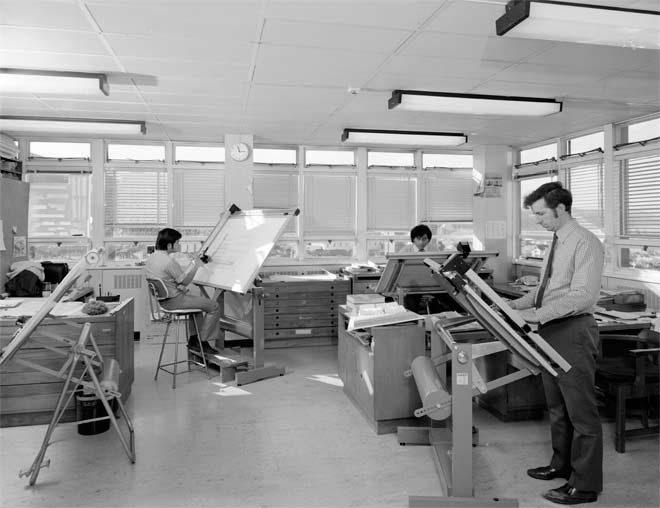
New Zealanders' Television: Obliterated almost completely from New Zealanders’ collective memory is the amazing collection of creative talent which was all-too-briefly assembled in the purpose-built Avalon television studios (above) situated ten miles north of the capital. If this period is recalled at all it is only for the purposes of laughing at the posh pronunciation and absurd hairstyles of the era’s ridiculously clunky (by contemporary standards) broadcasters.
WHO WILL RESCUE TV3? Almost certainly not the private
sector. Not only is the commercial free-to-air broadcasting model broken, but
TV3 remains burdened by its previous owners’ insatiable appetite for debt.
These formidable liabilities have fatally undermined the network’s return to
profitability. Even without the migration of advertising revenue to Facebook,
Amazon, Netflix, Google and YouTube it would have continued to bleed money.
Given these disadvantages, the probability of TV3 finding a private sector
buyer is close to zero. Which leaves the obligation to rescue TV3 resting
squarely with the New Zealand state – which is to say, with us.
Not that you’ll hear this, the most obvious long-term
solution, articulated by many of those speculating on the fate of New Zealand’s
most innovative and downright bolshie television network. “Nationalisation” is
one of those words it is forbidden to utter in twenty-first century New Zealand
without spitting on the ground. Public ownership is almost always rendered by
media pundits as “government owned” or “state controlled” – as if Jacinda
Ardern, in addition to being New Zealand’s prime minister, would instantly
become TV3’s CEO and Editor-in-Chief. Accordingly, public ownership is branded
unequivocally as a “bad thing” – the first stumble down the slippery slope that
leads to Putin’s state-owned and government controlled propaganda network.
1970s Television: More Than Flared Jeans And Disco.
AS IS SO OFTEN the case in any discussion about who should
own what in New Zealand, the historical ignorance of the younger generation
stands athwart any progress towards non-neoliberal solutions. Fed horror
stories about prime ministers vetting broadcast journalists’ questions and news
bulletins crafted in the offices of the Tourist & Publicity Department,
younger media players know nothing of the extraordinary creativity, vibrancy and
independence of publicly-owned television in the late-1960s and 70s.
The latter decade, which coincided with the introduction of
a second publicly-owned television channel, witnessed an extraordinary
flowering of news and current affairs, documentary, drama and music programmes.
For this very reason, the enemies of public ownership spare no effort in
casting the 1970s as the decade that taste forgot – notable only for its flared
jeans and disco. Obliterated almost completely from New Zealanders’ collective memory
is the amazing collection of creative talent which was all-too-briefly
assembled in the purpose-built Avalon television studios situated ten miles
north of the capital. If this period is recalled at all it is only for the
purposes of laughing at the posh pronunciation and absurd hairstyles of the
era’s ridiculously clunky (by contemporary standards) broadcasters.
It is no accident that New Zealand’s golden era of
television coincided with the changes initiated by the Norman Kirk-led Labour
Government of 1972-1975. The freedom and independence that marked the
broadcasting of the mid-1970s reiterated Kirk’s re-definition of New Zealand
nationhood – especially his emphasis on steering a new and independent course
diplomatically, economically and culturally.
The assertion of government ownership and state control, so
often derided by the critics of public ownership, came not from the last
democratic-socialist Labour Government, but from the Rob Muldoon-led National
Government that ousted it. New Zealand the way Rob wanted it was all about
hugging the fictions of the post-war era ever tighter to the ‘RSA Generation’s’
bosom. That the forces of creativity and innovation were injurious to the
existing order of things was a prime-ministerial view of which public
televisions’ bosses were left in not the slightest doubt. For Rob and his
‘Mob”, the proper focus of state television was the status-quo.
The Revolution That Wasn’t.
THE OVERTHROW OF MULDOONISM in 1984 brought a new status
quo. To those broadcasters forced to endure the Big Chill of the late-1970s and
early-1980s, the new order had a revolutionary feel – they even made a series
about it. The reality, however, was that the new ‘Labour’ government’s
‘free-market’ broadcasting regime was way more insistent on ideological
conformity than Muldoon’s government had ever dared to be. Richard Prebble’s
Broadcasting Act of 1989 buried ‘public service broadcasting’ forever. A
commercially-oriented, ratings-driven TVNZ was Rogernomics’ gift to the
shattered remnants of what had once been New Zealand’s vibrant public media.
That’s why the long-awaited third television network was so
warmly welcomed. TV3, by some unanticipated quirk of late-capitalist cultural
logic displayed more creativity, innovation and independence than the
ideologically straightjacketed TVNZ. For the past 30 years, the privately-owned
TV3 network has, heroically and paradoxically, filled the vacuum created by the
deliberate destruction of public service broadcasting in 1989.
Certainly, there was an attempt to re-inject public service
ideals into the state broadcaster under the Clark-led Labour Government of
1999-2008. Unfortunately, the commercial ethos was so deeply entrenched in TVNZ
that removing it would require, in the powerful metaphor of veteran broadcaster
Ian Fraser “a neutron bomb” – i.e. something that would keep the infrastructure
intact while wiping out all the people inside it. The TVNZ ‘Charter’ and its
good intentions did not survive the 2008 change of government.
Enter Democracy’s Digital Gravediggers.
IN THE TEN YEARS since then both the global and the local
media environment has been utterly transformed. Technological change and the
radical cultural responses it has prompted have disrupted not only newspaper
publishing and broadcasting, but also the democratic political system they did
so much, historically, to construct. While the future of digital communication
is assured, the same cannot be said for the gathering and dissemination of
news. In the words of The Spinoff’s Duncan Greive:
“Journalism is different. It has been indirectly funded,
through advertising, since its birth. Advertising no longer sustains it, nor
will it ever again. The new advertising giants make no journalism, nor have any
interest in doing so. We are facing a New Zealand in the not too distant future
in which information becomes a tightly held and costly commodity (the new
premium Herald is $200 a year, the NBR twice
that), with access to it limited to those who have the facility to pay for it.”
Put more bluntly, the not-too-distant future will not be
democratic.
That does not have to be the way things develop in New
Zealand. Democracy and journalism, cultural creativity and innovation, can
survive and thrive: but only if sufficient political will is summoned to the
task of transitioning the newspaper and television industries out of their
current configurations and into publicly managed structures dedicated to
preserving the critical thinking and free speaking so essential to the practice
and defence of democracy.
Freedom & Funding
OF COURSE the Duncan Greives of this world will object that
taking current affairs journalism, and cultural production generally, under the
wing of the state will produce exactly the same reduction in diversity that the
“pompous relics” at the Commerce Commission deemed so injurious to the public
good in relation to the proposed merger of NZME and Stuff. But is that really
the only outcome? Is that what actually happened back in the days when
television was principally funded from the public purse?
The answer is “No.” The producer-driven television of the
1970s generated programmes that were as quirky as they were challenging.
Ranging from the still much-beloved Country Calendar, to the
ground-breaking historical drama series, The Governor, the output of the
two publicly-owned television channels was formidable. Editorial freedom,
moderated by professional responsibility and a strong understanding of and
connection with their viewers, empowered New Zealand’s television producers to
turn out programmes of impressive quality and impact.
Broadcast live out of the Avalon studios, The
Dean/Edwards Show – featuring Brian Edwards and another British import,
Michael Dean – anticipated the big, live-audience shows of what came to be
called “reality” television. Perhaps their most memorable programme was devoted
to the power of advertising. With wicked inventiveness, the production team
hired an advertising agency and the actor Ian Mune to “sell” the Cooks &
Stewards Union (infamous for going on strike during the school
holidays) which they did with extraordinary and highly revealing
effectiveness.
All that is required to generate the most stunning
television is editorial freedom and the funding necessary to make it real. It is
precisely this magical combination that explains the runaway success of HBO and
Netflix-commissioned shows.
Public Media, Not State Media.
THE BEST WAY to secure the full benefits of public media is
to ensure that it is firmly embedded in the local community. Once again, young
New Zealanders have no memory of the time when each of the four main centres
boasted an extensive regional television service. Not only did these regional
production centres screen their own local news and current affairs, but also
produced shows for broadcast on the nationwide network. The award-winning
children’s programme “Spot On”, for example, was produced in TV One’s Dunedin
studios.
The social, political and cultural impact of the hundreds of
staff employed by these regional production centres was considerable. A healthy
dose of irreverence and anarchic joy was injected into the inward-looking
provincial communities their presence so thoroughly disrupted. With the broader
public acting as their patrons, they unleashed the energy of art and the power
of critical thinking against conservative regional cliques grown accustomed to
smothering both.
Such was the public – the social-democratic – media culture
that Rogernomics, Ruthanasia and the whole neoliberal revolution swept away.
Rebuilding Trust In Public Ownership.
AH, YES, but as Kit Marlowe says in The Jew of Malta,
“that was in another country; And besides, the wench is dead”. For a while at
least a resurrected system of public media ownership would need to be protected
by some pretty sturdy walls of public accountability. The taxpayers would have
to be assured that their new media system was, as Fox News boasts, “fair and
balanced” and that bodies existed to make sure it was.
At both the regional and national level this could be
achieved by appointing boards that were genuinely representative of the
communities they served. Like the boards-of-directors of the long-gone Trustee
Savings Banks, the governing bodies of these new media organisations could
include nominees from the business community, the trade unions, educational
institutions and communities of faith, along with representatives of management
and staff. Such bodies would be there to protect not only the rights of the
audience, but also the editorial freedom and independence of producers and
journalists. These guardians would, themselves, be guarded by the provisions of
statute law.
A Matter Of Political Will.
NONE OF THESE CHANGES will be forthcoming from the present
government. Broadcasting Minister, Kris Faafoi, has already made it clear that
he and his Cabinet colleagues have not the slightest intention of riding to
TV3’s rescue. On the left of New Zealand electoral politics in 2019 there is
neither the political will, nor any real political understanding of the vital
role played by the media in both preserving and fostering a democratic culture.
Like practically all politicians, Labour, Green and NZ First MPs regard the
media in general, and journalists in particular, as the enemy. Though most of
them had more delicacy than to say so out loud, Winston Peters’ “Good
riddance!” response to TV3’s imminent demise was, almost certainly, their own.
The truly radical insight of the Kirk Government was that a
genuinely independent public broadcasting system, driven by a desire to serve
the public good, and insulated from the tutelage of the advertisers’ almighty
dollar, would always end up serving the interests of the citizens it empowered
– and hence the interests of the political party most dedicated to their
welfare. Only when those same citizens grasp the urgent democratic necessity of
rescuing not just TV3 but the entire New Zealand news media, will they be in a
position to infuse their parliamentary representatives with the political will
to make it happen.
If you don’t like where your country is right now, you
should perhaps reflect upon how vital it was for the people who brought you
here to first corrupt and then break the media institutions whose democratic
duty it was to warn New Zealanders about where they were being taken – and why.
This essay was originally posted on The Daily Blog
of Friday, 25 October 2019.