Lotto - Oops, I Mean KiwiBuild Ballot - Winners: Derryn Jayne and Fletcher Ross pose with Phil Twyford and Jacinda Ardern outside their new KiwiBuild property in Papakura. Twyford is willing to buy Labour’s promised houses straight off the property developers’ plans. At a stroke, bad financial bets are transformed into sure things. Phil’s happy. The developers are happy. The banks are happy. And the winners of KiwiBuild ballots are over the moon.
KIWIBUILD, Labour’s flagship housing policy promising
first-home-buyers 100,000 affordable dwellings by 2028, is a dog. It started
out as a political fix and has yet to mature into coherent policy. Nowhere are
Labour’s ambitions for KiwiBuild matched by the resources needed to fulfil
them. Worst of all, the people most in need of 100,000 extra dwellings –
beneficiaries and the working poor – are not the scheme’s targets. KiwiBuild is
a perverse mixture of corporate and middle-class welfare, offering a handsome
subsidy to builders and a generous hand-up to young professionals.
KiwiBuild began its life as David Shearer’s answer to David
Cunliffe. In November of 2012, convinced that the Labour Left was plotting to
replace him, Shearer was casting about desperately for a political
circuit-breaker. He needed something that would halt the ambitious Cunliffe in
his tracks and reassure the party’s rank-and-file that he was a Labour man
through-and-through. KiwiBuild was that something. His announcement that the
next Labour government would build 100,000 affordable homes for young New
Zealanders brought Labour’s 2012 annual conference to its feet. In the warm
glow of the membership’s support, an emboldened Shearer banished Cunliffe to
the back-benches.
Having served its purpose, KiwiBuild was filed and
forgotten. The necessary detailed development work on how it would be
implemented, by whom, and at what cost, never progressed much beyond the
hurried sketch vouchsafed to conference delegates and the news media six years
ago. The consequences of Labour’s failure to fill in the gaps are now
embarrassingly clear.
A Labour Party with stronger connections to the world beyond
Parliament would have identified much sooner the practical limitations of
KiwiBuild. The people and the products required to build 10,000 dwellings every
year for 10 years simply aren’t out there. New Zealand’s construction industry
remains chronically short of labour. The private sector will struggle to meet
its own deadlines – let alone the government’s.
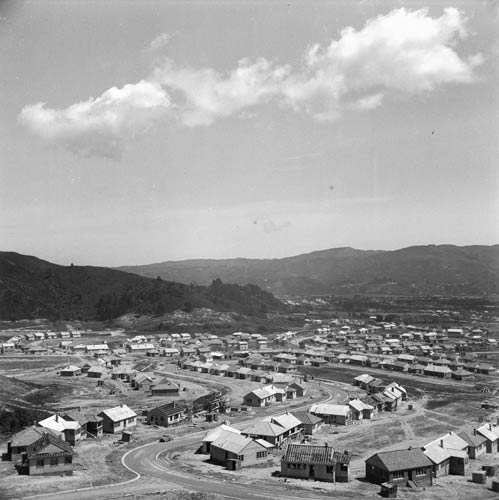
Unlike the First Labour Government, Jacinda Ardern’s
coalition is attempting to build thousands of additional new dwellings with a
construction industry at full-stretch. John A. (Jack) Lee, the man who oversaw
Labour’s massive state-house-building programme between 1935-1938 could summon
thousands of unemployed carpenters, tilers, plumbers, electricians and other
construction workers to the cause of housing the people. Idle factories could
be reactivated to supply the required building materials. This is what made
“The Houses That Jack Built” possible. The absence of such vital enabling factors
explains the houses that Phil Twyford cannot build in 2018.
Six years ago, when KiwiBuild was born, the full extent of
the housing crisis had yet to emerge. Back then, affordability was the issue.
The near impossibility of young professionals getting their feet on the first
rungs of the housing ladder. Fortuitously, these same young professionals just
happened to be the Shearer-led Labour Party’s prime electoral targets. First
and foremost, KiwiBuild was a political “solution” to a middle-class “problem”.
Six years on, and the focus has shifted to beneficiaries and
the working-poor sleeping in their cars or shivering in the overcrowded garages
of family and friends. Voters for Jacinda’s transformational “politics of
kindness” they may be, but they’ve not been deemed worthy of 10,000 houses per
year. For these, the working-class people in whose name Jack Lee built the
“social housing” of 80 years ago, 6,000 new state houses, in total, is considered adequate.
The irony is that, at an estimated price of $650,000,
KiwiBuild’s “affordable homes” are rapidly moving beyond the reach of all but
the luckiest of middle-class offspring. Those to whom the Bank of Mum and Dad
still happily provides a deposit. Those for whom the wills of Mum and Dad hold
out the prospect of eventual relief.
Undeterred, the Housing Minister presses on. Treasury may
have revised downwards its projection of the scheme’s contribution to
residential investment – but what do those “kids” know? Twyford is willing to
buy Labour’s promised houses straight off the property developers’ plans. At a
stroke, bad financial bets are transformed into sure things. Phil’s happy. The
developers are happy. The banks are happy. And the winners of KiwiBuild ballots
are over the moon.
About the only people who aren’t happy are those who believe
that publicly funded social interventions on the scale of KiwiBuild should be
directed first to those most in need. Tragically, however, the Coalition
Government is selling the poor a pup.
This essay was
originally published in The Otago Daily Times and The Greymouth Star of
Friday, 2 November 2018.