Showing posts with label David Shearer. Show all posts

Friday, 2 November 2018

KiwiBuild Should Be Targeting The Poor.

Lotto - Oops, I Mean KiwiBuild Ballot - Winners: Derryn Jayne and Fletcher Ross pose with Phil Twyford and Jacinda Ardern outside their new KiwiBuild property in Papakura. Twyford is willing to buy Labour’s promised houses straight off the property developers’ plans. At a stroke, bad financial bets are transformed into sure things. Phil’s happy. The developers are happy. The banks are happy. And the winners of KiwiBuild ballots are over the moon.

KIWIBUILD, Labour’s flagship housing policy promising first-home-buyers 100,000 affordable dwellings by 2028, is a dog. It started out as a political fix and has yet to mature into coherent policy. Nowhere are Labour’s ambitions for KiwiBuild matched by the resources needed to fulfil them. Worst of all, the people most in need of 100,000 extra dwellings – beneficiaries and the working poor – are not the scheme’s targets. KiwiBuild is a perverse mixture of corporate and middle-class welfare, offering a handsome subsidy to builders and a generous hand-up to young professionals.

KiwiBuild began its life as David Shearer’s answer to David Cunliffe. In November of 2012, convinced that the Labour Left was plotting to replace him, Shearer was casting about desperately for a political circuit-breaker. He needed something that would halt the ambitious Cunliffe in his tracks and reassure the party’s rank-and-file that he was a Labour man through-and-through. KiwiBuild was that something. His announcement that the next Labour government would build 100,000 affordable homes for young New Zealanders brought Labour’s 2012 annual conference to its feet. In the warm glow of the membership’s support, an emboldened Shearer banished Cunliffe to the back-benches.

Having served its purpose, KiwiBuild was filed and forgotten. The necessary detailed development work on how it would be implemented, by whom, and at what cost, never progressed much beyond the hurried sketch vouchsafed to conference delegates and the news media six years ago. The consequences of Labour’s failure to fill in the gaps are now embarrassingly clear.

A Labour Party with stronger connections to the world beyond Parliament would have identified much sooner the practical limitations of KiwiBuild. The people and the products required to build 10,000 dwellings every year for 10 years simply aren’t out there. New Zealand’s construction industry remains chronically short of labour. The private sector will struggle to meet its own deadlines – let alone the government’s.

Unlike the First Labour Government, Jacinda Ardern’s coalition is attempting to build thousands of additional new dwellings with a construction industry at full-stretch. John A. (Jack) Lee, the man who oversaw Labour’s massive state-house-building programme between 1935-1938 could summon thousands of unemployed carpenters, tilers, plumbers, electricians and other construction workers to the cause of housing the people. Idle factories could be reactivated to supply the required building materials. This is what made “The Houses That Jack Built” possible. The absence of such vital enabling factors explains the houses that Phil Twyford cannot build in 2018.

Six years ago, when KiwiBuild was born, the full extent of the housing crisis had yet to emerge. Back then, affordability was the issue. The near impossibility of young professionals getting their feet on the first rungs of the housing ladder. Fortuitously, these same young professionals just happened to be the Shearer-led Labour Party’s prime electoral targets. First and foremost, KiwiBuild was a political “solution” to a middle-class “problem”.

Six years on, and the focus has shifted to beneficiaries and the working-poor sleeping in their cars or shivering in the overcrowded garages of family and friends. Voters for Jacinda’s transformational “politics of kindness” they may be, but they’ve not been deemed worthy of 10,000 houses per year. For these, the working-class people in whose name Jack Lee built the “social housing” of 80 years ago, 6,000 new state houses, in total, is considered adequate.

The irony is that, at an estimated price of $650,000, KiwiBuild’s “affordable homes” are rapidly moving beyond the reach of all but the luckiest of middle-class offspring. Those to whom the Bank of Mum and Dad still happily provides a deposit. Those for whom the wills of Mum and Dad hold out the prospect of eventual relief.

Undeterred, the Housing Minister presses on. Treasury may have revised downwards its projection of the scheme’s contribution to residential investment – but what do those “kids” know? Twyford is willing to buy Labour’s promised houses straight off the property developers’ plans. At a stroke, bad financial bets are transformed into sure things. Phil’s happy. The developers are happy. The banks are happy. And the winners of KiwiBuild ballots are over the moon.

About the only people who aren’t happy are those who believe that publicly funded social interventions on the scale of KiwiBuild should be directed first to those most in need. Tragically, however, the Coalition Government is selling the poor a pup.

This essay was originally published in The Otago Daily Times and The Greymouth Star of Friday, 2 November 2018.

Thursday, 12 January 2017

Leading Labour's "Broad Church".

The Red Dawn: The labour movement conceives political power as a force residing not in charismatic leaders, but in the democratic electorate itself. If you're a member of the Labour Party, the only future worth having is a future fashioned by the people, for the people.
 
THE SOLUTION, if there is one, to Labour’s political woes is unlikely to involve the wholesale adoption of the führerprinzip. The notion that all Labour has to do to reclaim the Treasury Benches is find a leader capable of being admired, trusted and liked by the voters has found an enthusiastic advocate in The Spinoff's Simon Wilson. Unfortunately, enthusiasm is no substitute for political understanding.
 
“I’d have voted for Helen Kelly for prime minister”, gushes Wilson. “I’d have voted for David Shearer, too. I dearly wish I’d been given the chance to do both.” Never mind that a vote for David Shearer would have been a vote for the resumption of Rogernomics, and a vote for Kelly would have been a vote for its long-delayed repudiation. For Wilson, a party’s principles, and the content of its manifesto, mean nothing. The sole criterion by which its fitness to rule should be judged is whether or not its leader gets the electorate’s juices flowing.
 
That this approach to politics amounts to an open invitation to the Donald Trumps and Adolf Hitlers of this world to traduce our democratic institutions in no way slows Wilson down. Indeed, having proudly declared that he would have voted for Helen Kelly, Wilson proceeds to rubbish her final political testament that politics should be “about values” and that there is “far too much attention on leadership”.
 
“It sounds sensible”, says Wilson, “but sadly it’s not. It’s the idea that has done more damage to the Labour Party than any other since Rogernomics. Why? Because it keeps them out of power.”
 
Quite how Wilson is able to reconcile identifying Rogernomics as one of the main reasons Labour finds it difficult to attract electoral support with his earlier contention that he would have happily voted for David Shearer, is anybody’s guess. Perhaps he doesn’t know that Shearer became active in the Labour Party because of Rogernomics – not in spite of it. Or that shortly after becoming Labour’s leader, Shearer informed New Zealanders that he was an ardent admirer of Esko Aho, Finland’s neoliberal shock-therapist prime minister. I guess it all comes back to Wilson’s contention that ideas and policies are less important than whether the voters are ready to give their führer what really counts – power.
 
That one of the reasons political leaders are admired, trusted and liked is because their party’s ideas and policies correspond closely to broad swathes of the electorate’s own hopes and dreams, does not appear to have occurred to Wilson. We should not, however, be surprised at his failure of imagination. Wilson’s political vantage point is that of the elite observer; the technocratic fixer; the well-connected insider looking out – and down. Viewed from this perspective, voters are clay to be shaped and moulded, not citizens to be heeded.
 
If power is something that can only be bestowed from above, not seized from below, then Wilson’s support for the idea that Labour should be a “broad church” makes perfect sense. If one’s choice of political party is dictated solely by considerations of personal taste – like the choice between Coke and Pepsi – then the political ideas of its membership are irrelevant. Except, of course, membership of a political party is not determined by personal taste but by personal conviction. Once again, Wilson is guilty of a profound political misunderstanding.
 
The idea of Labour as a “broad church” harks back, as the metaphor suggests, to matters of individual conscience – not political economy. In the days when it really was a working-class party, Labour had to be able to accommodate both teetotal Methodists and Salvationists as well as hard-drinking Catholics. Staunch educational secularists had to be willing to get along with the supporters of parochial schools. Arguments for and against capital punishment raged alongside debates pitting pacifists against the supporters of king and country.
 
On questions such as the state’s dominant role in the New Zealand economy, and the centrality of the trade union movement to the working-class’ economic and political power, however, Labour was – until Rogernomics – a very narrow church indeed.
 
It is doubtful whether any party could have survived the sort of breakneck ideological expansion that Roger Douglas and his allies imposed upon the New Zealand Labour Party in 1984. Indeed, the only truly surprising aspect of the internal reaction to Rogernomics was how long Labour’s left-wing waited before splitting away in 1989. The latter’s departure did not, however, make Labour a broader church ideologically. On the core issues of political economy, Labour remained as narrow as ever: neoliberalism taking the place of democratic socialism.
 
More surprising, perhaps, was the party’s failure to remain a broad church on matters of conscience. As the party’s socialist credentials faded, the rainbow colours of the new social movements of feminism, anti-racism, gay rights and environmentalism intensified. So brightly did “identity politics” shine that Labour’s long-standing tradition of agreeing to disagree on issues of personal morality retreated into the shadows. In 2017, it is still possible for a member of the Labour Party to be “misogynistic”, “racist” and “homophobic” – but not openly.
 
The present-day party’s vigilant intolerance of socially conservative views is only possible because the ideological upheaval of Rogernomics reduced Labour’s membership from a staggering 85,000 in 1984 to around 8,500 in 2017. The militant “political correctness” of which Labour currently stands accused would have been unenforceable in its days as a mass party and remains a significant barrier to it ever again becoming one.
 
This is a problem, because although the purposes of politically correct party cadres may be served by ensuring that Labour’s membership remains “fewer but better”, the business of winning elections is all about “the more the merrier”. If all that Labour is prepared to offer the electorate is an unpalatable combination of watered-down neoliberalism and beefed-up identity politics, then winning elections is not going to be easy.
 
Wilson argues that Labour must learn from Michael Wood’s emphatic by-election victory in Mt Roskill: “Wood joined the dots. A party committed to raising wages must also be committed to better parental leave, childcare support and equal pay for women. A party determined to resolve the housing needs of the destitute and the working poor must confront the complex issues involved on the basis of class and race.”
 
But isn’t this precisely the sort of values-based and ideas-driven politics that Helen Kelly championed, and Wilson decries? And wasn’t Wood admired, trusted and liked because the people of Mt Roskill knew him to be a politician whose hopes and aspirations matched their own? And didn’t his campaign succeed because, rather than highlighting the characteristics that set the multi-ethnic communities of his electorate apart, he focussed on the issues that drew them together?
 
And isn’t that what being the leader of Labour’s “broad church” is really all about?
 
This essay was originally posted on The Daily Blog of Thursday, 12 January 2017.

Tuesday, 16 July 2013

Coups, And Rumours Of Coups

Tweet Surrender: Paradoxically, Duncan Garner's use of Twitter to announce a move against the leadership of David Shearer may, by alerting his supporters, have caused its organisers to hastily abort whatever it was they were trying to achieve. Or, the former TV3 political editor may simply have been played.
 
DUNCAN GARNER has been roundly criticised this week for falsely predicting the imminent resignation of Labour leader, David Shearer. Comparisons have been drawn between Mr Garner’s infamous “tweet” and the media tactics used to bring down the Australian Labor Prime Minister, Julia Gillard. Questions are now being raised about the ethics of journalists and commentators becoming players in a game they’re only supposed to watch.
 
All of which is the purest humbug. Politicians and journalists have always lived out of each other’s pockets. This is because politics isn’t just about the use of power; it’s also about how the use of power is explained and justified.
 
The truly effective politician leaves as little of that task to journalists as possible. There wasn’t a lot more that a journalist could have added to Abraham Lincoln’s Gettysburg Address, or Winston Churchill’s “Finest Hour” speech. Nor could Kiwi scribes much improve upon David Lange’s crushing dismissal of Sir Robert Muldoon’s interventionism: “You can’t run a country like a Polish shipyard!”
 
Not all politicians are, however, blessed with such memorable rhetorical skills. For those who struggle to explain and/or justify their political actions, a measure of journalistic assistance is usually required.
 
We have learned to call these people “spin doctors”. It’s an evocative title, recalling those legendary spin bowlers who could turn a cricket ball in whatever direction they pleased. The reality, however, is that nearly all spin doctors have, at one time or another, been senior political journalists.
 
As such, they have a fairly shrewd idea of who it is among their former colleagues that should be called in for an interview – and who should be kept as far away from their bosses as possible. As skilled journalists they can also spot the weaknesses and strengths in the stories that are written about their employers.
 
Tony Blair’s formidable spin doctor, Alastair Campbell, certainly wasn’t shy about letting errant journalists know exactly what he thought of their work – and them.
 
The environment in which politicians and journalists move is, therefore, one of both familiarity and contempt. Only the very best performers, on either side, have no need for the back-scratching of the other.
 
Stories are leaked. Rumours are started. Judgements are made – or encouraged. Politicians and journalists constantly use each other – not only to build themselves up, but also to tear down their colleagues (who are more often than not their competitors and rivals).
 
Which brings us back to Mr Garner and his tweet.
 
Labour MPs have accused Mr Garner of “making up” his story about a coup being underway against Mr Shearer. But only a moment’s thought is required to expose this accusation for the nonsense it is.
 
Mr Garner has confirmed that his informant was a member of the Labour Party Caucus. Presumably, he or she was someone who had vouchsafed information to Mr Garner in the past – information which had proved to be reliable.
 
The maelstrom of criticism into which Mr Garner has been unceremoniously pitched, since his predictions of last Thursday night were proved wrong, provides the strongest argument as to why he would not have tweeted without feeling extremely confident about the rumour’s veracity. (Just to make sure, however, he sought and received confirmation from a second Labour Party source.)
 
That Mr Garner was given what the Americans call “a bum steer” should tell him (and us) that the atmosphere in Labour’s Caucus is becoming increasingly toxic. And, as Julia Gillard would no doubt confirm, such a poisoned political environment makes rumours of an imminent leadership spill both inevitable and believable.
 
So, why did Mr Garner’s coup rumour fail to stack up? Let’s go through the explanatory options.
 
1) Some sort of leadership coup was on, but Mr Garner’s tweet alerted Mr Shearer’s supporters and the organisers were forced to abort. (Despairing Labour MPs may simply have been gathering sufficient signatures to persuade their leader to go gracefully and preserve the party from a debilitating civil war.)
 
2) No coup was imminent, but Mr Garner’s source considered it vital that Mr Shearer be forced to endure yet another destabilising round of media speculation concerning the viability of his leadership. (So vital that they were willing to abuse and lose Mr Garner’s trust.)
 
3) For reasons of their own, Mr Shearer’s backers decided to undermine Mr Garner’s journalistic credibility by deliberately misinforming him that a coup was underway.
 
Each of these explanations offers a slightly different take on the dire state of affairs within the Labour Caucus. Underlying all of them, however, is the undeniable fact of a leader (and the faction backing that leader) under extraordinary and unremitting pressure.
 
Mr Garner’s prediction may have failed to materialise, but it did, at least, remind us of Bismarck’s famous quip: “Never believe anything in politics until it has been officially denied.”
 
This essay was originally published in The Press of Tuesday, 16 July 2013.

Sunday, 14 July 2013

Being Seen Being "Done".

Mixed Messages: Labour promises the woman of the 1940s (and her children) a "place in the sun". That message, updated for the twenty-first century, embraced full equality of representation for women in the Labour Party - right up until Labour's 2013 parliamentary caucus insisted that it didn't.
 
NO! NO! NO! Not like that! Is there no one in Labour’s caucus who retains even the slightest vestige of political finesse?
 
To deal successfully with a blunder like the “Man Ban”, one needs to invert the old maxim about justice. For justice to be done, they say, it must be seen to be done. But, for problems arising out of the fraught relationship between the organisational and parliamentary wings of the Labour Party, the opposite is true. Whatever (or whoever) gets ‘done’ to re-make the peace, it (or they) must never be seen being ‘done’.
 
Besides, the Caucus can’t just demand that the New Zealand Council “withdraw” a proposed amendment to the Party’s constitution. Why? Because as every bush lawyer in the Labour Party (and there are many!) will tell you (usually at great length) such a move would be absolutely and positively unconstitutional.
 
It was the Labour Party Conference of 2012 which asked a working party to turn the raw proposals for ensuring gender equality into a workable proposition for the 2013 Conference to debate. This is the document that was e-mailed – with the weighty imprimatur of Labour’s New Zealand Council – to party members in early July.
 
As a proposed amendment to the Labour Party Constitution, the Man Ban’s fate can only be determined this November, in Christchurch, at the 2013 Annual Conference. Rightly or wrongly, the decision to withdraw, ratify or reject the amendment belongs to Conference – not Caucus.
 
Of course, a caucus made up of MPs who understood and respected their party would never have asked it to break its own rules. Just as no genuine Labour Leader would ever dream of publicly forcing his party, its president and its governing body into performing such a humiliating and unconstitutional back-down.
 
In fact, the last time a Caucus member behaved with such naked aggression towards the organisational wing of the Labour Party was in 1988 when Richard Prebble injuncted the entire New Zealand Council to prevent it from ruling that his Auckland Central Labour Electorate Committee had not been elected in accordance with the rules.
 
But then, a genuine Labour Leader would never have been caught off-guard by something like the Man Ban in the first place. Drawing up the rules by which parliamentary candidates are selected is not the sort of task a genuine Labour Leader would delegate to just anybody. He or she would make sure that a trusted lieutenant was in at the drafting stage. Any potentially controversial or embarrassing proposals would be communicated to the Leader’s Office long before they ended up in the hands of National Party bloggers.
 
The problem so cruelly exposed by the Man Ban blunder is that David Shearer isn’t any kind of Labour Leader at all. Two hours in a Kingsland pub with the guy, way back in February 2012, was enough to convince me that this man with the brilliant back-story knew next-to-nothing about his party’s history, it’s values, it’s members, or even its policies.
 
Now, thanks to his own and his right-wing parliamentary colleagues’ contemptuous treatment of the party organisation, the whole country can see how little understanding David Shearer has of Labour and everything it stands for.
 
Unable to calm the media storm with a few well-chosen words about Labour’s proud history of pushing out the boundaries of progressive politics, and the importance of encouraging democratic debate, he has, instead, allowed his ideological opponents to drive him towards a “solution” that shames both himself and the political movement he purports to lead.
 
Appallingly advised by people who know as little about the Labour Party as he does, he concluded that macho bombast and the public humiliation of female colleagues was preferable to having a quiet word with the right people at Conference, so that, stoically, and with unobserved degrees of reluctance, delegates could reject the Man Ban.
 
As things now stand, the Labour Party must either ratify the Man Ban or surrender unconditionally to David Shearer.
 
This essay was originally published in The Waikato Times, The Taranaki Daily News, The Timaru Herald, The Otago Daily Times and The Greymouth Star of Friday, 12 July 2013.

Tuesday, 2 July 2013

Missed Opportunities In Ikaroa-Rawhiti

There Can Be Only One: The ingredients were all there for a major political upset. Just under 60 percent of the voters of Ikaroa-Rawhiti supported somebody other than the by-election's eventual winner, Meka Whaitiri (Right). Had the voters thrown their weight behind the Mana Party candidate, Te Hamua Nikora (Second from Right) they could have sent a powerful message not only to the Maori Party (which has received the message that was sent loud and clear!) but also to the Labour Party (which, arguably, needs it the most).
 
IMAGINE A BILLIONAIRE with an interest in psephology (the academic study of elections and electoral behaviour). It’s by no means a far-fetched notion. The billionaire Koch brothers in the USA have invested millions in their quest to master the American electoral system. The billionaire currency speculator, George Soros, has similarly poured huge sums into US organisations dedicated to “getting out the vote”. So long as our leaders are elected, wealthy individuals will always have an interest in learning as much as possible about how democracy works.
 
Watching the Ikaroa-Rawhiti results come in on Saturday night, it occurred to me that with a little help from a friendly billionaire it would be possible to interview every person who participated in the by-election and ask them to explain their choice.
 
Ikaroa-Rawhiti is, of course, a Maori seat and is prone, like all Maori seats, to low voter turnout. Last Saturday’s by-election proved to be no exception, with only 10,519 of the approximately 33,000 registered electors participating in the ballot. Assuming one had the funding, 10,519 individuals is a small enough sample for a well-resourced team of professional researchers to interview in its entirety.
 
It would be a fascinating exercise. Most of us have, at one time or another, looked at an election result and scratched our heads. Why do people vote the way they do? What makes them support candidates representing parties with such a poor record of defending their interests? Why don’t more voters use their ballot strategically to secure effective representation – or simply to deliver a shock to the political system as a whole?
 
Last weekend it was within the power of the Ikaroa-Rawhiti electors to really upset New Zealand’s political apple cart. By shifting their support away from the Labour Party they could have delivered a stinging – perhaps fatal – rebuke to the Party’s lacklustre leader, David Shearer. At the very least, a rejection of Labour’s candidate would have precipitated a period of intense soul-searching within both the caucus and the wider party organisation. Labour’s entire approach to the Maori vote would have been up for review.
 
Wouldn’t that have been a more useful result for the people of Ikaroa-Rawhiti?
 
The voters of Ikaroa-Rawhiti also had the chance to deliver a sharp rejoinder to the Maori Party’s endless internal dogfighting. The leadership tussle between Dr Pita Sharples and the Waiariki MP, Te Ururoa Flavell, has weakened the Maori Party to the point where the likelihood of it retaining even the seats it holds currently is now in question. Had the electors put to one side the obvious personal qualities of the Maori Party candidate, Na Raihania (the strongest, individually, of all the contenders) and collapsed the Maori Party vote, the message to Dr Sharples and his colleagues would have been unmistakeable: “Get your act together – or this will be your fate!”
 
To be fair to the electors of Ikaroa-Rawhiti, they sort of sent a message to the Maori Party by demoting it from second-place-getter in 2011, to third-place-getter on Saturday. It was not, however, a very compelling message. Mr Raihania’s strong campaigning held his party’s vote together sufficiently well to limit his rival’s, the Mana Party’s Te Hamua Nikora’s, lead to just 500 votes.
 
Had the 2,104 Maori Party Voters, and the 1,118 electors who gave their vote to the Greens’ Marama Davidson, thrown their support behind Mr Nikora’s Mana Party, then the combined tally of votes (5,899) would’ve been more than enough to defeat the Labour candidate, Meka Whaitiri’s, winning total of 4,368.
 
Yes, they would have been taking a rather large punt on the colourful Mr Nikora, but it would only have been for 18 months. Had his performance as a Member of Parliament not been up to scratch they could easily have replaced him at the end of next year. In the meantime, the powerful messages his election would have sent – both to the Labour and Maori parties – would have benefited not just the people of Ikaroa-Rawhiti but the whole of New Zealand.
 
Sadly, that was not what happened. Rather than upset the apple cart, the electors of Ikaroa-Rawhiti (or, rather, just over a third of them) collectively kept it trundling along.
 
In electing a worthy, but pretty colourless, bureaucrat-cum-manager to represent them, Ikaroa-Rawhiti’s voters have bolstered the position of Mr Shearer and his supporters. Ms Whaitiri’s “respectable” win will allow the party to stumble on for another couple of months – or until the next disaster. By giving so many votes to Mr Raihania they have muted the message that a decisive shift of support to Mana would have sent to the Maori Party. It, too, has been permitted to stumble on.
 
So, if any public-spirited billionaires happen to read this – please get in touch.
 
We’d all benefit by discovering why democracy is so hard to master.
 
This essay was originally published in The Press of Tuesday, 2 July 2013.

Friday, 15 March 2013

Outsourcing Moral Leadership

Unusual Circumstances and Decisions: Somehow the Auditor General's finding that Shane Jones did not act improperly in granting citizenship to Labour Party donor Bill Liu has been taken to mean that he did not act unwisely. The decision to return Mr Jones to the Opposition front bench raises serious questions about the efficacy of Labour leader David Shearer's moral compass.
 
HERE’S A QUESTION for Labour. When confronted with evidence raising serious questions about the judgement of a senior caucus member, what should its leader do?
 
Should he measure the member’s actions against his own beliefs about what constitutes right and proper conduct in someone holding a ministerial warrant?  Examining the facts of the case, should he ask himself how he would have acted differently? Should he take moral stock of the environment in which the member’s actions occurred? Paying special attention to the actions of the member’s staff, should he ask himself whether he would have felt comfortable working alongside them? Would he have trusted their advice?
 
Or, should he simply outsource the whole job to the Auditor General?
 
On Tuesday afternoon Auditor General, Lyn Provost, announced that her office had found “no evidence there was any improper motive, collusion, or political interference” in the decision of Immigration Minister, Shane Jones, to authorise New Zealand citizenship for the mysterious Chinese businessman, Mr Yang (“Bill”) Liu.
 
Ms Provost did admit to there being a “combination of unusual circumstances and decisions” associated with the case, and that it was “not surprising” that people had started asking questions.
 
“We found reason to criticise most of those involved in different aspects of the decision-making process” Ms Provost reported. “In the public sector, decisions not only have to be right, they have to be seen to be right.”
 
No sooner had the Auditor General’s report been released than the Labour Leader, David Shearer, announced that Mr Jones would be returning to the Opposition front bench.
 
Disregarding the chain of “unusual circumstances and decisions” and the Auditor-General’s criticism of “most of those involved”, Mr Shearer decided that the absence of any conclusive evidence of serious impropriety was the sole criterion Mr Jones needed to satisfy to ensure his complete rehabilitation.
 
And this, lest we forget, was after Mr Jones, as Associate Minister of Immigration, had refused to accept the advice of Immigration Department officials that Mr Liu, a man under investigation in New Zealand, on suspicion of organising multiple identities, and wanted for questioning by the Chinese authorities concerning allegations of fraud, be denied New Zealand citizenship.
 
In spite of his officials’ doubts, and aware that the only reason he was handling the case was because the Minister of Immigration, Rick Barker, had recused himself on the grounds that he was personally acquainted with Mr Liu (as was at least one other member of the Labour caucus) Mr Jones approved Mr Liu’s application for citizenship.
 
We are told that Mr Jones was warned by one of his staff that if Mr Liu was repatriated to China he would likely face execution by the Chinese authorities – who would then harvest his internal organs for use as transplants. This information apparently weighed heavily in Mr Jones’s decision to reject his officials’ advice.
 
Mr Liu’s relationship with at least one Labour Cabinet Minister and one Labour MP does not, however, appear to have ever placed his application at serious risk of failing the political “sniff test”.
 
Mr Shearer, alone, knows why the decision-making surrounding Mr Liu’s application for citizenship offers no impediment to Mr Jones playing a key role in a future Labour-led Government.
 
The New Zealand public, on the other hand, can easily be forgiven for wondering how the Auditor General’s finding that Mr Jones did not act improperly has somehow been construed to mean that Mr Jones did not act unwisely. Is he truly innocent of any failures of judgement that a Labour leader keen to run a tight ethical ship might see as good reasons for keeping him away from ministerial decision-making in the future?
 
The Liu Report was always going to be as much a test of Mr Shearer’s ethical standards as it was of Mr Jones’s handling of Mr Liu’s citizenship application. The Auditor General has given Mr Jones a pass. Can we say the same for the efficacy of Mr Shearer’s moral compass?
 
This essay was originally published in The Dominion Post, The Waikato Times, The Taranaki Daily News, The Timaru Herald, The Otago Daily Times and The Greymouth Star of Friday, 15 March 2013.

Saturday, 2 March 2013

Chris Trotter - Shearer Supporter!

 
WHAT A DIFFERENCE a year makes! In this "Politics Chat", recorded in the television studio of the University of Otago's impressive Media Centre, political studies lecturer (and compiler of NZ Politics Daily) Bryce Edwards, while discussing many other subjects, quizzed me on the state of Labour and the New Zealand Left generally.

As you will see, in late February 2012, I was still publicly backing David Shearer's leadership of the party (my endorsement comes about 30 minutes into the interview). Although, I think it's fair to say that, even then, a few hair-line cracks in my allegiance were beginning to show.

Enjoy!

This posting is exclusive to the Bowalley Road blogsite.

Friday, 1 March 2013

Running Dogs

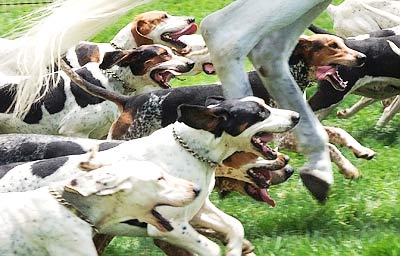
In Full Cry: In a perverse political version of the blood initiation, members of the Shearer and Robertson factions have guaranteed themselves higher rankings in the Labour Caucus by running down the followers of David Cunliffe.
 
I’M TOLD there were six of them, and that they hunted as a pack. Their prey?
 
Delegates who had voted the wrong way.
 
Moving through the excited crowds at the Ellerslie Conference Centre last November an angry group of Labour MPs was seen taking dissidents aside and telling them, in no uncertain terms, which way was up.
 
Leading the pack was Labour’s employment relations spokesperson, Darien Fenton, and her grim lieutenant, the Dunedin South MP, Clare Curran. No surprises there. Ms Fenton and Ms Curran were among the Caucus members most alarmed by the Labour Party rank-and-file's sudden outbreak of democratic distemper.
 
The other members of the pack, however, came as a surprise. I had never thought of Jacinda Ardern, Megan Woods, Kris Faafoi or Phil Twyford as attack dogs, but my sources assure me that they were there – chewing people out.
 
So what? Such brutal vignettes are the stock-and-trade of party conferences.
 
Certainly “The Pack” was far from being the only example of Caucus aggression at the Ellerslie Conference.
 
It was Chris Hipkins who drew me aside long before the dramatic conference floor-fight to murmur conspiratorially  “Our problems aren’t external – they’re internal.” And Andrew Little who first characterised the rank-and-file's bid to democratise their party as a statement of “anxiety” about the leader, David Shearer.
 
Even from the Media Table, the animosity directed  towards caucus members who spoke in favour of the rank-and-file’s resolutions (the most effective of whom, by far, was Lianne Dalziel) was unmistakeable. Mr Hipkins youthful countenance became an ugly mask of rage as he railed against the proposition that, to avoid a contest in Labour’s new electoral college, the party leader must be endorsed by sixty percent-plus-one of his caucus colleagues.
 
The underlying cause of all this angst was, of course, simple political arithmetic. The first thing all politicians learn to do is count, and the people backing Mr Shearer were fearful that a democratised party (with sufficient support in Caucus) might decide to wrest the power of choosing the party leader from their hands. They were terrified that the new Electoral College would saddle them with the rank-and-file's choice of December 2011: David Cunliffe.
 
And it wasn’t Mr Shearer’s faction, alone, who were counting heads. Labour’s Deputy Leader, Grant Robertson, had as much to fear from the leadership question being decided early, by the party, as his boss.
 
Now was the time for all who were not for Mr Cunliffe to unite against him. MPs from both factions fanned out across the conference venue to dampen down and/or extinguish the dissident hot-spots.
 
The Parliamentary Press Gallery were encouraged to interpret the rank-and-file’s attempt to “take back our party” as a leadership bid by Mr Shearer’s rival. The roving pack made up of Shearer and Robertson MPs would be joined by an even more vicious media pack led by TV3’s Patrick Gower.
 
The rest is history.
 
20 November 2012: Mr Cunliffe is demoted and his faction isolated.
 
4 February 2013: Mr Shearer manages – just – to secure the backing of sixty percent-plus-one of his caucus colleagues.
 
19 February 2013: Six days before Mr Shearer’s long-awaited shadow cabinet re-shuffle, Charles Chauvel, a supporter of Mr Cunliffe, quits Parliament.
 
25 February 2013: Mr Shearer’s new line-up is announced.
 
The Pack are well rewarded. Ms Fenton and Ms Curran both rise two places in the pecking order, while Mr Twyford goes up three to take a seat on the front bench. Megan Woods enters the top twenty – a back-bencher no longer. Andrew Little rises with her. Mr Shearer’s chief swordsman, Chris Hipkins, climbs five places to claim the shadow portfolio of Education from Mr Cunliffe’s running-mate, Nanaia Mahuta.
 
Ms Dalziel’s eloquence on behalf of rank-and-file democracy is rewarded with demotion to the back benches.
 
Mr Cunliffe remains outside the magic circle.
 
In Agatha Christie’s Murder on the Orient Express all the suspects are shown to have wielded the fatal knife. Labour’s MPs seem equally impressed by the advantages of collectivised bloodletting.
 
This essay was originally published in The Dominion Post, The Waikato Times, The Taranaki Daily News, The Timaru Herald, The Otago Daily Times and The Greymouth Star of Friday, 1 March 2013.

Friday, 22 February 2013

Charging The Train

Collision Course: Following Charles Chauvel's resignation from Parliament - allegedly after being told that, as an ally of David Cunliffe, he would have no role in a David Shearer-led Labour government - what will the Member for New Lynn do? The Labour Caucus's refusal to promote Cunliffe, its most electable member, to the party leadership offers grim evidence of its political and moral decline. (Photograph by John Chapman/Alamy)

AS LABOUR’S TRAIN rolls on towards 2014, I feel a bit like the bull in the Georgia politician’s story. Describing yet another doomed campaign waged by his liberal opponents in the Senate, the all-powerful leader of the segregationist Southern Caucus, Senator Richard B. Russell Jnr, observed that their position “reminded him of a bull who had charged a locomotive train. That was the bravest bull I ever saw, but I can’t say a lot for its judgement.”
 
I should have known that in championing the leadership credentials of David Cunliffe I was backing a bull over a locomotive.
 
After all, Mr Cunliffe could only boast a Harvard MPA, ministerial experience, a telegenic personality and the ability to string together a coherent English sentence. He was, moreover, the only member of the Labour caucus to have fully grasped the meaning of the Global Financial Crisis. The only Labour MP who understood how few of neoliberalism’s shibboleths remained politically serviceable to the Twenty-first Century Left.
 
There is always one who stands out in any party caucus: a man or woman who, in spite of their faults, is recognised by their colleagues as the only person who can beat the incumbent. Norman Kirk, Rob Muldoon, David Lange, Jim Bolger, Helen Clark, John Key: they may not have been liked by their colleagues; they may even have unseated a leader beloved and respected by the party’s rank-and-file; but they were the ones who could win; and they were the ones chosen.
 
I don’t think it is drawing too long a bow to say that the moral health (not to mention the historical success) of any political party depends upon its caucus’s ability to both recognise and engineer the promotion of the one/s most likely to succeed.
 
The elevation of the woefully inexperienced and chronically inarticulate David Shearer to the Labour leadership revealed a caucus no longer capable of identifying “The One”. Indeed, the very notion of a candidate possessing outstanding leadership qualities is now condemned as both disruptive and demoralising. Anyone promoted on the grounds that they possess superior talent or, God forbid! – charisma – is immediately blackballed by their less talented and charisma-bypassed colleagues.
 
The personality structure best suited to a Labour caucus overpopulated with MPs who owe their parliamentary seats to a high ranking on the Party List is that of the passive-aggressive courtier; the intriguer; the secretive collector of his or her colleagues’ political IOUs.
 
Robust egos and forthright personalities are proving easy meat for such folk.
 
Charles Chauvel, “Champagne Charlie”, that wilful roisterer whose liberal disposition and utterly brilliant legal mind promised a Labour Attorney General and Justice Minister of rare ability and enduring achievement, is merely the latest victim of a Labour caucus which, increasingly, is distinguished by nothing other than its dreary mediocrity.
 
I ask myself: “With Champagne Charlie gone, can the talented Mr Cunliffe be far behind?”
 
New Zealand now faces the dismal prospect of a change of government by default. It is entirely possible that, in twenty months’ time, Mr Key and his National Party, in spite of enjoying a ten percentage point advantage over their nearest political rival – will, nevertheless, lose the 2014 General Election.
 
Replacing him will be a man of whom it can only be said: “He was loathed less than his opponents.” Mr Shearer will enter office not like David Lange – on the updrafts of his own soaring rhetoric. Nor will he possess the menacing mandate of a Rob’s Mob, or even John Key’s “Labour-lite”. Mr Shearer will sit at the head of the Cabinet Table by virtue of simple arithmetic. Because Labour’s Party Vote, plus the Greens’ Party Vote, plus NZ First’s Party Vote, together, add-up to a Prime Minister.
 
The mandate of these three, ideologically distinct, political parties will be impossible for the electorate to discern. Inevitably, New Zealand’s policy direction will default to the usual bureaucratic suspects: Treasury, MFAT and the Ministry for Primary Industries. Their attached ministers are unlikely to cause any trouble. The ambition of courtiers is to climb things – not change things.
 
It is in the nature of bulls to defend their own. Mr Cunliffe’s supporters should, therefore, console themselves with the knowledge that while they lacked the judgement to avoid a head-on collision with Labour’s locomotive, they retained just enough courage for one final, redeeming, charge.
 
This essay was originally published in The Waikato Times, The Taranaki Daily News, The Timaru Herald, The Otago Daily Times and The Greymouth Star of Friday, 22 February 2013.

Tuesday, 29 January 2013

The Greens Reach Out To Reach Up

Reaching Out To The 'New Majority': The Green's Metiria Turei is hoping that by inviting idealistic New Zealanders to join her party in advancing progressive causes they will, through the osmosis of engagement, be ready to assist the Greens in next year's election. Labour, by contrast, has circled the wagons against everyone except those belonging to what one Shearer advisor calls "The Real Labour Party".
 
THE REAL FIGHT is now on the Left. John Key’s government has begun descending the long slope that leads to electoral destruction – which only the most extraordinary events (think 9/11) can interrupt. Once political gravity has a government in its grip, the location of the really significant political battles shifts immediately to the territory of its opponents. This is what we see happening right now in the respective strategies of Labour and the Greens.
 
So far, the Greens are winning.
 
On Sunday, the Green Party co-leader, Metiria Turei, delivered her “State of the Planet” speech to picnickers gathered in the Tahaki Reserve on the slopes of Auckland’s Maungawhau/Mt Eden. At roughly the same time, 600 kilometres to the South, Labour’s David Shearer was addressing his party’s Summer School in Wainuiomata.
 
The overwhelming focus of Ms Turei’s speech was what she called “the new majority” and how the Green Party proposes to harness its decisive electoral power. This new initiative, “I’m in – for the future”, seeks to replicate in a New Zealand context the extraordinarily successful ‘get-out-the-vote’ initiatives perfected by Barack Obama’s campaign organisations in both 2008 and 2012.
 
One need not be a member of the Greens to participate in this new organising initiative. Road-tested in the campaign to secure a Citizens Initiated Referendum on the partial sale of the state’s energy generators, the goal of “I’m in – for the future” is to enlist activists around specific progressive issues and causes (like affordable housing) trusting that the Green Party message will be absorbed through the osmosis of engagement. Over three thousand “Asset Savers” – only 60 percent of whom were Green Party members when they signed on – have already been identified in this fashion.
 
The Greens hope to call on this newly-recruited activist base in 2014. By building up their numbers “on-the-ground”, the gap between the Greens’ nominal support (as measured by the pollsters) and the support actually received in the polling booths should be narrowed significantly. Even if “I’m in – for the future” only delivers a 1-2 percent boost in the Greens’ Party Vote, its overall impact on the outcome of the 2014 General Election could prove decisive.
 
Labour’s ability to “get-out-the-vote” – once the subject of political legend – is now a pallid shadow of its former prodigious grunt. With a steadily declining share of the Party Vote, Labour, too, must find a way of plugging into the energy of the New Majority. (Defined by Ms Turei as “the new consciousness of environmental issues, human rights, fairness and the need for good change.”)
 
Unfortunately for the people Labour purports to represent, the current disposition of political forces within the Labour Party makes this impossible. Ignoring the radically democratic message from delegates attending last year’s annual conference, David Shearer has circled the wagons against not only his own activist rank-and-file, but also the expectations of the broader labour movement.
 
The Labour Leader’s inner circle of advisors is distinguished neither by intellectual creativity nor operational dynamism. Far from reaching-out to activists and supporters outside the party’s structures, most of the Shearer Camp’s energies appear to be devoted to finding new ways of insulting and excluding them from policy-making. Like the unlamented Stalinists of the old Socialist Unity Party, Mr Shearer’s backers would rather keep control of the losing side – than lose control of the winning side.
 
State Of The Nation: David Shearer's speech to Labour's Summer School was a leaden rehearsal of policy announcements already months old.
 
Mr Shearer’s speech to the Labour Party Summer School at Wainuiomata show-cased every one of these weaknesses. A leaden rehearsal of policy announcements already months old, written in exactly the same unconvincing and uninspiring style as every other speech he has delivered since becoming leader (at the very least you’d think Mr Shearer might have found a better speech-writer!) the address possessed only one notable line:
 
“A tide for change is building.”
 
These words, at least, ring true. The tragedy, however, is that Labour’s response to this tide's surge and pull is a cautious collection of technocratic adjustments to the status quo. A Capital Gains Tax. Raising the age of eligibility for NZ Super. Employer subsidies and youth training schemes. Fussing about with the Reserve Bank Act. Even Labour’s policy centrepiece – the KiwiBuild scheme – is little more than a gigantic PPP scheme targeted at the restive children of the middle class. It took the Greens to come up with a housing policy specifically designed for Kiwis without homes.
 
Given their head, the Labour Party’s rank-and-file would give the Greens a serious run for their money in the progressive policy stakes. Unfortunately, the only interest Mr Shearer has in his rank-and-file’s head is in it being presented to him on a platter. And if the cautious coterie of centrists advising Mr Shearer have little time for their own members, they have none at all for progressives outside the party.
 
The Greens, by reaching-out, are reaching-up.
 
This essay was originally published in The Press of Tuesday, 29 January 2013.

Tuesday, 22 January 2013

Party-Wide Vote No Guarantee Of Shearer (Or Cunliffe) Victory

Reading The Signs: An early leadership vote in Labour's new Electoral College poses as many political risks for David Shearer as it does for David Cunliffe. It would be cruelly ironic if the two leading contenders were to beat themselves to death for the benefit of a third - Grant Robertson.
 
AS FEBRUARY’S scheduled leadership ballot looms, Labour Leader, David Shearer, and his rival, David Cunliffe, have some tough strategic decisions to make.
 
Since last November’s Annual Conference and its controversial aftermath many Labour members have demanded that the February vote be transferred from Caucus to the party’s newly-established Electoral College. Only in this way, they argue, can the sins of David Shearer and his minions be washed away. The unspoken assumption behind these dissidents’ demands is that the Electoral College will return not Mr Shearer but Mr Cunliffe as Labour’s leader.
 
Now we learn from the pseudonymous “Eddie”, writing at “The Standard” – New Zealand’s third-largest and Labour-leaning blogsite – that Mr Shearer may be preparing to call Mr Cunliffe’s supporters’ bluff by giving them the Electoral College vote they’ve been clamouring for.
 
Though indisputably a bold and potentially game-changing move, Mr Shearer cannot be unaware of the many and serious strategic and tactical risks associated with this course of action.
 
The most obvious risk is that once an Electoral College vote is arranged the likelihood of the contest being limited to just two candidates is extremely remote. Once the process is set in motion, Mr Shearer’s supporters have no way of preventing Grant Robertson or Andrew Little from adding their names to the ballot paper. Should that happen the political calculations immediately become much more complex.
 
Labour’s new Electoral College is required to tally the votes cast by the Parliamentary Caucus, Ordinary Members and Trade Union Affiliates and then re-calculate the results so that the votes of the Caucus account for 40 percent of the total, Ordinary Members 40 percent, and Affiliates 20 percent. Whether the contest will be decided on the basis of a simple plurality of the votes cast, or according to some form of preferential voting system, is not yet clear.
 
If it’s the former, then the margin separating Mr Shearer and Mr Cunliffe is likely to be very narrow. But if some form of preferential system is employed, then neither Mr Shearer nor Mr Cunliffe is assured of victory. Supporters of the principal contenders are most unlikely to put their candidate’s rival anywhere but last on their list of preferences. Mr Shearer and Mr Cunliffe could thus face early elimination, leaving the field to Mr Robertson and Mr Little. The smart money in that fight would be on Mr Robertson.
 
Demanding the leadership question be decided by the Electoral College in February 2013 is, therefore, the worst possible move Mr Cunliffe’s supporters could make. Because even if he emerged victorious from the calculations of the Electoral College, Mr Cunliffe’s problems would be far from over.
 
His greatest challenge would lie in persuading those colleagues who have repeatedly demonstrated a quite irrational animosity towards the New Lynn MP’s leadership ambitions to swing in behind the Electoral College’s choice. If their past actions are any guide, the “Anybody But Cunliffe” faction would immediately set about undermining Mr Cunliffe’s position. Secret caucus debates would be repeated verbatim to favoured members of the Parliamentary Press Gallery and senior Labour MPs would not shrink from vicious public criticism of their leader’s favoured policies.
 
Such a public display of political disunity would very quickly reduce Labour to a laughing-stock. Subjected to unrelenting media criticism and with its poll numbers collapsing the Cunliffe-led Opposition would be judged to have very little to offer the electorate.
 
Labour’s leadership, secured too early, is, therefore, much more likely to destroy, rather than enhance, Mr Cunliffe’s chances of becoming Prime Minister. The gift they are most anxious to bestow is, paradoxically, the gift Mr Cunliffe’s followers should, for the time being at least, withhold.
 
Mr Shearer, too, should think very carefully before confirming “Eddie’s” rumour. It was, after all, the same pseudonymous writer who kicked off all the discussion about Mr Shearer’s leadership deficiencies immediately prior to last year’s Conference. That discussion, which suddenly (and without justification) morphed into the media-driven accusation that Mr Cunliffe was mounting a leadership challenge led, in turn, to his savage relegation to the back-benches.
 
I have learned that at about the same time as “Eddie” was mounting his first assault against Mr Shearer, a representative of at least one of the trade union affiliates was sounding-out fellow unionists’ opinions of a Robertson candidacy. (It is important to note here that Mr Robertson emphatically denies any involvement in, or knowledge of, such soundings.)
 
Now “Eddie” is at it again. Were Mr Shearer to allow himself to be goaded into an early vote in the Electoral College it is possible – indeed it is quite likely – that both he and his most serious rival, Mr Cunliffe, could find themselves manoeuvred out of contention.
 
It would be cruelly ironic if Mr Shearer and Mr Cunliffe were to beat each other to death – for the benefit of Mr Robertson.
 
This essay was originally published in The Press of Tuesday, 22 January 2013.

Thursday, 10 January 2013

Behind The Mask: Who's Backing David Shearer - And Why?

What Lies Beneath? The most plausible explanation for David Shearer's incoherence as a political leader is that he is masking his true - neoliberal - beliefs. The right-wing character of his political and media support only reinforces this disturbing conclusion.
 
READ A FEW PARAGRAPHS of David Shearer’s Foreign Affairs article “Outsourcing War” aloud, then ask yourself this question: “How could the man who currently leads the New Zealand Labour Party possibly have written that?”
 
I’d only been reading the article for a few minutes when I felt the hairs on the back of my neck rise in alarm. I put the journal down and took a deep breath. Could the article’s author really be the same man I’d shared a few beers with in a Kingsland pub earlier in the year? Whoever had written that article possessed a flair for clear and compelling language and a solid grasp of world history. Most of all, the author of “Outsourcing War” was a skilled advocate who could, and was, making a strong case for the use of private armies.
 
The man I’d been drinking with in that Kingsland pub did not appear to possess any of those talents. He came across as a typical, inarticulate Kiwi bloke for whom clear and compelling English would always be a second language. His grasp of the history of his own party (let alone the wider world) was weak; his powers of persuasion negligible.
 
Most of us will readily identify the man in the Kingsland pub as David Shearer. The questions only begin to pile up when we try to match New Zealand’s inarticulate and essentially unpersuasive Leader of the Opposition with the writer who’d successfully tackled what was, in 1998, one of the most controversial propositions in international relations: That private security contractors had a better chance of ending low intensity conflicts than the regular military forces of nation states.
 
Now it is true that some people can write a great deal more persuasively than they can speak. The late Bruce Jesson was a poor orator but an outstanding writer. No matter how badly he mumbled it from the lectern his political analysis was formidable. What, then, prevents Shearer’s speeches (even his well-rehearsed and teleprompted address to the Labour Party Conference) achieving the power of “Outsourcing War”?
 
What has become of the audacity and passion of the international aid administrator who penned that extraordinary article? The person who wrote “Outsourcing War” was a policy innovator; a seeker after radical solutions; an iconoclast willing to take a sledgehammer to prevailing orthodoxies. More than this, he was someone who meticulously marshalled his evidence and then buttressed it with rigorous political and economic analysis.
 
But very little of this radicalism and even less of the rigorous analysis has been evident in David Shearer’s parliamentary career. Indeed, it is hard to recall a more docile back-bencher. As Leader of the Opposition, however, Shearer has not been able to avoid giving the New Zealand public at least an introductory glimpse of the sort of politics he admires. Hence the Esko Aho speech of 15 March 2012, in which he drew New Zealanders attention to the controversial career of the former Finnish prime minister.
 
The former Finnish Prime Minister, Esko Aho, largely untested, came into office in 1991. He was almost immediately faced with a banking crisis. Jobs were disappearing. Its stock market was tanking. Its future was hugely doubtful. Aho’s message to the Finnish people was blunt and honest: They had big problems. No-one else was going to fix them.
 
For New Zealanders, meeting big challenges with big solutions is a familiar political meme. And those of us who lived through it tend to have pretty strong views on what political journalist, Colin James, described as the “Big Change” of David Lange’s fourth Labour government. Shearer, however, has maintained a dogged silence on the economic transformations of the mid-1980s. His admiration of Aho suggests that this reticence regarding Rogernomics is because, back in the 80s, David Shearer was a fan of Roger Douglas – not a foe.
 
His celebration of the Finnish PMs career is, in this context, highly significant. Aho, like Douglas, conforms in nearly every respect to what the political scientist, Geoffrey Debnam, calls a “policy aggressor”.
 
Policy Aggressor Par Excellance: Roger Douglas realised that the risks of introducing radical change had, by the mid-1980s, become less than those associated with attempting to maintain a failing system.
 
Well-placed within the ranks of a disciplined party, the policy aggressor is “prepared to act decisively and is strategically located to have a significant impact on public policy.” In Aho’s case the opportunity for an aggressive restructuring of the Finnish economy came with the 1991 collapse of the Soviet Union – Finland’s largest trading partner. At the cost of severe domestic dislocation, and against the wishes of his own party and its rural support-base, Aho led Finland into the European Union.
 
As Shearer, himself, noted in his speech:
 
Aho made bold decisions. He was, I need to say, voted out at the next election. He thought it was more important to make a difference than to get re-elected. Though our prescription might differ, we could all take a lesson from that.
 
According to Debnam, “only those least likely to be rewarded under normal party conditions will risk the possibility of party collapse. It is, thus, extremists who are given a tactical advantage because these are the people who are least likely to pay the cost of conflict.” This is a pretty accurate description of Douglas who was only prevented from abandoning the Labour Party by Lange’s promise to make him Finance Minister.
 
In his 1990 paper  “Adversary Politics in New Zealand: Climate of Stress and Policy Aggressors” published in The Journal of Commonwealth and Comparative Politics (Vol. XXVIII, No. 1, March 1990) Debnam sets forth the preconditions for successful policy aggression.
 
The process begins when a lengthy period of economic buoyancy comes to a close in conditions of significant economic dislocation, initiating what the pioneering political scientist, Samuel Finer, dubbed a “climate of stress”. Initially, political parties respond to the developing crisis by applying traditional formulae. But, as recourse to tried and true methods of restoring economic stability bring ever-diminishing returns, the electorate increasingly moves towards new and untried ideologies and/or parties. The resulting political instability only intensifies the crisis.
 
“Eventually”, writes Debnam, “one party will decide that the risks associated with advocating radical change are less than those in maintaining a failing system. A distinctive image will be pursued via ideological or visionary appeals. If that is successful, a new stability may be achieved around a new set of values that will form the basis of a new consensus.”
 
Debnam was, of course, describing the sequence of political events which led up to the unleashing of “Rogernomics” in the mid-1980s. It is, however, possible to discern in the 2008-09 collapse of global prosperity amidst multiple and linked financial crises the initiation of a new climate of stress leading inevitably to yet another period of radical political, economic and social change.
 
David Shearer clearly sees himself as New Zealand’s next big policy aggressor: the “anti-politician” who considers it more important to make a difference than to get re-elected. In this respect, at least, the current Labour leader and the author of “Outsourcing War” evince an unmistakeable congruence of character.
 
Why then is Shearer so woefully tongue-tied when it comes to making the necessary “ideological or visionary appeal”. Why don’t his speeches resonate with the boldness and iconoclasm of “Outsourcing War”?
 
The only sensible answer is: “Because his ‘solutions’ to the crisis are merely crude reiterations of the same tried and true methods which, in the hands of the incumbent government, have already demonstrably failed to bring the crisis to an end.”
 
Introducing the efficiencies of the marketplace to the business of international peace-making undoubtedly had a radical ring to it in the mid-1990s, but in 2013 it just sounds like more of the same old market madness. There is, moreover, a world of difference between penning articles for the International Institute for Strategic Studies and drafting a party manifesto. Were Shearer to openly declare his intention of becoming a “hands on” neoliberal policy aggressor, eager to deploy all the powers of the state to bulldoze new pathways for advancing market power, the Labour Party membership would rise up in angry revolt. Small wonder, then, that Shearer stumbles and mumbles: all of his mental energy is devoted to masking rather than revealing his true intentions.
 
Ideological mummery is also the key distinguishing feature of Shearer’s principal backers in the Labour Caucus. Phil Goff, Annette King and Trevor Mallard all dipped their paper cups into the neoliberal Kool-Aid in the 80s and none of them have ever publicly recanted (let alone repented) their supporting roles in Roger Douglas’s Economic Salvation Show. They no longer defend (at least not publicly) Rogernomics’ legacy, but behind their hands they dismiss its critics as “paleosocialists” who simply don’t understand how the world works.
 
What all of them fail to grasp, however, is that the current climate of stress is being generated by the failure of neoliberal ideology (just as the climate of stress of the late-1970s and early-80s was caused by the failure of Keynesianism). To talk about a neoliberal policy aggressor in 2013 is, therefore, oxymoronic. The next genuine policy aggressor will be a politician possessing both the courage and the imagination to go beyond the maintenance of a discredited orthodoxy – someone willing to forge a new political, economic and social consensus.
 
Policy Aggression From The Left: David Cunliffe is seen by many people inside and outside of the Labour Party as the politican best placed to forge a new political, economic and social consensus.
 
That David Cunliffe is seen by many both inside and outside the Labour Party as the politician most capable of forging such a consensus largely explains the extreme viciousness of his recent treatment. That left-wing policy aggressors are greeted with much more hostility than their right-wing counterparts is, however, to be expected. The latter’s intention is to shore up the defences of capitalism, while the former hopes to rescue and empower its victims. The arbiters of political acceptability in the business community, the state bureaucracy and the corporate news media will thus move decisively to forestall even the slightest hint of policy aggression from the Left.
 
Hence the near unanimous hatred directed at Cunliffe by the mouthpieces of the neoliberal establishment. Fran O’Sullivan, Jane Clifton and Matthew Hooton have gone to extraordinary lengths to besmirch Cunliffe’s character and ridicule his ideas. In a pincer movement with Shearer’s caucus allies they have attempted to cast the Member for New Lynn as a sly, egomaniacal (if ultimately inept) Cassius, plotting constantly to bring down Labour’s sensible Caesar.
 
At least the motives of these Shearer supporters are clear. Should the National Party be voted out of office, they are now reasonably confident that his replacement will not only leave the neoliberal settlement intact, but that he may also, with Esko Aho’s example set firmly before him, seek to extend it into the spheres of welfare, health, housing and education. It will not have escaped their attention that Labour’s “Affordable Housing Plan” is really just a glorified PPP on behalf of the professional middle-class.
 
Much harder to fathom is the self-defeating hostility of Labour MPs who were, until last year’s party conference, considered to be on the left of the caucus. One might have thought that Phil Twyford, Clare Curran, Jacinda Ardern and Andrew Little would have welcomed the opportunity to travel in the slip-stream of an ambitious left-wing policy aggressor. After all, the best chance a left-wing Labour MP has of “making a difference” is surely when the massive tensions built up under a climate of stress are suddenly released in a torrent of radical reform.
 
But the scope for far-reaching change in a government dominated by Shearer and his neoliberal allies will only be extended to the Right. That being the case, the prognosis for those who entered Parliament with honest left-wing intentions is grim. Promotion to Cabinet will depend not only on making ritual obeisance to Shearer and his clique, but also, following the tragic precedent of the Rogernomics Era, on abandoning their former social-democratic ideals. Such self-inflicted injuries to the soul do not heal quickly.
 
That so many people who consider themselves left-wingers cannot see where a Shearer-led Labour Party will take New Zealand is baffling. “Outsourcing War”, alone, should warn them just how far to the right Shearer is content to position himself when his behaviour is not constrained by the role of Labour’s leader. His hero-worship of Esko Aho; the quips about beneficiaries and teachers; his rejection of the Left/Right political divide; the half-hearted support he offered to the Maritime Union during the Ports of Auckland dispute: all of these signs point in one direction only. And yet, even the trade unions continue to back what they obviously (and cynically?) believe to be the winning team. It is only after the votes have been counted, and David Shearer’s performance-hindering disguises are triumphantly cast aside, that they will realise, exactly, what they have “won”.
 
To paraphrase Murray Ball’s superb quip about the backers of the old FPP electoral system: If you want a good reason for opposing David Shearer – just take a look at the people supporting him.
 
This posting is exclusive to the Bowalley Road blogsite.