
Showing posts with label Theology. Show all posts

Friday, 7 October 2022

The Problem Of Evil.

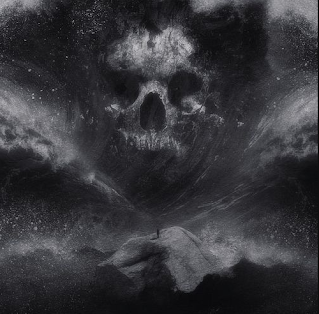
“Stare not too long into the abyss, lest the abyss stare back into you.” - Friedrich Nietzsche.
 
THE PROBLEM OF EVIL – ah yes – an old and flavoursome chestnut. How many nights, fuelled by Velluto Rosso (and other brave attempts at a palatable New Zealand red) did I wrestle with my fellow undergraduates as to why, or even if, evil exists in this world.

“How could a benevolent God allow bad things to happen to good people?” That was one of the questions. Inevitably followed by: “And isn’t a God that allows bad things to happen to good people himself one of the bad guys? Or, if not bad himself, then powerless to prevent evil from doing its worst?”

Except, of course, that a powerless deity is not a deity at all – but a fraud. Which not only means that evil is more powerful than good, but also more powerful than God. And that is not a comforting thought.

Nor, I’m afraid, a very original thought. Indeed, the notion that this world is in the grip of a malevolent deity harks all the way back to the earliest decades of Christianity. Some called this evil being “Rex Mundi” – King of the World. His was the realm of matter. It was Rex who personally made certain that our all-too-solid flesh would melt, burn, decay, and otherwise fail to endure.

Given the fate of those who subscribed to this, the Gnostic, heresy, it is difficult to fault their theology. Over the centuries Rex Mundi has got a lot of blood on his hands.

I wonder, sometimes, whether undergraduates still argue over the problem of evil. Certainly, it is difficult to imagine them arguing about the nature of God – not when surveys show most of them rejecting the notion of divinity altogether. That said, it isn’t in the least bit difficult to imagine them arguing about the problem of climate change.

Ideally, this would be a rigorously scientific exchange, but I strongly suspect that any argument about climate change will very quickly morph into our old friend, the problem of evil.

Not that God will be standing in the dock at this trial. Much more likely the discussion will turn on whether there is enough good in the human species to warrant its survival, or, whether our overwhelming propensity to tear apart the delicate threads of Nature’s ecological web has led humanity to an evolutionary dead-end.

It is not a debate to which Rex Mundi would be invited. In my imagination, I see Gaia as the smiling hostess of this existential colloquium. Proving just how difficult it is for the human mind to free itself entirely from the notion of a benign and/or just deity.

Then again, voting for their own species’ extinction is a pretty hard ask of the undergraduates of the Twenty-First Century. But, if the species itself isn’t all bad, then, perhaps, the “problem” of evil is best resolved by examining who has done the most.

Who was it who enslaved the peoples of Africa? Who wiped out the world’s indigenous cultures? Who planted their flags in the soil of sovereign nations and claimed them for their own? Who spread their capitalistic economic system across the face of the whole planet without thought for the exorbitant human and environmental costs? Who denied women their rights? Who persecuted homosexuals and the gender-diverse? Who invented racism, heavy artillery, poison gas and the H-Bomb? Who is the living embodiment of evil?

Yes, well, we all know the answer to those questions, don’t we?

Us, the world’s white, heterosexual, males: marching down the centuries with our swords and guns and bombs; slaying the innocent; enslaving the weak; bending all to our implacable will; consuming the whole world to satisfy our insatiable appetites. Us, seated upon our ivory thrones, white as death, ruling the world of matter absolutely. Rex Mundi in human form. Evil personified.

It’s all our fault.

And it’s not just undergraduates who argue this way – their professors write books about it!

They characterise evil as the problem born out of power over others. The power that creates victims. The power to be overcome only when its victims seize their own power – and use it.

Making evil a paradox. When we fear it, we feed it. In attempting to defeat it, we only make it stronger.

“Stare not too long into the abyss,” warned Nietzsche, “lest the abyss stare back into you.”


This essay was originally published in The Otago Daily Times and The Greymouth Star of Friday, 7 October 2022.

Tuesday, 22 March 2011

Reflections On The Christchurch Earthquake: Not A Tame Lion

The Jehovan Deity: For the benefit of his younger readers the Christian novelist, C.S. Lewis, re-cast Jehovah as Aslan, the Lion Lord of Narnia. He was careful, however, to retain the Judeo-Christian deity's dangerously unpredictable omnipotence. As he has one of his Narnian characters say of Aslan: "He's not a tame lion!"

WAS GOD PRESENT in Christchurch on 22 February 2011? It’s a question many New Zealanders have wrestled with over the past month, and the tragedy which engulfed Japan on 11 March has given it added urgency.

Officially, we’re a secular nation, yet Census data confirms that more than half of New Zealanders retain a belief in God. That belief is sorely tested by natural disasters. If God was present in Christchurch on 22 February, why didn’t He prevent the earthquake?

But, in posing this question aren’t we separating God from the natural world? Seating Him on a divine throne beyond this earthly realm? Requiring Him to demonstrate his mastery over his own creation by, in this case, countermanding the movement of the earth’s tectonic plates?

Yes, we are. But we can hardly be blamed for doing so. Because, when all is said and done, this is the view of God we have inherited from the Bible. He is the maker of heaven and earth and if it pleases him to command the sun to stand still, or the oceans to o’ertop the world, then it will be so. He is Jehovah, “I am that I am”, the God Charlton Heston (in the role of Moses) invokes when Pharaoh’s army traps the Israelites against the margins of the Red Sea.

“Behold His mighty hand!”, Charlton cries, and low, the waters of the sea are parted.

There are, of course, plusses and minuses to the Jehovan conception of divinity, as the celebrated author, C.S. Lewis, well understood.

In The Horse and His Boy, one of his Chronicles of Narnia, he makes it clear that his own rendering of the Jehovan God – the golden lion Aslan – is not a pet to be called for and dismissed at our convenience. On the contrary, he is an altogether dangerous being. As one of Lewis’s characters indignantly observes: “He’s not a tame lion!”

And, yet, it was to a rather tame deity that the Dean of Christchurch Cathedral, Peter Beck, appeared to be appealing in the aftermath of the earthquake. In answer to the question: “Where was God on 22 February?” he responded:

“God is in all these people. God is in the midst of all this. God is weeping with those who weep. God is alongside those who are finding the energy to just keep going. God is in the people who are reaching out and seeking to sustain one another. God is about building community, about empowering people.”

And, when a journalist demanded: ‘Yes, but where was God was when offices pancaked and burned and hundreds died?’

He replied:

“Well, we live on a dynamic, creating planet that’s doing its thing. For whatever reason, our forebears chose to build this city on this place. They didn’t know we were on this fault line. God doesn’t make bad things happen to good people. We make our own choices about what we do.”

Doing its thing?! What exactly is the Dean trying to say? That the natural world is a conscious entity? That it has its own volition and (God save us!) its own agenda? And did Cantabrians, thanks to the poor choices of their “forebears” simply find themselves in this “dynamic, creating planet’s” way? And was Jehovah, in fulfilment of some hitherto undisclosed self-denying ordinance, required to turn his face from the imminent suffering of Cantabrians and keep his mighty hands in his pockets?

If so, then God has a rival – a divine competitor in the omnipotence business. And the Dean is in flagrant breach of the Nicene Creed, the first article of which states, unequivocally: “We believe in one God, the Father Almighty, Maker of heaven and earth”.

Perhaps the Dean should return to his Bible and ponder the God that spoke to Moses from the burning bush. The God that gave man counsel from the whirlwind, and moved before the Children of Israel in a pillar of fire. Perhaps he should consider the God that laid Jericho low and sent fire from heaven to consume Sodom and Gomorrah. A red God, a wrathful God, a jealous God. The God that was ready to drown the whole world. The God who, when his son, nailed to a cross, cried out “Father, why have you forsaken me?”, remained silent.

Shock and awe. These words have been sullied by the Pentagon’s bloody hands. Yet it is only in those moments when all our human conceits are battered down and laid to waste that we, shocked and awestruck, come close to understanding Jehovah as the authors of both the Old and New Testaments understood Him.

Was God present in Christchurch on 22 February? Oh yes, He was there. And He is with us always. Beyond our questions; beyond our understanding; beyond our judgement.

Not a tame lion.

This essay was originally published in The Press of Tuesday, 22 March 2011