Showing posts with label Wealth Tax. Show all posts

Sunday, 27 August 2023

The Election Labour Has To Lose.

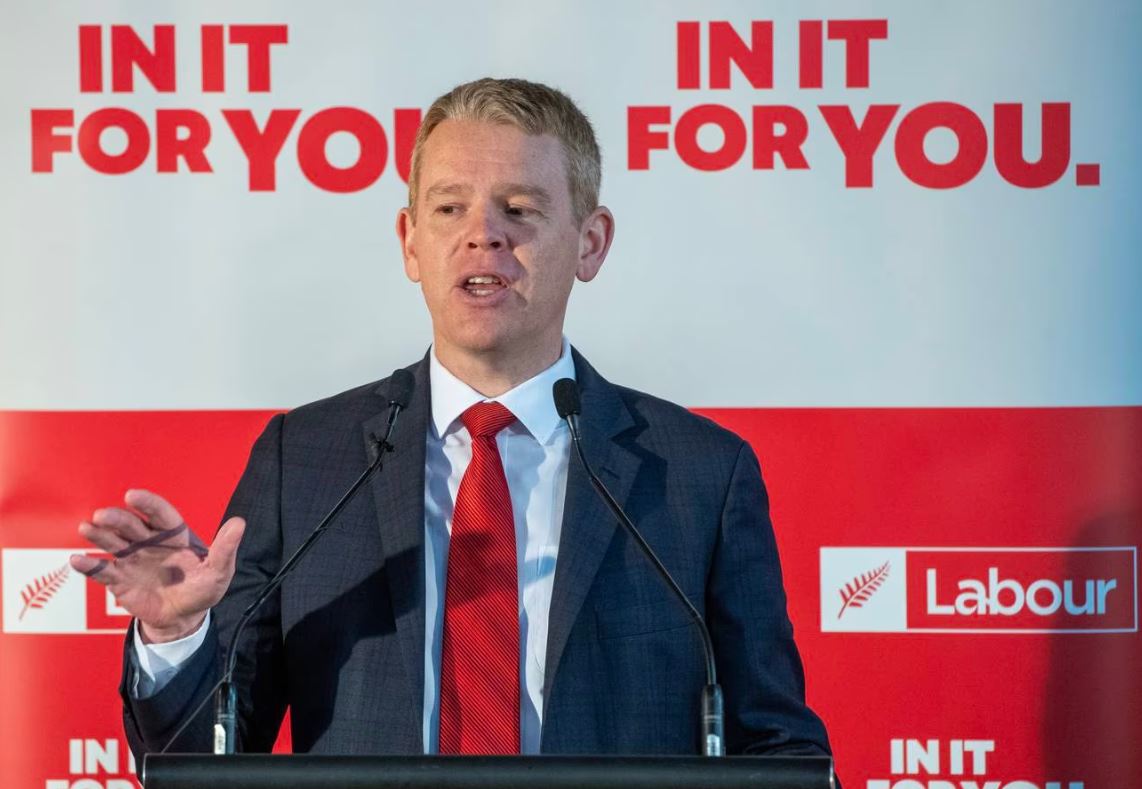
Bonjour Tristesse: The next time you see Chippy on the news, take a look at his eyes. There you will see the sadness and resignation of a man who not only knows that he cannot, but also that he must not, win. Labour is going to lose the election, not because it wants to, but because it has to – before it remembers who it was created to serve.

LABOUR’S GOING TO LOSE the General Election, and everybody with a shred of objectivity left to them knows it. The government of Chris Hipkins is doomed, and it’s not just the polls that are giving us the bad news, it’s Hipkins himself. He has nothing to offer the electorate: nothing that it wants to hear; and he knows it. Political promises are useless now. There are simply too many voters convinced that, after 14 October, Labour will be in no position to honour them. Hipkins is in the same position as a country experiencing hyperinflation: no matter how many zeros get added to the notes rolling off the printing presses, the currency remains worthless.

The real question is: “Why is Labour going to lose?” At the beginning of the year the party stood at 38 percent in at least one of the major polls. Hipkins’ takeover from Jacinda Ardern had been executed flawlessly and his “bonfire of unpopular policies” had been well-received. For a few precious weeks, the electorate believed Labour was listening to them. Had Hipkins and his colleagues followed through: focussing, laser-like, on “bread and butter” issues as promised; they would now be odds-on-favourites to win the electoral race. But, they didn’t follow through, they stopped listening, and Labour’s long, slow slide into the sub-30 percent electoral “death-zone” commenced.

It is clear now that Hipkins’ really didn’t care one way or the other about the “unpopular policies” – and neither did most of his colleagues. There was no factional divide in either Cabinet or Caucus over issues like Three Waters or Free Speech: no ideological conflict with passions running high on all sides; just the polls, the focus-group findings, and the tactical opportunities they presented.

That’s why what was probably the least popular of the “unpopular policies”, Three Waters, underwent only cosmetic changes. The Māori caucus wanted it because Iwi leaders wanted it, and if they didn’t get it, they might start knocking on Te Pāti Māori’s door. No one else in the Labour caucus proper felt strongly enough about the issue to organise any kind of serious resistance. So, Hipkins allowed Three Waters to be tweaked and re-named, and hoped that the public would be satisfied with a ludicrous name change. They weren’t.

It was left to Labour’s resident policy boffins, Grant Robertson and David Parker, to come up with something to replace the “unpopular policies” theme. It had to be about tax (because tax was National’s headline policy initiative) and it had to be bold enough to get the voters thinking and talking about Labour’s radical proposals all the way to the polling booths. To give Robertson and Parker their due, the plan they came up with felt like a winner. Certainly, it would have kept the political spotlight fixed upon the Government. Parker’s investigation into who-pays-what in tax had already predisposed the public to radical change – the polls were saying so quite emphatically – so, it just might have worked.

But, if the polls were pointing to widespread public support for making the super-wealthy pay their fair share of tax, Hipkins was adamant that the focus-group reports were all pointing the other way. From the other side of the world, in Vilnius, Lithuania, the Prime Minister issued his “Captain’s Call”, voiding Robertson’s and Parker’s plan, thereby making Labour’s election defeat inevitable.

Why did he do it? Because, deep down, Hipkins is a conservative politician, with a conservative politician’s deep-seated horror of anything that threatens to upend the status quo, and a genuine conservative’s loathing for all those who presume to challenge it. Oh sure, he is a Labour Party politician, but only because he got into parliamentary politics via student politics, where a rhetorical commitment to the Left is more-or-less de rigueur.

At heart, however, “Chippy” believes in the hierarchies of expertise and competence by which New Zealand politicians are surrounded from the moment they enter Parliament. It matters not at all whether they enter the circles of power as political advisers, Members of Parliament, or, in the cases of Hipkins’, Robertson and Ardern, a good measure of both: the idea that all great political ideas come from below, from the people, is dismissed out-of-hand as antiquated nonsense. Those who believe otherwise do not fare well in the NZ Labour Party of the Twenty-First Century.

The great irony, of course, is that if the Labour Party had somehow remained a mass party, made of, by, and for the New Zealand working-class, then Labour’s present difficulties would never have developed. A party permitted – nay, encouraged! – to engage in robust policy debates would have equipped its parliamentary representatives with a set of policies which enjoyed the democratic imprimatur of a political movement boasting powerful and organic attachments (through trade unions and community groups) with something very close to a majority of the voting public. A party of that sort would require a lot of convincing to take on board policies that struck its members as peculiar, offensive, unfair, unscientific and/or at odds with plain, old-fashioned, human decency.

Such a party is, of course, an impossibility in a society dominated by neoliberal ideology. Such a society cannot countenance any serious political movement that is not dedicated to preserving the interests of the ruling elites, or run by anyone other than their enablers in the professional and managerial class. What Chris Hipkins (and Jacinda Ardern) have shown us is that remaining in office is, ultimately, much less important than ensuring that no policies are contemplated – let alone enacted – which might undermine the neoliberal order.

Unpopular policies, especially those that encourage social division, are nothing for neoliberals to worry about. It is the policy capable of attracting two-thirds or more of the electorate’s support, the policy holding out the promise of actually challenging and changing the neoliberal status quo, that must be resisted – at any cost. A policy calling for the introduction of a Wealth Tax, for example.

The next time you see Chippy on the news, take a look at his eyes. There you will see the sadness and resignation of a man who not only knows that he cannot, but also that he must not, win. Labour is going to lose the election, not because it wants to, but because it has to – before it remembers who it was created to serve.


This essay was originally posted on The Daily Blog of Friday, 25 August 2023.

Tuesday, 22 August 2023

Not In It For Them.

In It For Your Votes: Political momentum comes from announcing policies (like removing GST from fruit and veges) that you already know “your people” want. Call that cynical if you want to, but it’s a helluva lot better than announcing policies your supporters don’t want (like pushing up the price of petrol).

OH DEAR, OH DEAR, OH DEAR, the political class is extremely displeased with the Labour Government. Against all responsible advice, the Prime Minister has announced the removal of GST from fresh and frozen fruit and vegetables. Who knew there were so many economists and tax lawyers in our unhappy little nation? Or that they could all become so very cross on cue? We shouldn’t be surprised, though. Not really. A state so bereft of sensible tax policy did not get that way by accident. How many economists and tax lawyers does it take to prevent a meaningful redistribution of wealth? Now we know.

And oh, what a giveaway. All these middle-class objections. All these silly, cavilling, nit-picking political journalists. None of them able to see what’s happening right in front of their upturned noses. All of them arrogantly unaware of their starring role in Chris Hipkins’ shrewd political drama. If they realised that what they are doing is exactly what Labour’s strategists want them to do, I wonder, would they go on doing it? Probably. These newshounds have heard Pavlov’s bell ring one too many times.

So, what is Chippy’s cunning plan? Why is the sound of the whole Press Gallery criticising his GST policy music to the Prime Minister’s ears? Simple really. When Labour’s electoral base hears the media pack howling down a policy aimed at helping the sort of people political journalists wouldn’t be seen dead with, then they are even more disposed to give “their” party the big thumbs up.

The same principle is at work in relation to the condemnatory commentary of the economists and tax lawyers. They’re experts, remember, extravagantly rewarded shills who think they know best. And who, these days, trusts extravagantly rewarded shills who claim to know more about your world than you do? The more the “experts” criticise Labour’s policies, the more credibility those policies acquire. To paraphrase the old pro-MMP poster: “If you want to know why you should back Labour’s GST policy, then just take a look at the people telling you not to.”

A cynical and manipulative misuse of the post-Covid zeitgeist by politicians who have lost even the memory of their moral compass? Well, duh! How else would Labour’s critics suggest it recovers the political momentum it has so clearly lost? (Thanks Stuart. Thanks Michael. Thanks Kiri.) And, no, the answer has nothing to do with releasing the sort of policy that makes old lefties like me jump to their feet and cheer. We are a wasting electoral asset – fewer of us to cheer with every passing year. No, political momentum comes from announcing policies that you already know “your people” want. Call that cynical if you want to, but it’s a helluva lot better than announcing policies your supporters don’t want.

And, sorry, but if the word from Labour’s strategists is to be trusted (a big “if” I’ll grant you!) then a wealth tax and a capital gains tax both fall into the category of policies the average Labour voter doesn’t want. Chippy and his inner circle, ably assisted no doubt by Talbot Mills, “focus-grouped” the “tax switch” put together by Grant Robertson and David Parker, and the assembled “ordinary voters” are said to have given it the big thumbs down. God knows why. But, God’s not answering his cellphone.

So, what’s a government to do? It gets sneaky, that’s what it does.

When Nicola Willis told the world that Labour was planning to take GST off fruit and vegetables, my first thought was that someone in Treasury or the IRD had leaked it. Some dyed-in-the-wool neoliberal for whom the very idea of messing with New Zealand’s “pure” goods and services tax was an abomination. Some bureaucrat who thought that by allowing National to release the information early, the Government would be warned-off the idea by the vociferously negative response. But, now, I’m not so sure. Now, I’m coming round to the idea that it was actually Labour’s campaign-team that leaked the GST policy to National.

Think about it. Robertson’s and Parker’s tax package allegedly tested badly with the punters, so Chippy issued his “Captain’s Call” and pulled the plug. But, the polling agencies reported solid support for the idea – raising the possibility that Captain Chippy had made the wrong call. With Labour still needing to make some announcement on tax, someone needed to come up with a cunning plan – and soon.

In retrospect, the plan was better than cunning – it was brilliant.

Labour leaks its GST policy to National. National denounces it. The media follows suit. The Old Left decries the initiative as too little, too late. The economists and tax lawyers join the debate. They are not impressed. It looks as if Labour is on a hiding to nothing with its GST policy.

Except, while all this is going on, Labour’s pollsters are hard at work measuring the reaction of Labour’s working-class supporters to the GST off fresh fruit and vegetables policy. No focus-groups this time, but honest-to-goodness scientific opinion sampling. And, guess what? The poll data showed Labour’s electoral base loving the policy. They were all for it. Chippy and his team were on to a winner.

More to the point, all that negativity from the Nats, Act, the news media and, of course, the “experts”, hadn’t dimmed the party’s enthusiasm. Labour voters weren’t responding with their heads, but with their hearts. As far as they were concerned, Labour was doing something to help people like themselves: people without fancy degrees and six-figure salaries; people without mortgage-free houses and tons of money in the bank; people with no reason to like or trust the pointy-heads putting the boot into Labour’s plans.

Chippy’s and Robertson’s speechwriters got it. From now on, like Donald Trump, they would “love the poorly-educated”. Now there was no need to justify Labour’s policies to the economists and the tax lawyers, no need to fear the woke media pack. So long as the Prime Minister and his Finance Minister kept reiterating that they weren’t introducing the policy to win the approval of the “purists”. So long as they insisted that they were changing the rules for the benefit of “all those people out there who are doing it hard”.

Cynical? You bet! Socialist? Don’t be silly! But, you know what? It works. The louder the political class howls its disapproval, the tighter Labour’s voters close ranks around “their” party.

Who would have thought it was so easy?

POSTSCRIPT: Easy it might have been, but, true to form, this Government refused to be guided by its own political insights. Any good that might have been done for Labour's election chances by removing GST from fruit and veges was undone completely by Hipkins' decision to add 12 cents to the price of a litre of petrol over the next three years. The consequences of this insane announcement were promptly captured by the 1News/Verian Poll released on Monday, 21 August 2023. Labour's popularity had fallen by 4 percentage points to 29 percent. That's pretty much "Game Over" for Chippy and his mates. Didn't have to be, but, as one of those Ancient Greeks put it: "Those whom the Gods seek to destroy they first make mad." And, right now, Labour is barking.  – C.T.


This essay (except for the postscript) was originally posted on The Daily Blog of Wednesday, 16 August 2023.

Friday, 28 July 2023

A Distracting Tragedy.

Using Kiri For Cover: Ironically, the idea of using a dramatic event to distract the public’s attention from something politically embarrassing was picked up by David Parker. Unwilling to front his party’s “revised” tax policy, Labour’s most progressive cabinet minister quietly relinquished the Revenue Portfolio.

THERE IS AN IRONIC TWIST buried at the heart of the Kiri Allan tragedy.

The word “tragedy” is used advisedly in this instance, since it is always tragic to see politicians of principle and promise dragged down by their own inner demons. Most pundits are assuming that the extraordinary events of Sunday night also spell tragedy for the Labour Government. Certainly, its chances of retaining office appear to have sustained a fatal blow.

The twist of irony in this political debacle is to be found in Chris Hipkins high-handed decision to rule out the one indisputably exciting move that might have distracted the electorate from Labour’s ministerial malfunctions.

Had the Prime Minister, from the Lithuanian capital of Vilnius, not informed New Zealanders that there would be no Wealth Tax or Capital Gains Tax while he remained leader of the Labour Party, “end of story”, then the acute political discomfort occasioned by Kiri Allan’s misadventures would have been swept off the front pages by the release of his government’s radical new tax policy. Flanked by his Finance and Revenue Ministers, Chris Hipkins could have set the terms of the 2023 General Election in a single media conference.

The policy he was supposed to announce – about now – had been quietly developing within the Labour Cabinet, Caucus and Party for several years. The Finance Minister, Grant Robertson made no secret of his support for a Capital Gains Tax. Indeed, had it not been for the application of Winston Peters’ “handbrake”, he would likely have made history by introducing New Zealand’s first comprehensive CGT in this Labour government’s first term.

David Parker, beneath whose grey exterior beats a surprisingly red heart, was keen to top Robertson’s CGT with a Wealth Tax. Inspired by the radical French economist, Thomas Piketty, Parker commissioned an IRD study into the distribution of wealth in New Zealand. To the surprise of very few, it showed the wealthiest New Zealanders paying a proportionately smaller amount to the taxman than the average wage and salary earner.

Before they could take their tax package public, however, Robertson and Parker needed draft legislation. At Treasury and Inland Revenue, the wheels were set in motion. Alarmed at the speed of the policy’s development, Hipkins grabbed for the handbrake himself, bringing the work at Treasury and Inland Revenue to a sudden, screeching halt. A few weeks later, the Prime Minister issued his infamous “Captain’s Call” from Vilnius, killing the Robertson/Parker Tax Package stone-dead.

This is what he killed. A tax package that would have made the first $10,000 of personal income tax-free. Worth roughly $1,000 per year, this change would have made every taxpayer around $20.00 per week better-off. It was to have been paid for by a Wealth Tax levied on the richest families in New Zealand. These wealthy few would not have been impoverished by the tax, but within ten years they would have been contributing billions to the state’s revenues. Whether Labour’s package would have addressed the problem of “fiscal drag” (a move that would have neatly undercut National’s tax policy) paid for by a CGT and a new top tax rate for those earning in excess of $250,000 per annum, we shall never know. The whole thing lies dead at Chippy’s feet.

Word was spread that the Robertson/Parker package had been very badly received by Labour’s focus-groups. Like Jacinda Ardern before him, Hipkins appeared spooked by the prospect of having to win the country over against the fierce opposition of big business and the right-wing news media. He remained unmoved by the argument that the election could be transformed into a referendum on a fairer tax system and all the pro-social things it could buy. “We have no mandate”, chorused Hipkins’ defenders. The idea of seeking and winning one, was rejected.

One can only speculate on Hipkins’ response to the suggestion that the announcement of the Robertson/Parker package would have refocused the public’s attention dramatically. Kiri’s crash forgotten, voters might now be arguing about something of real importance to their own, their families’, and their country’s future.

Ironically, the idea of using a dramatic event to distract the public’s attention from something politically embarrassing was picked up by Hipkins’ principal victim. David Parker, unwilling to front Labour’s “revised” tax policy, quietly relinquished the Revenue Portfolio. Presumably, Grant Robertson is waiting for October.


This essay was originally published in The Otago Daily Times and The Greymouth Star of Friday, 28 July 2023.

Sunday, 16 July 2023

Captain’s Call.

Not Now, Not Ever, Never! That Labour has meekly accepted Chris Hipkins’ “Captain’s Call”, nixing both a Wealth Tax and a Capital Gains Tax while he’s in charge, is deplorable. Given the centrality of tax policy to everything a political party seeks to accomplish when in office, his decision to rule out key instruments of revenue gathering without consultation, debate, or vote indicates that tangible accomplishments are no longer on the party’s agenda.

IT WAS THE AUSSIES who came up with the “Captain’s Call” tag, and we Kiwis have followed along behind. In the context of sport, the term has a rough and ready legitimacy. After all, our national teams are not democracies, so the idea of allowing the team captain (instead of the team coach) to make the occasional decision on strategy, tactics, and/or personnel, seems entirely reasonable. Otherwise, why bother having a captain at all?

But political parties are not sports teams. No matter how often politicians and journalists talk about “the team”, politics is not a sporting fixture. Indeed, the more a nation’s politics comes to resemble a sporting fixture, the more certain you can be that nothing important is riding on the outcome of the “game”.

In the past, people joined political parties to change the world. It is a moot point as to whether this is still the case. What is certain, however, is that a political party whose only objective is to beat the other team/s has long since degenerated into something else. The members of such a party might well accept a “Captain’s Call” as the end of the story, but only because they’ve forgotten how to make decisions for themselves.

That the New Zealand Labour Party has meekly accepted the Captain’s Call of its Leader, Chris Hipkins, that his government will not introduce either a Wealth Tax or a Capital Gains Tax (CGT) while he’s the one in charge is deplorable. Given the centrality of tax policy to everything a political party seeks to accomplish when in office, the decision to rule out key instruments of revenue gathering without consultation, debate, or a vote – not even around the cabinet-table – indicates that tangible accomplishments are no longer on the party’s agenda.

When political leaders issue a Captain’s Call, they are effectively inviting their parliamentary colleagues to either back them or sack them. They are signalling that key policies, key decisions, are no longer to be decided democratically by Cabinet, Caucus and/or the wider party; but from above, by the Leader and his/her closest advisors. Where democratic leaders are content to let the party determine policy, seeing themselves as simply the chief salesperson of its policies to the electorate; autocratic leaders have no interest in discussion or debate. It is their judgement, their will, which alone determines whether a policy lives or dies. This sort of leader, once they have made their “call”, can no longer be persuaded, or outvoted. They can only be deposed.

What has led Chris Hipkins to this crucial Captain’s Call on Labour’s taxation policy? That he was the unanimous choice of his colleagues to lead Labour into the 2023 General Election suggests that Hipkins and, at least, the parliamentary party were on the same political wavelength. His bonfire of Labour’s unpopular policies also seemed to have the blessings of the caucus, and was well received by the voters. Hipkins appeared to be on track to win his party a third term.

But, somewhere amid the havoc unleashed by storm and cyclone, the bonfire went out. The Māori caucus refused to countenance the jettisoning of co-governance, and so fiercely were a clutch of expensive pet projects defended by their originating ministers, that it seemed prudent to leave them in place. Even more troubling, from the new Prime Minister’s perspective, was the news that policy development on radical tax reform targeting the super-wealthy was well advanced. Hipkins, who had introduced himself to the country as Mr Bread-and-Butter (with positive results in the preferred prime minister stakes) was not at all keen on being re-branded as Mr Fire-and-Brimstone.

Hipkins’ colleagues, Finance Minister Grant Robertson and Revenue Minister David Parker, found it impossible to persuade the Prime Minister that their tax reform plans were a plus, not a minus, for the Labour Party. Nor could they convince him of the wisdom of their time-line. Robertson and Parker wanted to introduce their tax package in the May 2023 Budget, but delay its coming into force until 2024. By explicitly seeking a popular mandate for the reforms, Labour could set the tone of the forthcoming election campaign: pitching hope and fairness against fear and greed.

Hipkins wasn’t convinced. His advisers had warned him that focus-group reports indicated that a radical tax policy would be a very hard sell. More to the point, all of Hipkins personal political experience told him that most of the privately-owned news media, and all of the interest-groups representing the big end of town, would wage an unrelenting campaign against Labour’s tax package. A campaign loud enough to drown out the Government’s message of hope.

It is also likely that Hipkins feared the consequences of unleashing such a left-populist campaign. Temperamentally, Hipkins is ill-at-ease with the sort of politics that mobilises too many ordinary people. Ever since the political divisions unleashed in the 1980s, the strongest factions in the Labour Party (which Hipkins has been careful to cultivate) have thought it wiser to keep control of the losing side in the class war, than lose control of the winning side.

Hence Hipkins’ Captain’s Call from Vilnius.

That there were public servants in Treasury and IRD willing to tell National’s Nicola Willis exactly what questions to ask and which documents to seek in relation to Robertson’s and Parker’s tax plans, had already put the government on the back foot. If the tax package had been released in the Budget, as planned, Labour might have avoided looking shifty and secretive on tax. But, Hipkins had put a stop to that. And, now, he would put a stop to this.

The upshot of all this political caution is that Labour will go into the election with very few achievements to boast of, and with next to no policies bold enough to persuade the electorate to overlook its many failures. Hipkins’ refusal to risk his own and his party’s future on a policy platform that would’ve helped to make New Zealand a fairer and more hopeful country, coupled with his refusal to let the Greens and Te Pāti Māori make the same promises with any credibility, have made the victory of fear and greed a near certainty.

It was a chance for Captain Hipkins to show his quality, and sadly, he has.


This essay was originally posted on The Daily Blog of Friday, 14 July 2023.

Wednesday, 14 October 2020

The Second Time As Farce: National's Election Campaign Falls Apart.

The Mask Of Civility Is Removed: According to Politik’s editor, Richard Harman, Collins has become her own campaign manager. Now, as a lawyer, you might think that the Leader of the Opposition would be familiar with the old saying: “The lawyer who defends himself has a fool for a client.” Well the same applies, with bells on, to the management of election campaigns. What do you call the candidates who decide to manage their own campaign? That’s right, you call them losers

WHICH CAME FIRST, the Taxpayers’ Union’s campaign against the Wealth Tax, or the National Party’s “Stop the Wealth Tax Day”? My money’s on the Taxpayer’s Union. If the past week of the campaign has taught us anything, it’s that Judith Collins is making National’s campaign up as she goes along. I suspect she read, or someone summarized, Richard Harman’s Politik post on the Taxpayers’ Union’s direct mail shot. I can just see Collins’s eyebrows arching wickedly and hear her exclaim: “What a good idea!” Needless to say, she and her woefully inept campaign team then proceeded to cock the whole thing up.

If I’m wrong, however, and the whole exercise was, indeed, carefully planned in advance, then the Taxpayers’ Union’s mail-shot must have been timed to arrive in its targeted mailboxes just in time to underscore the media’s coverage of Collins’ “Stop The Wealth Tax Day” event. According to this script: just as the parties began their final dash for the finish-line, the voters were to be treated to a classic, last-minute, National Party demolition job.

There is actually at least one piece of evidence to support this theory. On the final “Politics” panel before the election, Trish Sherson and Neale Jones joined RNZ’s Kathryn Ryan, to discuss the state-of-play just five days out from polling-day. In the course of that discussion, Sherson told listeners that a letter explaining the impact of the Wealth Tax on her family’s future fortunes had turned up in her letter-box. Surely, this was the mail-shot exposed by Richard Harman in last Thursday’s Politik post?

So far, so good. On paper, this sequence does indeed have all the hallmarks of a potentially ruinous National Party hit. We have only to cast our minds back to Steven Joyce’s superbly-timed attack on Labour’s tax policy in the final weeks of the 2017 general election. In concert with his “There’s an $11 billion hole in Labour’s financial plan” assault on Grant Robertson’s economic competence, National’s attack on the Opposition’s proposed Capital Gains Tax delivered a devastating blow to Jacinda’s and Labour’s credibility.

Still, you must remember what Karl Marx had to say about history repeating itself? No? Well then, allow me to supply the quote:

“Hegel remarks somewhere that all great, world-historical facts and personages occur, as it were, twice. He has forgotten to add: the first time as tragedy, the second as farce.”

We could spend some time debating whether Steven Joyce is, or ever was, a “world historical personage”, but what is not in doubt is that he was pretty damn good at running election campaigns. If Joyce had been master-minding the joint National Party/Taxpayers’ Union hit, then “Stop the Wealth Tax Day” would have set in motion a dangerous, hard-to-counter Opposition effort designed to strip 5 percentage points off the Labour Party at a point in the campaign when Labour is least equipped to mount an effective counter-attack.

But – and it’s a really, really big BUT – Joyce is not running National’s campaign. According to Politik’s editor, Richard Harman, Collins has become her own campaign manager. Now, as a lawyer, you might think that the Leader of the Opposition would be familiar with the old saying: “The lawyer who defends himself has a fool for a client.” Well the same applies, with bells on, to the management of election campaigns. What do you call the candidates who decide to manage their own campaign? That’s right, you call them losers. What looked like a truly tremendous plan of attack on paper, simply could not survive the fog of Judith.

The Ancient Greeks used to say that those whom the Gods sought to destroy they first made mad; these days they just make them incompetent. The degree to which National’s number-crunchers cocked-up the calculations at the core of their “Stop The Wealth Tax” Facebook post simply beggars belief. After all, these are the guys who never stop telling us that when it comes to number-crunching, National leaves Labour in its dust. And yet, when critiquing the Wealth Tax, the Nats’ not only failed comprehensively to get the numbers right, but were also, clearly, unable to grasp even the rudiments of the Greens’ proposed fiscal instrument. No wonder that, for just about the first time since the days of Roger Douglas, the “Business Community” prefers a Labour finance minister (Grant Robertson) to National’s economic spokesperson (Paul Goldsmith).

It was such a debacle that I almost (and that word, almost, needs to be stressed) felt sorry for the National Party. Their soldiers lifted up their rifles, took careful aim at their enemies, pulled their triggers, and discovered that the party’s armourers had failed to supply them with live rounds. The poor bastards were firing blanks!

I do not, however, feel the least bit sorry for the mainstream news media. What I’m actually feeling is anger and disgust. Richard Harman broke the story about the Taxpayers’ Union’s mail-shot early in the morning of Thursday, 9 October. With the honourable exception of The Daily Blog, it was studiously ignored. No one that I’m aware of thought to ask Judith Collins if she was aware of the Taxpayers’ Union’s plans. No one from RNZ picked-up on Sherson’s description of the letter she received over the weekend. The parallels between this attack and the similarly timed, and targeted, Exclusive Brethren attack of 2005 have been missed completely. Okay, it happened 15 years ago, but are we really expected to accept that today’s political journalists lack the capacity to link the events of the present with those of even the relatively recent past?

Obviously, the politicians don’t think so. Why else would the National front-bencher (once again, this information is sourced from Harman’s Politik website) have leaked Denise Lee’s critical e-mail directly to the media? Waiting around for the modern gallery journalist to ferret out the level of dissatisfaction with Judith Collins in National’s caucus all by themselves is clearly regarded as a fool’s errand. When it comes to making sure the news media knows WTF’s going on, spoon-feeding would appear to be the order of the day!

We have already seen what has happened to the National Party, now that experienced players like Steven Joyce are no longer in control of their election campaigns. It’s amateur night in Tory Town. But, God alone knows what will happen to the mainstream media’s ability to maintain a properly informed electorate when experienced professional journalists like Richard Harman finally retire. Democracy defeated both Nazism and Stalinism: whether or not it can survive the sheer incompetence of its contemporary practitioners and reporters, is an open question.


This essay was originally posted on The Daily Blog of Tuesday, 13 October 2020.

National's Little Helpers have A Cunning Plan.

Keep Your Hands Off Of My Stash: Viewed from the perspective of the 2020 General Election as a whole, the intervention of the Taxpayers’ Union against the Greens' Wealth Tax confirms the Right’s growing sense of desperation that the campaign is slipping away from them. With hundreds of thousands of voters having already cast their ballots in favour of the Labour Party, the opportunity to turn around all those former National voters who have shifted their allegiance to the Labour leader, Jacinda Ardern, grows smaller by the day.

LIKE THE EXCLUSIVE BRETHREN in 2005, the Taxpayers’ Union is poised to launch a well-funded, last-minute attack on the Greens. According to Richard Harman’s Politik website, the right-wing, anti-tax, lobby group is about to send a personalised letter to every homeowner whose property is valued at more than a million dollars. The letter “explains” how the Green’s proposed 1 percent Wealth Tax on property valued at more than one million dollars will apply to them.

As Harmon makes clear in his post, the cost of sending a direct mail shot as big as this is, almost certainly, beyond the means of the Taxpayers’ Union. When questioned by the veteran broadcaster and journalist about the source of the sizeable funds required, the Union would say only that the money had been raised in response to a special appeal for financial support.

Harmon also makes clear that the Taxpayers’ Union has registered itself with, and obtained all the required approvals from, the Electoral Commission. The latter has duly authorised the Union to spend up to $338,000 on its “political campaign” against the Greens’ tax policy.

Naturally, any campaign directed primarily at the Greens will likely be of considerable benefit to National and Act. But, since the letter makes no direct appeal for its recipients to support either of those parties, the cost of critiquing the Greens’ Wealth Tax cannot be deducted from the spending caps of the campaign’s principal beneficiaries. Like the Exclusive Brethren before them, the Taxpayers’ Union is taking full advantage of the fact that there is nothing in the Electoral Act which prevents individuals and groups from attacking the enemies of their friends.

Viewed from the perspective of the 2020 General Election as a whole, the intervention of the Taxpayers’ Union confirms the Right’s growing sense of desperation that the campaign is slipping away from them. With hundreds of thousands of voters having already cast their ballots in favour of the Labour Party, the opportunity to turn around all those former National voters who have shifted their allegiance to the Labour leader, Jacinda Ardern, grows smaller by the day.

Throw into the mix the internecine squabbling that has re-emerged within National’s ranks, and the widely shared opinion that Judith Collins has become her own (less than brilliant) campaign manager, and the readiness of outsiders to do something – anything – to stop the rot is easily understood.

For most strategic thinkers on the right, the only viable path to victory for National is over the dead body of the Green Party. If the Greens can be driven below the 5 percent MMP threshold, and the so-called “Trash Vote” pumped up to something approaching 10 percent, then a combined tally of National and Act votes of around 45 percent should be enough to reclaim the Treasury Benches. Assuming Act stands firm on 8 percent, National need only lift its Party Vote to around 37 percent for it to be “Game On!”. So, the 84,000 vote question is: “What will it take to shift that many voters from Labour’s column to National’s before 17 October?”

The Taxpayers’ Union (and whoever is bankrolling its direct mail shot) is betting that the prospect of having to pay a Wealth Tax of $10,000 (on a $2 million property) will be enough. They are confident that people with that sort of asset base are smart enough to know that while a Labour Party able to govern alone might be trusted to keep its promise not to introduce a Wealth Tax, a Labour-Green government could not. The Taxpayers’ Union is confident that, in the cold light of day, those asset-rich/cash poor voters will come (albeit reluctantly) to the conclusion that the only safe vote is a vote for National or Act. The bet is also that, as anxiety about the Wealth Tax percolates through the wider electorate it will shave just enough off the Greens Party Vote to send them below the threshold.

How sweet a victory that would be! Labour would find itself in exactly the same position as National in 2017: holding a clear plurality of the Party Votes cast, but, stripped of its Green ally, commanding insufficient seats in the House of Representatives to form a government. Presumably, all those who denounced this outcome as unfair – unconstitutional even – just three years ago, would bite their tongues in 2020.

There are, however, two important factors working against the Taxpayers’ Union and its Sugar-Daddies winning their wager.

The first is that the National Party’s “bucket”, in which it is hoping to collect the voters bailing out of Labour, may have a hole in it. As fast as all those asset rich/cash poor liberals dribble back to National, an equal number of disillusioned social conservatives and angry evangelicals may be dribbling out a hole in the base of National’s big bucket and into the little pails of the New Conservative Party and Advance NZ positioned directly underneath. Judith Collins can kneel and pray until Doomsday, but it won’t erase her name from the list of those who voted in favour of liberalising New Zealand’s abortion laws.

The second factor is driven by left-wing solidarity – something which, to be fair, the leading lights of the Taxpayers’ Union cannot be expected to know a great deal. If, over the next few days, Labour’s pollsters discover that the Right’s desperate strategy is working, then Labour has only to let the information percolate through the Left and wait for its more radical adherents to draw the obvious conclusion. That the best way to help Jacinda and Labour to retain power is to cast a Party Vote for the Greens. What’s more, if the situation were to become really and truly hairy, then all Jacinda needs to do is let it be known that if Labour’s supporters in Auckland Central have a strong desire to poke the Taxpayers’ Union and their secret backers in the eye, then they should think seriously about giving Chloe Swarbrick their Electorate Vote.

Every New Zealander who wants to progressivism to be given three more years and a fighting chance, owes Richard Harman a hearty vote of thanks. Forewarned is forearmed. The Taxpayers’ Union and its backers (whose identity is legally required to be revealed after the election) may be desperate, and even though there is a better-than-even chance that their “Hail Mary!” attempt to fly under the radar will end up harming, not helping, the National Party and Act, we would be most unwise to dismiss their strategy as hopeless. As the Right repeatedly fails to grasp the power of solidarity; we on the Left are far too prone to underestimate the terrible power of selfishness.

If the Right’s plan looks like it’s working, every Baby Boomer who has ever voted for Values, NewLabour and/or the Alliance knows exactly what they have to do. Because, if the Greens go down, so, too, does the Left.


This essay was originally posted on The Daily Blog of Thursday, 9 October 2020.