Showing posts with label Winston Churchill. Show all posts

Friday, 10 June 2022

Our Least Worse Option.

We Can Be Heroes: Ukrainian newly-weds pose for the cameras before heading-off to the front-lines. The Russo-Ukrainian War has presented young people with the inescapable reality of heroism. They see Volodymyr Zelensky in his olive-drab T-shirts; they see men and women their own age stepping-up to do their bit. They have learned that there are some things worth fighting for – worth dying for. They have also learned how to say: Sláva Ukrayíni! – Glory to Ukraine! 

THERE ARE MOMENTS in history when the essential powerlessness of our leaders stands exposed for all their people to see. Moments when they are struck forcefully by the brutal realisation that they have no good options – only the least worse ones. The manner in which they respond to these moments is critical.

Volodymyr Zelensky, for example, presented with the reality of Russian forces rolling across Ukraine’s borders at multiple points, had to accept the reality that his worst nightmare was now upon him. The man who had campaigned on promises of peace, now faced war with an enemy the whole world expected to be rumbling through his capital city within three days.

The Americans famously offered Zelensky a ride out of harm’s way. He refused. Faced with no good options, he chose what was, morally, the least worse: he stayed where he was. Outnumbered and outgunned, he nevertheless vowed to defend his homeland and his people.

And the hearts of the peoples of the West beat a little faster. After the shame of the cowardly flight from Afghanistan, the spirits of Westerners were lifted. Everywhere, from the battlements of Edinburgh Castle, to the rooftops of Dunedin, Ukraine’s blue and yellow banners suddenly blossomed, like bright flowers of freedom.

To the immense relief of their elders, young people were presented with the inescapable reality of heroism. They saw Zelensky in his olive-drab T-shirts; they saw men and women their own age stepping away from their university studies; saying farewell to their workmates; and presenting themselves to be trained in the operation of deadly weapons. They learned that there are some things worth fighting for – worth dying for. They also learned how to say: Sláva Ukrayíni! – Glory to Ukraine!

How much easier it would have been: not only for Vladimir Putin and the Russian Federation, but also for the West itself, if Zelensky had taken that ride. If Kyiv had fallen in three days and a puppet government subservient to Moscow had been installed. Diplomatically, the world would have been confronted with a convenient fait accompli. Western leaders, most particularly, President Joe Biden, would have huffed and puffed. Sanctions of a largely cosmetic nature would have been imposed. And that would have been that.

The waters of the world, briefly disturbed, would have returned to their former placidity. And the children of the West would have received yet more lessons from their leaders. That might makes right. That nothing is worth fighting for. That heroism is dead.

It has taken the example of Zelensky to make us understand, fully, the true political magic of Winston Churchill’s example in 1940. France had fallen, and those who purported to speak the language of realism argued that Great Britain was “irredeemably lost”. The world expected to learn, any day, of Britain’s surrender, confirming the irreversible advance of fascism across the entire globe. But, Churchill said “No!” Refusing to bow to the “inevitable”, he vowed that Britain would “never surrender”.

The flame of freedom, guttering, grew suddenly stronger and brighter. The darkness hesitated and drew back. Hope sang – like a nightingale in Berkeley Square.

So, what do we do now? Now that Ukraine is fighting for us all? Now that we can no longer afford to let her lose? What is the least worse option being offered to our own leader, Jacinda Ardern?

She may already have taken it.

Diplomatically and militarily the game is changing. Russia and China are already allies – and only likely to grow closer together. Against the fluttering complexities of liberty and democracy, they will offer the straight lines and sharp edges of authoritarianism. In place of the heady wines of freedom, they will offer the opium of security.

It would be most unwise to believe that this new Eurasian behemoth will not find friends. The wounds inflicted by the West still bleed in many countries. Among the victims of imperialism, the virtues of democracy and freedom are often obscured by tears.

But, if we would not shed tears of our own, then we must look to our own safety. At the end of this month, Prime Minister Ardern will attend the Nato Summit. Alongside Australia’s Anthony Albanese, she will hear plans for a great Western alliance extending the protections of collective security well beyond the North Atlantic.

Our least worse option.


This essay was originally published in The Otago Daily Times and The Greymouth Star of Friday, 10 June 2022.


Thursday, 11 June 2020

One Cheer For Democracy.

Tough Crowd: The democratic tree’s once wholesome fruit has been poisoned by the malodorous blight of populism. A toxic virus composed of three-parts racism, two-parts misogyny, one-part homophobia and four-parts malignant nationalism. Small wonder that so many young people, struggling to free themselves from the fear of fascist-populist intolerance and violence are increasingly giving up on freedom of speech – which only serves to spread the deadly disease.

GIVING UP ON DEMOCRACY, thankfully, remains unthinkable to most – if not all – New Zealanders. Ever since the triumph of democratic values in 1945, our political system’s moral superiority over all other governmental regimes has simply been assumed by those fortunate enough to live in liberal democratic societies.

The veterans of the global war against fascism needed no persuading. Their children, convinced by the Cold War rhetoric of freedom and justice, demanded its extension into every last corner of the world. Those born in the post-Cold War era, however, seem less enthused; less willing to take Democracy at its face value. Some are even demanding to know if Democracy is worth preserving.

They may have a point. Though the American President who led the United States into World War II, Franklin D. Roosevelt, had promulgated the “Four Freedoms” (Freedom of Speech, Freedom of Worship, Freedom from Want, Freedom from Fear) as the core war aims of the Allies, he did so in a land where those freedoms were neither universally acknowledged nor enforced.

It was Roosevelt himself who had given the order to inter all American citizens of Japanese descent in what were essentially concentration camps. The armies that fought Japanese militarism in the Pacific, and German and Italian fascism in Europe, remained racially segregated throughout. African Americans migrating from the Jim Crow South to the North and West in search of wartime employment were welcomed with white-inspired race riots. A great many of the otherwise progressive American trade unions maintained a rigid colour-bar right up until the 1970s.

Nor was it considered tasteful to acknowledge too forthrightly the indisputable fact that Hitler was not defeated by the democratic armies of the West, but by the armies of the totalitarian Soviet Union. No democratic leader, and certainly not Winston Churchill or Franklin Roosevelt, would have dared to squander human life as carelessly as the Soviet leader, Joseph Stalin. The almost incomprehensible Soviet military and civilian losses – 24 million dead – only hint at the unprecedented ferocity of the fighting on the Eastern Front. In essence, the Second World War turned out to be a titanic struggle between two equally abhorrent dictators. The total number of American and British soldiers who died for Democracy is considerably less than a million.

To make matters worse, the gun barrels had hardly had time to cool before the Western nations decided to interpret the Soviets’ extreme defensiveness vis-à-vis Eastern Europe as proof of their intention to roll Stalinism all the way to the English Channel. As if the Soviets, bled almost white by Hitler’s Wehrmacht and Himmler’s SS; its cities in ruins and its villages charred piles of rubble; were in any state to threaten the sole possessor of the atomic bomb!

The western capitalists states’ deep fear of communist world dominion, however ill-founded, was nevertheless real enough for them to spend the best part of three decades curtailing the democratic rights of their own citizens at home, while denying them entirely to human-beings living abroad.

It was only when the Soviet Union blipped ignominiously off History’s screen in 1991 that the peoples of the West began to understand just how many of their economic and social rights had depended upon its existence. Absent the restraining influence of its principal geopolitical and ideological competitor, free-market capitalism could finally and unceremoniously jettison the “social” democracy which had made the post-war lives of western workers so secure and prosperous. Their unconscionable drag on corporate profits was no longer justifiable.

And so we come to the political environment in which the young people of today are required to contemplate their future. A world in which it is seemingly impossible for the edicts of the market to be gainsaid – at least, not through the ballot-box. No matter which Jeremy or Bernie they vote for, neoliberalism always wins.

The democratic tree’s once wholesome fruit has been poisoned by the malodorous blight of populism. A toxic virus composed of three-parts racism, two-parts misogyny, one-part homophobia and four-parts malignant nationalism. Small wonder that so many young people, struggling to free themselves from the fear of fascist-populist intolerance and violence are increasingly giving up on freedom of speech – which only serves to spread the deadly disease.

Seventy years ago, E. M. Forster could muster only “Two Cheers for Democracy”. Today, it barely rates one.

This essay was originally published in The Otago Daily Times and The Greymouth Star of Friday, 12 June 2020.

Friday, 27 March 2020

A Compelling Recollection.

Broad, Sunlit Uplands: How those words fired my young imagination! Or, perhaps, it is more accurate to say: how those words fused, in my young mind, with the image printed on every packet of Fielder’s Cornflour. Always fascinated by history, especially modern history, I cannot hear Churchill’s wonderfully evocative words, even at more than half-a-century’s distance, without Edmond’s image of morning sunlight, golden fields, and a plentiful harvest gathered in a time of peace, rising unbidden from my store of childhood memories.

IT’S CURIOUS, isn’t it, how words and images fuse into a single compelling recollection? As I look up from my keyboard, my eye alights upon the decades-old packaging art of “Fielder’s Cornflour” – now, alas, replaced by a more up-to-date expression of the graphic designer’s skill.

The original packaging features a brightly rising sun, its broad rays dappling the rolling hillsides in a golden glow, while below a farmer leads a team of draughthorses across his wheatfield. I remember my Mother giving me the name of the peculiar standing bundles of harvested wheat: “Those are ‘stooks’.”

Even then, in the early 1960s, the Edmonds company’s graphic art had an old-fashioned feel. When my Father’s North Otago wheat-fields were ready to be harvested, I looked forward eagerly to the arrival of a gigantic (to my eyes) combine harvester. The days of draughthorses and stooks were long gone.

So much for the image. What of the words?

My Father was 15 years-old, and my Mother was twelve, when World War II broke out in 1939. Old enough to take a deep personal interest in the great events that were now shaping their young lives. Twenty years later, married, with a growing family, both would recall those years with a mixture of pride, sadness and exhilaration. My Mother would entertain us at the piano with “In The Mood” – Glenn Miller’s wartime hit. On Anzac Day, both of them would sing Vera Lynn’s haunting anthems: “The White Cliffs of Dover”; “A Nightingale Sang in Berkeley Square”; “We’ll Meet Again”. And Dad would quote Churchill.

Churchill was still alive in the early 1960s, but failing fast. In the hearts and minds of my parents’ generation, however, he would always be the indomitable “Winnie”, whose stirring wartime speeches – masterpieces of English rhetoric – gave heart to Britain and its empire in the dark days of 1940, when Western Civilisation found itself staring into “the abyss of a new Dark Age made more sinister, and perhaps more protracted, by the lights of perverted science.”

Dad could quote huge chunks of Churchill’s “Finest Hour” speech. Not just its immortal last sentence: “Let us therefore brace ourselves to our duties, and so bear ourselves that if the British Empire and its Commonwealth last for a thousand years, men will still say, ‘This was their finest hour’”, but also many of the sentences that preceded it. It was one of these: the sentence that promised the millions of people whose future then seemed so dark; that they would overcome their enemy; that Europe would be freed from Hitler’s tyranny so that “the life of the world may move forward into broad, sunlit uplands”.

How those words fired my young imagination! Or, perhaps, it is more accurate to say: how those words fused, in my young mind, with the image printed on every packet of Fielder’s Cornflour. Always fascinated by history, especially modern history, I cannot hear Churchill’s wonderfully evocative words, even at more than half-a-century’s distance, without Edmond’s image of morning sunlight, golden fields, and a plentiful harvest gathered in a time of peace, rising unbidden from my store of childhood memories.

“Broad, sunlit uplands”, it was a phrase that resonated not only with me, twenty years after the event, but with the people – most especially with the people – who lived and fought and died in the awful shadow of Hitler’s evil. They were determined that the dreadful experiences of the decades that followed the First World War would not be repeated in the decades that followed the Second. This time all the death and destruction, all the suffering and heartbreak and sacrifice, had to produce something better, something fairer, something that would, indeed, allow the world to move forward into “broad, sunlit uplands”.

It is my hope, as New Zealand once again finds itself in a dark place, beset by the threat of loss and ruin, that we can make our way, as before, into broad, sunlit uplands and a new morning. I am also confident that young New Zealanders, now walking through the Valley of the Shadow of Death, will, like their forebears, emerge from it not unscathed but unbeaten. And that, twenty years from now, they’ll be singing the songs of the Great Pandemic to their own children, and explaining to them proudly why this was their finest hour.

This essay was originally published in The Otago Daily Times and The Greymouth Star of Friday, 27 March 2020.

Friday, 7 June 2019

The Least We Could Do.

Saving What We Could: Had the United States and the British Empire not intervened in June 1944, it is almost a certainty that the Red Army would have rolled on all the way to the English Channel. That was not something either power was willing to countenance. D-Day may have rescued half of Europe from Adolf Hitler, but it could not prevent the other half from falling under the sway of Joseph Stalin - leader of the nation that really won World War II.

ABOUT THIS TIME, 75 years ago, D-Day was at approximately T+24. That is to say, the seaborne invasion of Nazi-occupied Europe was fast approaching being exactly one day old.

In the United States, where most of the resources underpinning the invasion came from; and in what used to be known as the British Empire, which supplied a great many of the troops who spent June 1944 slogging their bloody way inland; D-Day has come to be seen as the pivot-point of the Second World War. The moment when the defeat of Hitler’s Third Reich became inevitable.

Indeed, D-Day is crucial to the mythology of that dreadful conflict. It reinforces the notion that the War was an existential struggle between Good and Evil – which Good won.

Except it wasn’t. And it didn’t.

In all the commemorative literature; in the seemingly endless grainy documentaries playing on the History Channel; in the grossly oversimplified D-Day stories broadcast on radio, television, and the Internet; one brutal fact will be, at best, glossed over, or, at worst (and much more probably) omitted altogether.

On 6 June 1944, as the first landing craft were making contact with the beaches of Normandy, fully nine-tenths of the German armed forces were engaged fighting the Soviet Union’s Red Army on the Eastern Front.

Had they not been, then D-Day would never have been attempted. Neither the United States, nor the British Empire, would have dreamed of sending an invasion force against the full strength of the German Army. Why not? Because it would have been an unmitigated disaster.

Even with 90 percent of Germany’s forces battling the Russians; even with the Allies reading virtually all of the Wehrmacht’s military communications; even with a drugged-up Fuhrer incapable of providing anything remotely resembling competent leadership; D-Day was, to borrow the Duke of Wellington’s terse summary of the Battle of Waterloo: “A damn near-run thing.” Had Erwin Rommel and the other German commanders been permitted the same degree of operational freedom in June 1944 as they had enjoyed in the invasion of France, just four years earlier, then “Eisenhower” might now be a by-word for abject military failure.

As for a battle between Good and Evil. Well. Even if we allow that the British Empire and its American ally represented the forces of justice, tolerance and liberal democracy (and that would be a ridiculously generous allowance!) no such generosity can be afforded to the regime of Joseph Stalin.

The battle that mattered: the one that raged across the Great European Plain following the truly pivotal Battle of Stalingrad (and after that, the epic Battle of Kursk) was not a struggle between Good and Evil; but a fight to the death between two equally evil ideologies: Fascism and Communism.

That Communism won the day was not due to any inherent superiority in its philosophical precepts, but simply because Stalin had a great many more human-beings to hurl into the meat-grinder of the Eastern Front than Hitler did. The Fuhrer also lacked military officers who were willing to countenance the deliberate machine-gunning of their own troops should they falter in the face of withering fire, or, worse still, attempt to retreat. Not even the Nazis dared issue an order that the wives of soldiers who dared to surrender to the enemy be sent to the death camps.

Winston Churchill, questioned about his support of the Soviet Union following the launching of “Operation Barbarossa” in June 1941, famously quipped: “If Hitler were to invade Hell, I would, at least, make a favourable reference to the Devil in the House of Commons.” It was a clever joke, but, as jokes so often do, it contained a hard kernel of truth.

“We” won the Second World War not because we had God on our side, but because we were allied with the second-best approximation of Lucifer to be found this side of the Gates of Hades. Adolf Hitler may have started the War; and his industrialised genocide may have come down to us as its most obscene emblem; but it was the Soviet dictator, Joseph Stalin, who ended it. The combined losses of the British Empire and the United States barely exceeded one million. Soviet losses are estimated at 20-27 million.

In a moral, as well as a military sense: D-Day was the very least we could do.

This essay was originally published in The Otago Daily Times and The Greymouth Star of Friday, 7 June 2019.

Wednesday, 21 March 2018

A Lively Terror

An Indiscriminate And Reckless Attack: Curiously, the British Prime Minister, Teresa May, does not appear to regard the “indiscriminate and reckless” attacks made against “innocent civilians” living on the soil of other United Nations member-states as being worthy of the unequivocal condemnation contained in her statement to the House of Commons on 12 March 2018. Only when the alleged attacker is the Russian Federation does the UK start screaming blue, bloody murder.

“I AM STRONGLY in favour of using poisoned gas against uncivilised tribes.” So said Great Britain’s Secretary of War, Winston Churchill, in 1920 – and he was as good as his word. That same year, Aylmer Haldane, the commander of British forces in Iraq bombarded the villages of rebellious “uncivilised tribes” with gas-filled shells. The British estimated Arab casualties at 8,450 killed and wounded. The action was deemed a resounding success. The use of chemical weapons had engendered, in Churchill’s telling phrase, “a lively terror”.

It still does.

Much of Southern Iraq remains contaminated with the residue of the depleted uranium shells used by American armoured columns against the Russian-made tanks of the Iraqi army in the Gulf War of 1991. During the first and second battles for the Iraqi city of Fallujah, in 2004, the use of white phosphorus explosives (first developed for anti-personnel purposes in World War I) inflicted hideous burns on hundreds of the city’s inhabitants – civilian as well as insurgent.

The United States and British-led invasion of Iraq in 2003, undertaken in defiance of the United Nation’s Charter and without the authorisation of the UN Security Council was, in the near-unanimous opinion of jurists around the world, an egregious breach of international law.

To date, no nation state, or collection of nation states, has imposed diplomatic or economic sanctions on the United States or the United Kingdom. The individuals responsible for planning and executing the illegal invasion of Iraq are free to travel and conduct business wherever they choose.

The suspected use of an illegal chemical weapon by the Russian Federation has provoked near-universal condemnation. Rightly so, because the deployment of a deadly nerve agent in the picturesque medieval city of Salisbury was an extraordinarily reckless act. The sheer lethality of the substance has inflicted critical injury not only upon the target of the assassination attempt, the Russian double-agent, Sergei Skripal, but also upon his 33-year-old daughter, Yulia, and the local police officer who rushed to their aid. Anyone or anything coming into contact with the Skripals is now being treated as a potential bio-hazard.

The British Prime Minister, Teresa May, has condemned the attack in the most unequivocal fashion. In her 12 March statement to the House of Commons, she unhesitatingly identified the Russian Federation as the source of the nerve agent used in the Salisbury incident. Her concluding remarks made the UK’s position very clear:

Mr Speaker, this attempted murder using a weapons-grade nerve agent in a British town was not just a crime against the Skripals. It was an indiscriminate and reckless act against the United Kingdom, putting the lives of innocent civilians at risk. And we will not tolerate such a brazen attempt to murder innocent civilians on our soil.”

Curiously, Prime Minister May does not appear to regard the “indiscriminate and reckless” attacks made against “innocent civilians” living on the soil of other United Nations member-states as being worthy of an equally forthright parliamentary statement.

Since 2001, armed Predator drones piloted by United States armed forces personnel have patrolled the skies above Africa and the Middle East. Their mission: to track the precise location of individuals and groups whose very existence has been deemed inimical, by the CIA and other intelligence gatherers, to the national security of the United States.

When the location of these “targets” had been pinpointed, the US launched one, or both, of the Hellfire missiles carried under the Predator’s wings. Sometimes these missiles achieved a “clean kill” – “neutralising” only their targets. On other occasions, however, these US drone strikes inflicted “collateral damage” – killing or maiming the “innocent civilians” living inside the blast zone.

It is passing strange, is it not, that the global news media has, to date, seen no need to whip itself into a lather of fury over the fate of these casualties of state-sponsored terrorism? Especially when the death-toll from this US policy, which operates well outside of any reasonable reading of international law – or justice – now numbers in the thousands.

Then again, we are only dealing here with members of those “uncivilised tribes”: human-beings for whom the protection of the law was deemed, as long ago as 1920, and by no lesser authority that Winston Churchill, to be unwarranted.

When set against these current and historical facts, the propensity of Vladimir Putin to engage in “indiscriminate and reckless” acts is suddenly rendered grimly intelligible.

If the West’s use of poison gas, depleted uranium, white phosphorus and Hellfire missiles elicits no outrage in the House of Commons; and if the “international community” is not moved to impose diplomatic and/or economic sanctions against those responsible; then perhaps the only reasonable lesson to be drawn is that “international outrage” has now become just one more “lively terror” to be unleashed upon the “uncivilised tribes” of Planet Earth.

This essay was originally published in The Press of Tuesday, 20 March 2018.

Friday, 26 August 2016

A Political King.

Birds Of A Feather: If Edward VIII had been a less enamoured sex-slave to Wallis Simpson and a more convinced fascist, it is entirely possible that he could have completely upended the British constitution. Royal words, and deeds, still matter - as the political impact of the Maori King's, Tuheitia Paki's, intervention earlier this week attests.
 
IT’S AN INTRIGUING COUNTERFACTUAL to contemplate. What if Edward VIII had been a less enamoured sex-slave to Wallis Simpson and a more convinced fascist? It is entirely possible that a highly politicised King, ably assisted by Winston Churchill (who, in real life, fought right up until Edward’s abdication speech to keep him on the throne) David Lloyd-George (Britain’s Prime Minister during World War I) and Sir Oswald Mosley (leader of the British Union of Fascists) could have completely upended the British constitution.
 
Early in 1936 Edward had given hope to millions of unemployed workers, and heart palpitations to the Conservative Government of Stanley Baldwin, by declaring that “something must be done” about the appalling poverty he had just witnessed on a royal visit to South Wales.
 
British monarchs were not supposed to say such things. But, let us suppose that Edward had continued to speak out against poverty and mass unemployment. Let us further suppose that his younger brother, George, the Duke of Kent, had used his contacts with Nazi-sympathising German aristocrats to forge an alliance with like-minded members of the British upper-classes? With the additional assistance of the brilliant outcast politicians mentioned above – all of them desperate to restore their dwindling political fortunes – a more intelligent and dynamic Edward VIII would have had every chance of successfully carrying-off a royal coup d’état.
 
Even today there are elements within the British establishment who dread the ascension of the Prince of Wales. Unlike his remarkable mother, who has maintained the constitutional proprieties impeccably for the whole of her 64-year reign, it is feared that King Charles III may not be content to remain above the political fray. Imagine a King who tweeted? A King who to read his own Speech from the Throne? In the throes of another economic crisis, and unwilling to be ‘rescued’ by a political class they both despise and distrust, what might Charles III’s subjects not do?
 
What has prompted these musings on the residual power of the monarchy? Obviously, it was the extraordinary, and apparently impromptu, political observations of Tuheitia Paki, the Maori King. The latter’s disparaging remarks about the Labour Party, coupled with his de facto endorsement of the Maori and Mana parties, have garnered the Kingitanga movement considerable media coverage. It is a matter of some significance that, to date, media coverage has offered little in the way of criticism of the King’s actions. Maori and Pakeha journalists, alike, have not thought it necessary to condemn Tuheitia for stepping into the fraught arena of electoral politics.
 
The NZ First Leader, Winston Peters, has had no such qualms. “It is disappointing the Maori King has been used in such a sad way,” said Mr Peters. “There is no way his predecessor, the Maori Queen, would ever have done that.”
 
Perhaps not. But was his predecessor’s reticence born of what she perceived to be her purely ceremonial status? Or, was her silence on electoral matters merely a concession to the prevailing political realities of her reign. For the past 153 years, the Kingitanga has maintained a respectful distance from the Settler State. This is hardly surprising: military invasion and land confiscation tends to dampen even the most courageous people’s political ardour.
 
The Kingitanga’s long-standing recognition of the Settler State’s power to do it harm, indicated by its dignified silence, has been misinterpreted by Pakeha politicians as indigenous acceptance of the rules of constitutional monarchy. Like his British counterpart’s, the Maori monarch’s status is regarded as purely symbolic and ceremonial. That he or she might aspire to being an independent political actor, wielding real political power, is not something Pakeha New Zealand has seriously contemplated since 1863.
 
Much has changed since that violent period of our history. The Settler State is no longer the predatory beast that assailed the earthworks at Rangiriri. The need for Kingitanga reticence is not so great now as it was during the reign of Dame Te Atairangikaahu, King Tuheitia’s predecessor. In his keynote speech to mark the tenth anniversary of his ascension, the Maori King spoke of Maori exercising dual sovereignty over Aotearoa-New Zealand by 2025. This is less constitutional monarchy than it is constitutional revolution.
 
Royal words matter. If you doubt it, then just imagine the effect on Jeremy Corbyn’s fortunes if Queen Elizabeth II declared herself a life-long Labour supporter.
 
This essay was originally published in The Waikato Times, The Taranaki Daily News, The Timaru Herald, The Otago Daily Times and The Greymouth Star of Friday, 26 August 2016.

Tuesday, 7 June 2016

Judging Our Leaders By What They Mean To Say.

Right Place, Right Time, Right People: Andrew Little earned a standing ovation from Green Party members for his speech to their AGM, held in Lincoln over Queens's Birthday Weekend. (4-6/6/16) He was followed by the Greens' Co-Leader, James Shaw, who delivered the best speech of his career. Wouldn't it be nice if our political leaders were judged by these considered and deliberate statements of their political intent, rather than by the "Gotcha!" journalism of today's news media?
 
HOW DIFFERENT politics would be if our political leaders were judged solely by the force of their public speeches. Fanciful though it may sound to twenty-first century ears, a good or bad speech could make or break the politicians of yesteryear. It’s why such political giants as Winston Churchill devoted so many hours to perfecting the wording and delivery of their public utterances. It’s why Abraham Lincoln will forever be associated with the 266 words he penned on the train to Gettysburg. Likewise, but in darker hues, can anyone imagine a successful Adolf Hitler without the extraordinary power of his public oratory?
 
Had these giants of yesteryear been subject to the unending and intimate scrutiny of today’s political leaders would they have succeeded? Would Churchill be remembered for his inspiring wartime speeches, or for the screaming newspaper headline: “Lazy Winston’s silk undies!” Would the fledgling Republican Party have pinned their hopes on such a peculiar-looking candidate as Abe Lincoln? Or would their media advisors have ruled out broadcasting so odd a face into the living-rooms of America? Could Hitler have survived the Twitter flash: “Adolf and Geli! Keeping it all in the family?”
 
These were the questions that occurred to me as I watched first Andrew Little, and then James Shaw, address the Annual General Meeting of the Greens last Saturday afternoon. What if these two speeches were all that we, the voters, had with which to assess Labour and the Greens?
 
Both addresses were well constructed, well written, and surprisingly well delivered.
 
James Shaw, in particular, was visibly buoyed by the audience’s reception. Having heard him speak on a number of occasions, I was not expecting much more than an adequate presentation. Even with an excellent text to read from, Shaw’s past performances have typically involved considerably more wood than fire.  Not so on Saturday. As the audience – already heated by Little’s rousing address – stamped their feet and cheered, Shaw braced himself against their warm gusts of positivity and, digging deep, found that magic vocal register which at once reassures and inspires a political audience.
 
“I want to give New Zealand a better vision of the future”, Shaw effused. “It’s a future where, on your weekends away, you’ll go to sleep at night safely knowing that the same beach that you’re enjoying will be there for future generations, unthreatened by rising seas. In the morning, you’ll be woken by a dawn chorus from flocks of birds that once bordered on extinction. After lunch you’ll pack the family into your electric car and head safely home on uncongested roads while your kids count the containers on the freight trains running on the tracks alongside you. If you’ve got time, you might even stop by a river on your way home – and actually swim in it!”
 
So vociferous was the audience’s response that the static camera through which the event was being streamed live across the Internet actually began to shake on its tripod. It was only when I glanced at the meter displaying the number of people logged-on that I realised how very few we were. While I watched, it never registered more than 172 viewers.
 
Five hundred people, tops, would have absorbed the messages that Little and Shaw delivered live on Saturday afternoon. (Although, it must be admitted, tens-of-thousands more may have tuned-in to watch the one-to-two minute clips of the event broadcast on the six o’clock news.) What is undeniable, however, is that how the event should be framed, and which tiny fraction of the two speeches should be broadcast, were decisions over which neither Little nor Shaw exercised the slightest control.
 
Eighty years ago, Labour’s first Prime Minister, Michael Joseph Savage, got over this problem by legislating for the live broadcasting of Parliament. Notwithstanding the near universal media hostility, Labour’s leaders were soon able to communicate directly with their supporters. Tens-of-thousands tuned-in to hear the parliamentary debates that changed a nation. Speeches were more important than ever.
 
The opening of Labour’s 1984 election campaign is the last time I can recall a party leader’s speech being broadcast live to the nation. David Lange’s minders were biting their nails, but the moment the big man opened his mouth it was clear their fears were groundless. Lange’s rhetoric, to paraphrase Labour’s campaign anthem, soon lifted them up where they belonged.
 
So, the next time you see Andrew Little rear like a startled draughthorse as the camera lights are switched on, and the microphones, like snakes’ heads, are thrust under his chin, ask yourself whether this is the sort of test which the great leaders of the past (or, indeed, any ordinary person) could have taken in their stride?
 
If our leaders are no longer judged by their speeches: but by their gaffes; in what way is our democracy improved?
 
This essay was originally published in The Press of Tuesday, 7 June 2016.

Wednesday, 22 April 2015

What Were The ANZACs Fighting For?

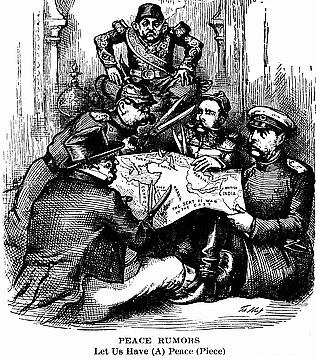
The Lion's Share: As the hapless Ottoman Sultan looks on, the major imperial powers openly bid for huge chunks of his empire. New Zealanders died in their thousands so that John Bull (him with the scissors) could keep the Royal Navy supplied from its Middle-Eastern oil-wells. The very same oil-wells that the German Kaiser (him with the shears) was so keen to get his hands on.

DIPLOMACY AND WAR have always been uneasy bedfellows. Uneasy because, when diplomacy fails it is usually war that triumphs. Sometimes, however, the baton is passed on quite deliberately. In those cases: when diplomacy is allowed to fail; the uneasiness arises out of war’s wild contingency. It is upon the bodies of warring states that the Law of Unintended Consequences inflicts its most dreadful wounds.
 
On 25 April, Australians and New Zealanders will mark the hundredth anniversary of a catastrophic military defeat. Close to 3,000 young New Zealanders died in the Gallipoli campaign and many thousands more were wounded. These shattering losses (New Zealand’s population in 1915 was barely 1 million) provided but a foretaste of the bitter repast that awaited New Zealanders in Flanders and Picardy. From a very little country, diplomacy and war were about to extract a very high price.
 
This would have been tragic enough if the diplomatic and military decisions that sent so many young New Zealand men to their deaths had been made by New Zealanders themselves. That they died as a result of the deliberate failure of British diplomacy, in a war intended to enrich and enlarge the British Empire, renders their sacrifices even more absurd and obscene.
 
Such, however, are the hard, cold facts of the matter. The Dominions of Australia and New Zealand entered the First World War at precisely the same moment as Great Britain (11:00am 4 August 1914) because constitutionally, diplomatically and militarily they were appendages of the British Crown. Where Britain stood, we stood. Her enemies were our enemies. Where she led – we followed.
 
That we ended up following Great Britain on to the territory of the Ottoman Empire was only partially accidental. One of the most important reasons British diplomacy did so little to prevent the outbreak of hostilities in 1914 was the British Empire’s rising concern at the Germans’ lengthening strategic reach. British policy makers were especially wary of Germany’s rapidly expanding diplomatic, military and economic ties with the Ottoman Empire. The British had observed the dramatic benefits of French investment in the Russian Empire and were fearful that Germany’s administration of a similar tonic to the tottering Ottomans could compromise Britain’s strategic future.
 
It was Winston Churchill who, as First Lord of the Admiralty, made the decision (just one year out from the First World War) to power the Royal Navy with oil rather than coal. With Churchill’s primary source of oil being the Anglo-Persian Oil Company (whose wells were perilously close to the Ottoman border) Germany’s “peaceful” expansion into the oil-fields of the Middle-East loomed instantly as a major strategic threat.
 
The decision to invade the Ottoman Empire, which swept the hapless ANZAC’s into the doomed assault on Gallipoli, was first and foremost Churchill’s. Ostensibly an attempt to come at the Central Powers from a new direction, its true purpose was to secure for the British Empire and its French allies the strategic oil reserves located in Ottoman territory. Britain’s other ally, Tsarist Russia, would receive Constantinople (modern-day Istanbul) and control of the crucial straits linking the Black and Mediterranean Seas.
 
The Sykes-Picot Agreement: In complete secrecy, the British and French negotiators (Sir Mark Sykes and Francois George-Picot) carved up the Ottoman Empire to their respective governments' satisfaction. The peoples who actually lived there were never consulted. Had the Bolsheviks not published its contents (Britain and France had thoughtfully provided their Tsarist Russian ally with a copy) the Arabs would never have known what they were fighting for - and neither would we! Modern-day borders are overlaid.
 
The first of these strategic objectives were confirmed in the notorious Sykes-Picot Agreement of 1916, in which the Ottoman provinces of Syria, Palestine and Mesopotamia (modern-day Iraq) were divvied up between the British and French Empires. The top-secret deal was to be delivered militarily not only by British arms, but also by the Ottoman Empire’s Arab subjects (inspired to revolt by T.E. Lawrence “of Arabia”) with additional assistance from the New Zealand Mounted Rifles and the Australian Light Horse.
 
The New Zealand Mounted Rifles
 
The second objective – Russian control of Constantinople and the Bosphorus – was thwarted only by the intervention of the Russian people, who overthrew the Romanov dynasty in 1917.
 
Undaunted, the British simply revised their plans. Just how inimical these would have proved to the people of modern-day Turkey was revealed in the extraordinary Treaty of Sèvres. Had the latter been allowed to stand, virtually the entire empire of the Ottomans would have been parcelled out between the British, French, Italians and Greeks.
 
That this did not happen was due to the efforts of a man not unknown to the ANZAC’s – one Mustapha Kemal. The man who had held the heights at Gallipoli rallied the Turkish people behind him, drove out the Greek invaders, forced the Allied occupiers of Istanbul to withdraw, and established the Turkish Republic – where Saturday’s ANZAC centennial commemorations will unfold.
 
On TVNZ’s Q+A programme (19/4/15) Chief of Defence Force, Lieutenant General Tim Keating, declared that New Zealand entered World War I to fight “a great evil”. Presumably, he was referring to Kaiser Wilhelm’s Germany. History refutes him. The First World War was a war between rival empires. The “great evil” was Imperialism. And New Zealand’s sons were fighting for it – not against it.
 
This essay was originally published in The Press of Tuesday, 21 April 2015.

Friday, 12 September 2014

Have We Got The Right Horse For The Course - Or Is A Mid-Stream Change In Order?

“Horses For Courses”: It's an expression you often hear in the mouths of old politicos. What they mean is that some elections are better suited to demon politicians than angelic statesmen.
 
WITH JUST OVER A WEEK TO GO, the core issue of this election is at last coming into focus. It is difficult to recall a political contest so fraught with diversions and divisions as this one. Nicky Hager’s book, Dirty Politics, has told us very forcefully what politics shouldn’t be about, but it’s been nowhere near so helpful at informing the better angels of our nature. What Mr Hager has managed to do, however, with characteristic prescience, is place the issue of trust at the heart of the choices we must make in eight days’ time.
 
But trust, in politics, is not a simple thing. Like love, it is apt to be bestowed upon the most unlikely and undeserving of individuals, institutions and nations. That’s because trust is about a great deal more than simply keeping promises. Indeed, the people we trust most are often those who’ve proved that, sometimes, promises must be broken. Given a choice between an angel and a demon for prime minister, it is by no means axiomatic that a desperate electorate will always vote for the heavenly creature.
 
“Horses for courses” is the expression you often hear in the mouths of old politicos. By which they mean that there are some tasks better suited to demons than angels.
 
In the course of a lengthy political career, Winston Churchill earned the enmity of just about every section of British society. In 1904 he betrayed the aristocracy by abandoning the Conservative Party and joining the Liberals. In 1926 he helped defeat the Trade Union Congress’s General Strike. Throughout the pacifist Thirties he constantly urged his countrymen to prepare for war. And, as the arch-imperialist of his generation, he did all he could to deny the people of the Indian sub-continent their independence. In short, Churchill was a reckless egotist, an avowed racist and an inveterate warmonger: anyone searching for the angelic in his character faced a daunting challenge.
 
And yet, when the shadow of a much darker demon fell over Britain in 1940, it was to Churchill that the British people turned. Given the fateful course that lay before them, only a warhorse would do.
 
Five years later it was a different story. The “Spirit of ‘45” wanted nothing more to do with warhorses. Winning the peace could not be accomplished by harnessing the same demonic forces that had won the war. It was one of those rare occasions when, given a choice between the devil they knew, and the angels they didn’t, people voted for the angels.
 
Now, John Key is no Winston Churchill, and yet there’s no disputing that for most New Zealanders he’s been the right horse to carry them through the course of a global financial crisis. In a world teetering on the brink of economic disaster, who better than a millionaire currency trader? True, currency traders are not known for being angels. They are quick and ruthless and shamelessly opportunistic. But, for the last six years most New Zealanders haven’t cared. They’ve trusted National’s demon to take them where Labour’s angels feared to tread.
 
The questions New Zealanders must ask and answer before 7:00pm on 20 September is whether or not New Zealand is still on the same critical course as 2008 and 2011, and whether John Key is still the right horse to carry them through?
 
Labour has put up a challenger who, frankly, calls to mind Clarence, the wingless Angel in Frank Capra’s It’s A Wonderful Life. David Cunliffe is gentle, well-meaning and, like Clarence, just a little accident prone. He’s urging us to do the right thing by our communities: warning us against letting the country’s problems get too big to fix. But Cunliffe’s and Labour’s big problem is that New Zealanders aren’t yet sure if it’s the right time to start trusting accident prone angels. The economic recovery is, at best, precarious; at worst, over. If things, again, turn pear-shaped, is David Cunliffe really the right horse for the course?
 
Then again, just how far to the dark side has John Key already taken us? Nicky Hager has posed the question, but a disturbingly large number of New Zealanders seem too frightened to hear the answer.
 
And that’s always the trick with the demonic horses we mount in times of danger: knowing when, and how, to get off.
 
This essay was originally published in The Waikato Times, The Taranaki Daily News, The Timaru Herald, The Otago Daily Times and The Greymouth Star of Friday, 12 September 2014.

Tuesday, 5 August 2014

Reaping The Whirlwind

Dresden, February 1945: Our parents and grandparents received the news of Dresden's destruction with equanimity. We were at war. By 1945 the civilian population of Germany had ceased to be "collateral damage", they were now regarded as legitimate targets. Israel's deliberate targeting of civilians in Gaza is not without precedent.

SUCH A BRIEF RESPITE. Barely time to find water – let alone food. And all around the shelter fires blazing unchecked. She did not tell her children what she had seen in the streets. Could not admit, even to herself, what lay there. Where was God, she wondered, amidst all this death? As if in answer, the sirens wailed again, their harsh note of alarm rising and falling like the cry of some gigantic beast in pain. In the shelter they could already hear the ominous drone of the bombers. And then, the thud, thud, thud of the bombs.
 
God may have been absent from Dresden on St Valentine’s Day 1945, but the Devil was there and he had brought the fires of Hell with him.
 
My wife and I have been arguing about Gaza. She demands to know what benefit Israel could possibly derive from deliberately bombing and shelling innocent women and children? I asked her what benefit our grandparent’s generation derived from ordering the bombing of Dresden – a city packed with refugees posing no threat to either the British, the Americans or the Russians? By February 1945 the Allies were driving Adolf Hitler’s battered armies before them and in less than three months the war in Europe would be over. Why unleash a firestorm on one of Germany’s most beautiful cities? Why kill 25,000 people, most of them women and children, needlessly?
 
Sir Arthur “Bomber” Harris justified the Allies’ terror bombing of German cities in explicitly biblical terms:
 
“The Nazis entered this war under the rather childish delusion that they were going to bomb everyone else, and nobody was going to bomb them. At Rotterdam, London, Warsaw and half a hundred other places, they put their rather naive theory into operation. They sowed the wind, and now they are going to reap the whirlwind.”
 
Those words may sound harsh to New Zealanders living in the twenty-first century, but in the ears of our parents and grandparents they sounded both true and just. In the eyes of Hitler’s enemies, Nazism was an unmitigated evil which had to be destroyed – by any means necessary.
 
Once a nation thrusts itself into the unrelenting horrors of war, its over-riding priority is to end them, on the most favourable terms possible, as quickly as possible.
 
Almost exactly 100 years ago, at the outbreak of the First World War, Great Britain’s first lord of the admiralty, Winston Churchill, ordered the Royal Navy to institute a complete naval blockade of Germany. Of this ruthless strategic decision he would later write: “The British blockade treated the whole of Germany as if it were a beleaguered fortress, and avowedly sought to starve the whole population – men, women, and children, old and young, wounded and sound – into submission.”
 
These are not pleasant facts to dwell upon. The terror-bombing of civilians. The deliberate starvation of whole populations. And yet, these were, indisputably, the tactics employed by “our side” in both world wars. Unsurprisingly, when paying our respects to “the glorious dead” on ANZAC Day, we prefer to draw a veil across the inglorious death we inflicted in return.
 
I wonder, were it possible to travel back in time and confront our parents’ and grandparents’  younger selves about these measures; if we could demand to know their justifications for acquiescing, without protest, in these crimes against humanity: how would they respond?
 
I think they would look at us strangely. I think they would shake their heads in disbelief. I think they would reply, simply: “We are at war.”
 
That same incomprehension is similarly imprinted on the faces of Israelis when the world demands to know why their jets and artillery are pounding Gaza until the rubble bounces; why the whole of the Gaza Strip is being treated, in Churchill’s words, “as if it were a beleaguered fortress” and why “the whole population – men, women, and children, old and young, wounded and sound” are being ruthlessly bombed and shelled and starved into submission.
 
“Does the world not understand that we are at war?” Israel asks.
 
“They that sow the wind, shall reap the whirlwind.” So said the Prophet Hosea. If Bomber Harris could quote the Bible, can Israel not quote the Torah?
 
Gaza, July 2014.
 
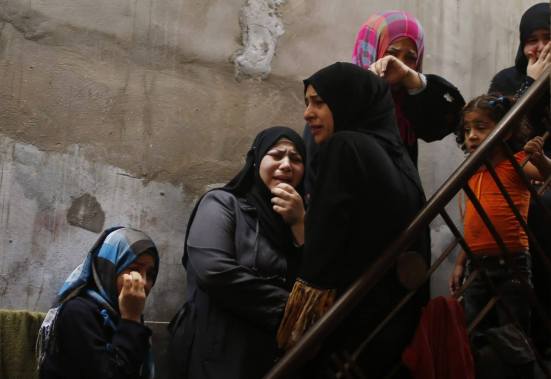
Such a brief respite. Barely time to find water – let alone food. And all around the UN school fires blazing unchecked. She did not tell her children what she had seen in the streets. Could not admit, even to herself, what lay there. Where was Allah, she wondered, amidst all this death? As if in answer, the sirens wailed, their harsh note of alarm rising and falling like the cry of some gigantic beast in pain. In the shelter they could already hear the hideous screech of the jets. And then, the thud, thud, thud of the bombs …
 
This essay was originally published in The Press of Tuesday, 5 August 2014.

Wednesday, 11 June 2014

Favourable Reference: Why John Key's Worst Enemy Is The Left's Best Friend.

My Enemy's Enemy: The Right's hysterical response to Kim Dotcom's involvement in the Internet-Mana Party suggests two things. 1) They believe he has been "turned". 2) They will do anything to destroy him. This should be enough to persuade the Left that the man and his money are there to be engaged, if not to their own advantage, then, at the very least, to their enemies’ disadvantage.
 
“IF HITLER INVADED HELL I would make at least a favourable reference to the devil in the House of Commons.” Winston Churchill’s famous quip, directed at the hard-line anti-communist MPs of his own Conservative Party, followed Nazi Germany’s invasion of the Soviet Union in June 1941.
 
Churchill recognised immediately the urgent strategic need for Britain to range itself unequivocally alongside Stalin. If the Soviets could hold off Hitler’s blitzkrieg until the Russian winter, then his Nazi regime would face an intensifying war on two fronts – Germany’s worst strategic nightmare. The invasion wasn’t quite as good news as the USA entering the war (that would follow in December) but it was close.
 
Inevitably, however, there were rumblings from the extreme Tory Right. A number of Churchill’s critics had been involved in the British intervention of 1919-21, during which British troops and British spies (including one Sidney Reilly) did their best to bring down the Bolshevik government of V.I. Lenin.
 
If the hard-liners had their way, Britain would have made peace with Hitler and backed his assault on the communist enemy. Churchill’s brilliant quip was an imaginative repackaging of the old adage “My enemy’s enemy is my friend”. Not only was it intended to silence the mutterings of the Tory ultras, but also to remind the British people that one thing, and only one thing, mattered: the complete and utter destruction of Hitler and the Nazi regime.
 
I’m drawing on this timely (last Friday was D-Day) anecdote because it illustrates the importance of strategic clarity – a quality severely lacking in the left-wing critics of Kim Dotcom, the Internet-Mana Party alliance, and their media supporters.
 
The Right’s unrelenting assault on Kim Dotcom should have alerted the whole of the Left to the possibility that the man and his money could be engaged, if not to their own advantage, then, at the very least, to their enemies’ disadvantage. Those who took the trouble to observe Dotcom’s performance during the anti-GCSB protests of 2013 witnessed a thoughtful and extremely shrewd individual whose devil-may-care lifestyle had been shattered by the US-sponsored Police raid on his home in January 2012. In the terminology of the intelligence agencies, here was a man who, if he hadn’t already been “turned” by his experiences, was very obviously ready for “turning”.
 
The Right recognised this possibility far sooner than the Left – which is why their blackguarding of the man became so vicious and unrelenting. Thwarted in their attempts to get him out of the country quickly and quietly, and severely embarrassed by his exposure of the GCSB’s illegal involvement in his surveillance, it was vital that Kim Dotcom be transformed into a hate figure from whom all decent New Zealanders should run a mile.
 
For those on the Left with a keen historical sense, the demonization of Dotcom should have raised a whole forest of warning flags. Individuals and institutions are only demonized in this fashion after they’ve been identified as clear and present dangers to the Right’s political hegemony.
 
The National Party and its media surrogates went after Kim Dotcom in exactly the same way that the US Right went after left-wing artists, intellectuals and trade unionists in the late-1940s and early-1950s. Their antipathy towards the large-living German IT entrepreneur was not based upon the fact that he had a criminal record (they knew that when they granted him permanent residency) but because their botched attempt to have him extradited to the US had transformed him (and his fortune) into a folk hero – and potential ally of the Left.
 
The Internet Party was proof that the potentiality of an alliance with the Left was on the cusp of becoming a reality. Accordingly, the Right set about strangling the infant political organisation in its cradle. But, in doing so they could not hide the fact that Dotcom’s American and New Zealand persecutors were still hard at work. Clearly, he remained under close surveillance in his Coatesville mansion, and, equally clearly, international law enforcement agencies were still assembling and releasing whatever they could lay their hands on that would contribute to the blackening of Dotcom’s character, the destruction of his credibility, or both.
 
He was accused of having Nazi sympathies (why else would he possess a signed copy of Mein Kampf?) and the details of his wife’s, Mona’s, past as a Filipino glamour girl, were posted on the Internet. The Right complained loudly about the way he treated his former business associates and employees – even as they pumped these same individuals for incriminating information concerning Dotcom’s colourful past.
 
And still the amiable giant – like a Germanic version of Jonah Lomu – rolled over the top of his enemies; moving steadily across the field from Right to Left.
 
It was at this point that Hone Harawira, demonstrating all the strategic and tactical fighting skills of his Ngapuhi ancestors, reached out to Dotcom with an offer that neither party could refuse. Availing themselves of the same sections of the Electoral Act that validated the Alliance’s participation in the 1996, 1999 and 2002 General Elections, Dotcom and Harawira brought their parties together in a way that significantly boosted their chances of becoming critical players in the post-20 September period of political bargaining.
 
Just how gravely this development was viewed by the National Government is demonstrated by what happened next. Firstly, and most predictably, a cacophony of party political and media condemnation was unleashed against all of those participating in the newly-formed Internet-Mana Party.
 
Secondly, the country was suddenly invaded by high-powered legal teams representing the US movie-making and recording industries. They’d come to prevent the “disbursement” of Dotcom’s considerable assets. Not only would this materially hamper Dotcom’s ability to mount an effective defence, but it would also prevent him from donating large sums to his favourite political parties. They arrived too late to prevent the latter (Dotcom had already donated upwards of $3 million to the Internet Party). Whether or not they secure the former lies in the hands of the New Zealand courts.
 
That Holywood’s finest were here at all, quipped the cynics, suggested that, even in Los Angeles, one good turn (The Hobbit) continues to deserve another.
 
For the moment, the third indication of how gravely the emergence of an unprecedentedly well-resourced electoral force dedicated to the utter destruction of John Key’s government is being viewed by both its electoral and ideological enemies remains hidden in the darkest recesses of the Right’s domain. All that can be heard at present are whispers. Rumours of something huge and terrible waiting in the wings. Something that the IT entrepreneur’s enemies have uncovered, the revelation of which will destroy the Dotcom phenomenon once and for all. Allies and associates are being warned to distance themselves from “The German” lest they be sucked down with him in a scandal of career-destroying power.
 
Pinning down these rumours is extremely difficult, The best guess as to their content, for the moment, is that Dotcom’s enemies have “discovered” a cache of incriminating files that he had “hidden” on the so-called “Deep Web”. If this turns out to be the case, the Left would do well to remember that the only agencies with the resources to plumb the depths of the Deep Web are the very same law enforcement agencies involved in Dotcom’s arrest and arraignment. Nor should it be forgotten that there is a world of difference between “discovering” evidence and planting it.
 
That rumours of this sort are being circulated – not least for the purposes of silencing all actual and potential supporters of Dotcom – indicates how very seriously his intervention in the 2014 election is being taken by the New Zealand Right. It also suggests that the latter are now convinced that Dotcom has indeed been “turned” by his experiences with the US and New Zealand “national security” regimes, and that his alliance with the New Zealand Left is genuine.
 
If that is so, and since armed police, aided (illegally) by the GCSB and acting on behalf of the FBI with the approval of the New Zealand Government, have already invaded his Coatesville mansion, shouldn’t the Left make at least a favourable reference to Kim Dotcom in the battle for control of the House of Representatives?
 
This essay was originally posted on The Daily Blog on Monday, 9 June 2014.

Friday, 28 March 2014

People Like Me

People Like Me: In the English-speaking world the Welfare State was born out of two vast historic events, the Great Depression and World War II. The sense of social solidarity engendered by these all-embracing experiences extended the definition of "community" to include everyone who had lived through them - right up to the British Royal Family.
 
IS IT POSSIBLE to renew our social contract without a sense of community?
 
Heather McGhee, who heads up the Washington Office of the UK-based research and advocacy group, Demos, calls it “the great question of our time”.
 
According to the 33-year-old graduate of Yale and the Berkeley Law School, this is because “if you look at all this hostility and anxiety around public solutions, at its root is the anxiety about who the public is. And I think that’s happened because of the real explosion in diversity.”
 
McGhee is not alone in identifying diversity as one of the most potent solvents of the social contract that underpins our Welfare State. But, as a young African-American, she has a better appreciation than most of how all those “hostilities and anxieties” play out in a non-academic context.
 
Because no matter how earnestly we are encouraged (by people like Ms McGhee) to think otherwise, the ordinary person’s understanding of “community” is generally reducible to just three words: “people like me”.
 
In the English-speaking countries the welfare state was born out of two world-shattering events: Economic Depression and Total War. In both situations it proved virtually impossible for ordinary citizens to remain unaffected by the great happenings in which they found themselves entangled, and these common experiences fostered powerful feelings of social solidarity. Everyone could see they were “all in this together” and relying upon one another to make it through to the “broad sunlit uplands” promised by Winston Churchill in the finest hour of that darkest of years – 1940.
 
So pervasive was the impact of the Great Depression that the experiences of poverty and marginalisation began to lose much of their social stigma. Working-class and middle-class citizens alike were winnowed by the near collapse of the capitalist order, and even those whose material well-being remained unaffected – like the Prince of Wales – could see that “something must be done”.
 
And later, when the bombs were falling, that sense of solidarity only grew stronger. In spite of pleas to remove themselves to safety in Canada, the Royal Family refused to leave the capital. When Buckingham Palace was hit during the Blitz, Queen Elizabeth told the press: “Now, at least, I can look the East End in the eye.”
 
On the battlefields, where men of every rank and station quite literally rubbed shoulders, the essential equality of all human-beings was daily demonstrated. The roughest working-class battler could prove himself a bloody hero and the bloodlines of a thousand years produce nothing more than a craven coward. Nobility came not from class or money but from character. In war, only deeds mattered.
 
This, then, was the historical forge in which the welfare state was fashioned. When people used the word ‘community’; when they thought of people like themselves; the picture included everyone from the King and Queen to the local “night-soil” collector. Everyone who had been through the fire together – and come out the other side.
 
To live for longer than that single generation, however, the social contract that had been fashioned in “blood, toil, tears and sweat” would need to be sent to the forge again. A new generation would need to feel the hammer blows of history.
 
Some did.
 
On union picket-lines. Registering voters in the Deep South. Opposing the obscenity of war. Demanding entry for all those who were not “like me”. Envisioning a more diverse and democratic definition of ‘community’.
 
A More Diverse Definition of Community: America answers Amerika. The Pentagon, 21 October 1967.
 
Too few.
 
The moment the social contract was deemed to include people with darker skins and different gods; the moment people’s taxes were doled out to those whose behaviour flouted the values and conventions of the ‘community’; that was when the solidarities born of depression and war began to fade and wither. The mental picture of who was – and was not – “people like me” narrowed radically. Class and money regained their lost prestige and all the old stigmas attached to poverty and marginalisation returned.
 
A social contract is never for “people like them”.
 
This essay was originally published in The Dominion Post, The Waikato Times, The Taranaki Daily News, The Timaru Herald, The Otago Daily Times and The Greymouth Star of Friday, 28 March 2014.

Friday, 4 March 2011

Reflections On The Christchurch Earthquake: Getting Through

Blood, Toil, Tears, and Sweat: Winston Churchill's words to the people of Britain during its "finest hour" in 1940 were so magnificently inspiring precisely because they were so utterly uncompromising. The political force-field created by the Christchurch earthquake can be harnessed by our politicians, but only if they display the unflinching honesty and unshakeable resolve of Britain's wartime leader.

THE CHRISTCHURCH TRAGEDY has generated its own political force-field. Events of such gravity always do. When something as big and brutal as Christchurch’s devastating earthquake shatters the ordered symmetry of our daily lives, we expect our political leaders to respond with measures of equal force.

These measures don’t always have to be practical – although it’s on the ground that the authorities’ performance will always, ultimately, be judged. Often, in moments of crisis, the words of our leaders can be just as important as their deeds.

Recall Winston Churchill’s words, upon assuming the mantle of wartime leadership in 1940. "I have nothing to offer", he told a hushed House of Commons, "but blood, toil, tears and sweat."

That steely realism: so bereft of sentiment; so empty of comfort; stiffened the sinews of the British people. At such critical moments, citizens aren’t looking for soft words of pity and consolation. What they want is speech of unflinching honesty and unshakeable resolve.

"You ask, what is our aim?", Churchill went on. "I can answer in one word: victory; victory at all costs, victory in spite of all terror, victory, no matter how long and hard the road may be; for without victory, there is no survival."

New Zealand is about to be tested in ways only marginally less gruelling than the ultimate audit of war. We are faced with the abrupt cessation of more than a tenth of our national economy – for how long we cannot tell. If the rebuilding of the earthquake-devastated Japanese city of Kobe is any guide, Christchurch may require as much as a decade to fully recover.

The leader who successfully harnesses the political force-field of the Christchurch earthquake will be the leader who tells New Zealanders clearly and without prevarication exactly what he or she expects of them. Because any politician who suggests that Christchurch can be rebuilt or that the New Zealand economy can successfully weather this crisis without a supreme and united national effort, is insulting the intelligence of the electorate.

Not only that, they are insulting the thousands of ordinary Kiwis: farmers, workers, businessmen, students, beneficiaries and retirees; who have added their skills and energy to the unstinting efforts of tens-of-thousands of dedicated public servants.

The men and women who have rushed to bring practical assistance to their fellow New Zealanders are showing the way forward to any political leader with the wit to see it. We are not going to get Cantabrians through this crisis except by means of a co-ordinated and collective effort. And New Zealand will only find the money to rebuild and restore Christchurch if every New Zealander pays their fair share of the cost.

That means the top ten-percent of income earners will have to give up the generous tax windfalls of last year’s Budget – as well as pay a special levy on incomes in excess of $100,000 p.a. It will require the rest of us to pay higher EQC levies. And all of us will have to invest in Earthquake Recovery Bonds with the same sort of patriotic enthusiasm that our parents and grandparents once invested in War Bonds.

Getting through will also require New Zealanders to dispense with many of the economic articles-of-faith that have been drummed into them this past quarter-century. The notion that "Government isn’t the solution to the problem. Government is the problem" (to quote Ronald Reagan’s infamous formulation) must go.

The other lesson which the heroic altruism of ordinary Cantabrians should be teaching our political class is that New Zealanders feel much more like themselves when they’re helping – not hurting – their neighbours. Any political party that believes a national reconstruction effort can be successfully undertaken while unemployed Kiwis and solo mums are being stigmatised, or while the sick and disabled are being harassed and harried into non-existent jobs, is criminally deluded.

Rebuilding Christchurch, and its crucial contribution to New Zealand’s national life, requires, above all else, the same unity of purpose that allowed the Allies to overcome fascism in World War II.

The earthquake’s political force-field will simply annihilate any politician or party which, by unfairly distributing the burdens of recovery, sets New Zealander against New Zealander – in mutual ruin.

To paraphrase Churchill: At this time we are entitled to claim the aid of all, and say: "Come then, let us go forward together."

This essay was originally published in The Dominion Post, The Timaru Herald, The Taranaki Daily News, The Otago Daily Times and The Greymouth Star of Friday, 4 March 2011.