Friday, 15 August 2014

Burning Issues

Sympathetic Magic: John Key is burned in effigy by angry youths at a birthday party. What leads our fellow citizens to the extreme of publicly destroying the image of their political leader. What is fuelling such incandescent anger? Who is responsible for the social and political desperation it represents?
 
BURNING THE PRIME MINISTER in effigy is evidence of some pretty serious political disaffection. The only other instance I can recall is the burning in effigy of Jenny Shipley and Ruth Richardson during the mass demonstrations against the Employment Contracts Bill and Mrs Shipley’s proposed social welfare cutbacks in April 1991. The image of the two stuffed dummies consumed in flames, while the delirious crowd chants “Burn, Shipley, burn!”, is one of the most powerful to emerge from that bitter time.
 
The practice itself is a primal expression of what anthropologists call “sympathetic magic”. The act of setting fire to a likeness of your enemy is driven by the same powerfully negative emotions as sticking pins in a voodoo doll. Unlike the private, even secretive, persecution of the voodoo doll, however, burning in effigy is almost always a collective and cathartic act, and the effigy itself almost always of a well-known – if not well-liked – public figure.
 
The act is undoubtedly more shocking to us now than it would have been to our parents and grandparents. Seventy or eighty years ago in the English-speaking dominions of the British Empire the very public burning in effigy of the hapless Guy Fawkes was an annual ritual in which whole communities participated. Behind the bonfires and fireworks, however, flitted the shadowy folk memory of a time when real men and women were burned alive in the public square. Those who cared to ponder the origins of such “harmless” folk traditions were reminded that believing in the wrong things at the wrong time was once a very dangerous practice indeed.
 
The Prime Minister’s supporters have naturally recoiled in anger and disgust at the image of their leader being put to the torch. His opponents, however, would be lying if they did not admit to feeling just the hint of a thrill as the flames climbed higher. Such is the power of fire. It speaks directly to the savage that lies within every one of us.
 
And it is precisely this appeal to our inner savage that makes burning in effigy such a profoundly undemocratic gesture. Because if democracy means anything, it means suppressing the savage within and submitting the issues that divide us as individual citizens to the judgement of the electorate as a whole. Even more importantly, it means accepting that collective judgement – even when it goes against our individual contribution to its formation.
 
Such high-minded pronouncements are no substitute, however, for a closer examination of what leads some of our fellow citizens to the extreme of publicly destroying the image of their political leader. What is fuelling such incandescent anger? Who is responsible for the social and political desperation it represents?
 
Because that is what it is: the burning of John Key’s effigy is, indisputably, an act of deep-seated anger and desperation. Proof that a whole layer of our population not only feels excluded from the “rock star economy”, but despairs of ever finding a political champion willing to obtain for them a back-stage pass.
 
But, perhaps, the use of the present tense in this context is misplaced. Perhaps what we should say is “despaired”. Because, in the course of the past few weeks, these reckless haters of John Key and his National Party government show every sign of having found themselves a champion; one of the most unlikely to ever bestride New Zealand’s political stage; Kim Dotcom.
 
Here is someone who shares the rage of New Zealand’s despised Underclass. And for much the same reasons. He, too, has felt the unwanted attentions of the Police. He, too, has been lashed by the whips of the mainstream media. He, too, has been branded a threat to public safety and decency.
 
Most importantly, however, Kim Dotcom and the Underclass blame the same man: John Key. And when it comes to voicing their political priorities, he and they both use the same three word slogan.
 
It is a powerful rallying cry for the young and the disaffected – incendiary even. But one wonders whether the young and idealistic activists on the Internet Party payroll would find much to talk about with those who deride John Key as a “faggot”, or, worse still, a “Jewish faggot”?
 
Especially considering that this time-worn term of abuse is derived from the tradition of consigning homosexuals (and Jews) to the flames.
 
This essay was originally published in The Waikato Times, The Taranaki Daily News, The Timaru Herald, The Otago Daily Times and The Greymouth Star of Friday, 15 August 2014.

Wednesday, 13 August 2014

Thank God For Nicky Hager!

Man Of The Hour: Nicky Hager with a copy of his just released book, Dirty Politics. Photo by Mark Mitchell.

IF NICKY HAGER did not exist it would be necessary, for the survival of our democracy, to invent him.

A full review of Nicky's book will follow just as soon as I have read and digested its contents.

In the meantime, as the news media responds to Nicky's revelations, we should ask ourselves this very simple question: "Does this journalist's response to Dirty Politics suggest that he or she is part of the solution - or part of the problem?"

Oh, and thanks again, Nicky. Thanks heaps.

This posting is exclusive to the Bowalley Road blogsite.

Tuesday, 12 August 2014

We Have Lift-Off: Some Thoughts On Labour's Campaign Launch.

I can Do This: At last Sunday's launch of its 2014 election campaign, the Labour Party reminded David Cunliffe that he had something worth leading, and he reminded them why they had considered him worthy of doing just that.
 
IT IS EASY to forget, sometimes, just how big the Labour Party truly is. When the party’s rank-and-file, their friends and families and the generally supportive turn out for Labour’s triennial campaign launch the numbers can be impressive. To fill the Viaduct Events Centre – a huge space – is no small achievement. It’s roughly the same as filling the Auckland Town Hall right up to the Gods – a common occurrence back in the days before television but a much rarer accomplishment in this grossly over-mediated era.
 
But gathering large numbers of people in a single venue remains a vital part of political campaigning – even in the age of Twitter and Facebook. Nothing else comes close to providing the party faithful with the excitement, the buzz, the magic that transforms mere information into conviction. And when you throw in the superlative skills of Don McGlashan and his friends, slashing out the chords of “Nature” in a hall pulsing with socialist crimson, and the whole audience is up on its feet and swaying to the beat, well, magic is what you get.
 
McGlashan and friends’ rendition of the Split Enz classic “Time For A Change” – channelling the Spirit of ’72 when Norm Kirk rode to a stunning victory on that simplest of slogans – also had the hairs standing up on the back of more than a few old-timer’s necks. And then the master of ceremonies, Oscar Kightley, was introducing “the next Prime Minister of New Zealand” and the place just went nuts.
 
It was Radio New Zealand’s Brent Edwards who best summed up the effect of Cunliffe’s near flawless delivery by observing that all those Labour Party members who had voted for him in last year’s leadership contest would have heard the speech and been reassured that they’d made the right choice. Yes, their loyalty has been tested of late, that is undeniable, but so, too, is the fact that when David Cunliffe is on form he is a very, very good performer. Yes, even better than John Key.
 
Who, if he’s not seriously worried already, must surely be getting that way. Because something strange is happening out there in the place Don Brash called “Punterland”. National’s spells are no longer producing the desired effects, and what’s worse: much, much worse; John Key’s vital political magic is also beginning to fade.
 
Darren Watson’s and Jeremy Jones’ extraordinary music video, “Planet Key”, in recapitulating all of the Prime Minister’s most inglorious moments, deconstructs the National Party leader’s hitherto indestructible persona with hilarious (but deadly) aplomb. Daily Blog Editor, Martyn Bradbury, insists that the animators at Propeller Motion set out to create the 2014 equivalent of Rob Muldoon’s infamous “Dancing Cossacks” cartoons of 1975. If that’s true, then I can only say they have succeeded magnificently!
 
But “Planet Key” was only the first straw in a rising wind of discontent. The rhythmic chanting of “Fuck John Key!” by Canterbury students was another. Now we are told that young people are burning the Prime Minister in effigy. It’s as if a dangerously large percentage of the electorate has suddenly noticed that the towering Tory idol which has loomed over them these past six years has feet of clay, and are all, simultaneously, reaching for their hammers.
 
Because why shouldn’t the elderly, pregnant women, children under 13 and the chronically ill have free access to their GPs? Why is that a bad idea? And why shouldn’t the wealthy pay more tax – just the way they did 35 short years ago? Who says New Zealand won’t be better off for paying its workers a living wage and making sure their families have warm and affordable houses to live in? Why have all these things been taken off the agenda? Who did that? And isn’t it time we put them back on New Zealand’s “to do” list?
 
As the final chords of “Time For A Change” reverberated around the Viaduct Events Centre, a beaming David Cunliffe looked out over a red sea of followers, almost in disbelief. He has been told that he is failing so loudly and so often that he’s had to fight very hard against the temptation to believe it. But yesterday, as he received the raucous approbation of his enraptured party, you could see it in his face; the realisation: I can do this.
 
This essay was originally posted on The Daily Blog of Tuesday, 12 August 2014.

The Responsibilities Of Power

This Land Is My Land: Yes, but if we want to keep it out of foreign hands then New Zealand will have to abandon its 30-year adherence to the doctrines of free trade and unrestricted foreign direct investment. And that will cost us more than many of us may be willing to pay.
 
SO, LABOUR’S going to block the sale of Lochinver Station. The political party which proudly attached New Zealand’s signature to the People’s Republic’s first free trade agreement with a western nation is now proposing to slap the Chinese government in the face. Forgive me, but in the absence of a wholesale repudiation by Labour of its longstanding commitment to free trade, I just don’t see this happening.
 
At the heart of the free trade doctrine lie two fundamental and related provisions: Most Favoured Nation status and National Treatment. In a nutshell, these two provisions are about non-discrimination; about governments promising not to play favourites and undertaking to treat foreigners no better or worse than they treat their own people.
 
These provisions are fundamental to free trade policies for the very simple reason that free trade is impractical without them. Without a foreign government’s undertaking that your country’s exports will be treated no better or worse than those of the “most favoured nation” with which it currently does business, what possible incentive would your own country have to open up its markets to the products of foreigners? And why would anyone attempt to establish a business in a foreign land if it was immediately lumbered with obligations and restrictions from which local businesses are exempt?
 
David Cunliffe, David Parker and Phil Goff (especially Phil Goff) understand the vital importance of reciprocity in international trade relations. The idea that they will intervene to nullify Shanghai Pengxin’s perfectly legal purchase of Lochinver Station – thereby signalling to China and rest of the world that Labour is abandoning its longstanding commitment to the core provisions of international free trade is, frankly, laughable.
 
Why, then, have they given such an undertaking?
 
The answer, of course, is because all the indications point to the conclusion that New Zealanders are adamantly opposed to the idea of their country’s farms being sold to foreigners. With an election looming, and a potential coalition partner, NZ First, promising to ban foreigners from swallowing up New Zealand’s green and pleasant land, Labour’s strategists clearly believe they have no choice except to say: “Me too!”
 
Now there is nothing intrinsically wrong with a political party opting to embrace a more protectionist stance on trade issues. New Zealand’s was, for many years, a highly protected economy with import quotas and high tariffs to protect local industries. The rest of the world accepted this because, for the most part, the rest of the world subscribed to very similar notions of economic management.
 
But, times have changed.
 
Officially, the rest of the world no longer believes in protectionism. The IMF and the World Bank, not to mention the World Trade Organisation, take a very dim view of countries which persist with (let alone re-erect!) barriers to the free movement of goods and services around the world. The fact that many larger and more powerful countries (the USA, the EU, Japan, Russia, South Korea) still maintain substantial barriers to trade, especially in agricultural products, may be a sore point with the New Zealand government, but it is not one it can do much about. From the mid-1980s, successive New Zealand governments (beginning with the fourth Labour Government) have progressively stripped away all the impediments to free trade. As a very small country, determined to achieve unrestricted access to the world’s markets for its predominantly agricultural exports, we could hardly do less.
 
All of which makes it extremely unlikely that a Labour-led Government would do anything so foolish and provocative as to over-rule an Overseas Investment Office-approved sale of Lochinver Station to Shanghai Pengxin. Not unless they actually wanted to see New Zealand’s exports held up for weeks on the Chinese docks!
 
It is critical to the future prosperity of New Zealand that its political leadership, even at the risk of incurring the electorate’s wrath, remain steadfast in its adherence to the principles of open markets and open borders. And if that means rehearsing the arguments in favour of free trade, as well as pointing out the likely consequences of denying the benefits of Most Favoured Nation status and National Treatment to a trading partner as vital to this country’s economic interests as the People’s Republic of China – then so be it.
 
It is easy to secure the approbation of the masses by telling them what they want to hear. Much harder is the task of convincing one’s fellow citizens that the cost of the changes they are demanding is well beyond what most of them would be willing to pay.
 
Small parties without prospect of ever being in a position to formulate the core policies of the state are free to promise voters the diplomatically and economically impossible. The leaders of parties large enough to make a difference have a duty to accept the responsibilities of power.
 
This essay was originally published in The Press of Tuesday, 12 August 2014.

F**king John Key: How Kim Dotcom And Internet-Mana Transformed The Right Into Their Best Recruiters.

Finding The Right Words: To an electorate grown weary of the bland rhetoric of parties content to play politics-by-numbers, Kim Dotcom's invitation to "bring down the government" has a novel and, for a great many younger New Zealanders, irresistible appeal.

ARE YOU READY FOR A REVOLUTION? When was the last time anybody asked a crowd of young New Zealanders that question? Seriously? When was the last time a political party, with a reasonable chance of putting at least five people into Parliament, had five candidates for whom the idea of participating in a revolution wasn’t utterly abhorrent?
 
Honestly? The last time such a thing happened was nearly 100 years ago, when Peter Fraser openly admitted that, were he in Russia, he would be a Bolshevik; and when Labour’s first parliamentary leader, Harry Holland, in his maiden speech, informed the New Zealand Parliament that:
 
“We of the Labour Party come to endeavour to effect a change of classes at the fountain of power. We come proclaiming boldly and fearlessly the Socialist objective of the Labour movement throughout New Zealand; and we make no secret of the fact that we seek to rebuild society on a basis in which work and not wealth will be the measure of a man’s worth.
 
“We do not seek to make a class war. You cannot make that which is already in existence. We recognise that the antagonisms which divide society into classes are economically foundationed,  and we are going, if we can, to end the class war by ending the causes of class warfare.”
 
Both Peter Fraser and Harry Holland were former members of the militant trade union organisation known as the “Red Feds” (The New Zealand Federation of Labour) and were well versed in the ways of inspiring their mostly young audiences. Being good Edwardians, they would have shied away from the public use of Anglo-Saxon expletives but, as good Socialists, they would not have hesitated to state in 3,000 impassioned words what a boisterous crowd of Canterbury students this week condensed into just three. Confronted with this government’s and this prime minister’s record, the essence of Peter Fraser’s and Harry Holland’s message would also have been: “Fuck John Key!”
 
The young advisers to the Internet-Mana Party, at whose urging the in/famous FJK clip was posted on YouTube (21,665 hits and counting) knew what they were doing. Quite apart from accurately anticipating the reaction of their peers, they also hazarded a shrewd guess as to how the “offensive” clip would be received by the political and media guardians of the status-quo.
 
And they have not been disappointed. Almost to a person, the conservative commentariat has condemned Internet-Mana in the most extravagant terms. PR maven and political commentator, Matthew Hooton, tweeted that the clip contained images reminiscent of a Munich beer-hall circa 1920, thereby setting in motion a Kim-Dotcom-as-Adolf-Hitler meme that within hours would infect huge chunks of the mainstream media. Curiously, very few media commentators appeared to consider how gratefully such criticism might be received by a movement whose primary objective is to be seen as the antithesis of everything old and well-behaved and conventional and boring.
 
The over-riding goal of Internet-Mana is to be branded as dangerous and transgressive. The Powers-That-Be have co-operated splendidly.
 
Then again, they may have had no choice. The internal polling of the major political parties may well be detecting the invisible effects of what the visible manifestations of Internet-Mana’s efforts are signalling. The packed halls and enthusiastic chanting of the hundreds of young people who have turned out for the party’s public meetings may simply be the tip of a vast iceberg of political re/engagement on the part of those who usually keep well away from the electoral fray. The pool of voters may be expanding; bringing into play for the first time since 2005 the marginalised, the disillusioned, and – most alarmingly for the forces of the Right – the angry and aggrieved. The sort of people who need very little excuse to begin chanting – “Fuck John Key!”
 
This is the stuff of nightmares for the Right. Rising participation in the electoral process has always spelled doom for conservative administrations. John Key’s best-case scenario has always been one of mass political somnambulance: in which hundreds of thousands of voters, convinced by the pollsters and their journalistic interpreters that the election was already won, would march, zombielike, into the polling-booths and make the media’s prophecies come true. Kim Dotcom’s unparalleled ability to disturb and disrupt has put this fantastical scenario to the sword. Even worse (from John Key’s perspective) the political spell he has cast cannot now be recalled.
 
Even were all the rumours of dark secrets soon to be revealed proved correct, the effect of their release would likely be very different from that anticipated by their purveyors. The Establishment, in its hysterical reaction to the FJK clip, has already demonstrated a willingness to do almost anything to upend Internet-Mana’s campaign. Even the most scurrilous revelations will now be received by the insurgent party’s target audience as yet further proof of the extraordinary lengths to which the Powers-That-Be will go to bring Dotcom down.
 
The optimum strategy to derail Dotcom was always to completely ignore him. But even that option is now denied his enemies. In his Auckland Town Hall meeting of the 15 September Dotcom has laid a trap which the National Government cannot escape. If it attempts to persuade the news media to stay away from the meeting and/or wilfully misrepresent its significance, Dotcom’s case will be made against Key with a force equal to or greater than any evidence he may, with Glenn Greenwald’s internationally visible assistance, produce.
 
Like Brer Fox and his Tar Baby, Kim Dotcom has, in Internet-Mana, created an object which the Prime Minister and his allies simply could not resist. In his version of the story, however, there will be no Briar Patch into which the Prime Minister can, like Brer Rabbit in “Uncle Remus’s” famous tale, be conveniently thrown and thus escape his fate. If all goes according to Dotcom’s plan, the refrain upon which this story ends will not be “Born and bred in the Briar Patch, Brer Fox! Born and bred in the Briar Patch!” but “Fuck-John-Key! Fuck-John-Key! Fuck-John-Key!”
 
This essay was originally posted on The Daily Blog of Friday, 8 August 2014.

Saturday, 9 August 2014

World War I - Whodunit?


I’VE AN IDEA for a television documentary – one I probably should have had two years ago. If it had occurred to me then, and I’d found someone to back it, it would be on your screens right now. This is, after all, the week in which we commemorate the outbreak of the First World War.
 
My idea is to treat the outbreak of the war as a cold case, with a crusty old Chief Inspector and an idealistic young Detective Sergeant.
 
The documentary (“docu-drama” is a better description) begins with the Detective Sergeant approaching the Chief Inspector with what he claims is evidence of a gross miscarriage of justice.
 
He points out that Germany’s confession of “war guilt” in the Treaty of Versailles was extracted under duress.
 
“For goodness sake!”, he tells the Chief Inspector, “the country was still being blockaded. It’s population was starving. There was rioting in the streets. And, as if that wasn’t enough, the armies of France, the British Empire and the USA were camped on its doorstep. What choice did she have?”
 
“That’s all very well,” says the Chief Inspector, “but for the past 100 years the evidence of Germany’s guilt has been regarded as overwhelming: proved beyond reasonable doubt.”
 
“Well, the Allied Powers would say that, wouldn’t they?”, says the Detective Sergeant. “I mean, they were hardly going to admit that the death of so many of their sons was the result of their own nefarious machinations – were they?”
 
The Chief Inspector demands to know if the Detective Sergeant has anything in the way of fresh evidence. Something solid enough to have the whole case re-opened.
 
The Detective Sergeant slams down a book by Cambridge historian, Chris Clark – The Sleepwalkers: How Europe Went to War in 1914.
 
“The question, as always, in a crime such as this is ‘Cui bono?’ – who benefits? The evidence suggests that it was Serbia that had the most to gain. Its great dream was a South Slav nation – ‘Yugoslavia’ – which Serbia would dominate. But Yugoslavia could only be constructed upon the ruins of the Austro-Hungarian Empire, and that would require a general European war.”
 
“You’re saying Serbia wanted a general European war?”
 
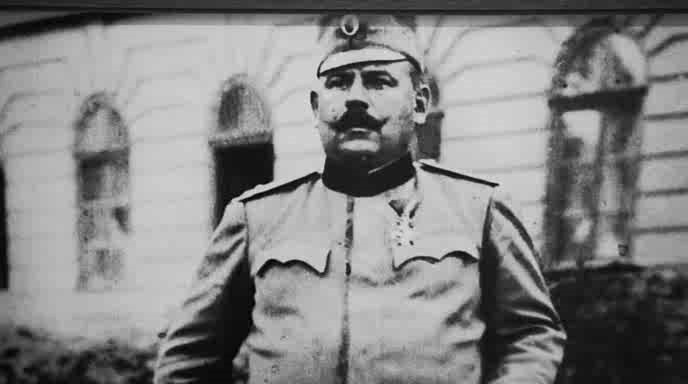
Dragutin Dimitrijevic: Serbia's Head of Military Intelligence. He not only wanted a general European war - he triggered it.
 
“Not only did they want it – they triggered it!”, exclaims the Detective Sergeant. “Gavrilo Princip, the Bosnian assassin of the Archduke Franz Ferdinand, heir to the Austro-Hungarian throne, was the wind-up toy of Serbian military intelligence. The latter’s boss, Dragutin Dimitrijevic, was certain that the Archduke’s death would provoke a war with Austria and that this, in turn, would draw in Serbia’s protector, Imperial Russia. Once the Russians moved, a general war was inevitable.”
 
“Hmmm”, says the Chief inspector, “it’s pretty thin.”
 
“Okay, but there’s more”, says the Detective Sergeant. “The entire Serbian economy, bankrupted by the Balkan Wars of 1912 and1913, was being kept afloat by French and Russian loans. So Dimitrijevic wasn’t going to move without the go-ahead from Paris and St Petersburg.”
 
“Wait a minute. Are you saying that the French and the Russians gave the green light to Franz Ferdinand’s assassination?”
 
Raymond Poincare: The French president was present in St Petersburg in the midst of the assassination crisis, which he helped to fan into war.
 
“Petty much, pretty much. Maybe not the assassination specifically, but definitely something in the nature of a casus belli – a cause for war. How else do you explain the fact that in the twelve months immediately preceding the outbreak of war, the French President, Raymond PoincarĂ©, was present in both London and St Petersburg. Hell’s teeth! The man was actually in Russia at the exact moment the crisis was unfolding!”
 
“What are you saying?”
 
“I’m saying that PoincarĂ©, having confirmed the anti-German faction at the British Foreign Office still had Foreign Secretary Sir Edward Grey’s ear, made sure he was in St Petersburg to steady Tsar Nicholas’s nerves.”
 
“His motive?”
 
“Revanche! Chief Inspector. Revenge! PoincarĂ© was born in Alsace – the province stolen by Germany in 1871.”
 
“And the Russians?”
 
“Constantinople! They were terrified that Germany’s friendship with the Turkish Empire would stymie their plans for seizing the Bosphorus – gateway to the Mediterranean.”
 
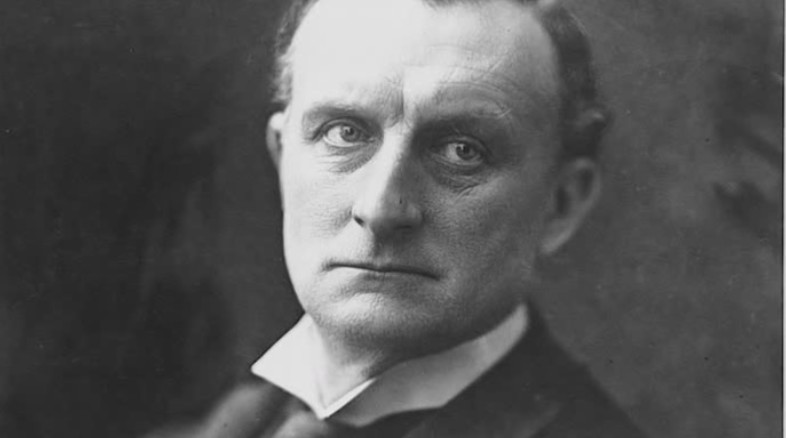
Sir Edward Grey: The British Foreign Secretary who famously remarked on the eve of World War I: "The lamps are going out all over Europe, we shall not see them lit again in our lifetime." Less well known is his role in extinguishing them!
 
“And Great Britain?”
 
“She had no choice but to go along – if only to keep St Petersburg’s attention on the Balkans and away from India.”
 
“But Germany invaded Belgium!”, objected the Chief Inspector.
 
“Facing a war on two fronts: what other choice did she have?”
 
Now, tell me these aren’t the ingredients for a gripping whodunit – History’s ultimate cold case?
 
This essay was originally published in The Waikato Times, The Taranaki Daily News, The Timaru Herald, The Otago Daily Times and The Greymouth Star of Friday, 8 August 2014.

Friday, 8 August 2014

No Cookies! But Maybe The Balance Of Power: Why Kelvin Davis And The Labour Right Are So Scared Of Internet-Mana.

On Message And On Fire: The Labour Right are terrified that having established a parliamentary bridgehead the Internet-Mana Party will play the role of the broader Left’s staunch chorus, with Hone Harawira, Annette Sykes, Laila Harre and John Minto passing withering judgement upon the antics of a back-sliding Labour Caucus.
 
THE CRUDE POLITICAL GAMBIT of Kelvin Davis and his supporters in Te Tai Tokerau has fallen flat. His plans to knock Internet-Mana out of the electoral race have been revealed and the Maori voters of the North will punish him severely. Not only for his confrontational and abusive rhetoric, but also for the rank ingratitude and disloyalty he has displayed toward Labour. The rest of the country can only shake their heads in wonder at the strategic stupidity of the man.
 
Davis is, after all, the candidate to whom the Labour Party’s Ranking Committee gifted a very favourable position on the Party List. His role in Te Tai Tokerau was not to go all out to take the seat from Hone Harawira, but to maximise Labour’s Party Vote. It is staggering that Davis and his allies have been unable (or unwilling) to grasp the simple fact that the welfare of the people of the North will be most effectively secured by a victory in the forthcoming election for the parties of the Left – of which Internet-Mana is rapidly becoming a critical component.
 
The scuttlebutt in left-wing circles is that Davis has been “rarked up” by Labour’s ABC Faction, who not only need their leader, David Cunliffe, to fail on 20 September, but who are also determined to deny Internet-Mana a parliamentary bridgehead. Their plans to haul Labour back to the “centre” (the Right’s code word for an ideological position acceptable to Business New Zealand, Federated Farmers and the mainstream news media) will suffer a serious setback if Hone Harawira, Annette Sykes, Laila Harre and John Minto get to play the role of the Left’s staunch chorus – passing withering judgement upon the antics of a back-sliding Labour Caucus.
 
In this effort, the Labour Right is marching in lock-step with the National Party’s and the right-wing news media’s political objectives. The more intelligent among them understand that, over a three year term, an Internet-Mana presence in the House has the potential to haul back “Overton’s Window” from its present location well to the right of the political spectrum and reposition it much closer to the left. The overwhelming priority across the entire New Zealand Right is, therefore, to strangle this potential left-wing Hercules in his cradle. Wittingly or unwittingly, Davis has allowed himself to become a pawn in its game. How else to explain his willingness to be associated with David Farrar and Cameron Slater, the twin serpents sent to dispatch the Left’s infant hero?
 
The ABC Faction’s tactical priority is to smear David Cunliffe as Internet-Mana’s secret enabler: the politician who’s promising publicly to have nothing to do with Kim Dotcom’s creation while all the time secretly plotting to give Maori Affairs to Hone, Social Welfare to Laila Harre, and Foreign Affairs to John Minto. They are well aware of how badly the idea of any kind of Labour “deal” with Internet-Mana is playing with young, reasonably-skilled but indifferently-paid women workers whose extremely limited grasp of politics is almost exclusively informed by what Patrick Gower, Tove O’Brien and Corin Dann tells them on the six o’clock news.
 
In the past, these young women: retail workers, hairdressers, receptionists and office personnel of all kinds; have provided Labour with the numbers necessary to evict National Governments. Without them, securing victory becomes extremely problematic. Helen Clark lost what British snobs would call the “Chav Vote” to the dashing John Key in 2008 and poor old Phil Goff never seriously tempted them in 2011. David Cunliffe just might win them back in 2014, but not with Kim Dotcom looming behind him like a pantomime demon.
 
It is this need to distance himself from Dotcom and his allies that explains Cunliffe’s refusal to call out Davis for the dangerous political distraction he has become. Indeed, in a funny sort of way, Davis’s extreme animus towards Harawira and Dotcom has played into the Labour Leader’s hands. It has enabled him to reiterate in even more unequivocal language that Labour will have no truck with Kim Dotcom; that there will be no electorate deals done with Internet-Mana; and that no Internet-Mana MPs will be invited to serve in any coalition Cabinet over which Cunliffe presides. In Andy Williams’ immortal words to the importunate Cookie Bear: “Not now. Not ever. Never. No cookies!
 
Such is the general ignorance which still surrounds the MMP electoral system, however, that many of those reassured by Cunliffe’s rejection of the Internet-Mana Party may be shocked to discover on Election Night that they have somehow managed to win seats in Parliament. What’s more, as the sworn enemies of John Key’s government, if the numbers are there for David Cunliffe to become Prime Minister with Internet-Mana’s support they will happily make him so. This will undoubtedly provoke an outcry from those who interpreted Cunliffe’s “Internet-Mana will have no place in a Labour-led Government” as meaning “We will not accept the votes of Internet-Mana’s MPs in assembling the support needed to form a government.”
 
If that turns out to be the case, then New Zealanders are in for a crash-course in constitutional realities. They will discover that if Internet-Mana have the numbers to make David Cunliffe the Prime Minister, they will almost certainly also have the numbers to prevent John Key from resuming office. Whether some of the voters like it or not; whether National likes it or not; whether the mainstream news media likes it or not; and whether Kelvin Davis likes it or not; if the rules of MMP return the Internet-Mana Party in sufficient numbers to break the National Government and install a Labour-Green coalition – then that’s exactly what it will do.
 
This essay was originally posted on The Daily Blog of 6 August 2014.