Showing posts with label Andrew Kirton. Show all posts

Wednesday, 21 March 2018

The Theory And Practice Of Plausible Deniability.

Nothing To Smile About: Was it the need to give the Prime Minister "plausible deniability" that prompted Andrew Kirton to keep Jacinda Ardern out of the loop? Acutely aware of her unblemished political reputation, was it his judgement that the delicate questions arising out of the summer school scandal were better dealt with in places where the Prime Minister was never present?

WHY HASN’T ANDREW KIRTON been sacked? By any common-sense definition of accountability, the actions of the Labour Party’s General Secretary offer ample justification for dismissal. Upon learning of the youth wing of the Labour Party’s failure to keep four young people in its care safe, he decided not to alert their parents; not to alert the Police; and not to alert the leader of his party: The Prime Minister, Jacinda Ardern. Surely, at this stage of the scandal, Kirton should be shorter by a head? Why isn’t he?

To understand why the Prime Minister has so far spared her party’s General Secretary, it is necessary to frame a counter-factual account of the incident.

It’s the morning after the party at which four young people have been sexually assaulted or harassed by a 20-year-old attendee at Labour’s 2018 Summer School. The Young Labour organisers have contacted both the Party President and the General Secretary seeking advice about how they should proceed. Andrew Kirton tells them he’s on his way to Waihi and instructs them to do nothing until he arrives. His next call is to the Prime Minister’s Chief-of-Staff, Mike Munro. Having established as clear a picture of the incident as possible, Munro contacts Jacinda Ardern. A small crisis-team is formed to determine the best way of dealing with what is clearly a serious and potentially very damaging incident.

And, therein lies the problem. The number of people involved in an event of this kind begins to grow exponentially the moment state officials become involved. What’s more, every discussion entered into and every decision made by state officials is subject to public discovery under the Official Information Act. (Significantly, decisions made by the senior officials of a private political organisation, such as the New Zealand Labour Party, fall outside the scope of the OIA.)

Once informed of the summer school incident, the Prime Minister would have had no choice except to front it. The scandal would have been hers, regardless of the spectacular twists and turns that inevitably characterise such human dramas – especially after they enter the public realm. It would have been the Prime Minister’s face that people saw on television; the Prime Minister’s words that would, for good or ill, have defined the scandal’s meaning.

Cold political logic would, therefore, dictate that the Prime Minister should be kept in ignorance of such an event for as long as possible. That way, when the story breaks (and in a democratic state, with a free media, the story will always break) she can say – hand on heart – that this is the first she has heard about it. The Prime Minister will have, in the value-free vocabulary of statecraft: “plausible deniability”.

“Plausible Deniability” may be defined as:

“A condition in which a subject can safely and believably deny knowledge of any particular truth that may exist because the subject has been deliberately kept unaware of said truth in order to benefit or shield the subject from any responsibility attached to the knowledge of such truth.”

The first explicit use of the concept may be traced back to the Central Intelligence Agency, whose first Director, Allen Dulles, emphasised the importance of protecting the government of the United States from the consequences of failed agency operations by ensuring its officials are able to offer the American public a “plausible denial”.

As the Wikipedia entry on Plausible Deniability helpfully points out, however, the idea has been around for a lot longer than the CIA:

“[I]n the 19th century, Charles Babbage described the importance of having ‘a few simply honest men’ on a committee who could be temporarily removed from the deliberations when ‘a peculiarly delicate question arises’ so that one of them could ‘declare truly, if necessary, that he never was present at any meeting at which even a questionable course had been proposed’.”

Was this the sort of thinking that prompted Andrew Kirton to keep the Prime Minister out of the loop? Acutely aware of her unblemished political reputation, was it his judgement that the “peculiarly delicate questions” arising out of the summer school scandal, were better dealt with in a setting where the Prime Minister “never was present”.

If the matter could be resolved out of the public spotlight – all well and good. The Party would have dodged some potentially very harmful bullets. If the news media ended-up getting hold of the story – well then, at least none of the bullets would hit the Prime Minister.

This interpretation of events had clearly occurred to senior NZ Herald political journalist, Claire Trevett, as she was summing up the state-of-play of the summer school scandal on 15 March:

“It may have been accidental, but the worker bees [protecting their Queen in the Beehive] have done their job because ‘political management’ was also the only reason not to tell Ardern. Her lack of knowledge now means she does not carry the blame for the initial clumsy handling of it. Ardern is also free from any claims of a cover-up. It is Andrew Kirton who is the worker bee paying the price for his Queen. He fronted on it and it was he who dealt with – or at least made the decision to let Young Labour deal with it without sufficient oversight – after the event.”

And that, almost certainly, is why the Queen in the Beehive is not shouting “Off with his head!” Or, at least – not yet.

This essay was originally posted on The Daily Blog of Friday, 16 March 2018.

Friday, 16 March 2018

School For Scandal.

In Loco Parentis: The errors of judgement made by the event organisers, and then compounded by the party organisation’s leadership, have been well rehearsed over the past week. Too many participants under the age of 18; too much alcohol; too little supervision; too few people with the experience required to manage a serious crisis; too many party members desperate to avoid a scandal.

“WHAT WERE THEY THINKING!?” That’s the question which thousands of New Zealanders put to their families, friends, workmates and, of course, to themselves, when they learned what had happened at Labour’s 2018 summer school, held at the Waitawheta Camp near Waihi on 9-11 Februray.

The errors of judgement made by the event organisers, and then compounded by the party organisation’s leadership, have been well rehearsed over the past week.

Too many participants under the age of 18; too much alcohol; too little supervision; too few people with the experience required to manage a serious crisis; too many party members desperate to avoid a scandal.

And that was just for starters. Having been informed by four sixteen-year-olds that they had been sexually assaulted by an extremely drunk twenty-year-old male, the summer school organisers failed to either lay a complaint with the Police or inform the victims’ parents of what had happened to their children.

Even more astonishing was the revelation that the highly contentious decisions of the “first responders” were not immediately countermanded by the Labour Party’s General Secretary, Andrew Kirton. Not only was the senior administrative officer of the NZ Labour Party unwilling to involve the Police and the parents, but he was also unwilling to inform the leader of his party, the Prime Minister, Jacinda Ardern!

It was only when Labour’s senior officials realised that the story was about to break in the news media, that any serious thought was given to how the country might react to the summer school scandal. The extent to which these officials failed to anticipate the public’s response is, politically-speaking, one of the most concerning aspects of the whole, sorry saga.

Instead of putting themselves in the shoes of the ordinary Kiwi parent of a teenage daughter or son and trying to imagine how they might feel about a political party which kept themselves, the cops and the Prime Minister – for goodness sake! – in the dark about their kids being sexually assaulted, the party organisation opted instead to frame its public response in terms of the victims’ right to determine what, if anything, should be done about the summer school incident.

The party’s senior officials did not believe they had the right to inform anyone about the events of 10 February without the consent of the young people directly affected. In taking this position, they were following the lead of doctors, counsellors and teachers who refuse to involve the parents of the young people who come to them seeking advice on sexual intimacy, contraceptives or, more rarely, the termination of unplanned pregnancies. According to Andrew Kirton, the party organisation was following the “victim-led” protocols of individuals and agencies who deal with sexual trauma on a daily basis.

Nor should it be forgotten that it was only a few years ago that the Labour Party membership came within a few votes of carrying a remit calling for the voting age to be lowered to 16. Should New Zealand parents be surprised that a political party which seriously considered allowing 16-year-olds to vote, decided to allow the four 16-year-old victims of the summer school incident to set the parameters within which the rest of the world would be granted access to their own, extremely personal, experiences?

By adopting this impeccably “progressive” stance, Andrew Kirton and his comrades have forced Labour back into the same perilous political position it took up to defend the so-called “anti-smacking” legislation.

Morally-speaking, that was unquestionably the right thing to do. Politically-speaking, it was the height of folly. Far too many of its working-class voters interpreted Labour’s stance on smacking as an implied criticism of the way they’d raised their kids.

On this issue, Labour seems to be saying: “We’re not going to tell you that some drunken creep has groped your daughter/son during an out-of-control party at one of our summer schools, because we don’t believe you have the right to be informed.”

In the words of the irrepressible editor of The Daily Blog, Martyn Bradbury:

“That position is utterly untenable to every single voting parent in NZ. And that this is the best excuse Labour could come up with since the event is a terrible blunder and political miscalculation. As the enormity of [Labour’s] defence sinks-in to every voting parent in the country, the backlash will grow and grow and grow.”

Jacinda Ardern simply cannot allow that to happen.

This essay was originally published in The Waikato Times, The Taranaki Daily News, The Timaru Herald, The Otago Daily Times and The Greymouth Star of Friday, 16 March 2018.

Friday, 27 May 2016

Fewer Is Not Better

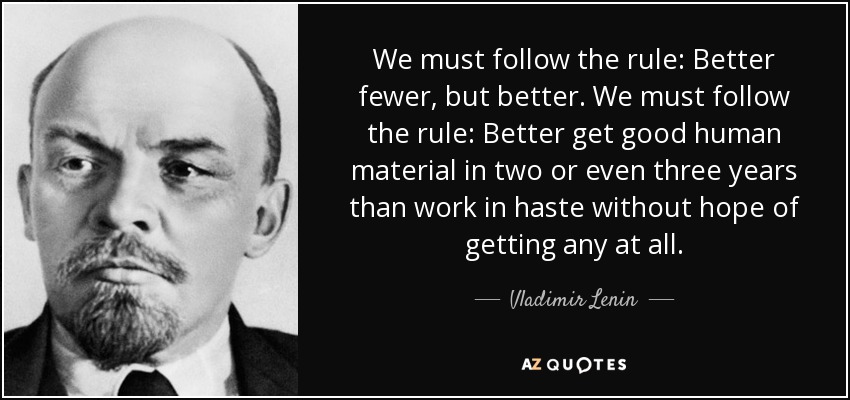
Good Human Material? Viewed from the outside, Labour offers less-and-less to anyone not already comfortable with the injunctions of political correctness. Lacking the “bullshit detectors” of ordinary men and women, progressive parties begin to mistake the technocratic prattle of “experts” for genuine political wisdom. The logical terminus of this trend is when party leaders start nodding approvingly at Lenin’s historic assertion that what the organisation needs are “fewer, but better” members.
 
HOW MANY MEMBERS does the Labour Party have in its centenary year? According to the veteran political journalist, Richard Harman, the answer is – not a lot.
 
Writing in his “Politik” blog on Monday, 23 May, Harman noted:
 
“Politik has learned that the party’s membership is now probably below that of the Greens, which would place it below 5000, possibly less than half that.”
 
If true, that is shocking news – and it’s only fair to point out that within 24 hours the Labour Party’s new General Secretary, Andrew Kirton, was assuring Harman that it was not true. “We are far, far higher than 5,000 and therefore well above the Greens.”
 
In spite of reassuring his readers that the contested information came from “a usually reliable source”, Harman was willing – as of Tuesday morning – to take Kirton at his word.
 
A more cynical person, upon being told by Labour’s General Secretary that the membership figure is “far, far higher than 5,000”, might offer, by way of response, the words of the infamous call-girl, Mandy Rice-Davies, who, when told that an Establishment big-wig had denied all knowledge of her, shot back the immortal line: “Well, he would say that, wouldn’t he?”
 
Certainly, it would be remarkable if a political party with fewer than 5,000 members entertained any serious hopes of becoming the Government. Though its current membership comes nowhere near the quarter-of-a-million figure bruited about in the 1970s, the National Party can still lay claim to being – by a wide margin – New Zealand’s largest political organisation. From its present muster of approximately 25,000, National’s goal is a paid-up membership of 35,000. It’s a measure of the party’s rude health that no one considers that figure to be beyond its reach.
 
Five thousand members, by contrast, is a perilously fragile base from which to launch a bid for state power. Divided by 64 (the number of General Electorates) 5,000 produces an average of just 78 members per electorate! Except that Labour in 2016, to a degree not seen since its formation in 1916, is a party of metropolitan New Zealand – meaning that in National’s provincial heartland its principal electoral opponent has next to no presence at all.
 
But the values of metropolitan New Zealand are not the values of provincial New Zealand – not by a long shot. And even in metropolitan New Zealand there is an important distinction to be made between the values of chic enclaves like Grey Lynn and Wadestown, and the vast suburban tracts that sprawl away from the centres of New Zealand’s largest cities. In the ‘‘burbs’, provincial values have a very familiar ring.
 
If Donald Trump wins the US Presidential Election in November it will be because the Democratic Party long ago lost all contact – and sympathy – with the ordinary voters of the suburbs and the “flyover” states. That “God and Guns” America to which Barack Obama condescended so loftily in 2008.
 
It is difficult to avoid making similar judgements about the New Zealand Labour Party. Too small, and too narrowly recruited, Labour’s membership hasn’t had to do battle with genuine conservatives for the best part of three decades. Progressivism is not improved by being unchallenged. Uncontested, its precepts all-too-easily harden into dogmatic certainties, against which no arguments are permitted to prevail. Lacking the ballast of conservative values, the organisation becomes increasingly vulnerable to erratic helmsmen.
 
Viewed from the outside, Labour offers less-and-less to anyone not already comfortable with the injunctions of political correctness. Lacking the “bullshit detectors” of ordinary men and women, progressive parties begin to mistake the technocratic prattle of “experts” for genuine political wisdom. The logical terminus of this trend is when party leaders start nodding approvingly at Lenin’s historic assertion that what the organisation needs are “fewer, but better” members.
 
Perhaps that is why Richard Harman was so willing to believe General Secretary Kirton’s assertion that Labour’s numbers are “far, far higher than 5,000”. Because to believe that 5,000 (let alone “less than half that”) is the true figure, is to more-or-less concede that New Zealand no longer possesses an Opposition worthy of the name.
 
Harman, like myself, is long enough in the tooth to remember what Labour looked like in the early 1980s, when it had 85,000 paid-up members. Unlike today’s shrunken entity, it looked like a Government-in-waiting.
 
This essay was originally published in The Waikato Times, The Taranaki Daily News, The Timaru Herald, The Otago Daily Times and The Greymouth Star of Friday, 27 May 2016.