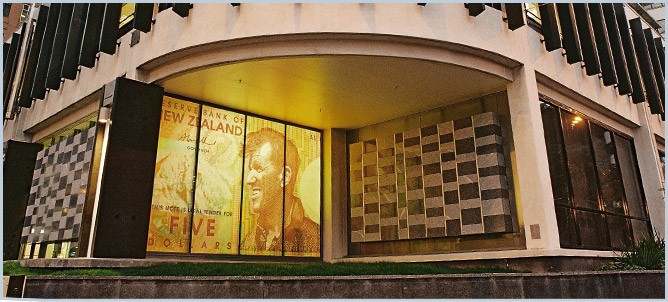
Inflation Buster: As Governor of the Reserve Bank of New Zealand from 1988 until 2002, Dr Don Brash oversaw the anti-inflation programme of the new neoliberal order he had played such a vital role in unleashing upon New Zealand. The financial sector and the ticket-clipping classes were delighted by his success, workers and borrowers paid with stagnating real wages and diminished expectations. And now, an even more frightening spectre looms: Deflation.
THE PROSPECT of zero inflation is difficult for many New
Zealanders to grasp. Those of us over fifty will recall the years when the
annual inflation rate was this country’s most contentious political issue. Hardly
surprising, when rates of up to 18 percent were recorded. A nation experiencing
that sort of monetary pressure has reason to be concerned.
But, persistent high inflation affects different groups in
different ways. Like most human creations, it produces both winners and losers.
In a country where most wage-workers belonged to a trade
union, and there were powerful political incentives for the annual round of
wage negotiations to produce results roughly reflective of increases in the
cost of living, inflation was more of an irritant than a danger. If a worker’s
union was strong, he and his family could keep ahead of inflation. The members
of the weaker unions, however, were forever playing catch-up.
If those workers were the recipient of a 3 percent (!) State
Advances loan, however, inflation was their friend. Every year that high
inflation persisted, young couples could pay off the mortgage on their first
home with dollars that were, in real terms, worth less than when the debt was
originally incurred. Persistent levels of high inflation were a huge boon to
borrowers.
Between 1965 and 1985, governments of both the left and the
right were content to see inflation lift tens-of-thousands of young
baby-boomers onto the lower rungs of the property ladder. Indeed, it is
possible to argue that the creation and maintenance of National’s
“property-owning democracy” would have been all-but-impossible without a
persistently high rate of inflation.
Persistent high inflation was also of crucial assistance to
running an effective welfare state. Thanks to the phenomenon known as “fiscal
drag”, inflation-driven increases in wages and salaries were constantly lifting
workers into higher tax-brackets, allowing the government’s own revenue needs
to be met without recourse to more regular, explicit, and, therefore,
politically unpopular, tax adjustments.
Persistent high inflation’s biggest losers, obviously, were
those whose loans were being repaid at a fixed rate of interest in devalued
dollars, along with people attempting to live on incomes that could not easily
be adjusted for the effects of inflation. Returns on investment; the real value
of private pensions, annuities and legacies; all tended to fall in
circumstances of persistent high inflation.
It is never a good idea for politicians to antagonise those
who control their nation’s financial system. Equally unwise is a government
that even looks like it is prepared to beggar the social class most dependent
on legacies, annuities, private pensions and the income generated from
investments. That persistent high inflation, with its beneficial impacts on
workers, borrowers and social-democratic politicians, would, by the end of the
1970s, convince bankers, rentiers, and other sundry members of the
ticket-clipping classes that some pretty major reforms were long overdue, was
entirely predictable.
That a constant theme, running through all of the dramatic
economic changes of the next 30 years, would be “driving inflation out of the
economy”, was equally foreseeable. Nor should we be surprised that these
reforms neatly reversed the position of winners and losers. That the banks and
the ticket-clipping classes would benefit disproportionately from their
anti-inflationary crusade was really the whole point of the exercise.
And who, now, can say that inflation isn’t beaten? With the
inflation rate hovering tantalisingly above zero - nobody. The costs, however,
have been substantial.
The radical reduction of trade union power by the Employment
Contracts Act shattered the mechanisms that had allowed workers and their
families to keep pace with inflation. Despite improvements in workforce
productivity, the purchasing power of New Zealand workers’ wages has stagnated
or declined.
Politicians, too, lost their ability to turn monetary policy
to the advantage of workers and borrowers. The moment controlling inflation
became the Reserve Bank’s first (and some would say only) priority, the old
social-democratic goals of full-employment, home ownership for all, and a
generous welfare state funded through progressive taxation, became inoperative.
There’s a paradox here. As New Zealand’s inflation rate
declines towards zero, the Reserve Bank must confront the possibility of
deflation. But, persistently declining prices are a reflection of declining
demand, which is, in its turn, a reflection of oversupply and a market that
cannot clear itself except by selling below cost. Deflation is, therefore, the
sign of an economy that’s slowing down. It is the harbinger of busts, slumps,
recessions and (God forbid!) another Great Depression.
Some economists argue that inflation allowed the Free World
to pay-off World War II in record time. Others affirm that it underpinned the
great post-war boom. Is it pure coincidence then, that at the peak of the boom,
inflation was suddenly branded Public Enemy No. 1?
If zero inflation is a triumph, then perhaps we should ask:
“For whom?”
This essay was
originally published in The Press of Tuesday,
17 March 2015.