Showing posts with label Hillary Clinton. Show all posts

Friday, 24 January 2020

The Thoughtful Mr Parker.

Stunningly Wrong-Headed: So blinded are the “left-wing” believers in free markets and free trade (like Trade Minister, David Parker) that even when they are staring directly at the wreckage of the lives and communities which these “unconscionable freedoms” (to borrow Marx’s telling phrase) have left in their wake, they cannot see it.

DAVID PARKER is among the more thoughtful members of Labour’s caucus. On his Politik website, the veteran political journalist, Richard Harman, describes him as someone with “an unerring ability to get up the noses of his many critics”, a talent I have long taken as proof positive of serious cogitation. But, as Harman goes on to say, Parker is also “a sober-suited Dunedin lawyer who was a close associate of the buccaneering entrepreneur, the late Howard Patterson”. He is, therefore, a man to whom it is reasonable to attribute a solid working knowledge of free-market capitalism, and profound ignorance of the tenets of democratic socialism.

Like so many of Labour’s neoliberal-capitalism’s-about-as-good-as-it-gets brigade, Parker is no fan of populism. Truth to tell, it frightens him. Fear is, however, an important step up from scorn – which has, for some time, been the default setting for all those “centre-left” politicians who still regard Bill Clinton and Tony Blair as “pretty straight-up guys”. The sort of people who actually believe that Hillary Clinton was defeated by the Russians, rather than weighed in the balance and found wanting by her fellow citizens.

One of the reasons why Hillary was found wanting was her notorious description of opponent Donald Trump’s supporters as a “basket of deplorables”. It is actually quite hard to think of a description more calculated to enrage those working-class voters from Pennsylvania, Wisconsin and Michigan who had twice pulled the lever for Barack Obama, yet remained unconvinced that the First Lady who’d been such a strong supporter of her husband’s North America Free Trade Agreement was the sort of Democrat to put the interests of American workers ahead of American bosses. (Their doubts in this regard were, by the way, entirely justified!)

I sense that Parker struggles just as hard to see those who oppose “free trade” as anything other than deplorably ill-informed. Thinking about it, however, he has come to the conclusion that the populist push for protectionism is, in reality, a symptom of what he calls “middle-class insecurity”.

What has prompted these feelings of middle-class insecurity? Well, as Parker told last year’s Otago Foreign Policy School, the causes are “pretty easy” to identify:

 “[E]normous rises in inequality, with so much wealth going to the one per cent, not just overseas, but also in New Zealand, which is exemplified by dropping homeownership rates and a sense amongst the public that trade agreements have been made for the benefit of multinationals rather than small businesses.”

Parker’s analysis is stunning in its wrong-headedness. In concentrating upon the feelings of the middle-class, it fails to identify the central core of populism’s attraction for the working-class voters who opted for Trump over Clinton and Boris Johnson over Jeremy Corbyn. Namely, their deep-seated loathing of precisely the sort of middle-class people who dismiss them as deplorable losers in the game of life they are so obviously winning.

So bitterly do working-class people resent the disdain in which the professional middle-class enablers of the One Percent’s excesses hold them, that they are willing to vote for a narcissistic billionaire, a tousle-haired toff, and all the other killer-clowns shrewd enough to recognize their pain – and not blame them for it.

That recognition is both the key to populism’s success and the explanation for the steady collapse of social-democratic and labour parties around the world. So blinded are the “left-wing” believers in free markets and free trade, that even when they are staring directly at the wreckage of the lives and communities which these “unconscionable freedoms” (to borrow Marx’s telling phrase) have left in their wake, the Parkers of this world cannot see it. Almost unbelievably, they’ve convinced themselves that its “middle-class insecurity” that’s jeopardising their political fortunes; utterly unaware that the real cause of their parties’ electoral disintegration is old-fashioned working-class rage.

It takes a special kind of political operative to grasp this reality: someone whose driving motivation is to tear the whole rotten edifice down and begin again; someone like Trump’s Steve Bannon or Johnson’s Dominic Cummings; Neos who haven’t swallowed the Blue Pill.

Fortunately – or unfortunately – that’s not David Parker. A thinker he may be, but his thoughts never seem to stray towards the unconventional. Rather than learning his politics at the feet of a capitalist buccaneer, he’d have done better to find himself an anarchist.

This essay was originally published in The Otago Daily Times and The Greymouth Star of Friday, 24 January 2020.

Saturday, 21 December 2019

If You Want To Know Why Clinton And Corbyn Lost - Watch This.


This short documentary explains brilliantly why the candidates and parties of the Left keep on losing to the Right. Highly recommended viewing.

Video courtesy of YouTube

This posting exclusive to Bowalley Road.

Tuesday, 19 November 2019

Democracy "A Bit Bonkers" - Thoughts Inspired By Lizzie Marvelly's Latest Column.

Didn't See It Coming: NZ Herald columnist Lizzie Marvelly's latest column merits serious scrutiny because such a clear example of anti-democratic thinking is encountered only rarely on the pages of the daily press. Which is not to say that the elitism which lies at the heart of such social disparagement goes unnoticed by the people who are its principal targets. Just as Hillary Clinton’s description of Trump’s supporters as “deplorables” only strengthened her opponent’s hand, the “progressives” all-to-obvious disdain for the competence of ordinary people will inevitably rebound to the Right’s electoral advantage.

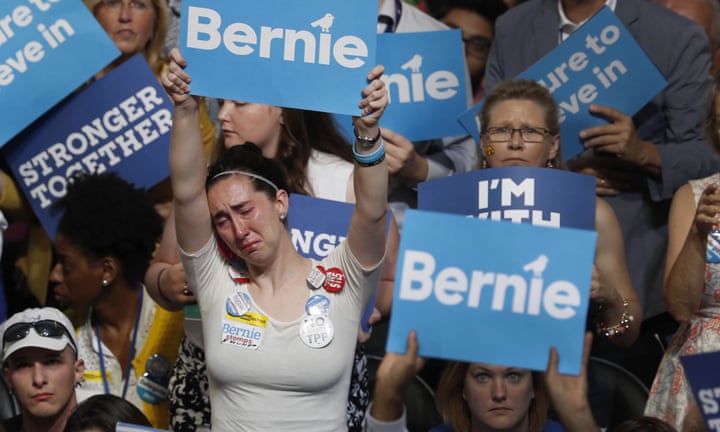
THE EXPRESSIONS of stunned horror that greeted the news that Donald Trump had won the 2016 Presidential Election spoke volumes. Almost none of the people gathered to celebrate the election of the USA’s first female president believed a Trump victory was even remotely possible. On display that fateful November night was a lethal mixture of social isolation and social ignorance. The shocked and horrified young Democrats who turned their grief-stricken faces from the television screens clearly knew next to nothing about the America that had just dashed their hopes.

In New Zealand, the world’s most “woke” country, the risk of something very similar to Trump’s upset 2016 victory grows stronger by the day. The 2020 General Election may deliver New Zealanders their first one-term government in 45 years. If that is the outcome, then it will likely be produced by exactly the same combination of forces that toppled the Kirk-Rowling Labour Government in 1975. An angry cocktail of resentments and denials; of ordinary people feeling abandoned by the decision-makers; of core values and cherished traditions perceived as being under threat. A dark tsunami of voter anger: barely perceptible in its approach, but rearing-up to terrifying heights as, finally, it comes ashore.

And, of course, like Hillary supporters, the partisans of Labour and Green haven’t a clue. They just don’t see it: the anger and resentment; the alienation and bewilderment. Or, if they do, they simply don’t rate it. In the eyes of the decision-makers and their opinion-former allies, “ordinary people” simply aren’t up to it.

Consider the latest contribution from NZ Herald columnist Lizzie Marvelly. The fact that New Zealand’s District Health Boards contain a majority of elected members strikes her as a serious design fault. “Democratic elections for District Health Boards have always seemed bizarre to me”, she writes. “Though it’s important to listen to the views of the community when designing services to serve them, the idea that anyone, regardless of their experience, qualifications and skill set (or lack thereof) could be elected to a position where they are tasked with effectively running the health system in their region seems a bit bonkers.”

In these two chilling sentences, we can identify all the ingredients of the looming political disaster. Of these, it is Marvelly’s careless disdain for the capabilities of her fellow citizens that is the most telling. That such people might possess insights and understandings of which the “experts” she so clearly prefers are entirely innocent, does not appear to have occurred to her. Neither, apparently, has the thought that democracy itself is predicated on the notion that the views of ordinary people, as expressed through the ballot-box, constitute the beating heart of political sovereignty.

No, “government of the people, by the people, for the people” cuts little ice with Marvelly. The word she offers up in preference to “government” is “governance”: something best left to professionals.

“Making a difference in an organisational setting, providing quality services for clients and ensuring at the very least that the bills are paid and the doors stay open, is a challenge that requires good governance,” opines Marvelly. Such work, she goes on to say, with all the breathless confidence of the recent convert, must be “conducted by directors who have the right mix of skills, experience and foresight to plan for worst and best case scenarios, pivot quickly when things aren’t quite right, and steer an organisation through times of both trouble and success.”

That working-class mums and dads, struggling to make their meagre wages stretch to housing, feeding and clothing their families might also have the skills, experience and foresight to plan for both the best and the worst, pivot quickly when things go wrong, and so steer themselves and their loved ones through good times and bad, is apparently an idea that has never crossed her mind.

Which is why, presumably, she felt compelled to suggest that “at least half of each health board around the country should be appointed experts, or even better, 60 percent.” With astonishing condescension, all the more objectionable for being unconscious, Marvelly concludes: “Retaining a minority of elected board members would allow DHBs to stay connected with their local communities, without giving the balance of power to people who may not have the skills to wield it properly.”

I have quoted Marvelly at some length because such a clear example of anti-democratic thinking is encountered only rarely on the pages of the daily press. Which is not to say that the elitism which lies at the heart of such social disparagement goes unnoticed by the people who are its principal targets. Just as Hillary Clinton’s description of Trump’s supporters as “deplorables” only strengthened her opponent’s hand, the “progressives” all-to-obvious disdain for the competence of ordinary people will inevitably rebound to the Right’s electoral advantage.

The thousands of West Coasters who gathered in Greymouth last weekend to demonstrate their opposition to the Coalition Government’s policies will no doubt be dismissed as feral rednecks. Even worse epithets will be reserved for the 200+ women who attended the Speak Up For Women conference hosted by David Seymour in the Beehive’s banqueting hall.  Sticks and stones. The Act Party leader’s gesture, prompted by the failure of Massey University to defend the free speech rights of radical feminists, has significantly boosted Act’s chances of adding two – maybe three – new members to its parliamentary caucus.

There was a time when progressives and conservatives could both agree that 2+2=4. As next year’s election draws near, however, the confidence that there are still some propositions to which all politicians can sign-up – such as freedom of speech – diminishes. When young newspaper columnists openly disparage the notion that ordinary people can be trusted with the reins of government; when the same “experts” who led the world into its current condition are held up as the only persons capable of leading it out; then those still capable of grasping basic political arithmetic should not expect next year’s election to have a happy ending.

So long as ordinary people retain the right to vote; so long will pissing them off remain the very worst political strategy.

This essay was originally posted on The Daily Blog of Tuesday, 19 November 2019.

Friday, 25 November 2016

Sixty Four Shades Of Grey

Bright Sunlit Morning - Or Grey Rainy Day? In the final days of the US presidential election some Trump supporters waited in line for 11 hours to see their champion. Eleven hours! Forgive me for being harsh, but honestly, I can’t see too many Kiwis being willing to wait in line for 11 minutes to see Andrew Little.
 
IS OUR LABOUR PARTY capable of learning anything from the US Democratic Party’s stunning electoral defeat? Andrew Little’s recent string of lacklustre media performances offer few reasons for optimism.
 
Donald Trump won the White House because he made politics exciting. Newshub’s Paddy Gower was in the US for the final days of the presidential campaign and interviewed Trump supporters who’d been waiting in line for 11 hours to see their champion. Eleven hours! Forgive me for being harsh, but honestly, I can’t see too many Kiwis being willing to wait in line for 11 minutes to see Andrew Little.
 
And that unwillingness is not entirely attributable to the Labour Leader’s complete charisma by-pass. Possessing the wit and movie-star good-looks of Canada’s Prime Minister, Justin Trudeau, certainly wouldn’t impede Little’s political career, but it is not enough, on its own, to guarantee Labour’s electoral success.
 
Bernie Sanders is hardly what you’d call a matinee idol (more like the voter’s cranky old uncle) but that didn’t prevent him from electrifying huge crowds of young Americans. What lured all those millennials away from their I-Pads had nothing to do with what Sanders looked like. What made them “Feel the Bern” were the things Sanders said.
 
And even Justin Trudeau could not have become Canada’s PM solely on the strength of his illustrious parentage and pleasing countenance. Indeed, his Conservative Party opponents regarded his sense of political entitlement and youthful good looks as powerful negatives to be exploited.
 
Canadians, they argued, had no need of a pretty, upper-class dilettante with nothing more to offer them than a famous name. And if that had been all Trudeau offered Canada, then the centre-left New Democrats would have won last year’s election. What finally sealed the deal for the Canadian electorate was Trudeau’s strategic flair and the boldness of his party’s policies. These, combined with the Trudeau family’s indisputable lustre, were what gave Justin and his Liberals their historic victory.
 
No, Little’s lack of glamour is not Labour’s problem. What’s crippling his leadership – and his party’s chances of winning next year’s election – is that neither he, nor his colleagues, seem capable of inspiring the slightest enthusiasm or excitement in the electorate.
 
Labour either can’t, or won’t, commit to the sort of hard-and-fast policies its supporters want to hear. Like Hillary Clinton and the Democratic Party, Little and Labour are deaf to the cries of those who find themselves on the food-supply side of the dog-eat-dog struggle which now passes for life in the neoliberal West.
 
What Labour’s electoral base is presented with, instead, is wonkism. For nearly two years Grant Robertson and his Future of Work Commission have being toiling away. Their final report was released earlier this month at Labour’s centennial conference. Presented for our perusal were no fewer than 64 recommendations – none of them meriting, even slightly, the description of bold or exciting.
 
There wasn’t a single policy recommendation to match Trump’s in-your-face promise to build a wall to keep out illegal Mexican migrants. Nothing that came anywhere close to Sander’s promise to abolish student loans. Labour’s policy proposition in 2017 isn’t 50 – but 64 – shades of grey.
 
The worst thing is, Little and his advisors flatly refuse to see this as a problem. They have only the coldest disdain for the sort of wild-eyed populism which has swept across the United Kingdom and the United States in 2016, and which, in 2017, threatens to wreak equal havoc among the political classes of Italy and France. It’s simply not the way the shell-shocked party pulled together by Helen Clark, Michael Cullen and Steve Maharey cares to do business. When asked whether he would have voted for Jeremy Corbyn, the present, British-born, President of the NZ Labour Party responded curtly: “No.”
 
In morbid conformity with the limp “Third-Way-ism” which still engrosses them, Little and his people – like Hillary and hers – have placed all their eggs in one technological basket. The mysterious algorithms of their data-manipulating, voter-identifying wonks will do what thousands of committed followers – apparently – cannot. They will locate all the shy, centrist voters Labour needs to win. That these same mysterious algorithms singularly failed to deliver the White House to Hillary has not shaken their confidence in electoral mechanisation.
 
To paraphrase Talleyrand’s celebrated dismissal of the Bourbon dynasty: Labour has forgotten everything – and learned nothing.
 
This essay was originally published in The Waikato Times, The Taranaki Daily News, The Timaru Herald, The Otago Daily Times and The Greymouth Star of Friday, 25 November 2016.

Thursday, 20 October 2016

Why the Greater Good requires Americans to vote for the Lesser Evil – Hillary Clinton.

The Lesser Evil: Yes, Hillary Clinton is more Hawk than Dove when it comes to US foreign and defence policy. And, yes, like so many “mainstream” Democrats, she is not above taking donations from her friends in Wall Street, Hollywood and Silicon Valley. But what she is not, is a bloated, foul-mouthed racist and misogynist, who, facing imminent defeat, is preparing, like some narcissistic parody of Samson, to pull down the temple of American democracy upon the heads of its fractious citizens.
 
THE CLAIM that “voting for the lesser of two evils is still voting for evil” raises as many difficulties as it resolves. If we accept that society’s most intractable problems are a reflection of its most serious imperfections, then, surely, we must also accept that imperfect solutions are the best we can hope for? If the only choice presented to us is between inflicting less – or more – harm upon the world, then, surely, the only way for us to do any good is by deciding to do the least evil?
 
Simply refusing to choose between the greater and the lesser evil does not get us off the hook – not if our desire is to do the most good we can, whenever we can. If that is not our desire, then fine – we can just shrug our shoulders and walk away.
 
But, presumably, the very fact that we find choosing between (in this case) Donald Trump and Hillary Clinton so frustrating is because we have a vision of the United States that neither candidate is willing to fulfil completely. Like progressive activists all around the world, we want a socially-just, ecologically-sustainable and peace-making America. How likely are we to see that America, however, if the best advice we can offer our American comrades is to simply throw up their hands in exasperation and cry “A plague on both your houses!”?
 
Yes, you could argue that given the evident corruption of the Republican and Democratic parties, the best way to do good is to encourage American progressives to build a new political party. And you might be right – but it doesn’t solve the problem of what to do now. A genuinely progressive and thoroughly organised third party is not going to be on the ballot-paper on 8 November!
 
Then, again, you might say that voting for one of the minor party candidates is the best way of doing good. Except that, as John Oliver’s latest Last Week Tonight show so brilliantly demonstrates, the Libertarian’s Gary Johnson and the Green Party’s Jill Stein are complete flakes, whose grasp of what the US President can and cannot do is as woefully inadequate as Trump’s.
 
Nor will it do to simply declare that since New Zealanders don’t get to vote in the 2016 US Presidential Election, the choice between Trump and Clinton is one we can, mercifully, avoid. But, if we take it upon ourselves to judge and condemn these candidates (and boy do left-wing Kiwis love to judge and condemn these candidates!) then it seems entirely gutless to refuse to make the imaginative leap into an American polling-booth and choose.
 
Not that the choice is all that difficult – not really.
 
Yes, Hillary Clinton is more Hawk than Dove when it comes to US foreign and defence policy. And, yes, like so many “mainstream” Democrats, she is not above taking donations from her friends in Wall Street, Hollywood and Silicon Valley. But what she is not, is a bloated, foul-mouthed racist and misogynist, who, thwarted in his grandiose ambitions (quite possibly for the first time in his entire life) and facing imminent defeat, is preparing, like some narcissistic parody of Samson, to pull down the temple of American democracy upon the heads of its fractious citizens.
 
The socially-just, ecologically-sustainable and peace-making America we are all hoping for is unlikely to be fully realised under President Hillary Clinton, but a great deal more of it will be brought into existence under her leadership than under Donald Trump’s.
 
In an imperfect world, the imperfect solution is to vote for the least-worst presidential candidate. For the greater good, American progressives are morally obliged to choose the lesser evil – Hillary Clinton.
 
This essay was originally posted on The Daily Blog of Wednesday, 19 October 2016.

Friday, 14 October 2016

Raising Nixon's Ghost.

Political Pathology: Once again, the United States risks falling under the spell of a man pathologically incapable of quarantining his own disreputable impulses from the immense powers of the supreme political office he is seeking.
 
IN THE FINAL, desperate days of the Nixon Administration, a crucial instruction was communicated to the commanders of military bases in or near the American capital. Any  presidential order pertaining to the disposition of units under their command should be obeyed only if it was countersigned by James Schlesinger, the Secretary of Defence.
 
That was how seriously the situation had deteriorated in the early months of 1974. Senior figures in the government of the United States were taking grim precautions against the possibility that Richard Nixon, acting in his capacity as Commander-in-Chief of the armed forces, might attempt to forestall his imminent impeachment by ordering tanks onto the streets of Washington DC.
 
Why was the prospect of such an unprecedented abuse of presidential power considered plausible? The answer lies in what came to be known as the “Saturday Night Massacre”.
 
On Saturday, 20 October 1973, President Nixon ordered his Attorney General, Elliot Richardson, to sack Archibald Cox, the Independent Special Prosecutor appointed by the Justice Department to investigate the Watergate scandal. Cox’s investigation had advanced perilously close to the Oval Office and Nixon wanted him gone.
 
Richardson refused to obey the President’s order and immediately tended his resignation. Upon being given the same instruction, the Deputy Attorney General of the United States, William Ruckelhaus, also refused and resigned. Undaunted, Nixon ordered the Solicitor General of the United States, Robert Bork, brought to the White House. After swearing-in Bork as his new Attorney General, Nixon immediately ordered him to sack Cox. With considerable reluctance, Bork complied.
 
It was the Saturday Night Massacre that finally drove American public opinion towards impeachment. The President’s evident contempt for the US Constitution and the Rule of Law made the Watergate accusations all-too-believable. The events of 20 October also caused a number of senior White House officials and Cabinet members to wonder just how far Nixon would be prepared to go to avoid impeachment, arraignment, almost certain conviction, and, quite possibly, incarceration.
 
For students of American history these forty-year-old events have been pulled into sharp focus by Donald Trump’s threat to put Hillary Clinton in jail. Routinely castigating his opponent as “Crooked Hillary”, Trump used the occasion of last Sunday’s Second Presidential Debate to inform his opponent that: “If I win, I am going to instruct my attorney general to get a special prosecutor to look into your situation.” When Clinton responded: “It’s just awfully good that someone with the temperament of Donald Trump is not in charge of the law in our country.” Trump shot back: “Because you’d be in jail.”
 
This is a chillingly Nixonian exchange. Once again, the United States risks falling under the spell of a man pathologically incapable of quarantining his own disreputable impulses from the immense powers of the supreme political office he is seeking.
 
The attempt to establish an “imperial presidency”, began in 1937 with Franklin Roosevelt’s unsuccessful bid to pack the Supreme Court. By the end of the 1960s, it was threatening to turn the American Constitution into a museum piece.
 
The Watergate scandal and Nixon’s downfall had vindicated the Founding Fathers’ commitment to the doctrine of the  “separation of powers”. Under the US Constitution, a President Trump has no more right to hire a special prosecutor than President Nixon had to fire one. In a democracy, presidents don’t put people in jail, courts do – and only after the accused has been found guilty, at a fair trial, according to law.
 
Unfortunately, two generations of Americans have grown to maturity since the Saturday Night Massacre, and the lessons of Watergate are only now recalled by ageing Baby Boomers.
 
But if the “great silent majority” that re-elected Nixon in 1972 were voting for a strong leader to quell the waning “youth revolt” and restore “law and order” (i.e. repress African-Americans) the ambitions of the marginalised white males currently cheering-on Donald Trump are much more perilous.
 
What Trump’s supporters want is an America purged of all the social gains achieved by blacks, women and gays since the 1960s. An America ready to wall-up Latino immigrants below the Rio Grande. An America in which Muslims are neither seen nor heard.
 
This is the America they bellow for so raucously whenever their putative Emperor/President promises to “Make America Great Again”.
 
And because Hillary Clinton is standing in his way: “Lock her up!”
 
This essay was originally published in The Waikato Times, The Taranaki Daily News, The Timaru Herald, The Otago Daily Times and The Greymouth Star of Friday, 14 October 2016.

Tuesday, 11 October 2016

Clever Strategy vs Desperate Tactics: Hillary Clinton Allows Donald Trump To Survive The Second Presidential Debate.

He's Behind You! By declining numerous opportunities to take the “kill shot” against her Republican opponent, Clinton ensured that Donald Trump emerged from the debate with just enough credit to keep his candidacy alive. Had she comprehensively trounced Trump, it’s just possible that the Donald’s already fractured ego would have disintegrated completely, causing him to resign his candidacy. That is the last thing the Clinton Campaign wants.
 
THE SECOND US PRESIDENTIAL DEBATE demonstrated brilliantly the difference between strategy and tactics. Hillary Clinton’s performance was all about the political needs of the next 30 days. Donald Trump was fighting for his life.
 
By declining numerous opportunities to take the “kill shot” against her Republican opponent, Clinton ensured that Trump emerged from the debate with just enough credit to keep his candidacy alive. Had she comprehensively trounced Trump, the panic in the Republican camp would only have gotten worse. The calls for Trump’s replacement would have become deafening, and it’s just possible that the Donald’s already fractured ego would have disintegrated completely.
 
This is the last thing the Clinton Campaign wants. Their strategic objective is to keep Trump in the race. They are confident that he has already done more than enough to lose the presidency. What they are hoping for now is that in the remaining 30 days of the campaign Trump will do enough to deliver the Senate – and maybe even the House of Representatives – to the Democratic Party.
 
Considerations of strategy were nowhere near the top of Trump’s mind. His campaign was bleeding copiously and unless he staunched the blood-flow it would very soon be dead. His only tactical option was to hurl everything he had at Clinton and hope that the sheer intensity of his assault would break him out of the rapidly tightening cordon of condemnation strangling his bid for the White House.
 
In this he was reasonably successful. His combative performance, aimed directly at his electoral base, was just enough to hold these white, male, working-class voters in place. It was also enough to remind even his most vociferous Republican detractors of how he got to be their party’s nominee. On the issue of Clinton’s insider status, and especially on the vexed question of her deleted e-mails, Trump’s gloves definitely connected with Hillary’s jaw.
 
But he did not knock her out. On the contrary, in the course of delivering his wild rhetorical blows, Trump unwittingly extended the Clinton Campaign’s strategic advantage. His threat to use the powers of the presidency to put Clinton “in jail” is without precedent in US political history, recalling the very worst excesses of the Nixon White House. The Democrats will undoubtedly offer up Trump’s threat as further proof of his utter unfitness for America’s highest office.
 
His repudiation of his vice-presidential running-mate’s, Mike Pence’s, statements about Syria will also rebound to the Democratic Party’s advantage. Trump’s eagerness to work with the Russians (ostensibly to “defeat Isis”) reinforces the growing concern among American voters that the Russian president, Vladimir Putin, will stop at nothing (not even hacking into the Democratic Party’s and Clinton’s confidential computer files) to prevent “Hawkish Hillary” from becoming President of the United States.
 
Between now and 8 November, Clinton’s campaign team will use Trump’s words to consolidate their candidate’s gains among disillusioned Republican and independent voters in the dozen or so “swing states” she must win to secure the 270 votes needed in the Electoral College. The Democratic Party’s strategic symphony, portraying Trump as a “clear and present danger” to the constitutional liberties of the American people, will build relentlessly to a crushing crescendo.
 
With CNN’s scientific poll of debate-watcher’s declaring Clinton the winner of the second presidential face-off by a margin of 23 percentage points (Clinton: 57 percent – Trump: 34 percent) Hillary’s victory march just got a whole lot louder.
 
This essay was originally posted on The Daily Blog of Monday, 10 October 2016.

Monday, 10 October 2016

The Masculine Mystique: The True Nature Of Aaron Smith’s Transgression

The Masculinist Nightmare: In Homer's Odyssey the amorous enchantress, Circe, transforms Odysseus's lustful crew into swine. Mastery being the essence of masculinity, men are expected to demonstrate at all times that they are in control of both themselves and their lives. Aaron Smith's sin was his failure to control of his desires. As an All Black, the epitome of Kiwi masculinity, such a display of weakness was a kind of betrayal. He let the side down.
 
MASCULINITY – can’t live with it, can’t live without it. Well, that’s half true. A world in which masculinity no longer dominated human affairs would probably be much improved. What went on in airport toilets between consenting adults would count for much less. And the ideas espoused by female candidates for high political office – rather than what they were wearing and how often they smiled – would count for much more.
 
New Zealand’s problems with masculinity are deeply embedded in its social and cultural history. New Zealand men are notorious for being overly repressed and emotionally unavailable: tightly-wound machines with an aversion to mechanics. Trained from birth to value self-reliance above all other virtues, their responses to vulnerability and complexity range from dismissive impatience to outright hostility. Their most prized quality is mastery. Mastery of what? Well, just about anything: the world’s highest mountain; the British Lions; women.
 
It’s why so many Kiwi males are furious with Aaron Smith. Not because he had sex in an airport toilet with someone who wasn’t his partner, but because he was willing to risk everything to do it. As an All Black, he was expected to master his lustful urges. Succumbing to temptation in the way he did marked him down as a man not in control of himself. Weak.
 
As something constructed and in need of constant maintenance, masculinity is forever being scrutinised and assessed by those who feel in need of its protection. For most Kiwi men, achieving All Black status represents something pretty close to perfection in the masculinity stakes. That Aaron Smith was willing to risk it all for a quick shag wasn’t just reckless and stupid, it devalued the currency of masculinity itself.
 
That the woman involved in the incident is accorded no real agency or consequence shows just how peripheral living, breathing, autonomous human females are to the construction of masculine identity. For so many men a woman is just one more thing to master, and all-too-often her presence at a man’s side is valued only for the indisputable proof it offers of his competitiveness in the masculinity stakes.
 
It’s why so many men turn nasty when “their” woman decides she no longer wishes to remain in the relationship. By walking away she is stripping him of one of the key proofs of his status as a “real” man – the ability to attract and “keep” a woman. Very little is more threatening to masculinity than a woman who refuses to devote her life to shoring-up her man’s identity. By forcing him to acknowledge her as something more than a mere adjunct to his ego, she is challenging him to move beyond the self-imposed limitations of masculinity and become fully human.
 
Many men accept their partner’s challenge to break out of the character armour in which they have encased themselves – and are better people for it. But, many men do not. The price of their failure is revealed in New Zealand’s shocking levels of domestic violence.
 
What happens in the domestic environment finds its reflection in the public domain – most particularly in men’s reaction to women who seek and attain political office. The ideology of masculinity is fundamentally hostile to the very notion of women exercising power over men. Such women are perceived as having abandoned their “natural” social role in much the same way as the woman who deserts her husband. Instantly, she becomes a “bitch” – someone who, by asserting her humanity has forfeited her right to be treated with the “courtesy” and “respect” reserved for women who accept the masculine code.
 
This masculinist viciousness was fully on display in the latter years of Helen Clark’s prime-ministership. No epithet was too vile to hurl at this woman who had crushed three National Party leaders in a row. Even more telling was the way in which Clark’s opponents sought to paint her as being both criminal and sinful – as if, by stepping away from her assigned role in the masculine universe, she had broken not only the laws of men, but of God.
 
Hillary Clinton’s bid for the White House has elicited an equally overheated response from the white, working-class defenders of American masculinity. Writing in the October issue of The Atlantic, Peter Beinart, records of his astonishment at the unrestrained misogyny he encountered at the Republican National Convention in Ohio:
 
“Inside the hall, delegates repeatedly broke into chants of ‘Lock her up.’ Outside the hall, vendors sold campaign paraphernalia. As I walked around, I recorded the merchandise on display. Here’s a sampling: Black pin reading DON’T BE A PUSSY. VOTE FOR TRUMP IN 2016. Black-and-red pin reading TRUMP 2016: FINALLY SOMEONE WITH BALLS. White T-shirt reading TRUMP THAT BITCH. White T-shirt reading HILLARY SUCKS BUT NOT LIKE MONICA. Red pin reading LIFE’S A BITCH: DON’T VOTE FOR ONE … White pin advertising KFC HILLARY SPECIAL. 2 FAT THIGHS. 2 SMALL BREASTS … LEFT WING.”
 
If this is what American men were saying about Hillary before she so comprehensively trounced their masculinist avatar, Donald Trump, in the first debate, one can only imagine what they’re saying now. And God alone knows how they’ll cope if (or should that be ‘when’) she wins!
 
What a world of torment men consign themselves to in this hopeless quest to attain perfect masculinity. Their desire for women is matched only by their fear of becoming its slave. They are allowed to be tempted, but must never surrender to temptation on anything other than their own terms. And those terms must never include anything which undermines their standing in the eyes of other men. That was Aaron Smith’s true sin: not only to have allowed his desire for a woman to master him, but to have made the whole world privy to his weakness. He let the side down. Not just the All Black side, but the side to which every worshipper of masculinity belongs – and can only leave in disgrace.
 
This essay was originally posted on The Daily Blog of Sunday, 9 October 2016.

Thursday, 22 September 2016

“Better Now Than Later!” – Nato Deploys 4,000 Additional Troops To Eastern Europe.

A Demonstration Of Strength? Is Nato's decision to deploy an additional four battalions (approximately 4,000 troops) to Poland and the Baltic States a demonstration of strength: a firm “don’t mess with even the smallest of our member states”, directed at the President of the Russian Federation, Vladimir Putin; or yet further evidence of the West’s rising levels of anti-Russian paranoia?
 
THE MOMENTS OF MAXIMUM PERIL, diplomatically-speaking, are seldom the consequence of excessive strength. Strong states have little reason to fear their neighbours. It is, rather, perceptions of national decline and diminishing military strength that spur national elites towards diplomatic recklessness – and war.
 
How, then, should we interpret the news that in May 2017 the Nato alliance will be deploying an additional four battalions (approximately 4,000 troops) to Poland and the Baltic States? Is it a demonstration of strength: a firm “don’t mess with even the smallest of our member states”, directed at the President of the Russian Federation, Vladimir Putin; or yet further evidence of the West’s rising levels of anti-Russian paranoia?
 
On the face of it, Nato remains a very strong alliance – especially in relation to the military capability of the Russian Federation. According to an article authored by Ian Shields of Anglia Ruskin University and published in The Independent of 28 May 2016: “NATO is significantly larger than Russia in simple numbers: NATO has a total of 3.6m personnel in uniform, Russia 800,000; NATO 7,500 tanks, Russia 2,750; NATO 5,900 combat aircraft, Russia 1,571.”
 
But numbers aren’t everything, it’s what you do with them that counts. At the 1805 Battle of Austerlitz, the French Emperor’s, Napoleon Bonaparte’s, Grande Armée of 67,000 men outmanoeuvred and decisively defeated a combined Austrian and Russian force of 85,000. Imagination, daring and superior strategic thinking continue to play a vital role in diplomatic and military encounters.
 
In this respect the Russian leader has proved himself more than match for his European rivals. His willingness to use military force, both to advance and defend his country’s strategic interests, has reduced Nato to playing repeated games of catch-up and bluster. For the West’s political leadership Putin’s successes have been galling enough. For Nato’s generals, however, Russia’s strategic application of force has been a personal and professional humiliation. They are hungry for revenge.
 
The decision to deploy an additional 4,000 troops to Russia’s western borders has been undertaken in an attempt to both intimidate and deter Putin from contemplating a lightning-fast repossession of the former Soviet republics of Estonia, Latvia and Lithuania. Nato knows that Russia’s massive army could roll over the Baltic states in a matter of hours. Its purpose in stationing troops there is not to halt any Russian advance, but to require Russia’s soldiers to engage American, British and Canadian troops on their way to the Baltic shore.
 
Applying the same process of cold deliberation that he used in relation to Georgia, the Crimea and eastern Ukraine, Putin must decide whether this “Cross the Latvian border and start World War III” threat is real, or just another example of Nato bluster. The generals may be willing to incinerate the world for Latvian independence, but what about the peoples of Western Europe? And, how willing would a President Trump, or Clinton, be to invite their own people’s annihilation by authorising a nuclear strike against Russia?
 
In Trump’s case, Putin is reasonably confident that the nuclear codes will not be activated for the Baltic States. He cannot be so sure about the hawkish Hillary Clinton. That being the case, it is not difficult to understand why Putin is deploying his cyber warriors against the Democratic Party’s candidate. It is just one more demonstration of Putin’s strategic daring – and yet another example of the West’s inability to come up with an effective response.
 
It is often argued (by the winners of World War I) that Germany was only willing to risk war with Russia in 1914 because its generals knew that given a few more years, and a few more French loans, the Russian “steamroller” would be utterly unstoppable. “If war is going to come in any case”, they are said to have reasoned, “better now than later.”
 
There are alarming echoes of these grim calculations in Nato’s most recent deployment. Faced with economic stagnation, diminishing military budgets, and increasingly restive populations, have the generals of Europe – and Britain in particular – come to the same doom-laden conclusion as the German General Staff of 1914.
 
“If we wait, then in a few years Nato will be both militarily and politically incapable of stopping Putin and the Russians from reconstituting their lost empire. Better now than later!”
 
This essay was originally posted on The Daily Blog of Wednesday, 21 September 2016.

Friday, 9 September 2016

Dropping the Ball, or Saving the Game? A Response to Fran O’Sullivan.

Who's In Charge? That it was left to the Chinese President, Xi Jinping, to lead the charge against the rise in protectionism across the globe struck NZ Herald business columnist, Fran O’Sullivan, as particularly galling. Since the 1980s, it has been the West that has set the pace on trade liberalisation – particularly the United States. That this no longer appears to be the case clearly left O’Sullivan unimpressed.
 
THE DEEP ANXIETY of the “Free Trade” lobby was on full display in this morning’s NZ Herald (7/9/16). Fran O’Sullivan, that most indefatigable of the Herald’s free trade advocates, was so moved by the uncertainty currently surrounding the ratification of the Trans-Pacific Partnership (TPP) that she devoted a good chunk of her business column to the global fight against protectionism.
 
That it was left to the Chinese President, Xi Jinping, to lead the charge against the rise in protectionism across the globe struck O’Sullivan as particularly galling. Since the 1980s, it has been the West that has set the pace on trade liberalisation – particularly the United States. That this no longer appears to be the case clearly leaves O’Sullivan unimpressed.
 
Of President Barack Obama’s reticence on the subject – on display at the just concluded G20 meeting in Hangzhou, China – O’Sullivan is scathing:
 
“US President Barack Obama could hardly lead the charge given the two candidates fighting for election to president don’t have the bottle to even support the Trans-Pacific Partnership (TPP). The US previously argued TPP would enhance US economic supremacy and ‘contain’ China's ambitions.”
 
Those scare-quotes around the word “contain” indicate just how sceptical O’Sullivan has become of the United States’ capacity to any longer dictate economic terms to the world’s major economic powers – especially China. Her dismay at this turn of events is clear:
 
“Now Xi is driving the call for a more open economy, yet another sign of how badly ‘the West’ has dropped the ball in the post-Global Financial Crisis era.”
 
But if the West has “dropped the ball” in relation to the GFC, and if its political leaders no longer “have the bottle” to support free trade agreements like the TPP, then it is surely incumbent upon O’Sullivan to tell her readers why. Sadly, no such explanation is forthcoming.
 
There is, of course, a very good reason for O’Sullivan’s silence on the cause of the West’s failure. Even in the business pages of the Herald, blaming the world’s economic problems on democracy is a reputationally risky gambit. And yet, no other explanation suffices. That the very same international trends: free trade, globalisation; whose declining influence O’Sullivan so volubly laments; are also the root causes of the massive upsurge of populism across the USA and the United Kingdom is simply undeniable.
 
It’s not that Donald Trump and Hilary Clinton lack “the bottle” to back the TPP, more a case of them recognising that to do so at this juncture in American history would cost them the election. What O’Sullivan refuses to recognise is that free trade and globalisation have, over the past 30 years, imposed a tremendous economic and social cost upon the populations of the West. That the effects of free trade and globalisation were bound, eventually, to trigger a day of democratic reckoning was something their proponents preferred not to think about.
 
O’Sullivan offers a fine example of this political denial by quoting the words of the Chinese billionaire, Jack Ma. The founder of Alibaba (China’s equivalent of TradeMe) told CNN that: “We should keep on going along the path of globalisation ... globalisation is good ... when trade stops, war comes.”
 
Wa went on to dismiss the strongly antagonistic tone adopted by Donald Trump towards America’s Chinese competitors: “Every time there’s an election, people start to criticise China. They criticise this, they criticise that ... [But] how can you stop global trade? How can you build a wall to stop the trade?”
 
The answer, of course, is by erecting the very same protectionist trade-barriers that Wa’s President, Xi Jinping, was warning the G20 against. As boss of the Chinese Communist Party, Xi clearly struggles to fathom the West’s sudden falling-out-of-love with what used to be called the “Washington Consensus”. Perhaps his political empathy would be enhanced if his party’s policies were subjected to the judgement of the Chinese people every four years – like those of his Western counterparts.
 
2016 may prove to be the year in which the electorates of the West finally demonstrate to their political elites the democratic folly of pursuing trade policies that are free – but not fair. If that is what they do, then, far from dropping the ball, the voters of the West will have saved the whole capitalist game.
 
This essay was originally posted on The Daily Blog of Wednesday, 7 September 2016.

Friday, 12 August 2016

Hillary Clinton, Progressive.

Neoliberal War Goddess, Or Stalwart American Progressive? Why is this woman, this feminist, this progressive, demonised as some sort of fanatical neoliberal war goddess? Why do even New Zealanders who identify as “left-wing” claim to see no meaningful difference between Clinton and her Republican rival, Donald Trump? How has the woman who campaigned for George McGovern – the most radical presidential candidate in recent American history – been so egregiously defamed?
 
“WHAT WE HAVE TO DO every so often in America is save capitalism from itself.” Hillary Clinton’s take on capitalism is pretty much the same as Franklin Delano Roosevelt’s take on capitalism. If that doesn’t justify placing Clinton among America’s progressives, then the definition of “progressive” must have been changed when the world’s political scientists weren’t looking.
 
Only the most extreme denizens of the Far Right would dispute that Roosevelt’s “New Deal” rescued American capitalism from the looming political consequences of the Great Depression. Certainly, that remains the firm judgement of practically all American socialists. Indeed, the great tragedy of American socialism is that the progressive movement (almost always in the guise of the Democratic Party) has unfailingly stepped up to defuse those economic and social bombs which, left undefused, might so easily have exploded into revolution.
 
Clinton fits very comfortably into that Democratic tradition. Ideologically-speaking she rates as a fairly staunch American “liberal” (New Zealand political scientists would call her a social-democrat). United States experts locate her on the same section of the left political spectrum as President Barack Obama and Senator Elizabeth Warren, and only marginally to the right of Senator Bernie Sanders who, in spite of calling himself a “democratic socialist”, has devoted his life to promoting a social and economic programme indistinguishable from Roosevelt’s New Deal.
 
So why is this woman, this feminist, this progressive, demonised as some sort of fanatical neoliberal war goddess? Why do even New Zealanders who identify as “left-wing” claim to see no meaningful difference between Clinton and her Republican rival, Donald Trump? How has the woman who campaigned for George McGovern – the most radical presidential candidate in recent American history – been so egregiously defamed?
 
The answer is simple. Hillary Clinton has been demonised by the most reactionary elements of the American Right ever since she and her husband looked set to claim the White House in the presidential election of 1992. For nearly quarter-of-a-century she has been the target of an unrelenting campaign of false accusations, scurrilous rumours and outright lies. Recall the disgraceful campaign to undermine the prime-ministership of New Zealand’s own Helen Clark, multiply it by 10, and you will have some idea of the magnitude of what Clinton quite correctly described as “a vast right-wing conspiracy” dedicated to her and her husband’s destruction.
 
Those who were not yet born in 1992 find it difficult to fathom the depths to which the American Right was (and is) willing to sink in order to neutralise any and all threats posed to the legacies of Reagan and Bush by the Democratic Party and its more electable leaders.
 
That Hillary Clinton, as the Junior Senator from New York, voted for the invasion of Iraq has been parlayed by Sanders’ millennial supporters into proof positive of her war-mongering instincts. That dozens of her fellow Democratic senators did the same, is simply ignored. So, too, is the historical fact that ever since the days of the red-baiter, Joseph McCarthy, the Democratic Party has felt obliged to out-perform the Republicans on issues of national security.
 
The Millennial Left’s refusal to put the behaviour of politicians into some semblance of historical context is also evident in the their criticism of Clinton’s actions in regard to Libya. As US Secretary of State, Clinton was acutely aware of how much her country owed to its Nato partners for their unwavering support of the USA’s military commitment to Afghanistan. That was why she was willing to recommend to President Obama that he lend his support to British and French efforts in the UN Security Council to provide air support to Libyan rebels fighting Muamma Gaddafi. Clinton’s critics conveniently forget that it was the Security Council, not the US Secretary of State, who subsequently authorised the “humanitarian” bombing of Libya.
 
Unfortunately, this is not the sort of argument that sways Clinton’s younger critics in the slightest. Anyone who takes money from Goldman Sachs and their Wall Street partners-in-crime is obviously guilty beyond redemption. As is anyone who acknowledges the extraordinary electoral power of the Jewish Vote in US politics by making favourable references to Israel. (Did anyone hear Bernie condemn “Israel’s apartheid regime”?)
 
The “Bernie-or-Bust” die-hards who, unlike their mentor, refuse to recognise the brute realities of American presidential politics, have proved to be fast learners when it comes to orchestrating exactly the same phantasmagorical parade of falsehoods that, hitherto, Clinton only had to fend off from the Right.
 
Hillary has become “Killary”. Bumper-stickers scream “Liar, liar, pants-suit on fire!” Never mind that the US media’s fact-checkers have pronounced Clinton the most truthful of all the major primary contenders. Or that on her watch as Secretary of State the USA markedly improved its global conduct.
 
The only conclusion to be drawn from the above is that, in the minds of politicised Millennials, the meaning of “progressive” has changed. It now means: “Somebody who could not possibly be elected President of the United States.”
 
This essay was originally posted on The Daily Blog of Thursday, 11 August 2016.

Tuesday, 9 August 2016

Is Trump Preparing To Substitute Bullets For Ballots?

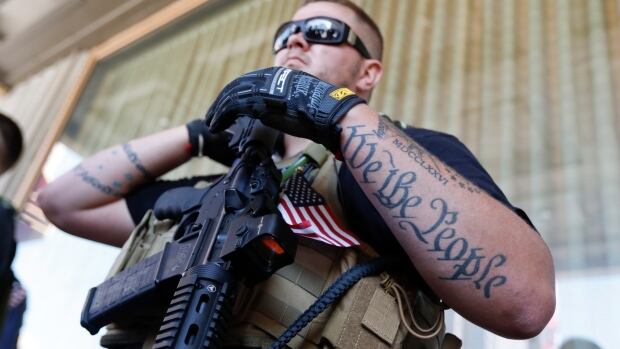
The Constitution In Arms: Alarmed at the steady decline in Trump's poll-ratings, extreme elements of the American Far-Right have begun warning his supporters that the forthcoming Presidential Election will be "rigged" to prevent their candidate from taking office. Already the Republican Party's most notorious political saboteur, Roger Stone, is using words like "bloodbath". Not one to miss his cue, Trump's stump speeches now include repeated references to a "rigged" or "stolen" election.

AS TRUMP’S NUMBERS slump, and Hillary’s surge, the worst elements of the American Right are mobilising in his defence. The Republican Party’s most notorious political saboteur, Roger Stone, is urging Trump to prepare his followers for a “rigged” election. And Trump is listening. To the alarm of election observers and commentators of every political stripe, Trump has taken to dropping the “R” word into his recent stump speeches.
 
“November 8th, we’d better be careful, because that election is going to be rigged,” he told American television viewers on Monday, 1 August, “and I hope the Republicans are watching closely, or it’s going to be taken away from us.”
 
Fears are growing in the Democratic camp that the prospect of losing to Hillary fills Trump with such terror that, rather than concede defeat, he will not shy away from doing irreparable damage to America’s 240-year-old system of representative democracy.
 
Roger Stone, who has a portrait of Richard Nixon tattooed on his back, is nothing if not explicit. In an interview with Alex Jones (a far-right extremist broadcaster and conspiracy theorist) he issued a chilling warning to Trump’s opponents:
 
“Well you have to let them know in advance that you’re not going to stand for it. That if there’s any solid evidence of election irregularities you’re prepared to challenge her swearing in and create a constitutional crisis.”
 
Or something much worse. According to the BBC’s Anthony Zurcher:
 
“In a podcast last week, long-time Trump advisor Roger Stone said that if the election results in November don’t match opinion polls, the Republican nominee should challenge the validity of the election and warned that the unrest could end in a “bloodbath”. “If there’s voter fraud, this election will be illegitimate,” he said. “The election of the winner will be illegitimate, we will have a constitutional crisis, widespread civil disobedience, and the government will no longer be the government.”
 
Roger Stone - Republican Party Fixer.
 
Threats of a similar nature were made in the lead-up to the Republican Convention. Even if, back then, they were directed at the leadership of the Republican Party itself! Historically-speaking, such overt references to political violence are alien to the presidential election process. At the state and local level of American government, however, “election irregularities” are commonplace.
 
Stone’s reference to “voter fraud” is telling. For nearly a decade Republican-controlled state legislatures have been passing legislation specifically designed to make it harder for voters more likely than not to support the Democratic Party to both register to – and cast – their vote. The standard political justification for these so-called “voter suppression” laws is the alleged incidence of fraudulent voting. Expert examination of such claims has pronounced them groundless. Proven examples of voter fraud in the United States are extremely rare.
 
The strongly contested presidential election of 2000 is, however, proof that, even at the presidential level, things can go very badly wrong with the election process. The irregularities surrounding the Florida vote were legion – including strong prima facie evidence of Bush family involvement (in 2000, George W. Bush’s brother, Jeb, was the Florida Governor) in a comprehensive plan to suppress the participation of the state’s African-American voters.
 
A more reckless and less patriotic Democratic Party presidential candidate than Al Gore might have done considerably more to prevent the 2000 election being stolen from him. His party had, after all, won the popular vote by a comfortable margin, and election day exit polls had shown him ahead (albeit narrowly) in Florida. Rather than call his followers into the streets, however, Gore allowed the US Supreme Court to determine the outcome of the election. By the narrowest of margins, the Court voted to declare Bush the winner.
 
Can Donald trump be relied upon to go quietly if the election is won narrowly (or even decisively) by Hillary Clinton? Or will he goad the losing side of the most heavily-armed citizenry on earth into substituting their bullets for their ballots?
 
This essay was originally posted on The Daily Blog of 9 August 2016.

Wednesday, 3 August 2016

Course Correction

Bernie's And Busted: When idealistic young people, most of them utterly unprepared, are pushed into the thrusting, beating and grinding behemoth that is the Democratic Party machine, and told to disrupt it, how shocked the party's critics claim to be, how dismayed, when the machine chews them up and spits them out. As if the Old Left had no idea that, to paraphrase Boromir in Lord of the Rings: “One does not simply walk into the Democratic National Convention.”

JEFFREY ST. CLAIR writes for the American on-line magazine Counterpunch. To read his excoriating critique of the Democratic National Convention is to feel the intense frustration and rage of the progressive American Left.
 
A sample: “Hillary has already out-Thatchered the Iron Lady and she hasn’t been elected yet. She’s made the complete metamorphosis from a Goldwater girl to a McGovern woman to a Reagan granny.”
 
That same frustration and rage was evident in the “Bernie-or-Bust” dead-enders’ attempts to disrupt the Convention. Their petulant bewilderment at being stiff-armed by the event’s organisers and security staff proof of just what a children’s crusade the Bernie Sanders candidacy had become in some US states – California in particular.
 
The Democratic Party is a machine: huge and unforgiving. St. Clair and his fellow critics on the Left know this. It is why they seem to enjoy nothing more than taking their readers into the heart of the mechanism. They point to its massive pistons pumping, its huge gears grinding, the controlled explosions in its vast cylinders, and they profess to be shocked.
 
And when idealistic young people, most of them utterly unprepared, are pushed into this thrusting, beating and grinding behemoth and told to disrupt it, how shocked the critics claim to be, how dismayed, when the machine chews them up and spits them out. As if the Old Left had no idea that, to paraphrase Boromir in Lord of the Rings: “One does not simply walk into the Democratic National Convention.”
 
Unacknowledged amid all this shock and dismay is the simple fact that without the brute force of the Democratic Party’s political machine: without the Wall Street donors, the SuperPACs, the media manipulation and the cheap parliamentary tricks designed to keep nay-sayers off the platform and away from the cameras; progressive politics in the United States would make no headway whatsoever.
 
Sanders grasped this simple fact. That’s why, to the boos of his supporters, he urged them to get in behind Hillary Clinton. Even if his followers failed to grasp it, the most important truth about the Democratic Party machine isn’t how it works, but in which direction it is steered.
 
Listening to Hillary Clinton’s acceptance speech all Jeffrey St. Clair heard was compromise, betrayal and “proto-fascism”. A less jaundiced observer would have heard something much more encouraging. Amid all the patriotic flourishes and the merciless deconstruction of the hollow, clay-footed god that is Donald Trump, a sensitive ear would have detected the crunch and groan of the Democratic Party changing course.
 
Not enough to silence the Bernie-or-Bust dead-enders; and nowhere near enough to mute the criticism of Jeffrey St. Clair; but more than enough to send a shiver down the spine of New Zealand’s Ambassador to the United States, the former Trade Minister, Tim Groser. Barack Obama would like to end his presidency with the congressional ratification of the Trans-Pacific Partnership, but Hillary Clinton is pledged to take the Oath of Office over TPP’s unratified corpse.
 
It was another female US Secretary of State, Madeleine Albright, who described the United States of America as “the indispensable nation”. When all other nations are stepping back, it is the United States that must step forward. In doing so, the United States reveals itself as not only the world’s indispensable nation, but also as its essential leader and guide.
 
This is the geopolitical reality that makes the presidential election of 2016 so critical. If Donald Trump wins, and puts “America First”, then the United States will have signalled its intention to step back and away from its leadership role. But if Hillary wins, as I believe she will, then the United States will begin the long, slow process of leading the world away from the self-destructive shibboleths of neoliberalism.
 
Hillary Clinton and the Democratic National Convention did not swing the wheel of American politics as hard to port as Jeffrey St. Clair and the Bernie-or-Bust dead-enders so obviously desired. But, on a long journey, even a small course correction can alter a vessel’s ultimate destination to a surprising degree.
 
In his glorious anthem, Democracy, Leonard Cohen urges on the USA, that indispensable vessel of the world’s hope:
 
Sail on, sail on
O mighty Ship of State!
To the Shores of Need
Past the Reefs of Greed
Through the Squalls of Hate.
Sail on, sail on, sail on.
 
Such is the political course dictated to Hillary Clinton, not only by what Bernie Sanders calls “the most progressive platform in the history of the Democratic Party”, but by the necessity of repairing an economic system that serves only obscene wealth. Redistributing that wealth isn’t just an ethical imperative, it is a sociological necessity. Inequality is the supreme solvent of human solidarity and social justice.
 
The choice before the American electorate has become existentially clear: sail on, or sink.
 
This essay was originally published in The Press of Tuesday, 2 August 2016.