Showing posts with label European Union. Show all posts

Wednesday, 27 February 2019

Is Corbyn Allowing Yesterday’s Enemies To Win Again?

The Ghost Of Futures Passed: Does Jeremy Corbyn have the political ability to rise above his preoccupation with Labour’s past? Can he recast himself as the progressive champion of the UK’s European future? That would require him to align himself unequivocally with the Remainers by forcefully demanding a second referendum. It’s a big ask. But, surely, he understands that those who hesitate to climb on board History’s bus when it pulls up at their stop invariably get left behind.

JEREMY CORBYN’S fatal political error has been to look over his shoulder rather than over the horizon. As is so often the case with politicians who have had their party’s agenda wrenched from their hands by ideological rivals pursuing radically different goals, the temptation to start again from where they were forced to leave off is very strong. The 1980s Labour Party of Michael Foot and Tony Benn – the lodestars of Corbynism – was taken over and completely reshaped by Tony Blair in the 1990s. Rolling back Blairism and resuming Labour’s march towards democratic socialism has always been Corbyn’s mission. It was not, however, the mission imposed upon Labour by the relentless march of events. That, it turns out, is Brexit.

Corbyn has always been deeply conflicted by the evolution of the European project. Originally conceived as a means of preventing the powerful nations of Western Europe from ever again going to war with one another, the European Economic Community (EEC) had much to commend it. Its transformation, from the EEC into the European Union (EU), changed perceptions considerably. What began as an essentially social-democratic dream has morphed into what more and more leftists have come to regard as a neoliberal nightmare.

This trajectory (from social-democracy to neoliberalism) was, of course, mirrored in the domestic histories of practically all of the EU’s member states. Corbyn’s assessment, that a rejection of neoliberalism in the UK would be next-to-impossible if it remained an EU member, made him a very tepid advocate of his party’s official policy of encouraging Labour supporters to vote “Remain” in the 2016 Referendum. That so many of Labour’s heartland constituencies favoured the “Leave” option didn’t make things any easier.

Theresa May’s doomed attempt to increase the Conservative Party’s majority in the House of Commons by calling a snap-election in 2017, poured almost as much acid on the Leader of the Opposition as it did on the Prime Minister. Labour’s astonishing electoral performance was partly fuelled by its immensely popular “For the Many, Not the Few” manifesto, which, like Bernie Sander’s “democratic socialist” platform of the previous year, inspired and enthused tens-of-thousands of young, well-educated, but economically marginalised, voters. Mostly, however, Labour’s success was built on these younger voters’ conviction that Labour represented a forward-thinking alternative to the Tories’ reactionary “Little Englander” Brexiteers.

In the minds of the only voters that truly mattered – the ones who would spend most, if not all, of their lives in the Twenty-First Century – Labour stood for an open-hearted, multicultural and European future. If Labour wanted to endure as a viable political force (rather than a declining legacy party of Britain’s industrial past) then it had no choice but to make those young voters’ perceptions reality. Tragically, Corbyn was too mired in the politics of the Twentieth Century to rise to the challenge. Rather than lead the debate against Brexit; rather than mobilise his young supporters behind the call for a second referendum; Corbyn equivocated – and thereby surrendered the initiative.

What is currently unfolding in the UK is the direct consequence of Corbyn’s error.

Any politician who can count has worked out that for the Prime Minister to secure her “Brexit Deal” all she has to do is run down the clock to the point where the Labour Party – absolutely opposed to the UK “crashing-out” of the EU with no deal – is left with no alternative except to give May what she wants.

If Labour swings-in behind May’s deal, the Tory Brexiteers’ leverage instantly disappears. Would the humiliation of being outmanoeuvred by May and Corbyn cause the Brexit hardliners in the European Research Group to split the Tories? Of course! But the sheer intractability of the Brexit crisis has for some time indicated that some sort of break-up of the Conservative Party is unavoidable. It seems pretty clear that May accepts this. Willing to settle for the historical legacy of being the PM who fulfilled her “sacred duty” to take the UK out of the EU, May seems ready to ‘retire hurt’: limping, but with her head held high.

With the Conservative Government hopelessly divided, and May’s parliamentary majority in tatters, a new election becomes inevitable. Nothing could better please Jeremy Corbyn and his followers. With the Tories torn and bleeding, Labour would be swept to victory. Safely removed from the EU’s clutches, the battle against British neoliberalism could then begin in earnest.

This is the terrifying prospect that caused first the Labour Right, and then the Tory Left, to step forward as the vanguard of a new electoral force conceived to achieve two, brutally simple, strategic objectives. The first: To prevent, by any means necessary, Corbyn’s democratic-socialist Labour Party from taking power. The second: To secure, with all possible speed, the UK’s membership of, or re-admission to, the EU.

What the world is currently witnessing in the UK, is the “pre-emptive split” that simply has to happen if the looming, uncontrolled, disintegration of the British Right, and the left-wing victory such an unmediated break-up will permit, is to be circumvented.

As always, to save the Right, the Left has first to be rendered electorally harmless. Look, then, for the rise of a British version of Emanuel Macron’s “Le Republique En Marche” – a media-driven, City of London-funded, manifestation of the so-called “radical centre”.

It’s not as if such a re-alignment has never happened before. To get the UK through the Great Depression of the 1930s, without capitulating to the far-Right or the far-Left, required the formation of a “National Government” – led initially by the renegade Labour Leader, Ramsay MacDonald, but held up by the votes of the shires. The Labour Party proper was reduced to an impotent parliamentary rump. It required the massive social and economic upheavals of the Second World War to restore Labour to electoral competitiveness.

Clearly, there is still a great deal to do before this unfolding political re-alignment can be brought to a satisfactory conclusion. What its organisers need most is time.

And time, strangely enough, is precisely what the EU leader, Donald Tusk, appears to be offering Theresa May. The last thing the EU’s German and French masters want to see is a securely entrenched democratic-socialist government unsettling the people of Europe from the other side of the English Channel. The EU looks set to give the UK’s political class all the time it needs to prevent such a dangerous development.

Does Corbyn have the political ability to rise above his preoccupation with Labour’s past? Can he recast himself as the progressive champion of the UK’s European future? That would require him to align himself unequivocally with the Remainers by forcefully demanding a second referendum. It’s a big ask. But, surely, he understands that those who hesitate to climb on board History’s bus when it pulls up at their stop invariably get left behind.

In the end, Corbyn’s obsession with fighting yesterday’s battles may only make it easier for yesterday’s enemies to win again.

This essay was originally posted on The Daily Blog of Sunday, 24 February 2019.

Thursday, 22 September 2016

“Better Now Than Later!” – Nato Deploys 4,000 Additional Troops To Eastern Europe.

A Demonstration Of Strength? Is Nato's decision to deploy an additional four battalions (approximately 4,000 troops) to Poland and the Baltic States a demonstration of strength: a firm “don’t mess with even the smallest of our member states”, directed at the President of the Russian Federation, Vladimir Putin; or yet further evidence of the West’s rising levels of anti-Russian paranoia?
 
THE MOMENTS OF MAXIMUM PERIL, diplomatically-speaking, are seldom the consequence of excessive strength. Strong states have little reason to fear their neighbours. It is, rather, perceptions of national decline and diminishing military strength that spur national elites towards diplomatic recklessness – and war.
 
How, then, should we interpret the news that in May 2017 the Nato alliance will be deploying an additional four battalions (approximately 4,000 troops) to Poland and the Baltic States? Is it a demonstration of strength: a firm “don’t mess with even the smallest of our member states”, directed at the President of the Russian Federation, Vladimir Putin; or yet further evidence of the West’s rising levels of anti-Russian paranoia?
 
On the face of it, Nato remains a very strong alliance – especially in relation to the military capability of the Russian Federation. According to an article authored by Ian Shields of Anglia Ruskin University and published in The Independent of 28 May 2016: “NATO is significantly larger than Russia in simple numbers: NATO has a total of 3.6m personnel in uniform, Russia 800,000; NATO 7,500 tanks, Russia 2,750; NATO 5,900 combat aircraft, Russia 1,571.”
 
But numbers aren’t everything, it’s what you do with them that counts. At the 1805 Battle of Austerlitz, the French Emperor’s, Napoleon Bonaparte’s, Grande Armée of 67,000 men outmanoeuvred and decisively defeated a combined Austrian and Russian force of 85,000. Imagination, daring and superior strategic thinking continue to play a vital role in diplomatic and military encounters.
 
In this respect the Russian leader has proved himself more than match for his European rivals. His willingness to use military force, both to advance and defend his country’s strategic interests, has reduced Nato to playing repeated games of catch-up and bluster. For the West’s political leadership Putin’s successes have been galling enough. For Nato’s generals, however, Russia’s strategic application of force has been a personal and professional humiliation. They are hungry for revenge.
 
The decision to deploy an additional 4,000 troops to Russia’s western borders has been undertaken in an attempt to both intimidate and deter Putin from contemplating a lightning-fast repossession of the former Soviet republics of Estonia, Latvia and Lithuania. Nato knows that Russia’s massive army could roll over the Baltic states in a matter of hours. Its purpose in stationing troops there is not to halt any Russian advance, but to require Russia’s soldiers to engage American, British and Canadian troops on their way to the Baltic shore.
 
Applying the same process of cold deliberation that he used in relation to Georgia, the Crimea and eastern Ukraine, Putin must decide whether this “Cross the Latvian border and start World War III” threat is real, or just another example of Nato bluster. The generals may be willing to incinerate the world for Latvian independence, but what about the peoples of Western Europe? And, how willing would a President Trump, or Clinton, be to invite their own people’s annihilation by authorising a nuclear strike against Russia?
 
In Trump’s case, Putin is reasonably confident that the nuclear codes will not be activated for the Baltic States. He cannot be so sure about the hawkish Hillary Clinton. That being the case, it is not difficult to understand why Putin is deploying his cyber warriors against the Democratic Party’s candidate. It is just one more demonstration of Putin’s strategic daring – and yet another example of the West’s inability to come up with an effective response.
 
It is often argued (by the winners of World War I) that Germany was only willing to risk war with Russia in 1914 because its generals knew that given a few more years, and a few more French loans, the Russian “steamroller” would be utterly unstoppable. “If war is going to come in any case”, they are said to have reasoned, “better now than later.”
 
There are alarming echoes of these grim calculations in Nato’s most recent deployment. Faced with economic stagnation, diminishing military budgets, and increasingly restive populations, have the generals of Europe – and Britain in particular – come to the same doom-laden conclusion as the German General Staff of 1914.
 
“If we wait, then in a few years Nato will be both militarily and politically incapable of stopping Putin and the Russians from reconstituting their lost empire. Better now than later!”
 
This essay was originally posted on The Daily Blog of Wednesday, 21 September 2016.

Thursday, 30 June 2016

From Top To Bottom: Some Thought’s On Britain’s Brexit Nightmare.

How Did That Happen! The vote to leave the EU poses a direct threat to the futures of Neoliberalism’s expensively credentialed children. Like no other use of the ballot box in their lifetimes, it has frightened the Tops. It’s as if the yobs and the chavs have turned the world upside down, which, in a way, they have.
 
THE MAGNITUDE OF THE CRISIS now overtaking Britain is difficult to exaggerate. A society obsessed with class has somehow to deal with the impossible fact that those on the bottom have over-ruled those at the top. Yes, that has happened before in the history of the British Isles: in 1381, 1642, 1832 and 1945. But on all those occasions the Bottom was inspired and supported by a small but crucial faction of progressive Tops. Brexit is different. Brexit has turned the progressive historical tradition on its head. This time the Bottom has thrown in its lot with a rogue faction of reactionary Tops.
 
No one in New Zealand has summed up the situation more succinctly than ex-pat Brit, Josie Pagani. “Nearly every one of the working-class kids I went to school with voted to leave,” she lamented, “while everyone I went to university with voted to remain.” The bare statistics back up Josie’s observation. On the day of the Referendum, the Guardian website affirmed that the factor most closely related to whether a person had voted to Leave or Remain was their level of education.
 
Josie’s heartfelt cry recalled one of my most intense experiences of the 1981 Springbok Tour .
 
A protest crowd had gathered outside the Springbok’s Dunedin hotel. People were angry that the deal Hart had negotiated with the Police, under whose terms protesters were to be allowed within sight of Carisbrook, had been broken. In light rain, they sat down on the street and awaited developments.
 
Pretty soon the “Blue” riot squad emerged from the hotel car-park and jogged into position. Across the street a somewhat smaller crowd of Tour supporters had assembled to watch the fun. “Rug-bee!” they chanted, “Rug-bee!”
 
The Blue Squad commander ordered the protesters to disperse. Nobody moved. He ordered his men to advance, halting them at the very edge of the sit-down demonstration. From somewhere in the crowd, someone started singing the national anthem.
 
The officer in command looked at the crowd. He saw university professors, lawyers and school teachers; frail old ladies and young middle-class students. The lone singer had been joined by others: God of nations, at thy feet, in the bonds of love we meet, hear our voices, we entreat, God defend our free land. The Police commander sighed. Slowly, rank-by-rank, he withdrew his men.
 
The pro-tour crowd fell silent. What was happening? The truck-drivers and shop assistants, freezing workers and bar staff didn’t yet comprehend the slowly emerging truth. The new reality which, by the end of the 1980s, would become frighteningly clear. Their credentials for citizenship weren’t good enough. They no longer counted.
 
The Springbok Tour supporters’ 1981 vote of appreciation to Rob Muldoon’s National Government was the New Zealand Bottom’s last hurrah. Three years later, Rogernomics was unleashed upon New Zealand. To be recognised in the new New Zealand, citizens had to be appropriately credentialed. Educational qualifications, and the political correctness absorbed while acquiring them, were the new model citizen’s indispensable passports to the neoliberal age of globalisation. Those without either were fit only for exploitation and impoverishment. The “dignity of labour” joined words like “solidarity” and “equality” in the dustbin at the end of history.
 
The punishment awaiting Britain’s uncredentialed will be no less savage than that meted out to the “Rug-bee!” chanters of New Zealand. Indeed, it is likely to be even more brutal. The vote to leave the EU poses a direct threat to the futures of Neoliberalism’s expensively credentialed children. Like no other use of the ballot box in their lifetimes, it has frightened the Tops. It’s as if the yobs and the chavs have turned the world upside down, which, in a way, they have.
 
The retribution of the Tops will be swift and unforgiving.
 
Already there is speculation that the ouster of Corbyn is just the opening gambit in a sequence of political moves designed to overturn the referendum result. Labour’s new leader will mobilise the professional middle-class around the party’s demand for an early election. Having secured it, Labour’s will frame the forthcoming vote as a second referendum on Europe. Those who want to stay out of the EU will be invited to vote for Boris Johnson’s Tories. Those wishing to stay in will have only one viable option. The yobs and the chavs will be bought off with a handful of policy sweeteners. A neo-Blairite Labour Party will secure the Tops’ “Remain” mandate, and Britain will be awakened from her Brexit fever dream by the EU’s forgiving kiss.
 
And then the nightmare of the British working-class will begin in earnest.
 
This essay was originally posted on The Daily Blog of Thursday, 30 June 2016.

Tuesday, 28 June 2016

Hooked On A Feeling: There Was Nothing Rational About Brexit.

Britain's Bellwether: The big vote for "Leave" in Sunderland was the first sign that Britain was on the way out of the European Union. But why did Sunderland, a strongly regenerating industrial city, not grasp the rational arguments for EU membership? Because rationality had nothing to do with how people voted. As always in politics, it was about power and control. Who had it - and who didn't.
 
SUNDERLAND was Britain’s bellwether. When the news came through on (our) Friday morning that 61 percent of its citizens had voted to leave the European Union (EU) the Pound went into freefall. Suddenly, the political class’s smug confidence that Britain would remain in the EU was exposed as wishful thinking. If the prosperous, go-ahead city of Sunderland had decided not to stay, then, clearly, Britain was leaving.
 
Sunderland prosperous and go-ahead? Well, yes, apparently. Once famed for its shipbuilding, coal-mining and glass manufacturing, this classic north-east English industrial city (roughly the size of Christchurch) has certainly experienced some very hard times over the past forty years. Today, however, it ranks as one of Britain’s more successful “regenerating” communities. The automobile manufacturer, Nissan, set up shop in 1986, and Sunderland now boasts Britain’s largest car factory. More recently, the city’s burgeoning service sector lifted Sunderland into Britain’s top seven “intelligent” cities.
 
From this distance, the temptation is to imagine a stereotypical group of cloth-capped, blue-collared, left-behind “Mackem”, sitting in the pub and jeering whenever a “Remain” campaigner appeared the TV to warn them of the serious economic consequences should Britain vote to leave.
 
“Eee, by heck, lad, yer cam oop ‘ere and tell us abart ‘serious economic consequences’, and we’ll sha yer tee rotting docks and tee closed pits and send yer back tee London and all yer canny mates wi’ tee message that lee-if oop ‘ere could ‘ardly git any worse!”
 
In Maggie Thatcher’s Britain of the1980s, maybe. But not in the “Sunlun” of 2016.
 
On the basis of Sunderland’s recent economic performance, the response of its overwhelmingly working-class population to the EU Referendum was expected to reflect a cautious optimism. It is, after all, a city in which upwards of 60 percent of citizens own their own homes, and where large numbers of young people are taking full advantage of its expanding tertiary education sector. Sunderland is also an overwhelmingly white city, with fewer than 10 percent non-white residents.
 
Why then did it vote so decisively to leave the EU?
 
Exactly the same question is being asked by members of the political class from all over Britain – and the world. Wasn’t “Remain” the only rational choice? Even with all its flaws, weren’t the British people indisputably better off within the EU than without it? Obviously, voting to “Leave” was politically irrational. It made no sense. Why would anyone do it?
 
But leaving the EU was never about behaving rationally. Those asking their fellow Britons to vote for “Leave” were speaking directly to their hearts – not their heads. Overwhelmingly, the people who voted “Leave” in the referendum were guided by how they felt about themselves; their community; and their nation. And these feelings, like just about everything else in politics, were driven by issues of power and control.
 
Do you feel in control of your life? Do you feel in control of your community? Do you feel in control of your country? Do you feel in control of your future? Who has power over you? Who do you exercise power over?
 
To those whose employment is both precarious and/or oppressive, the sense of being in control of one’s life is weak. The sense of being at the mercy of others, on the other hand, is very strong.
 
The presence of EU immigrants in British communities, with all the attendant pressures on local housing, health, education and employment, not only fuelled anger and prejudice, but also stoked a deep sense of powerlessness. The EU’s rules had steadily eroded local communities’ power to decide who could, and could not, join their ranks. It was a power they were anxious to reclaim.
 
The growing realisation that the candidates chosen by both major parties were fundamentally out-of-sync with the values and aspirations of the people they purported to represent was alienating significant numbers of voters from the entire electoral process. Democracy means “power is exercised by the people”, but more and more of the British people were beginning to feel that they no longer exercised any power at all.
 
The flipside to these feelings of diminishing power and control were identifiable in that fraction of the British population who experienced their country’s membership of the EU as both liberating and empowering. Far from feeling oppressed in their working lives, these folk saw the EU as the bringer of ever more exciting opportunities. They welcomed the growing diversity of Britain’s communities and regarded migrants as exciting and valuable additions to the national mix. Nor were they alienated by the sort of people ending up in Parliament. In their eyes, at least, they were admirably representative.
 
Feeling thus ruled both sides. “Remainers” clearly believed a majority of Britons shared their positive feelings towards the EU. “Do they heck as like!”, responded the good folk of Sunderland.
 
This essay was originally posted on the Stuff website on Monday, 27 June 2016.

Friday, 23 October 2015

A Time Of Fear

Terror Drives Them Westward: Syrian refugees trudge the dusty roads of Serbia en route to "Angela's" country - Germany. It is impossible to view the great throngs of migrants, piling up like driftwood against the newly-erected fences of the European Union, and not recall the Great Migration of uprooted peoples into the Western Roman Empire between 300-800 AD.
 
IT WAS A TIME of fear. People cast worried glances to the East, where rumour reported whole peoples on the move. Travellers said they were fleeing in terror from men who laid waste to villages, towns and cities without scruple or regret. Women, children, the temples of the gods: none were spared. Military commanders looked to the strength of the Empire’s defences: to the mighty walls and high gates that had stood for so long – and they wondered.
 
Between 300 and 800AD successive waves of migrant peoples beat against and washed over the borders of the Western Roman Empire. During these turbulent centuries, the component peoples of the “Great Migration” laid down the ethnic foundations of modern Europe. Some of its most powerful nations still bear the titles of these “Dark Age” migrants. The Frankish tribes settled in what is now France. The Angles gave their name to England. Rome’s empire, however, did not endure. The West fell.
 
It is impossible to view the great throngs of migrants piling up like driftwood against the newly-erected fences of the European Union and not recall the Great Migration. Impossible, too, not to imagine the panicky communications between all those provincial governors and the Emperor’s servants back in Rome. “What are we supposed to do with all these people! Should we feed them – or slay them?”
 
Rome’s answer, then, was the same as Chancellor Angela Merkel’s, now: “Let them in.” Like the ranks of Rome’s fourth century legions, the ranks of Germany’s industrial workers have been thinning of late. Dangerously low birth-rates dictate that the Empire of Porsche and Mercedes Benz admit as many auxiliaries as it can lay its hands on.
 
No doubt the bureaucrats in Rome, fervent believers in the Empire’s ability to make loyal Roman citizens out of the most unprepossessing of barbarian material, reassured their provincial governors that all would be well. These Goths were doughty warriors, they said. Properly trained they would ensure that the Emperor’s legions remained invincible.
 
Chancellor Merkel is equally upbeat. The upwards of a million refugees pouring across Germany’s borders from the civil war in Syria, and all those other great concentrations of misery along the North African coast, will soon be made into “Good Germans”. In the coming decades, the Fatherland’s complexion may grow a few shades darker, but Germany’s culture will survive unscathed.
 
The Romans’ optimism was misplaced. The migrant peoples admitted to the Empire may have swelled the legions depleted ranks, but they were never accepted as equals by “real” Romans. In the years ahead, ethnic rivalries would erupt into riots: blood would be spilled; hatreds flare and burn. The legions, increasingly composed of “barbarians”, would hear of these massacres, and the Emperor’s military resources would haemorrhage like an untended wound. In 410AD, the Visigoth chieftain, Alaric, sacked Rome. Saint Jerome, hearing the news in far off Bethlehem, lamented: “The city which had taken the whole world was itself taken.”
 
Alaric's Visigoths conquer Rome 410 AD.
 
Chancellor Merkel’s confidence may be equally misplaced. As the so-called “Summer of Smiles” – during which trainloads of exhausted refugees were met by Germans beaming with love and goodwill – gave way to Autumn gales and cold driving rain; and the refugees’ tent cities began springing up outside quiet German villages and towns; anti-immigrant demonstrators started appearing in the streets. The German people would appear to be much less confident of their assimilationist capacities than their increasingly unpopular Chancellor.
 
Forty years after the sack of Rome, Visigoth and Roman fought side-by-side on the Catalaunian Plains of Western Gaul against Attila and his Huns. It was from such fierce Asiatic tribesmen, the Huns especially, that so many of the peoples who joined the Great Migration were fleeing. By combining their strength, and defeating Attila, the Roman general, Flavius Aetius, and his Visigothic ally, Theodoric, were able to give the civilised communities of the Western Empire a few more decades of security and stability.
 
Modern day equivalents of Attila's Huns - Soldiers of the Islamic State.
 
How sad it is that the modern-day equivalents of Flavius and Theodoric – Barack Obama and Vladimir Putin – cannot emulate their predecessors’ success by putting aside their differences and combining their strengths against the modern-day equivalent of Attila the Hun – Islamic State and its army of jihadis.
 
What other means is there of stemming the human tide lapping at Europe’s borders? The West looks down from its crumbling walls – and it wonders.
 
This essay was originally published in The Waikato Times, The Taranaki Daily News, The Timaru Herald, The Otago Daily Times and The Greymouth Star of Friday, 23 October 2015.

Friday, 10 July 2015

Yanis Varoufakis: A Hero Worthy Of His Heritage.

Dropping The Pilot: The classical character of Varoufakis’s departure as Greece’s Finance Minister was made even more poignant by the fact that his own personal defeat was announced amidst the echoing tumult of a victory that he, more than anyone, had secured for his people.
 
WE OF THE LEFT know how to act collectively with no care for the privileges of office.” How long has it been since a left-wing leader talked like that? Yanis Varoufakis may have used a blogpost to announce his resignation to the world, but the sentiments he expressed were straight out of Homer. Like the hero of an ancient Greek legend, he showed that he understood both the duty he was bound to fulfil, and that he embraced it with a glad heart.
 
The classical character of Varoufakis’s departure as Greece’s Finance Minister was made even more poignant by the fact that his own personal defeat was announced amidst the echoing tumult of a victory that he, more than anyone, had secured for his people.
 
Across the whole of Greece, from Thrace in the north to Crete in the south, the Greek people had delivered a resounding “Oxi!” (No!) to the European Union’s demands for never-ending austerity.
 
Beneath a frenzy of flailing flags, in Athens’ Syntagma Square, tens-of-thousands of supporters of the Syriza Party-led coalition government shouted their defiance of the hated “Troika” (the European Commission, the European Central Bank and the International Monetary Fund). But, even as the Oxi voters celebrated, Prime Minister Alexis Tsipras was delivering the “Eurogroup’s” lethal ultimatum to his Finance Minister.
 
In Varoufakis’s own words: “Soon after the announcement of the referendum results, I was made aware of a certain preference by some Eurogroup participants, and assorted ‘partners’, for my… ‘absence’ from its meetings; an idea that the Prime Minister judged to be potentially helpful to him in reaching an agreement. For this reason I am leaving the Ministry of Finance today.”
 
If, as Troy burned, King Agamemnon had asked Odysseus to appease its tutelary deities by falling on his sword, the shock of injustice and ingratitude could hardly have been greater. But Varoufakis did not demur. “I consider it my duty to help Alexis Tsipras exploit, as he sees fit, the capital that the Greek people granted us through yesterday’s referendum.”
 
And yet, even as he abandoned his portfolio for the back-benches, Varoufakis could not resist one final, parting shot at the European hierarchs who, in their petulant fury, had demanded his political head.
 
“And I shall wear the creditors’ loathing with pride.”
 
This undisguised contempt for both the intellect and the character of Greece’s European creditors was, almost certainly, Varoufakis’s hamartia (in Classical Greek literary tradition, the fatal character flaw that causes the hero’s downfall). The son of a wealthy Greek industrialist, Varoufakis was never for a moment overawed by the European Union’s political bureaucrats and bureaucratic politicians. That he was, himself, an accomplished academic economist and author merely heightened his conviction that he had nothing to fear, and even less to learn, from the Eurogroup’s “participants and assorted partners”.
 
That Varoufakis’s professional analysis of Greece’s economic position was correct (as confirmed by at least two Nobel laureates – Stiglitz and Krugman – and, more recently, by the IMF itself) only made him more insufferable to the likes of Germany’s 72-year-old Finance Minister, Wolfgang Schauble. The hard-working German ant did not appreciate being lectured at by some upstart Greek grasshopper with a PhD – and no neckties.
 
Varoufakis’s sartorial insouciance was, of course, as carefully calculated as his economic analyses. His leather jackets and brightly coloured shirts (all-too-often unaccompanied by the required necktie) signalled his determination to carry just a little Mediterranean sunshine and machismo into the grey, staid and deeply conventional world of European finance. That these ageing Teutons in their dark suits and sensible ties felt upstaged by Varoufakis’s big fat Greek virility was as obvious as it was disruptive. A rock star at a Rotary meeting could not have been more out of place.
 
But disruption and non-conformity were essential ingredients of the Varoufakis shtick. What better way to demonstrate his radical new approach to doing business with the “suits” than by refusing to turn up in one? In a world increasingly informed by images rather than words, Varoufakis was signalling that Neoliberalism is not the only game in town: that economic alternatives do exist.
 
His people got the message. And even if he is not there to deliver it in person, Varoufakis’s vision of a better world will continue to dazzle the eyes of the “gods” who demanded this Greek hero’s sacrifice.
 
This essay was originally published in The Waikato Times, The Taranaki Daily News, The Timaru Herald, The Otago Daily Times and The Greymouth Star of Friday, 10 July 2015.

Tuesday, 7 July 2015

The Power of No: The Greeks Expose Neoliberalism's Anti-Democratic Agenda.

No! The decision of the Greek people has shown us that Neoliberalism can be challenged. Whether it can be beaten will require more than the bravery of a single nation. To defeat the neoliberals’ greed and cruelty, not just Greece but the whole world will have to find the courage to say: “No!”
 
THE UNFOLDING CRISIS in Greece has stripped Neoliberalism of its protective disguise and the world is recoiling from its ugliness. In normal circumstances the true purposes of the world’s neoliberal elites are masked by their use of opaque economic jargon. In the case of Greece, however, the social science of economics has been turned against them by some of its most impressive exponents. Nobel laureates Joseph Stiglitz and Paul Krugman have told the world that what is being done to Greece has nothing to do with economics, and everything to do with politics. A whole country is being driven to the wall in a desperate bid to destroy its left-wing government. Neoliberalism simply cannot allow the Greek Prime Minister’s, Alexis Tsipras’s, powerful lessons in democracy to go unpunished. If his Syriza Party is allowed to defeat austerity in Greece, what is there to prevent Podemos from defeating it in Spain? Or Sinn Fein in Ireland?
 
Hence the ugliness. Deprived of credible economic arguments for insisting that the Greek government persist with an austerity programme that has already shrunk Greece’s GDP by 25 percent and kept upwards of 60 percent of her young people out of the paid work force, the EU’s neoliberal elites – particularly the German holders of the neoliberal franchise – have been forced to resort to outright lies and childish insults.
 
Germany’s 72-year-old Finance Minister, Wolfgang Schauble, has clearly been unable to cope with his 54-year-old Greek counterpart, Yanis Varoufakis. Everything about the free-wheeling Greek economics professor offends the unyielding German ideologue. Varoufakis has been unsparing in his criticism of Germany’s inability to grasp the necessity for Greek debt relief (which even the IMF now acknowledges). It’s an act of insubordination which Schauble and his colleagues are resolutely determined to punish. So unchallenged has neoliberalism’s ideological hegemony been since the collapse of Soviet-style socialism that it finds itself unable to adequately respond to Varoufakis’s neo-Keynesian populist critiques. Their greatest fear is that, like the little boy in the Hans Christian Andersen fairy tale, the Greek Finance Minister will draw the world’s attention to the fact that the neoliberal German Emperor is wearing no clothes.
 
With Schauble and his neoliberal colleagues forced on to the defensive by the combined diplomatic and intellectual onslaught of Tsipras and Varoufakis, mobilisation orders were swiftly issued to neoliberalism’s reserve units located in the global news media. These latter lost no time in launching vicious attacks against the Syriza leadership – especially Varoufakis – and redoubled their blatantly racist denigration of the Greek people as a whole. This latter tactic had been in operation ever since Greece’s creditors had forced successive Greek governments into slashing the living standards of their own people. Cast as indolent Mediterranean grasshoppers (so unlike the hard-working Teutonic ants, whose borrowed Euros they had fecklessly frittered away) the Greek victims of neoliberal extremism were told that they had no one to blame but themselves.
 
Even at a distance of 17,000 kilometres from Athens, New Zealand’s neoliberal journalists and commentators have been working hard to maintain the two central arguments for neoliberalism’s assault on Greece. That the Syriza Government’s position is economically untenable; and that, in any case, the Greek people had it coming and richly deserve everything they have got. To pull this off they have had to studiously ignore the highly critical contributions of leading economists, while attempting to preserve the fiction that Greece has no alternative except to swallow still more of the austerity poison.
 
The most disturbing aspect of the mainstream news media’s adherence to the neoliberal line has been its willingness to go along with ethnic defamation. Just substitute the word “Maori” for “Greeks” in these neoliberal tirades and the full racist character of the attacks becomes clear. Newspapers and networks that would never allow contributors to get away with calling Maori lazy, good-for-nothing, ne’er-do-wells with no one to blame for their poverty but themselves, were quite happy to have it said of the Greeks.
 
It was, however, Tsipras’s decision to put the question of whether or not to persist with the EU’s austerity programme to a referendum that stripped away the last vestiges of Neoliberalism’s technocratic disguise. Now they were required to openly disparage not just Syriza, not just the Greek people, but democracy itself. In extremis, the neoliberals had no choice but to demonstrate, in a fashion that people who value democratic principles could not miss, that the interests of those who are both empowered and enriched by their control of the markets; and the interests of the people whose lives are cheapened and constrained by the operations of those same markets; have always been, and are still, on a collision course.
 
The decision of the Greek people has shown us that Neoliberalism can be challenged. Whether it can be beaten will require more than the bravery of a single nation. To defeat the neoliberals’ greed and cruelty, not just Greece but the whole world will have to find the courage to say: “No!”
 
This essay was originally posted on The Daily Blog of Monday, 6 July 2015.

Friday, 27 February 2015

A Killing Joke: Halford Mackinder's Last Laugh

Defending The Heartland: Russian volunteers bar the eastward road to a US-installed Ukrainian government determined to derange the strategic equilibrium of Eastern Europe - even at the risk of igniting World War III.
 
IN THE CAPITAL CITIES of Europe, diplomats are sharing the following, rather grim, joke: It seems that Washington, having missed out on the beginning of World Wars I and II, is determined to be in right at the start of World War III.
 
No one in the European Union is laughing very loudly. The flames of war are already lighting-up Europe’s eastern horizon, and a fire in your neighbour’s house, if not extinguished quickly, can all-too-easily set your own ablaze.
 
Beneath the joke’s mildly anti-American punch-line lie a host of barely acknowledged European fears. For almost half-a-century after the end of World War II the nations of Europe were effectively relieved of the responsibility for formulating their own foreign policies. To the east, the nations of the Warsaw Pact followed Moscow’s lead. In the West the members of Nato allowed themselves to be guided by Washington.
 
With the fall of the Berlin Wall in 1989, and the collapse of the USSR two years later, that all changed. The collapse of the Soviet Empire allowed a huge power vacuum to develop between the eastern border of the newly re-united Germany and the western border of a Russian Federation shorn of territories formerly regarded as integral and indispensable to the Russian State.
 
Diplomacy, like nature, abhors a vacuum. The West was thus presented with some very difficult – but crucially important – choices. Would the United States and her European allies take advantage of Russia’s temporary weakness and extend Nato’s reach hundreds of kilometres to the east. Or, would they acknowledge the historical justification for Russia’s demand that a buffer-zone of friendly and largely demilitarised states be erected between itself and the military might of the Nato powers? After all, the last time a large Western European state decided to move eastwards, 20 million Russian citizens lost their lives.
 
In spite of giving the last Soviet leader, Mikhail Gorbachev, his word that the Nato powers would not attempt to extend the alliance all the way to Russia’s new borders, the US President, George H.W. Bush, and his successors, attempted to do exactly that.
 
Their strategy was almost exactly the same as the one which had been urged on the Big Three victors of World War I, Great Britain, France and the USA, by the British envoy to Southern Russia in 1919, the geopolitician, Sir Halford Mackinder.
 
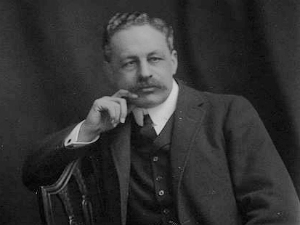
Sir Halford Mackinder: The father of geopolitics.
 
To keep the revolutionary Russian government weak, he argued, it would be necessary to construct a “cordon sanitaire” of Western-oriented regimes out of bits of the now defunct Austro-Hungarian, German and Russian Empires. Crucially, among the territories to be included in Mackinder’s list of westward-oriented buffer-states were Georgia, Byelorussia and the Ukraine.
 
According to Mackinder’s own “Heartland” theory, whichever great power, or combination of great powers, ended up acquiring these territories – especially the Ukraine – would soon be in a position to rule the world. This was because the possession of these territories would open the way to the strategic heart of what he called “The World Island” – the geographically contiguous Eurasian and African land-masses.
 
Mackinder’s infamous geopolitical formula: “Who rules East Europe commands the Heartland; Who rules the Heartland commands the World Island; Who rules the World Island commands the World”; was to inspire not only Adolf Hitler, but an alarming number of American geostrategic thinkers throughout the Cold War.
 
 
Geopolitics For Beginners: Frank Kapra's Why We Fight - a motivational series of films produced for American servicemen during World War II - leans heavily (and without attribution) on Mackinder's geopolitical theories. That  they were seized upon by German nationalists in the 1920s and 30s rendered Mackinder's ideas unfit for polite public discussion. (But not for Cold War strategy sessions!) The relevant section begins about 4 minutes in.
 
These same geostrategic thinkers, confronted with the unexpected collapse of the Soviet Union, immediately sought to apply Mackinder’s formula. The US and its Nato allies were urged to take control of East Europe as quickly as possible.
 
What was surprising was that the West European states, freed from the threat of Moscow’s armoured divisions, were unwilling to assert a more independent course. In spite of seeing the ruin all previous attempts to apply Mackinder’s geopolitical formulae had wrought upon Europe, her leaders made no attempt to restrain their American counterparts.
 
Perhaps those European leaders would have tried harder, had they known that Russia’s rising political star, Vladimir Putin, and his sinister coterie of foreign policy and military advisers, were every bit as enthusiastic in their admiration for Sir Halford Mackinder’s theories as their hawkish American adversaries. The West is not going to be permitted to rule East Europe on their watch. Not while Russia still commands nuclear weaponry.
 
Contemplating the outbreak of World War III is no joke.
 
This essay was originally published in The Waikato Times, The Taranaki Daily News, The Timaru Herald, The Otago Daily Times and The Greymouth Star of Friday, February 27, 2015.

Tuesday, 17 February 2015

Where, Oh Where, Are The Left's Heroes?

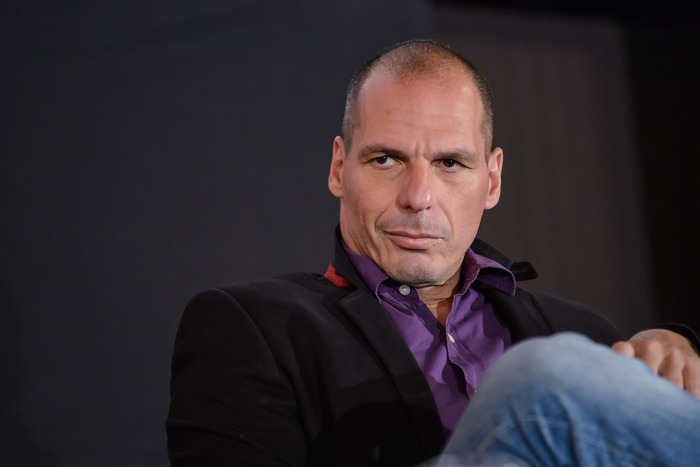
The Face Of The Resistance: Yanis Varoufakis, Greece's Finance Minister, is leading the fight against the European Commission's brutal austerity programme. Policies which, as applied to the Greek people, Varoufakis  condemned, memorably, as "financial waterboarding".
 
“WHERE, OH WHERE is our James Connolly?” I’ve lost count of the times I stepped forward to ask that question. Every 16 June, for the best part of a decade, would be my guess. The song was a regular feature of the annual “Bloomsday” celebration organised by Auckland playwright, Dean Parker. Achingly sad, the Lament for James Connolly offered a brief respite from the raunch and laughter more usually associated with these perennial tributes to James Joyce’s literary hero, Leopold Bloom.
 
Unlike the central character of Joyce’s celebrated novel, Ulysses, James Connolly was a very real Irish hero. A staunch nationalist, firebrand socialist, and peerless trade union organiser, Connolly was the darling of Dublin’s hard-pressed working-class. Seriously wounded in the Easter Rising of 1916, he was sentenced to death by a British court-martial. Because he was too injured to stand and face the firing squad, the British authorities, undeterred, tied Connolly to a chair and shot him sitting-down.
 
It is difficult to conceive of an act more calculated to inspire a nation’s poets and balladeers to passionate outrage. Neither in Ireland, nor in any station of the great Irish diaspora, has the name of James Connolly, or the manner of his death, been forgotten. The Lament For James Connolly is always heard in sobering silence.
 
Yanis Varoufakis is no James Connolly. Far from being the slum-born son of impoverished immigrants, Greece’s new Finance Minister was raised in one of Greece’s wealthiest families. Indeed, with his expensive private education, and his industrialist father’s money, Varoufakis could very easily have ended up as just one more pampered member of the global 1 Percent. Looking down at their new-born son 53 years ago, his parents almost certainly did not see him growing into the firebrand Marxist leader of Greece’s fight against “financial waterboarding”.
 
What makes Varoufakis even more remarkable is his former status as an academic economist. It’s been a very long time since the economics profession was renowned for producing either firebrands or Marxists. On the contrary, most contemporary economists seem content to function as the high-priests of neoliberalism, reconciling the ways of the almighty market to its hapless human victims. That one of their number has not only turned rogue, but armed his critical vision with political power is as surprising as it is encouraging.
 
And no one can accuse Mr Varoufakis of setting about his mission in a dull or conventional fashion. His flamboyant disdain for sartorial convention (he visited the British Chancellor of the Exchequer wearing a tie-less blue shirt, knee-length riding coat and biker boots) is only matched by his disdain for the “Troika’s” (European Commission, European Central Bank and the International Monetary Fund) demand that Greece’s newly-elected left-wing government adhere to its predecessors’ self-destructive austerity programme.
 
After detailing the exploits of the close-cropped and darkly handsome Varoufakis for the ZDF network, German television news-anchor, Maria Slomka, commented: “he is someone you could imagine starring in a film like Die Hard 6”.
 
That Varoufakis possesses a Bruce Willis-like potential for blowing things up is something of which Europe’s finance ministers are only too aware. “Grexit” – or a Greek exit from the Eurozone – is one deeply troubling possibility. Another, even worse, is “default”. But, as Varoufakis commented on his blog back in May 2010: “Simple logic dictates that if you cannot even conceive the possibility of leaving a negotiation, then it is preferable never to enter one.” In other words, if Europe is unwilling to take what Greece is offering, then Greece will exercise its right to leave.
 
Following Finance Minister Varoufakis’s European tour with a mixture of trepidation and exhilaration, the opponents of neoliberalism in this country are asking themselves why New Zealand’s opposition finance spokespeople are so unwilling to embrace the erstwhile Greek professor’s uncompromising economic radicalism.
 
One explanation may be found in Varoufakis’s social origins. Like Franklin D. Roosevelt, whose 1930s “New Deal” policies broke sharply with economic convention, Varoufakis is a member of his country’s upper class. Being one of them, he harbours no deep psychological need to win their acceptance. Indeed, it is very easy to imagine Varoufakis echoing FDR’s famous boast: “They are unanimous in their hatred for me, and I welcome their hatred!”
 
Such morale-boosting confidence is also accessible through conviction: from the certainty that one’s programme is not only the right thing to do, but that it will also work. It hardly seems fair that Varoufakis has both – in spades!
 
Part of the reason for the New Zealand Left being in such a deep funk at present is the absence of any progressive leader displaying even half Varoufakis’s confidence and conviction. Thirty years of political compromises and the ruthless application of a Labour/Green version of the “Tall Poppy Syndrome” has left this country's hero-deprived Left lamenting: “Where, oh where is OUR Yanis Varoufakis?”
 
A version of this essay was originally published in The Press of Tuesday, 17 February 2015.

Tuesday, 10 February 2015

Gone With The Nuclear Wind?

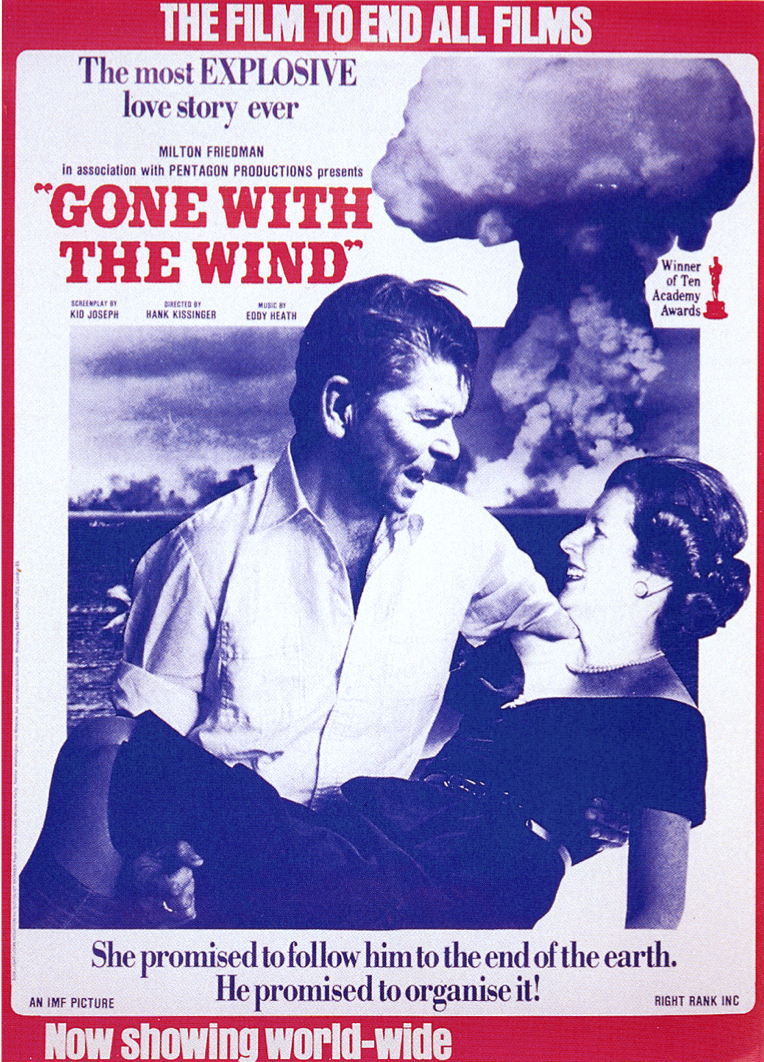
Tomorrow Might Not Be Another Day: The poster which swept the pre-Internet world in the anti-nuclear 80s. Those born in the post-Cold War period have little idea of how pervasive was the fear of nuclear annihilation. Those weapons have not gone away. Vladimir Putin's reassertion of his country's geopolitical interests may yet reacquaint the world with the fears of the 1980s. The Russian bear still has nuclear teeth.
 
IT WAS ONE of the most famous posters of the anti-nuclear 80s. Parodying the 1939 movie poster promoting Gone With The Wind, the 1980s version depicted Ronald Reagan in the role of Rhett Butler, and Margaret Thatcher as Scarlet O’Hara. Instead of rescuing his heroine from the wreckage of a burning Atlanta, Reagan carried Thatcher from the fallout of an ominous mushroom cloud. The anti-nuclear poster’s tag-line read: “She promised to follow him to the end of the earth. He promised to organise it.”
 
Black humour? Undoubtedly. But the worldwide popularity of the poster in those pre-Internet days speaks volumes about the existential fears of ordinary people everywhere that their leaders were impelling them towards a nuclear Armageddon.
 
These globally experienced fears were given specific expression in New Zealand by the nationwide movement to have the country declared nuclear-free. Distracted by the upheavals of the Springbok Tour for most of 1981, the Nuclear-Free New Zealand Movement only began gathering serious political momentum in 1982. By 1984, however, there were very few cities and towns in New Zealand that had not declared themselves nuclear-free. The incoming Labour Government, elected in July 1984, had little option but to go with the flow. Among its rank-and-file members (all 85,000 of them!) anti-nuclear sentiment was as intense as it was immovable.
 
It is difficult for New Zealanders who did not live through the early-1980s to appreciate just how tense the stand-off between the USA and the Soviet Union had become.
 
President Reagan and Prime Minister Thatcher were both implacable cold warriors. Indeed, when asked by a youthful aide to sum up his position on the Cold War, President Reagan breezily replied: “Well, I think we should win it.”
 
Soviet leaders, by contrast, came and went with almost comical speed. Between the death of Leonid Brezhnev in 1982 and the accession of the Soviet Union’s last leader, Mikhail Gorbachev, in 1985, the world welcomed and farewelled in quick succession Yuri Andropov and Konstantin Chernenko.
 
Meanwhile, as the Soviets were casting about frantically for a leader capable of lasting longer than eighteen months in office, Nato forged ahead with its plans to install nuclear-tipped Cruise missiles – a first-strike weapon – along the length of the Iron Curtain. Not surprisingly, the vast nuclear arsenals of the opposing superpowers were on a hair-trigger.
 
To New Zealanders born after 1991, the year the Soviet Union quietly blipped-off History’s screen, the mutual and assured destruction (MAD!) strategies of the Cold War era are mostly experienced as the more-or-less harmless echoes from a far-off, but very-far-from-harmless, historical era.
 
Today’s 24-year-olds may be intellectually aware that substantial stockpiles of nuclear weapons still exist in the United States and the Russian Federation, but the oppressive sense of their parents’ generation, that the slightest political miscalculation (or even a flock of errant geese!) might trigger the utter destruction of human civilisation, has, mercifully, faded from memory.
 
Global Warming, the existential threat du jour, may prove to be equally devastating, but its effects will be experienced over decades – not in the micro-seconds of a nuclear detonation.
 
Meanwhile, as the Millennials battle to prevent runaway global warming, another, all-too-literal battle rages between the forces of the Nato-supported Ukrainian government and the Russian-backed militias of Ukraine’s breakaway eastern provinces. Reported only fitfully in the Western news media, this conflict now threatens to escalate into a general European war. As former Swedish Prime Minister, Carl Bildt, told the Frankfurter Allgemeine Zeitung on Sunday.
 
“Unfortunately, war with Russia is conceivable. We are definitely living through one of the more dangerous historical phases, especially if you view the situation from a European perspective […] What makes the situation so explosive is that there is also great uncertainty about global power relations.”
 
The global uncertainty Mr Bildt speaks of is being fuelled by statements issuing from the United States Vice President, Joe Biden, reaffirming the Obama Administration’s determination to “allow Ukraine to defend herself”. By which the Americans mean – be given access to the heavy weapons necessary to drive back the pro-Russian separatists.
 
The German Chancellor, Angela Merkel, has reacted sharply to the Vice President’s statement, declaring that she could not “imagine any situation in which improved equipment for the Ukrainian army leads to President Putin being so impressed that he believes he will lose militarily.”
 
Only now is the European Union beginning to grasp its reckless folly in allowing anti-Russian extremists within Nato to connive in the fascist-supported overthrow of Ukraine’s democratically-elected President, Victor Yanukovych, in February 2014. Only now, having spent the last 12 months baiting the Russian bear, have the Europeans, the Americans, and the rest of us, belatedly remembered that the Russian bear has nuclear teeth.
 
The Nato powers promise to follow the fascist-backed Ukrainian regime to the end of the earth. Vladimir Putin offers to organise it.
 
This essay was originally published in The Press of Tuesday, 10 February 2015.

Wednesday, 21 January 2015

Twilight Of The West?

Germany Wins And Europe Is Free: As the Nazi regime reeled before Stalin's armies, the focus of its propaganda shifted from glorifying German arms and aims, to one of providing Europe's last desperate defence against the bestial threat from the East. Worrying echoes of this propaganda theme can now be detected on the streets of Dresden and, increasingly, across the entire Western World.

IN THE FINAL desperate months of the Second World War, Nazi propaganda underwent a subtle but significant shift of emphasis. In the glory days of victory, when Europe lay at Hitler’s feet, it was Germany’s triumph that was celebrated. But, as Stalin’s divisions rolled inexorably across the Great European plain, and all prospect of a Nazi victory retreated before them, the war was re-presented as a titanic clash of cultures in which a bestial Bolshevism sought to obliterate 3,000 years of European civilisation and extinguish forever the light of the West.
 
The threat from the East is as old as Europe’s memory of Attila and his marauding Huns. That is to say, a strategic nightmare extending all the way back to the dying days of the Roman Empire. Nor was it an empty threat. In the Thirteenth Century the all-conquering armies of the Mongol Khan stood poised to make their final push to the English Channel. Only the untimely death of the Khan in faraway Mongolia spared Europe from the fate that overwhelmed the civilisation of the Han Chinese.
 
The other great threat from the East arrived in the form of the armies of Islam. The first onslaught came via Europe’s soft underbelly in the Eighth Century. Spain fell, and the armies of the Prophet were only finally halted at Poitiers in Central France in 732AD. The second onslaught, led by the Ottoman Turks, hit its stride in the Fifteenth Century, snuffing out the Byzantine Empire, swallowing Greece and the Balkans and striking deep into Eastern Europe. It was only decisively checked at the gates of Vienna in 1683.
 
Existential threats to the survival of Christendom cannot, therefore, be dismissed as mere fever dreams of the racist European Right. From the Fifth to the Seventeenth Century the survival of Christian Europe was, to quote the Duke of Wellington’s pithy description of the Battle of Waterloo: “A damned near run thing!”
 
Precisely because they were real, these threats have become deeply embedded in Europe’s collective memory and are, thus, available to propagandists of every hue. Though the Nazis were defeated, their imagery of a defiant West holding the line against the Godless Communist threat from the East, slotted seamlessly into the propaganda of the Cold War.
 
Old memes, it seems, die hard. Just over a week ago, in the German city of Dresden, more than 18,000 people participated in a demonstration organised by a political organisation calling itself “Pegida” – which stands for Patriotic Europeans Against the Islamization of the West. Demonstrators wore black armbands in memory of the 12 people slain at the offices of the French satirical newspaper, Charlie Hebdo.
 
Pegida is an odd political phenomenon. Its tactics and slogans borrow heavily from the mass protest movements that contributed to the fall of Communism 1989. This has not, however, prevented Germany’s Chancellor (and fellow former East German) Angela Merkel, from accusing Pegida’s followers of having “hate in their hearts”.
 
Certainly the opinion of the German Left is that Pegida is a manifestation of the extreme “Neo-Nazi” Right. Counter-demonstrations attacking Pegida’s “Islamophobia” have attracted tens of thousands in Berlin, Cologne and other large German cities.
 
Many Germans are worried that their country’s erstwhile deeply-ingrained anti-Semitism, of which the Nazis took such deadly advantage in the Twentieth Century, has mutated into an equally irrational, but no less vicious, hatred of Muslims in the Twenty-First. After all, it’s not as if the modern-day equivalent of Suleiman the Magnificent is encamped in the outer suburbs of Dresden. Or that the self-aggrandizing “Islamic State” (barely the size of a single province of the mighty Ottoman Empire) constitutes an existential threat to European civilisation. Even thirty-five years from now, in 2050, the best demographic projections put Germany’s Muslims at just 7 percent of the German population.
 
What, then, is Pegida so frightened of?
 
Perhaps it’s the realisation that the rest of the world is crowding in on Europe. That European civilisation no longer commands the power and prestige of a century ago, when its empires bestrode the planet like armoured colossi.
 
As refugees from Africa and the Middle East clamour to be admitted to the member countries of the European Union, perhaps its peoples hear faint echoes of the Barbarian hordes clamouring to be admitted to the grandeur that was Rome.
 
Perhaps Europeans have been seized, like the Nazis in 1945, with the terrifying realisation that the world, upon whose resources they have all grown so fat, is very, very large; and that Europe, her 3,000 years of civilisation notwithstanding, is actually rather small.
 
Perhaps, like the Jews before them, Europe’s Muslim population has become an alarming reminder that history does not stand still, and neither do the peoples who make it. For five centuries Europe has been pushing against the world. Now the world is pushing back.
 
This essay was originally published in The Press of Tuesday, 20 January 2015.

Monday, 8 September 2014

Putin - The Grand Master


I FOUND THIS little gem on Cameron Slater's Whaleoil blogsite (yes, yes, I know, but it's actually a really interesting place to visit!) and I just had to re-post it on Bowalley Road.
 
This posting is exclusive to the Bowalley Road blogsite.

Tuesday, 25 February 2014

Putin's "Plan B"

Plan B: Did the thousands of Ukrainian revolutionaries who cheered her at the Maidan realise that Yulia Tymoshenko, no less than her great political rival, Victor Yanukovych, is a person the Russian President, Vladimir Putin, can "do business with". If Tymoshenko cannot be leveraged into a regime acceptable to both the EU and the Russian Federation, then the territorial integrity of Ukraine will become a live issue.

WHEN THE RIOT POLICE abandoned their posts and the protesters entered the hurriedly vacated offices of President Victor Yanukovych, Ukraine passed from mass protest to revolution. When the Ukrainian armed forces declared their unwillingness to defend its deposed government, revolution took a further critical step towards consolidation and success.
 
What happens next will depend on how Ukraine’s neighbours respond to the fast-moving situation the revolution has unleashed. The Russian Federation, which describes Ukraine as a “brother state” and “strategic partner” will be asking itself whether a virulently anti-Russian government in Kiev is tolerable. If the answer is “No”, then Moscow may have to swallow its pride and swing in behind a new Ukrainian leader – one both sides can live with.
 
The European Union, has a different problem. While achieving most of its short-term goals vis-à-vis removing the government of President Yanukovych, it must consider the long-term ramifications of being seen to endorse the violent overthrow of a democratically-elected government. (Ukraine was scheduled to go to the polls in March 2015.)
 
The EU also needs to consider the implications of its loud condemnation of President Yanukovych’s use of deadly force to defend his government from armed extremist groups intent upon its overthrow.
 
Confronted with anything like the same challenges, what would the leaders of Sweden, Poland and the United Kingdom, President Yanukovych’s harshest critics, have done?
 
Would the right-wing Swedish prime minister, Carl Bildt, have denied himself the resources of the Swedish armed forces if far-Left extremists demanding his resignation had broken into regional Police armouries, seized firearms and started ferrying them to demonstrators attacking and killing police officers in the heart of Stockholm?
 
Would the spirit of the 1980s protest movement Solidarity have been strong enough to keep the Polish army in its barracks in the face of a violent attack upon the democratically-elected government of Donald Tusk?
 
Would the same David Cameron who, in 2011, demanded the ruthless repression of the youthful urban rioters in London, Birmingham, Liverpool and other British cities, have urged the Metropolitan Police to “pull back” in the face of shotgun-wielding demonstrators in Trafalgar Square? With the smoke of burning barricades wafting over the Houses of Parliament, would the same political system that gave us “Bloody Sunday” and Blair Peach have unilaterally foresworn all recourse to deadly force?
 
Certainly, Messrs Bildt, Tusk and Cameron seem unlikely converts to the revolutionary ideas of the Founding Fathers of the United States who, on 4 July 1776, put their signatures to Thomas Jefferson’s celebrated Declaration of Independence.
 
“[W]hen a long train of abuses and usurpations,” wrote Jefferson, “pursuing invariably the same Object evinces a design to reduce [the people] under absolute Despotism, it is their right, it is their duty, to throw off such Government, and to provide new Guards for their future security.”
 
Well, there’s no disputing the fact that Ukraine has provided herself with “new guards”, but whether her “future security” can safely be left to the young, hard-core nationalists of the far-right “Pravy Sektor” only time will tell.
 
The triumph of Pravy Sektor is perplexing. In just about any other jurisdiction the appearance on the barricades of such a heavily armed group would have been the signal for the declaration of a State of Emergency or, more likely, Martial Law. Why this didn’t happen in Ukraine, especially after the exhausted Riot Police started losing men to small arms fire, is baffling.
 
In the famous Sherlock Holmes case “Silver Blaze”, Inspector Gregory from Scotland Yard asks: “Is there any other point to which you would wish to draw my attention?” Holmes replies: “To the curious incident of the dog in the night-time.” The puzzled Gregory retorts: “The dog did nothing in the night-time.” Says Holmes: “That was the curious incident.”
 
In danger of becoming lost in the kaleidoscopic tumble of events of the past few days was President Yanukovych’s dismissal of the Commander of the Ukrainian Armed Forces, Col. General Zamana, and his replacement by the Naval Commander, Admiral Yuriy Ilyin. With hindsight this can be seen as the Ukrainian President’s last throw of the dice. That it failed is almost certainly due to the intervention of both the USA and the Russian Federation.
 
The Obama Administration had warned repeatedly that the use of the army against the protesters would escalate the crisis to a new and dangerous level. Vladimir Putin, clearly unwilling to raise the stakes that high, appears to have abandoned President Yanukovych in favour of a “Plan B”.
 
How brave and fragile she looked, wheelchair-bound and bundled against the cold, speaking tearfully of a New Ukraine born of the blood spilled in the “Maidan” – Kiev’s Independence Square.
 
How many of those cheering thousands understood that Yulia Tymoshenko is someone Vladimir Putin can do business with?
 
Pawns take Knight. Check. Queen takes pawns. Checkmate.
 
This essay was originally published in The Press of Tuesday, February 25, 2014.