Showing posts with label Inequality. Show all posts

Thursday, 6 October 2022

Pressure Towards The Mean: Do We Really Want To Abolish Streaming?

Levelling Down: What will happen when streaming is no more? Will the children of New Zealand emerge from the public education system with the skills and qualifications necessary to foot-it in the modern world? Or, will their education be limited to whatever the least engaged and least talented students allow their teachers to impart? 

ABOLISH STREAMING, that is the demand of the Post-Primary Teachers Association (PPTA). They are not alone in their determination to put an end to the “blatantly racist” practice of grouping secondary-school students according to their intelligence/academic ability. The Minister of Education, Chris Hipkins, considers streaming “inequitable” and the Ministry of Education agrees with him. With forces as powerful as the Minister, the Ministry, and the Union ranged against the practice, its days would appear to be numbered.

Which leaves New Zealanders with the vexed question of what will happen when streaming is no more? Will their children emerge from the public education system with the skills and qualifications necessary to foot-it in the modern world? Or, will their education be limited to whatever the least engaged and least talented students allow their teachers to impart? If that is the outcome, then all the opponents of streaming will have achieved by its elimination is a society managed by traditionally-educated immigrants equipped with all the internationally recognised skills and qualifications that young, publicly-educated New Zealanders no longer possess.

Although driven by demands for equity, the abolition of streaming in the public secondary system will not make New Zealand a more equitable nation. No more than the students themselves, will parents be fooled by the randomised mixing of individuals of radically different abilities. The mums and dads of highly intelligent and powerfully motivated children will do everything within their power to ensure that their offspring are pushed and extended to the fullest extent of their powers. If they cannot get this from the public sector, then they will turn to private providers or themselves. The reformers’ push towards equity will not end in a narrowing of the class and racial divides, it will force them wider apart.

Māori middle-class parents will be as keen to see their offspring extended as middle-class Pākehā parents. Those who cannot afford the $30,000 per year fees of the leading private schools, will do all within their power to move their families into the zones of the most prestigious public schools, where the strong class bias of the “good schools’” catchments will lessen the impact of streaming’s abolition. Māori middle-class parents are well aware that as diversity quotas are achieved, and the need for positive discrimination declines, social advancement will increasingly depend on having the right credentials. Though they can hardly come out and say so, the drive towards racial equity – of which the abolition of streaming is part – is not in their own children’s interests.

There is, after all, a very powerful justification for streaming. Highly-complex, technologically-sophisticated civilisations, based on science, simply cannot do without the rigid hierarchies of competence that keep them functioning. The streaming process is, therefore, absolutely critical to the social and intellectual winnowing required to concentrate and develop talent. Streaming isn’t just about grouping the smartest students together, it’s about acculturating the smartest students to being smart. Streaming encourages students to value and accept their larger capabilities. In a non-streamed environment, the pressure is inevitably towards the mean – in every sense of the word.

The supposed downside of this meritocratic imperative is its negative impact upon those of lesser competence. New Zealanders, in particular, jibe at the very notion of hierarchies. They tell themselves that they are egalitarians, and fool themselves into thinking that egalitarianism means every person is the same as every other person – even when they know this isn’t true. (Just ask them if they would select an All Black team on that basis!)

New Zealanders have forgotten that their public education system was not conceived as an environment in which every student gets an “A”, but as a place where every kid capable of getting an “A” receives the professional instruction and educational resources he or she needs to be awarded an “A”. It should not matter whether you’re Māori or Pākehā, rich or poor, male or female, gay or straight: if you’ve got the talent, then you should be equipped to go as far as it can take you. And if getting “As” in academic disciplines isn’t your thing, then the education system’s job is to find out what is your thing – and develop it to the fullest extent.

That is what Charles Beeby and Peter Fraser meant when, together, they defined the education policy of the First Labour Government:

“The government’s objective, broadly expressed, is that every person, whatever his level of academic ability, whether he be rich or poor, whether he live in town or country, has a right, as a citizen, to a free education of the kind for which he is best fitted, and to the fullest extent of his powers.”

Apart from the relentless use of the masculine pronoun, the phrase that most sticks in the craw of twenty-first century educators is: “for which he is best fitted”. The PPTA’s argument is that the cultural logic of colonisation leads racist Pakeha teachers to the view that Māori and Pasifika are “best fitted” to be hewers of wood and drawers of water: a stereotype into which, for the rest of their time in secondary school, the system will do its best to squeeze them. Get rid of streaming, argues the Union, and this evil colonial project is made much more difficult.

Except, of course, transforming secondary school classes into random collections of students of every colour from every background is, itself, a pipe dream. Different races and different classes live in different places. Getting rid of streaming at Auckland Grammar will look quite different from getting rid of streaming at Northland College. And even if the Ministry of Education could magically produce perfectly random collections of students (much as the US Supreme Court tried to do by “bussing” kids from one side of town to the other) the Bell Curve would still not be denied – only those kids at either end of it.

It is a matter for considerable regret that the PPTA, in its determination to overcome the effects of colonisation, shows every sign of establishing a new regime where the “soft bigotry of low expectations” will only end up making the racist outcomes worse.


This essay was originally posted on The Daily Blog of Thursday, 6 October 2022.

Thursday, 27 January 2022

Accidentally Pandering To The Rich – On Purpose.

Glad You Liked It! In a nutshell, what Bernard Hickey’s Kaka podcast seems to be saying is that in an unabashedly capitalist nation, a government elected on the strength of middle-class (i.e. homeowners) votes, made sure that the massive transfers of cash required to keep the economy afloat in the midst of a global pandemic went to capitalists, and the people whose votes it really, really, really didn’t want to lose. Well, duh! Who would have thought it?

THERE’S NO DISPUTING the shock-value of the statistics assembled by Bernard Hickey in his latest Kaka podcast. What they show is that, in responding to the Covid-19 pandemic, the New Zealand Government transferred vastly more money to the business sector and homeowners than it did to beneficiaries and the working poor. Or, as he puts it: “The Labour Government, supported by the Greens, presided over policies that accidentally on purpose engineered the biggest transfer of wealth to asset owners from current and future renters in the history of New Zealand.”

Well … maybe. The problem with statistics is that they are generally presented without regard to context. To be honest, that’s probably a good thing. I don’t think it would be all that helpful (or ethical) for the Department of Statistics to encase its data in a carapace of tendentious ideology. In the 1950s American cop show, Dragnet, the hero’s signature line was: “Nothing but the facts.” That sounds about right to me.

So, let’s not argue about the facts. I’m sure a financial journalist of Mr Hickey’s experience has got the numbers right. What I’m much less certain of is whether his interpretation of the facts makes a great deal of sense.

In a nutshell, what Mr Hickey seems to be saying is that in an unabashedly capitalist nation, a government elected on the strength of middle-class (i.e. homeowners) votes, made sure that the massive transfers of cash required to keep the economy afloat in the midst of a global pandemic went to capitalists, and the people whose votes it really, really, really didn’t want to lose.

Well, duh! Who would have thought it?

And, with all due respect to Mr Hickey, it is nothing short of facile to evince horror and outrage that the perpetrators of this exercise in maintaining class (and, let’s be honest, racial) privilege were Labour and Green politicians. Labour gave away its historical role as the workers’ friend in 1984 – nearly 40 years ago. What’s more, since the introduction of “Rogernomics”, the Labour Party has occupied the Treasury Benches for a total of nearly 14 years. In all that time, it has made no serious attempt to dismantle the neoliberal regime it created. Expecting Jacinda Ardern to behave like Mickey Savage is just silly.

Especially when you consider the makeup of New Zealand’s House of Representatives. Labour, an unabashedly capitalist party, holds 65 seats. National, another unabashedly capitalist party, holds 35 seats. Act, a fanatically capitalist party, holds 10 seats. The Greens, supposedly not a capitalist party, but one which has, to date, done nothing to suggest that it is an anti-capitalist party, also holds 10 seats. Which leaves the Māori Party, an ethno-nationalist party which appears to be okay with capitalism – but only if it’s Māori capitalism – with just 2 seats.

The question I would put to Mr Hickey is: How would he have persuaded this House of Representatives, composed more-or-less entirely of MPs committed to the preservation of New Zealand’s capitalist system, to adopt policies which differed in any meaningful way from those actually implemented by the Labour Government of Jacinda Ardern? Not forgetting that for the first few months of the Covid-19 pandemic, the Prime Minister was dependent on the support of NZ First – a party convinced that capitalism could, and should, do better.

Presumably, Mr Hickey believes that New Zealand’s parliamentarians, alerted to the sheer bloody inequity of their Covid response, should have felt obliged to come up with something much kinder and fairer.

But why would they feel obliged to do that? Just recently I learned that in the United States the friends of capitalism (about 90 percent of the country!) not only believe in the doctrine of laissez-faire – French for letting the market rip – but that they also subscribe to what they call “lazy-fair”. Apparently, because so many of the underprivileged are lazy, it’s only fair that they’re poor. I know, I know, it’s an awful thing to say – although I’m sure it raises a good guffaw among the Country Club set. But, you know what? Although they would never repeat such an awful “joke” out loud, there are plenty of Kiwi MPs (some of them in the Labour Party) who subscribe wholeheartedly to the underlying philosophy of the “deserving” and “undeserving” poor.

Even worse, there are hundreds-of-thousands of ordinary Kiwi voters who subscribe to exactly the same philosophy – with bells on. The awful truth about New Zealand politics is that practically all of our political parties are just too scared to suggest anything like the massive transfer of wealth to the “current and future renters” whom Mr Hickey clearly believes the Government’s Covid response should have targeted.

The only way such a transfer could possibly have eventuated is in a political context dominated by the electoral success of a party aggressively representing the interests of the working poor and beneficiaries. Assuming such a party drew the bulk of its support from the 700,000 eligible voters who declined to participate in the last election, its impact on what politicians considered both possible and acceptable would be huge.

The problem, of course, is that every party which has tried to mobilise these voters has failed miserably. The Internet-Mana Party may have had a brilliant manifesto (so brilliant that I voted for it!) but its share of the 2014 Party Vote was a demoralising 1.42 percent.

In other words, if all the “current and future renters” had voted for Internet-Mana in 2014, its ideological and political influence would have made the Covid-19 response delivered by Labour over the past 21 months unthinkable.

And that’s what I mean by statistics shorn of context not amounting to very much. For the only people who counted – the people who voted – Jacinda Ardern’s and Grant Robertson’s Covid response was good enough to see them returned to office with 50 percent of the Party Vote. That Mr Hickey should be surprised that the values of politicians tend to reflect the values of their supporters is, itself, surprising.

If he wants a revolution, Mr Hickey will need to do more than excoriate Labour and the Greens on Substack – he’ll need to organise one.


This essay was originally posted on The Daily Blog of Thursday, 27 January 2022.

Thursday, 18 February 2021

In The Know: Making Sense Of Labour’s Inaction.

"I know what you're not thinking!" Thanks to their polling agency and the participants in its focus-groups, the Labour leadership possesses a great deal more information about the Kiwis clamouring for action on the housing and inequality fronts than most journalists and lobbyists.

ACCORDING TO PEOPLE “in the know”, Labour is awash with more cash than its seen in a very long time. Apparently, Jacinda Ardern’s handling of the Covid-19 crisis didn’t just net her party an unprecedented number of votes, it brought in tons of funds. While this happy situation endures, Labour is said to be polling and focus-grouping like there’s no tomorrow. The PM doesn’t just have her finger on the pulse of the nation, she’s reading its ECGs.

This insight – if that is what it is – goes a long way towards explaining what a great many journalists and commentators have found immensely perplexing. Why, with an absolute majority in the House of Representatives, is this government so reluctant to use it for anything other than legislatively facilitating Maori wards, and (apparently) making it easier to convict men accused of rape? Why, with inequality increasing, and the housing crisis becoming more acute with every passing week, have Jacinda and her Cabinet stubbornly refused to direct anything more substantial than pious rhetoric at either issue?

Towards the end of last year, for example, the government found itself on the receiving end of a growing cacophony of calls for action on the housing front. Those calls came from across the political spectrum. On TVNZ One’s Q+A show, Laila Harré on the left, and Fran O’Sullivan on the right, were united in their demand for action. The push came from employers, unions, churches and NGOs. National and Act swelled the chorus. It was as near to a show of public political unanimity as New Zealand had seen in decades.

Twenty years ago, the political pressure generated by such a powerful display of public concern would have been irresistible. Indeed, liberal-democratic theory holds that no government can resist such pressure without registering a significant fall-off in popular support. Was Jacinda moved? Was Grant Robertson? Not one bit. The rhetoric of Labour leaders’ may have edged up slightly on the piety scale. Jacinda’s look of concern may have grown even more compelling. But, nothing was done.

What on earth had happened to the “politics of kindness”? Why was Labour being so bloody-minded – not to mention so bloody mean? Why, when everybody was saying “Yes please!”, was the Labour Government saying “No thank you!”

The answer, of course, is because “everybody” wasn’t saying it. Thanks to their polling agency and the participants in its focus-groups, the Labour leadership possesses a great deal more information about the Kiwis clamouring for action on the housing front than most journalists and lobbyists.

Confronted with a simple “Are you concerned about the lack of affordable housing?”, most New Zealanders will respond in the affirmative. But, ask them whether they favour addressing the housing problem by means of a Capital Gains Tax, and their agreement will evaporate instantly, like spilt beer on the barbie.

Allow a randomly selected group of focus-group participants to range widely over the big issues of the day, and the comments and expressions captured by the organisers’ microphones and cameras will reveal just how divided our society has become. Between rich Kiwis and poor Kiwis; Boomers and Millennials; people of colour and the white majority: the chances are high these recordings will confirm that, in the New Zealand of 2021, unanimity is in very short supply.

Just how dispiriting this must be for Labour’s new MPs is readily imagined. Fresh from mixing with family and friends over the Christmas break they will roll up to their first big caucus meeting of the year brim-full of the opinions and criticisms they have been given. How hard it must be for them to discover that what they have been told in no way reflects what is actually happening out there in the electorate.

Among the sort of folk who know and like Labour MPs, the level of concern for the homeless, renters, and first home buyers, is unquestionably real and urgent. The same is probably true of the mostly young journalists writing and broadcasting about these issues. They, however, are not the only people with concerns; attitudes; and (most importantly) interests. What Labour’s new MPs think they know; and the knowledge which Labour’s pollsters have gleaned from the hard data of their surveys; are unlikely to be all that similar.

The New Zealand middle-class, like its counterparts in other western societies, will defend its advantages tenaciously. Sitting back and allowing the government to appropriate and redistribute its wealth – especially among those it dismisses as the “undeserving poor” – is not an option it is likely to greet with the slightest degree of enthusiasm.

Just how unenthusiastically such notions are received soon becomes very clear to those tasked with watching and listening to the reactions of focus-groups. These can be hair-raisingly racist and sexist – more than enough to demoralise even the most idealistic supporters of the Labour and Green parties. That such brutal prejudices against the poor and marginalised are often reiterated with even greater vehemence by upwardly-mobile members of the working-class, makes them no easier to hear!

Their vested interests and shared prejudices notwithstanding, these two groups nevertheless contributed enormously to Labour’s electoral success in 2020. Keeping them on-side is, therefore, this government’s No. 1 political priority. It explains the PM’s point-blank refusal to countenance anything other than a general flattening of New Zealand property prices. Certainly, no policy measure threatening to weaken the “wealth effect” produced by inflated house prices will be countenanced. The good-will of the fortunate 15 percent of voters who shifted from National to Labour at last year’s general election must, at all costs, be retained.

Less clear, is whether Labour’s willingness to embrace the “woke” agenda represents a similar reflection of the data emerging from its opinion surveys and focus-groups. In return for the government leaving their wealth intact, have the middle- and upwardly-mobile working-classes suddenly become willing to tolerate the Labour-Green agenda on race, gender and sexuality? Are we looking at yet another of the Faustian pacts entered into by the Baby Boom generation? Something along the lines of: “You let us enjoy our tax-free capital gains, and we’ll tolerate your cultural revolution.”

Or, is it, rather, a case of not asking the sort of questions that could lead to the cancellation of a pollster’s contract. Requiring progressive MPs earning in excess of $140,000 p.a. to accept a moratorium on tax hikes is one thing. Asking them to tolerate the racism, sexism and homophobia of the voters who placed them on the Treasury benches is another.

There are some answers a political party is better off not hearing.


This essay was originally posted on The Daily Blog of Thursday, 18 February 2021.

Tuesday, 28 January 2014

No Speeches On The State Of The Capitalist System

State of the System: What is it about Capitalism that allows so much to be denied to so many by so few? None of our political leaders "State of the Nation" speeches had anything to say about an economic system which is steadily reducing the opportunities for human participation in the processes of wealth creation.
 
ALL THREE LEADERS of the leading political parties have now delivered their “State of the Nation” addresses. To what degree the voters have been surprised, moved or inspired by their efforts will be registered in forthcoming opinion polls. If I had only one word to describe my own reaction to these political speeches it would be – underwhelmed.
 
None of our political leaders has yet delivered an adequate response to the extraordinary statistic released by Oxfam on the eve of the World Economic Forum at Davos in Switzerland. According to the UK based aid organisation, the world’s 85 richest individuals control a sum of wealth equal to that of the poorest half of the world’s human population – 3.5 billion people.
 
Now, I do not propose to argue the rights and wrongs of this extraordinary disparity. The gulf between the world’s wealthiest and poorest has always been vast, and who is to say that it is greater today than in 1914, 1814, or 1514 for that matter? A more useful question is what is it about our current economic system that makes it possible for so much to have been amassed from so many by so few?
 
To answer: ‘because that’s just the way the system works’ is clearly inadequate. Economic systems do not simply descend from the sky like rain or sunshine; they are human creations constructed for human purposes.
 
The economy of ancient Sparta, for example, was designed to sustain an army of proud and indomitable fighting men. Aware that money bred indolence and indulgence, Sparta’s rulers went out of their way to make getting rich more of a curse than a blessing.
 
According to the classical historians, Sparta’s official currency consisted of unwieldy iron bars several feet long. The gold, silver and bronze coins circulating among the other Greek city states were forbidden. In their place Spartans operated a form of voucher system – using leather tokens to acquire the basic necessities of life.
 
Not surprisingly, Sparta’s cumbersome currency isolated it from the thriving economies of its neighbours. Sparta’s rulers didn’t care: facilitating personal wealth was not their primary concern. Economically, Sparta relied upon the surpluses it extracted firstly from the Helots (farmers and herdsmen descended from the subject peoples of Sparta’s conquests) and secondly from the Periokoi – a slightly more privileged caste of merchants tasked with obtaining the commodities Sparta lacked.
 
Sparta was not a just, equitable or even a particularly comfortable society, but it was extraordinarily successful at what it set itself to do – which was to fight and win against all comers. Its peculiar economic arrangements were the product of its national objectives. Successes won with gold came a poor second to victories won by iron.
 
If the mind-boggling amount of wealth accumulated by Oxfam’s “85 individuals” is any guide, then contemporary capitalism is also extraordinarily successful at what it has set itself to do: make more and more money for fewer and fewer people.
 
According to a 1983 study undertaken by the German economist, F. Vester, the investment of a billion Deutschemarks in the years 1955-60 produced 1 million jobs. The same amount invested between 1960-65 generated only 400,000 jobs. Between 1965-70, far from generating employment, a billion Deutschemark investment would have eliminated 100,000 jobs. Half-a-million jobs would have been lost if the capital sum was invested between 1970 and 1975.
 
In other words, the ineluctable trend in modern capitalism is towards job-free growth. Or, as the American economist, Allen Sinai, told the New York Times in 2010: “American business is about maximizing shareholder value. You basically don’t want workers. You hire less, and you try to find capital equipment to replace them.”
 
The American socialist, G.S. Evans, calls this “Living Dead Capitalism” – a capitalism no longer capable of addressing contemporary human obligations but which, by super-efficiently funnelling the fruits of its own automatising ingenuity upwards to the dwindling number of real persons directing investment flows, continuously concentrates the “surplus value” of its non-human workforce in fewer and fewer human hands.
 
For a while the dire implications of this trend were masked by the explosion of service-sector employment. While the number of steel and auto-workers shrank, the number of data manipulators and patty-flippers sky-rocketed. But the same inhuman capitalist logic which prompted capitalists to invest in robotic car assemblers is now computerising millions of mid-level service industry jobs.
 
How long can it be before 42 individuals are worth as much as the poorest three-quarters of humanity? Or, just one person controls the wealth of the entire planet?
 
Spartan political-economy may have been brutally inefficient, but at least it delivered its citizens what they prized most – military victory.
 
What will Evans’ “living dead capitalism” deliver?
 
It’s an issue our vote-seeking political leaders unanimously declined to address. State of the Nation speeches are for encouraging voters – not questions.
 
This essay was originally published in The Press of Tuesday, 28 January 2014.

Wednesday, 1 January 2014

"The Defining Challenge Of Our Time"

Progressive Populism: Barack Obama's promise of collective empowerment was crucial to his 2008 election victory. On 4 December he signalled that combatting economic inequality would be the motivating theme of the Democratic Party's 2014 bid to reclaim control of the House of Representatives. If our own David Cunliffe was wise he would make the fight against inequality similarly central to Labour's 2014 election campaign.
 
2014 IS NOT ONLY an election year in New Zealand, it is also the year of the “mid-term” elections in the United States. In both countries the debate between Left and Right will be focus on rising economic inequality and what, if anything, should be done to reduce it.
 
Speaking to a meeting of the Centre for American Progress in Washington DC on 4 December, President Barack Obama described economic inequality as “the defining challenge of our time” – immediately touching off a spirited debate, not only between liberals and conservatives, but between the moderate and radical wings of his own Democratic Party.
 
The rhetorical struggle on the American Left, will be over whether or not the term “economic populism” is presented as being a good thing or a bad thing. The Democratic Senator for Massachusetts, Elizabeth Warren, has seized the initiative by boldly laying claim to the progressive legacy of American populism – a tradition enthusiastically endorsed by the Nobel-Prize-winning economist, Paul Krugman, who ended a recent New York Times blog posting with the words: “go populism go.”
 
The debate in New Zealand has yet to reach this level of noisy excitement, but within the Labour Party a similar struggle between moderates and radicals is underway.
 
At the Party’s annual conference, held in Christchurch in early November, the impetus towards economic populism was readily apparent. Ordinary branch members and the party’s trade union affiliates, fresh from their triumph in the leadership primary, were keen to rally Labour’s traditional support-base around a populist banner.
 
Significantly, their calls for a rethink of Labour’s policy of raising the age of eligibility for NZ Superannuation to 67, and for Labour to distance itself from the Trans-Pacific Partnership Agreement (both of which fall squarely under the rubric of economic populism) were finessed away by party bosses behind-the-scenes.
 
The biggest stumbling blocks to a campaign based on economic populism are Labour’s economic spokesperson, David Parker, and its trade spokesperson, Phil Goff. Both of these senior Opposition politicians believe that if Labour is to win the 2014 General Election, then it must present a moderate and responsible face to both the electorate and (perhaps more importantly) to the country’s opinion leaders.
 
Both men subscribe to the view that elections are won or lost in the middle-ground of politics, where men and women of moderate opinions congregate. Without the endorsement of these moderate voters, runs the argument, a change of government will not happen.
 
At work here is a powerful sub-text in which political moderation is conflated with the middle-class. If only by implication, the Right associates economic populism (which it regards as a form of extremism) with politicians purporting to speak for working-class voters and beneficiaries.
 
And this produces another, more sinister, twist to the idea of the “Moderate Middle”. In both the USA and New Zealand, the non-white population is strongly over-represented among low-paid workers and beneficiaries.  It does not, therefore, take much to persuade the mostly white middle-class voters of either country that economic populist policies designed to uplift Blacks and Latinos, Maori and Pasifika, can only be implemented at their expense.
 
The unacknowledged racism inherent in the strategy of appealing to the “Moderate Middle” forced Barack Obama, the Democratic party’s first black presidential candidate, to pursue a strategy of going around the white middle-class and mobilising those Americans least likely to participate in the electoral process: young people and poor people.
 
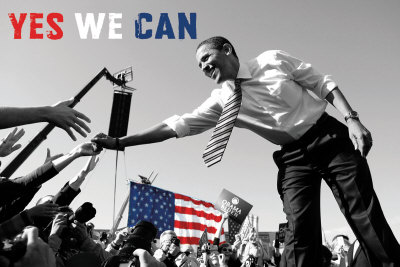
The extraordinary power of his campaign rhetoric in 2008 – his famous “Yes We Can” slogan – was designed to persuade those alienated and marginalised citizens who habitually dismissed politics as having nothing in it for them that – this time – they could make a difference.
 
And once they were “in” the electoral process, the Democratic Party’s extraordinary political machine made sure that they remained accessible to President Obama’s appeal for a second term. The Democrats ability to identify and mobilise an unusually large proportion of their 2008 vote was a crucial factor in Barack Obama’s defeat of Mitt Romney in 2012.
 
And now the President’s party is preparing to mobilise those same voters by presenting the 2014 mid-term elections as an opportunity to strike a blow for economic equality by helping “progressive populist” Democrats reclaim the House of Representatives from the far-right “Tea Party” Republicans.
 
If Labour is to retake New Zealand’s House of Representatives it needs to learn from the Democratic Party’s example. A strategy based on competing for the support of the Pakeha middle-class will do nothing to mobilise the 750,000 mostly young and poor voters who sat out the 2011 General Election.
 
Only an unashamedly populist campaign that declares “Yes we can eliminate economic inequality in New Zealand!” offers Labour the slightest hope of convincing the young and the poor that by casting a vote in 2014 they, too, can make a difference.
 
This essay was originally published in The Press of Tuesday, 24 December 2013.

Tuesday, 21 May 2013

Child Poverty: The Manifestation Of Parental Sin?

Simple Message - Contradictory Response: In the minds of many conservative New Zealanders a battle rages between their instinctive urge to protect and defend our species’ most vulnerable members, and an equally powerful conviction that their children, as extensions of themselves, constitute a form of personal property – over whom the community and/or the state should exercise only a strictly limited authority.
 
WHEN IT COMES to children, the attitudes of New Zealanders are contradictory and hard to fathom. On the one hand, we respond with genuine anguish to media accounts of infants fallen victim to adult violence. On the other, we sign monster petitions demanding the right to administer corporal punishment to our own children. If asked, we will agree emphatically that “the needs of the child must always come first”. But, when welfare agencies and anti-poverty campaigners attempt to do just that, we attack them for undermining parental responsibility.
 
It’s as if, in the mind of every Kiwi, a battle rages between the instinctive urge to protect and defend our species’ most vulnerable members; and an equally powerful conviction that our children, as extensions of ourselves, constitute a form of personal property – over whom the community and/or the state should exercise only a strictly limited authority.
 
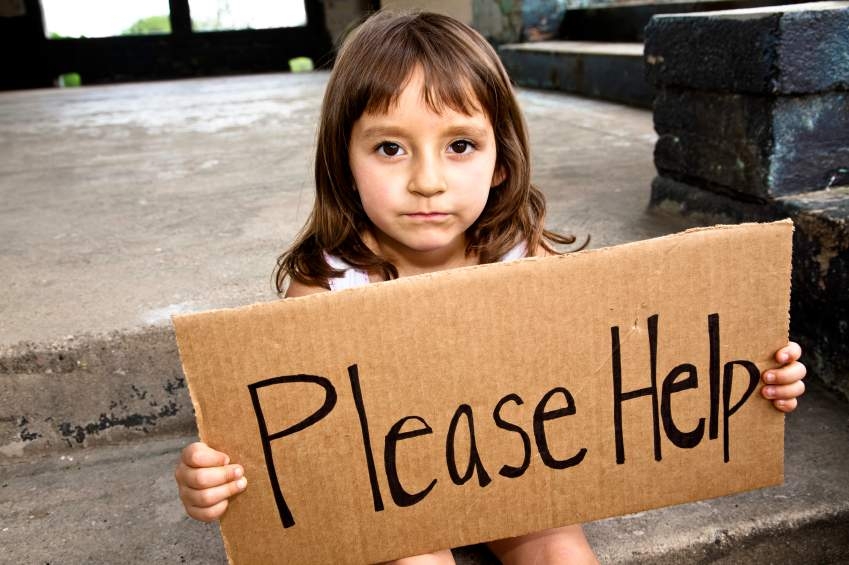
Nowhere are these contradictory impulses more clearly on display than in the current debate over whether or not our schools should provide their pupils with meals. Wrapped around this narrowly-focused proposal to “Feed the Kids” is a much wider debate about whether or not a substantial minority of New Zealand children (estimated at 270,000) are living in poverty.
 
Conservative New Zealanders take umbrage at the very suggestion that such a large number of their fellow citizens could be living in such conditions. They simply deny that child poverty exists. What they believe New Zealand is witnessing, in the children who arrive at school every morning hungry, unshod and ill-clothed, is evidence not of inadequate resources, but of poor parenting.
 
According to these conservative New Zealanders, thousands of Kiwi parents are making poor choices about their priorities. What’s more, the institutions of the welfare state, by failing to impose a more appropriate set of priorities and enforce more sensible parental choices, have ensured that the perfectly adequate resources allocated to welfare beneficiaries are both misapplied and misspent.
 
Underpinning this conservative view is what can only be described as an alarmingly eugenicist set of assumptions.
 
So many poor parental choices, the conservatives argue, is proof that a certain (and seemingly quite large) percentage of the population are simply not up to the role of parenting. The straightforward, and brutal, solution? Do not allow such people to breed – or, if they do, take away their children and place them with couples whose parental choices pass muster.
 
It was this sort of thinking that, in Australia, led to the “Stolen Generation”. Thousands of Aboriginal children were forcibly taken from their parents and placed with God-fearing, upstanding, middle-class White Australians. The parental choices of the latter, it was assumed, would be far superior to those of Aboriginal Australians. The cycle of poverty and abuse which plagued indigenous communities could thus be broken, and in just a few generations the Aboriginal “problem” would disappear.
 
The colossal failure of imagination which the “Stolen Generation” policy represented; the singular lack of empathy which made its implementation such a shameful chapter in Australian history; similarly disfigures the analysis of New Zealand’s conservatives.
 
It is common to hear talkback callers and conservative commentators declare that no matter how hard family life has become and no matter how tough their financial circumstances, no parent should ever be excused for allowing their child to go to school hungry.
 
The mental, physical and moral disintegration afflicting individuals subjected to prolonged periods of social isolation and material deprivation is well-attested in the academic literature. The collapse of self-esteem; the recourse to alcohol and drugs as a means of deadening intense emotional distress; the increased propensity to explosive episodes of violence and self-harm: all of these symptoms – the entirely predictable consequences of poverty – are encountered by WINZ staff, police officers, social-workers, GPs, practice nurses and teachers every day of the week. They are not, however, encountered with any frequency by those who claim there is no excuse for sending a child to school hungry.
 
The conservatives have become intellectually immune to even the logical inconsistencies of their hard-line attitudes. They refuse to differentiate the weak and broken-spirited adults of their analysis from the innocent and suffering children. As mere extensions of the pathetic human-beings they were foolish enough to choose as their mothers and fathers, the children of poverty are clearly expected to go down with the parental ship.
 
The polarisation of New Zealand society into “comfortable” and “struggling” has been accompanied by a not unrelated polarisation of political convictions. Among the comfortably-off we are witnessing a wholesale rejection of the paternalism which characterised the politics of earlier conservative leaders like Gordon Coates and Keith Holyoake. In its place we find a new enthusiasm for the politics of exclusion, punishment and shame.
 
As if our children’s only role is to embody for posterity their parents’ blameless success or guilty failure.
 
This essay was originally published by The Press of Tuesday, 21 May 2013.

Sunday, 9 August 2009

The Politics of Envy


Sinful Longing: To maintain the economic, social and political hierarchies of structurally unequal societies, envy is cast as a deadly political sin.

"THE politics of envy". Seldom has so much social disdain been packed, by so many privileged people, into so few words.

As working families compare their daily struggle to pay the mortgage with the hefty taxpayer allowances currently subsidising Cabinet Ministers’ accommodation costs, apologists for inequality reach instinctively for the Politics of Envy argument.

Devote a few moments to unpacking the term, however, and the self-serving maliciousness of the expression’s theological, ethical and political assumptions stand revealed.

Theological? Yes. Because "envy" is one of the Seven Deadly Sins – though biblical authority for the inclusion of this particular human frailty is difficult to locate. The nearest approximation is the Tenth Commandment: "You shall not covet your neighbour’s house; you shall not covet your neighbour’s wife, or male or female slave, or ox, or donkey, or anything that belongs to your neighbour."

But to covet something is not quite the same as envying it. Covetousness involves lusting after a specific individual or object, as well as planning to satiate that lust. Envy, on the other hand, is all about drawing unfavourable comparisons between one’s own condition and the condition of others.

To the rich and powerful such comparisons have always been "odious". Which is why the Church Fathers, with one eye on their need to retain the patronage and protection of society’s rulers, deliberately conflated the meanings of covetousness and envy. Only by linking envy with the behaviour described in the Tenth Commandment could the property of the powerful, and the tranquillity of the state, be safeguarded against the righteous anger of the poor and oppressed. Christ may have blessed the meek, and told them they would inherit the earth, but the religion bearing his name moved swiftly to make sure it never happened. For Christianity to thrive as an official state religion, it was vital that the lower orders defined "meekness" not only as the uncomplaining acceptance of their lot in life, but also as resisting the temptation to compare their own wretched condition with the exalted status of their rulers.

Never mind that the entire moral force of both the Old and New Testaments is drawn from the prophetic comparison between what God wills and Man does. And just ignore Jesus’ numerous warnings about money’s power to corrupt both those who possess it, and those who lack it. To maintain the economic, social and political hierarchies of the societies in which the Christian Church established itself – envy had to remain a deadly sin.

But the Politics of Envy accusation is not only theologically suspect: its ethically bankrupt character remains clear, even when viewed from a secular perspective. Wealth and status are inevitably presented by their defenders as the products of entrepreneurial talent, scrupulous honestly and unstinting toil. The probability that, as Balzac shrewdly declared: "behind every great fortune there is a great crime" is never acknowledged – though any study of ancient, feudal or capitalist history amply confirms the French novelist’s observation. All too often, the documents of provenance offered up as proof of the rich and powerful’s right to rule turn out to be a thieves’ charter.

Almost inevitably, therefore, the accusation that someone is practicing the Politics of Envy will be as self-serving as it is self-protective. Because, in the eyes of the powers-that-be, the only sin more blameworthy than envying your betters, is organising politically to challenge their privileged position. No matter how outrageous the comparison between what the ordinary citizen is expected to bear unaided, and the lashings of taxpayer support lavished upon the businessmen and politicians who set the terms of his existence, it is deemed unacceptable to employ the democratic process to alter the balance between wealth and poverty; privilege and disadvantage; strength and weakness.

Do those of us earning a modest income envy those whose taxpayer allowances amount to more than we earn in a week? Of course we do. The sense of safety and security that must come from owning several freehold rental properties, and earning close to quarter-of-a-million dollars a year, is something most of us can only dream about. And, is it really a sin to compare our own take-home pay with the salary package of a Cabinet Minister? No, it isn’t.

Those who ride on the backs of their fellow citizens, and over-eat, must anticipate the occasional crash-diet.

This essay was originally published in The Dominion Post, The Timaru Herald, The Taranaki Daily News, The Otago Daily Times and The Greymouth Evening Star of Friday, 7 August 2009.